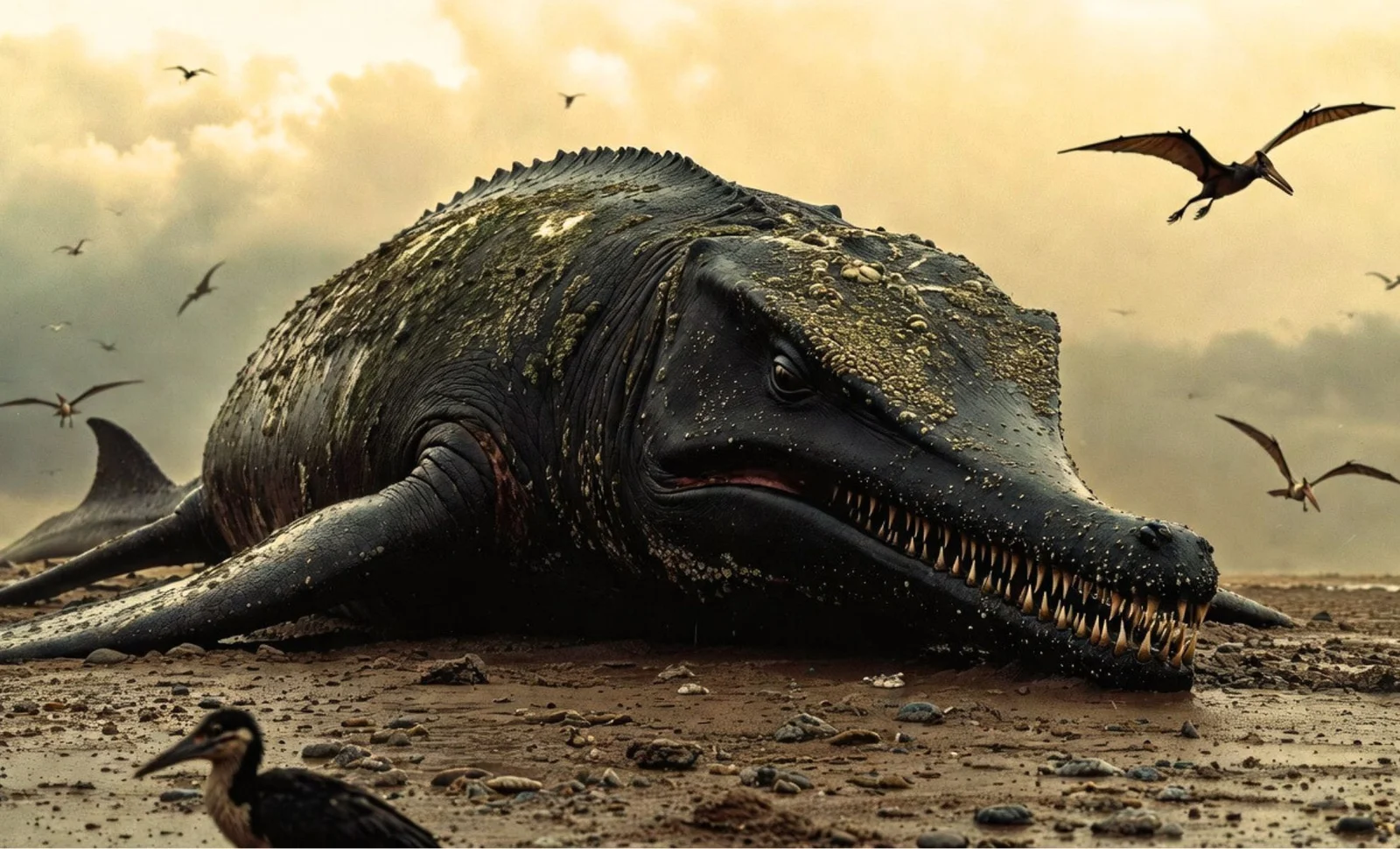
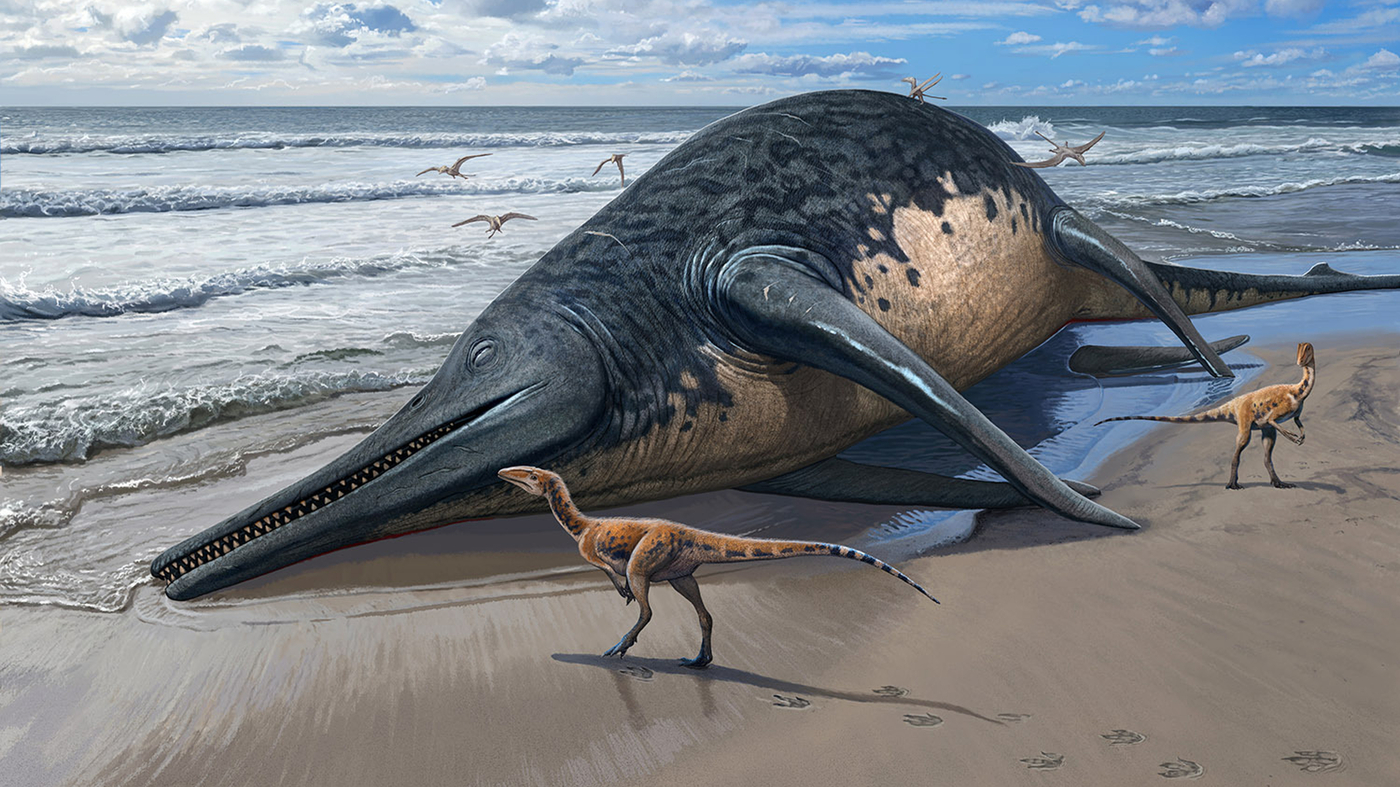
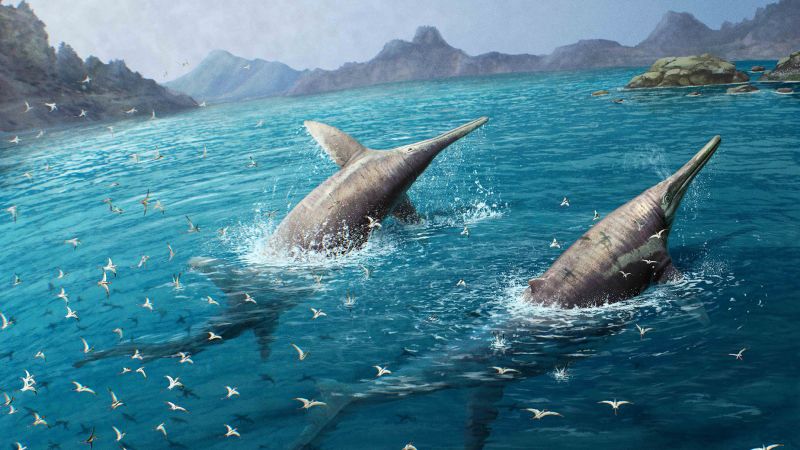
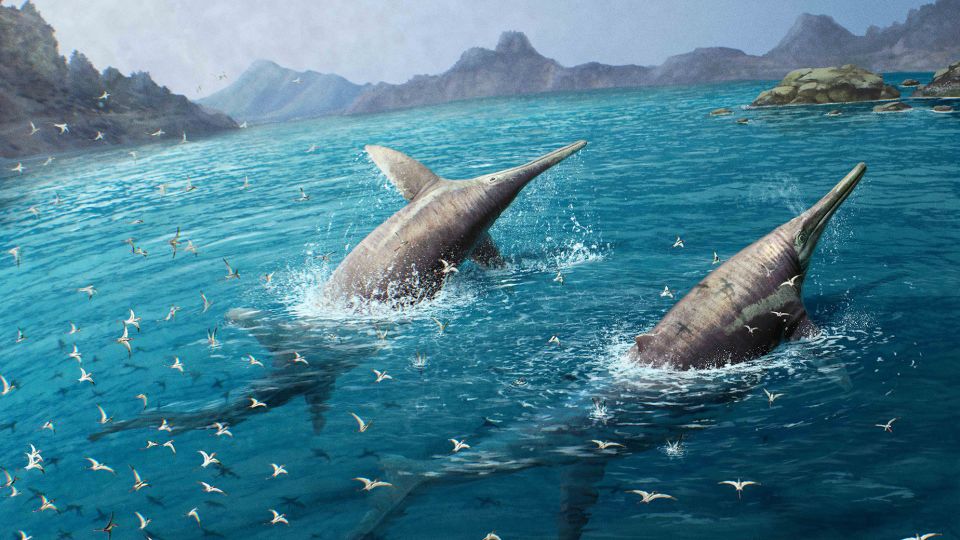
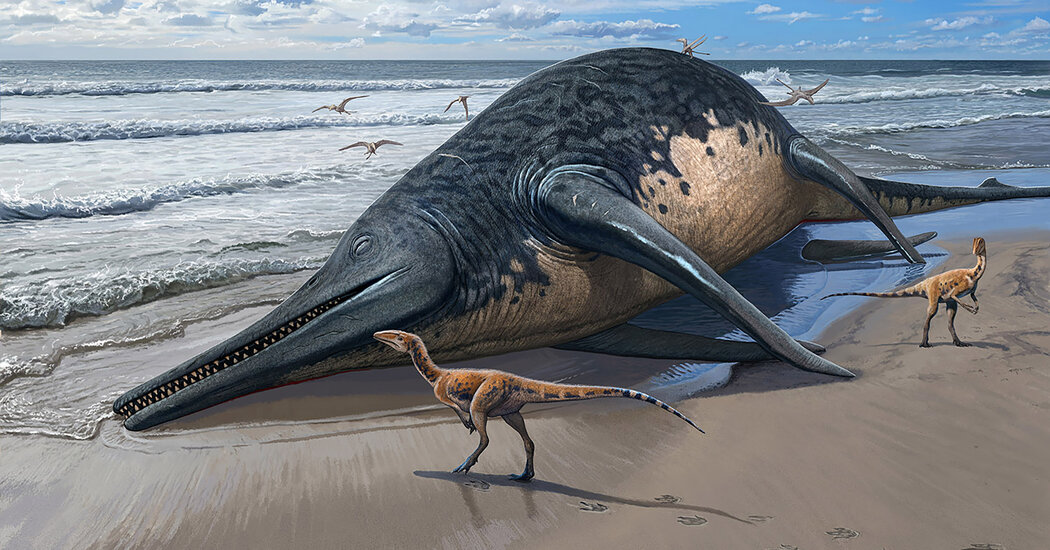
An 11-year-old girl discovered a fossil in England that led scientists to identify a new giant ichthyosaur species, Ichthyotitan severnensis, potentially the largest marine reptile ever, measuring up to 25 meters long and dating back to the late Triassic period.
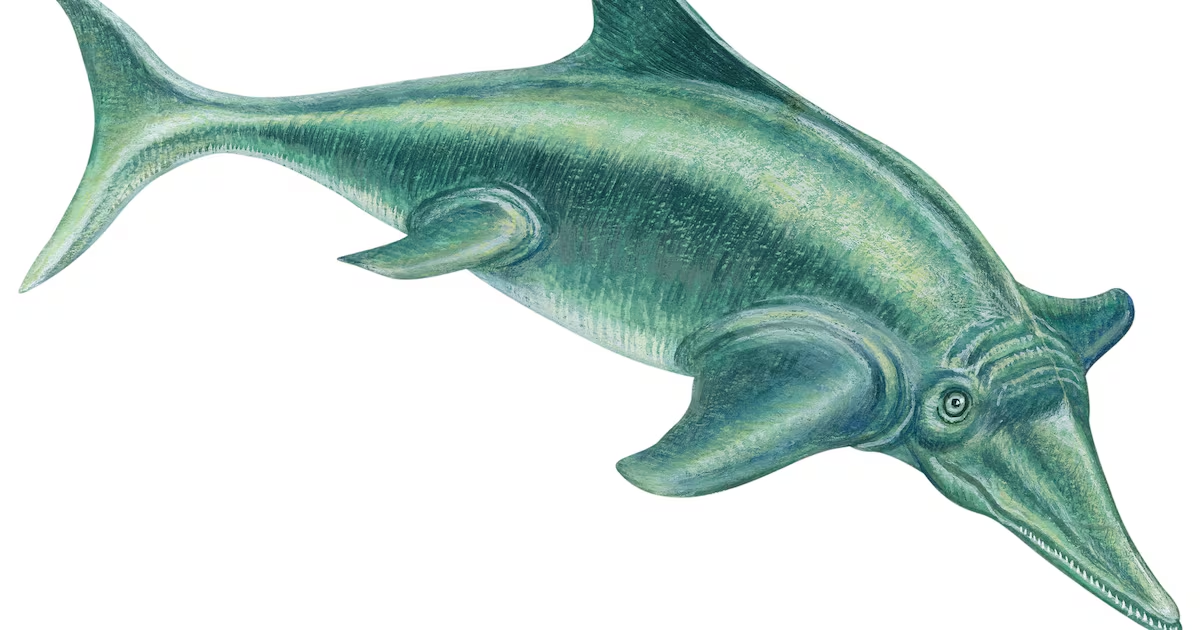
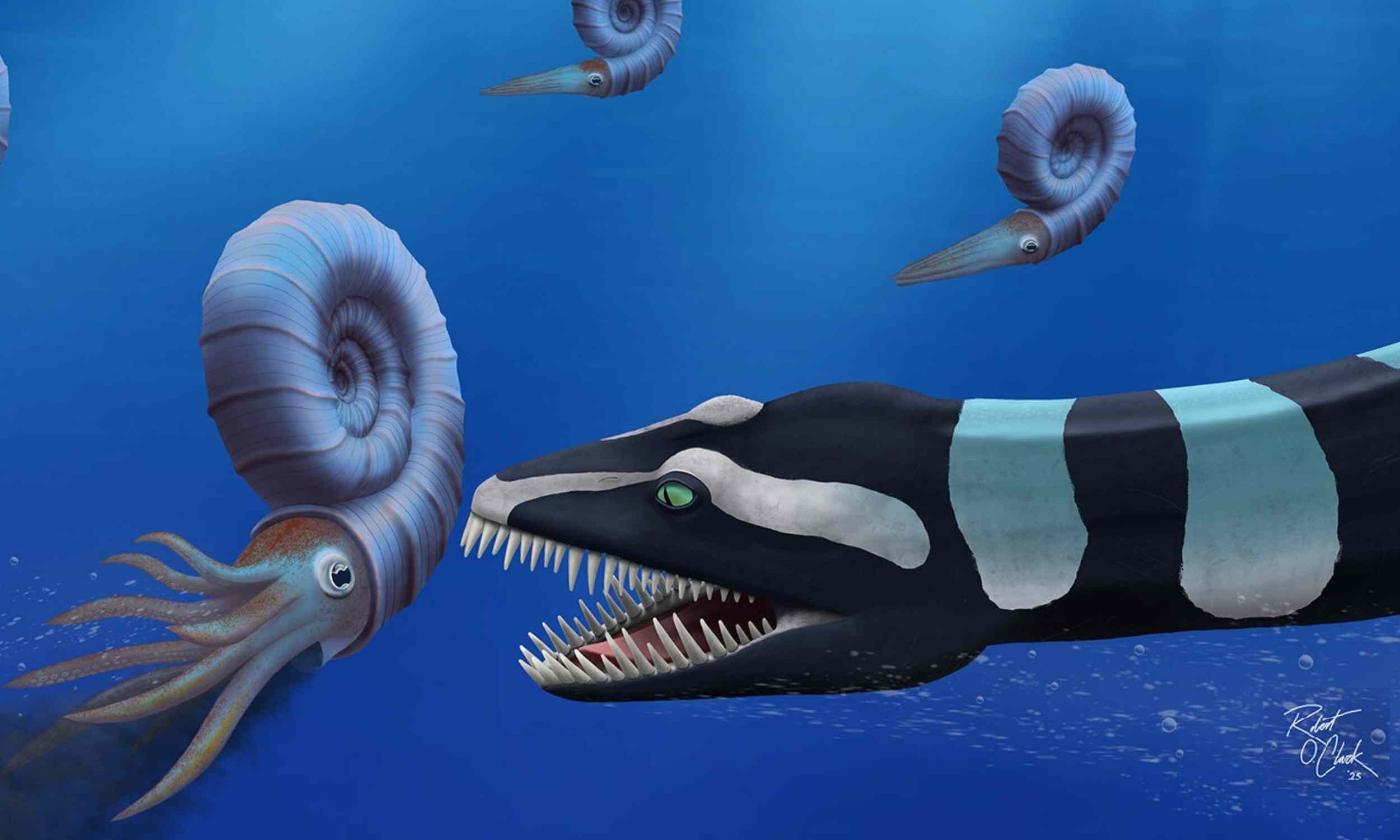
A new species of Jurassic-era marine reptile, Xiphodracon goldencapsis, was discovered in England, characterized by a long snout and narrow teeth, indicating a diet of soft prey like squid, and is considered one of the most complete fossils from its period.
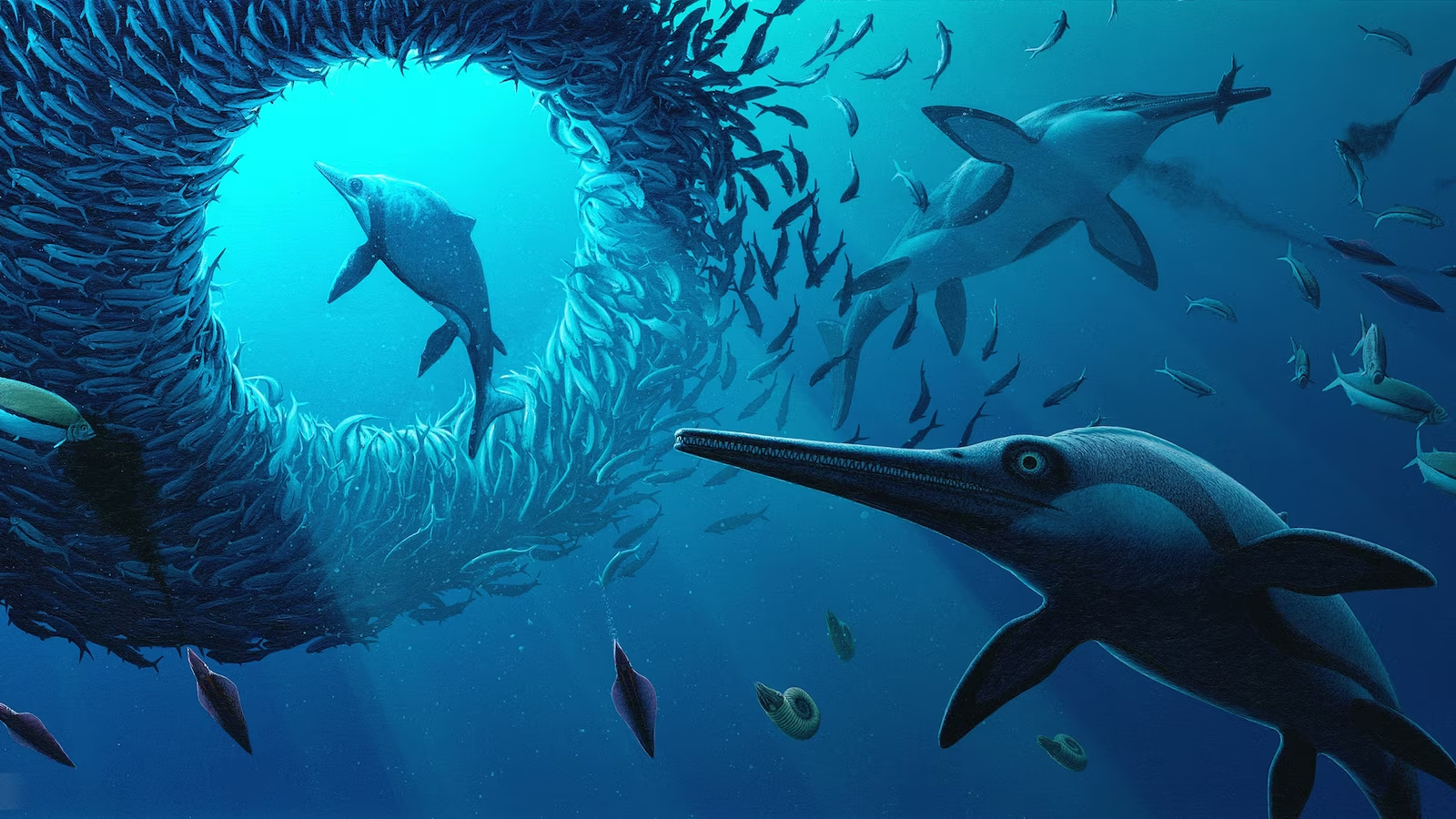
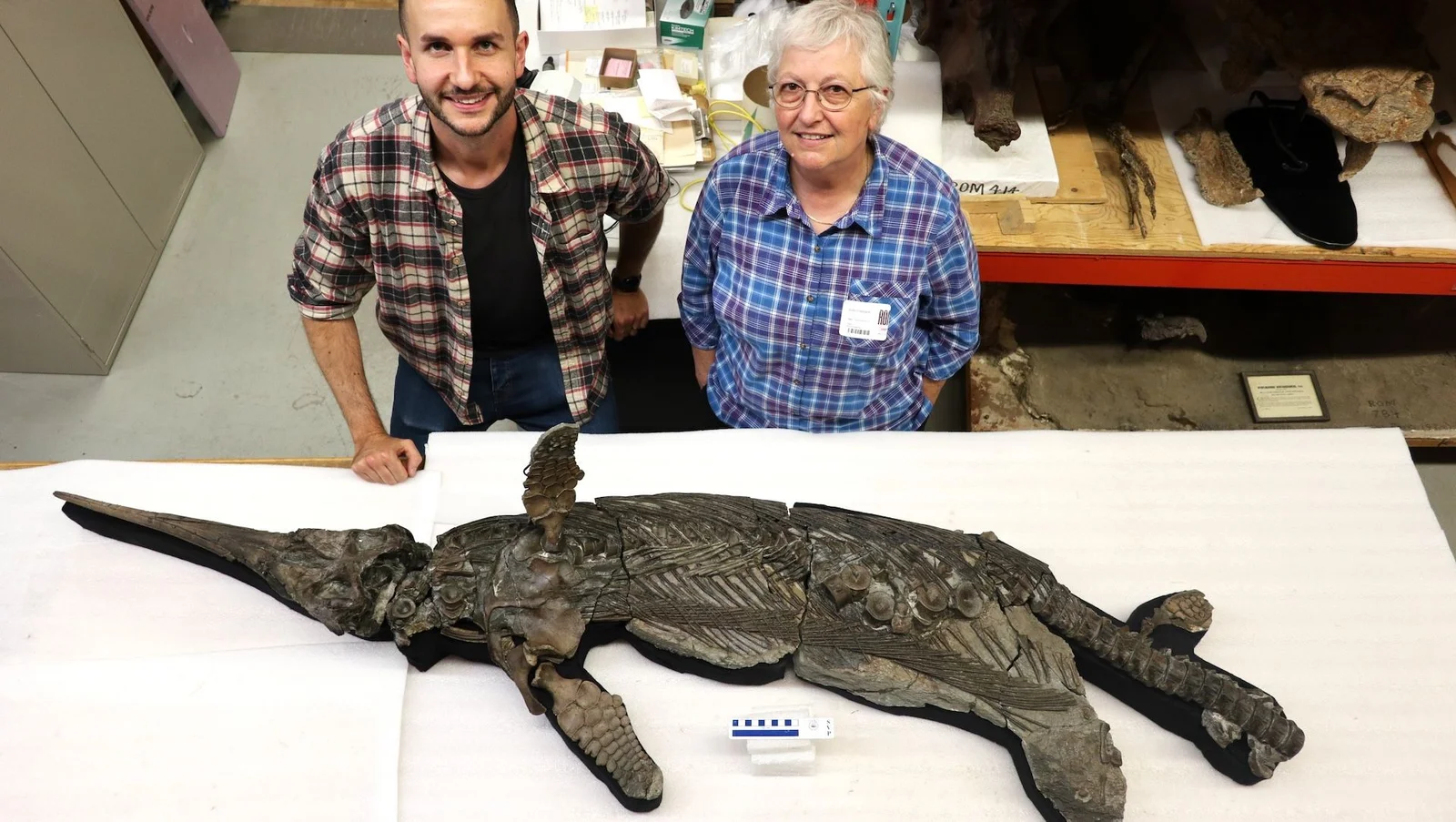
Scientists have identified a new species of marine reptile called Xiphodracon goldencapensis, a dolphin-sized ichthyosaur from 185 million years ago, discovered in the UK. The fossil shows signs of a fatal attack by a larger predator and injuries suggesting a tough life, providing new insights into ichthyosaur evolution.
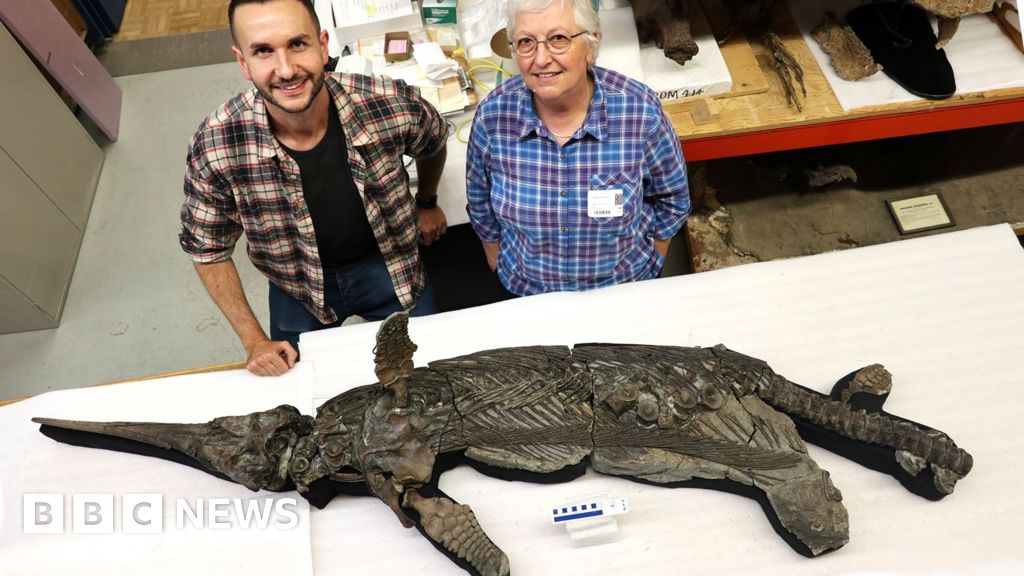
A near-complete skeleton found on Dorset's Jurassic coast has been identified as a new species of ichthyosaur, named Xiphodracon goldencapensis or the 'sword dragon of Dorset.' This dolphin-sized marine reptile, dating back about 185 million years, shows unique features and evidence of a fatal attack by a larger predator, filling a significant gap in ichthyosaur evolution.
A nearly complete fossil of a new Jurassic-era marine reptile, Xiphodracon goldencapsis, was discovered in the UK and provides insights into ichthyosaur evolution and a major faunal turnover during the early Jurassic period, with evidence of predation and disease.
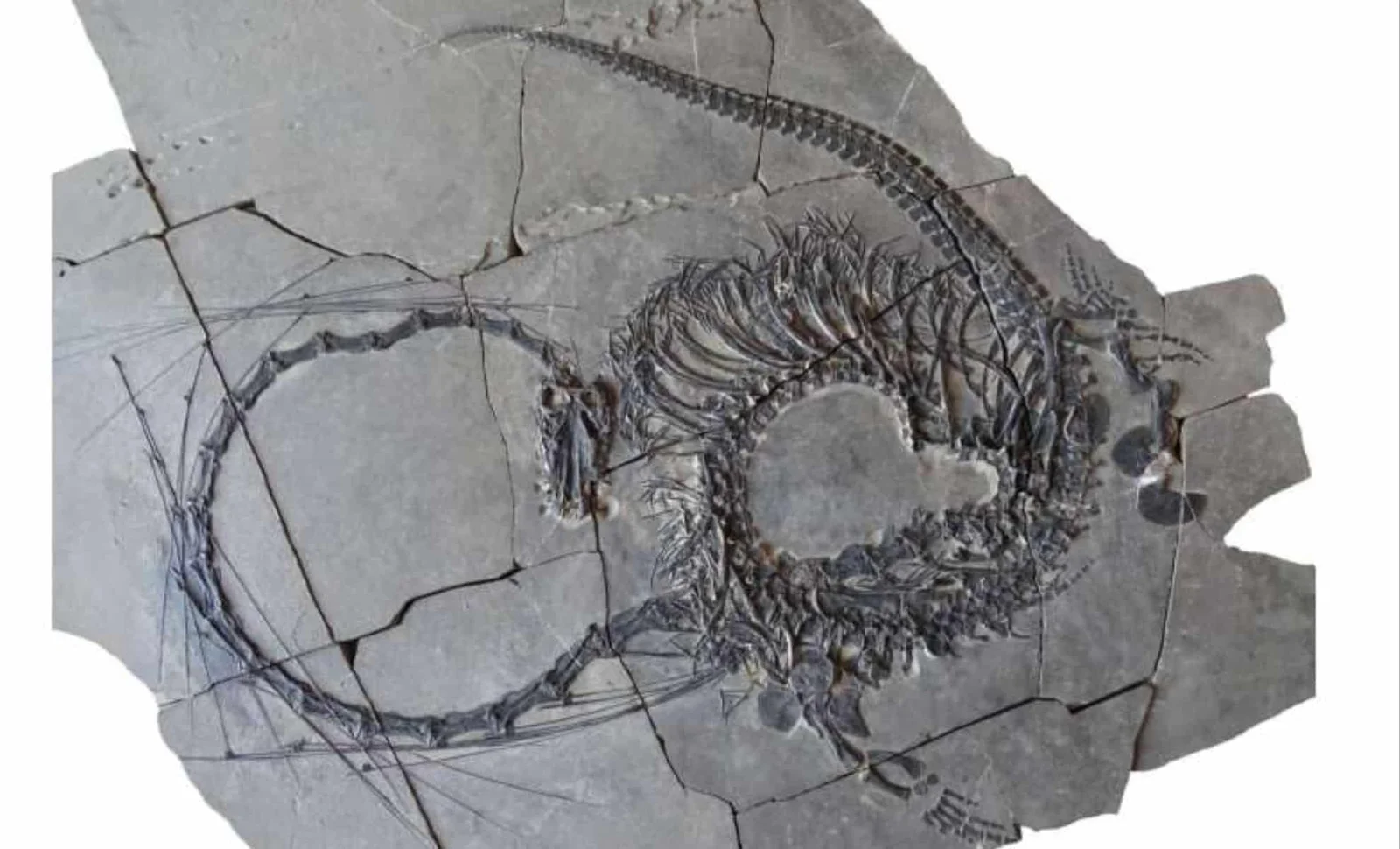
Scientists in China have uncovered a 240-million-year-old marine reptile fossil, Dinocephalosaurus orientalis, notable for its long neck and snake-like appearance, which provides new insights into Triassic marine life and evolutionary biology. The discovery involved international collaboration and highlights the importance of continued paleontological excavations.
Scientists have identified a new species of marine reptile, Traskasaura sandrae, based on fossils from Vancouver Island, showcasing unique hunting adaptations and a mix of primitive and advanced traits, highlighting the complexity of plesiosaur evolution.
Researchers in Mississippi discovered a giant vertebra from Mosasaurus hoffmannii, a massive marine predator from the late Cretaceous period, providing new insights into ancient marine life and the region's prehistoric ecology.
Scientists discovered the largest mosasaur vertebra ever found in Mississippi, revealing a massive prehistoric marine reptile from the Late Cretaceous period, highlighting the region's rich fossil history and the creature's formidable size.
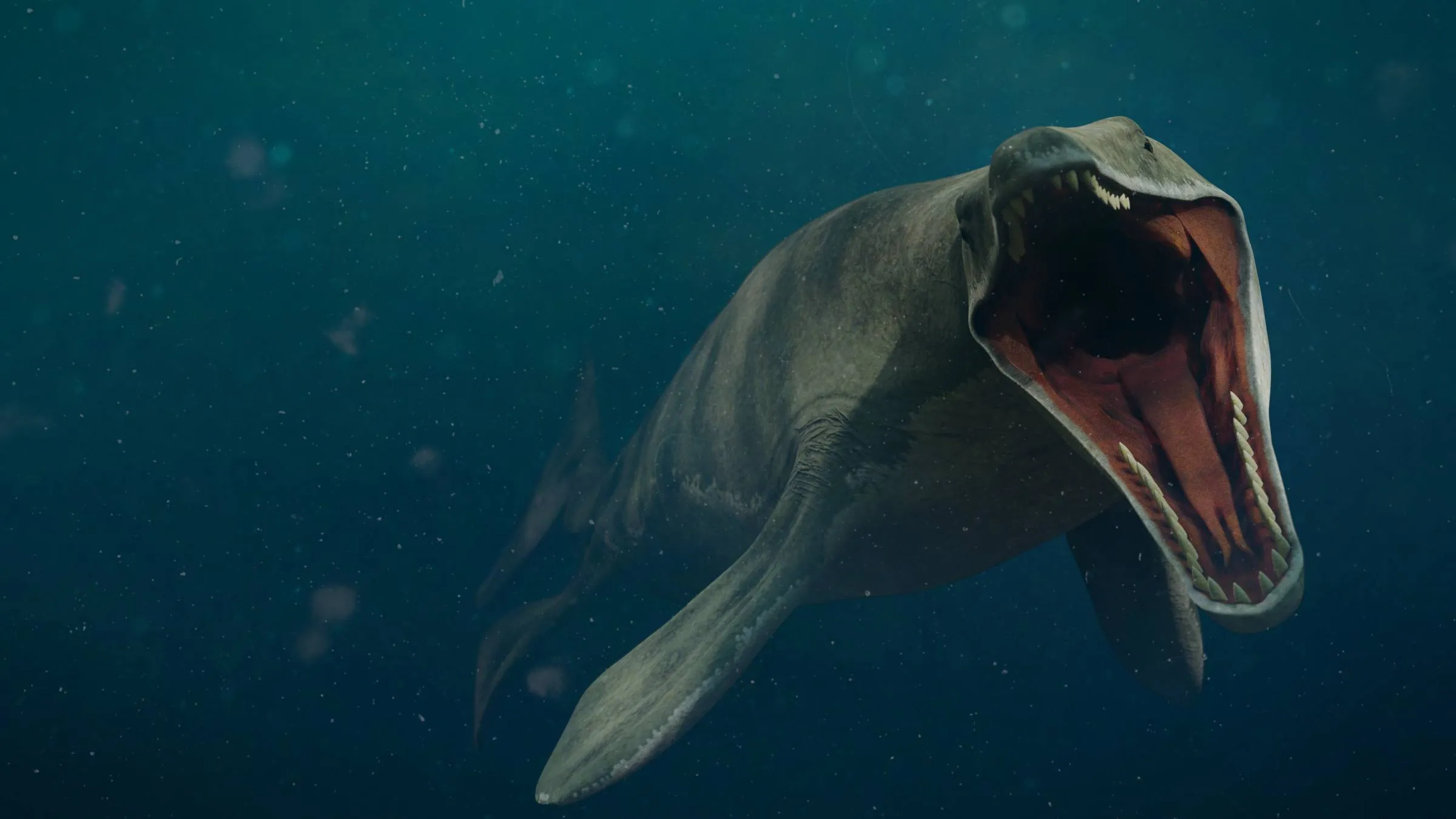
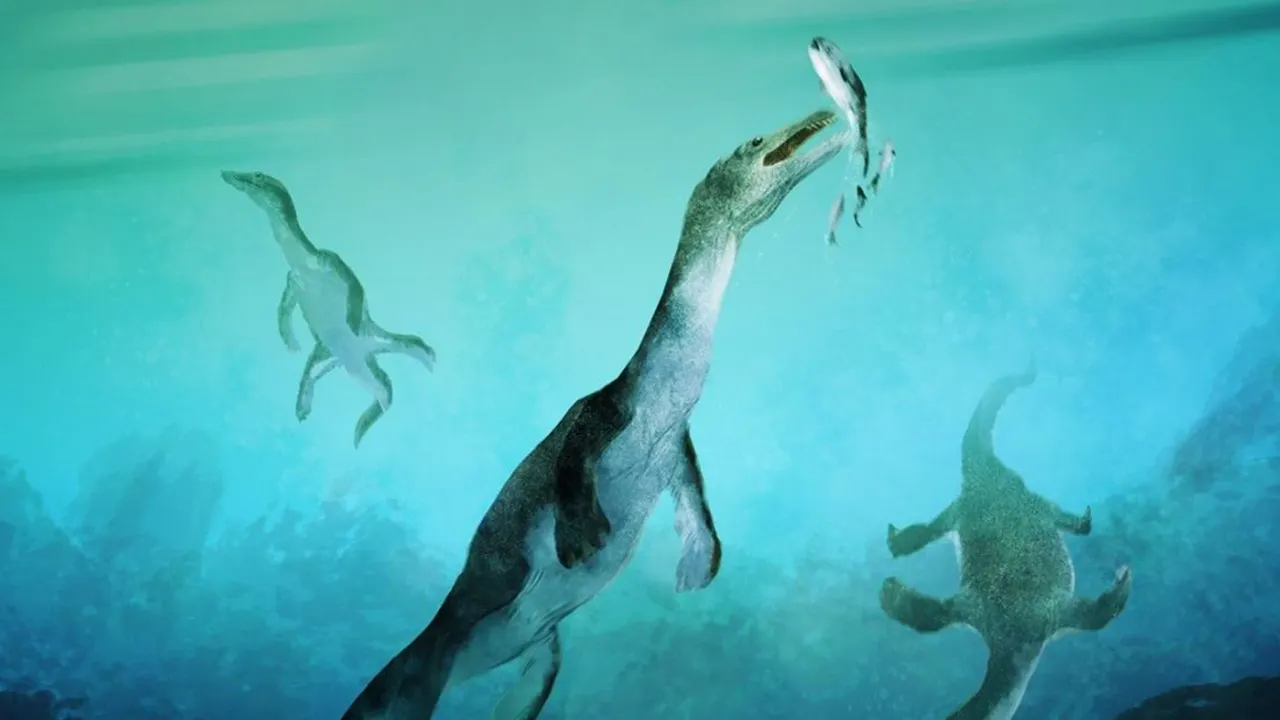
A 246 million-year-old nothosaur fossil discovered in New Zealand is the oldest marine reptile fossil found in the Southern Hemisphere. This finding, identified by Uppsala University’s Museum of Evolution, provides new insights into early sea reptiles' distribution and evolution following a mass extinction event. The fossil suggests that nothosaurs originated near the equator and spread rapidly, thriving in ancient polar regions due to extreme global warming.
An 11-year-old made a significant discovery by unearthing fossils of the largest known marine reptile, an Ichthyosaur measuring over 80 feet long, furthering paleontologists' understanding of this ancient creature. The finding has been detailed in a study published in the journal PLOS One, shedding light on the "giant fish lizard of the Severn sea."
British paleontologists discovered a surangular bone in Somerset, UK, suggesting the existence of a massive ichthyosaur, estimated to be between 22 and 26 meters long, potentially rivaling the size of blue whales. Another set of bones found in 1846 in southwestern England, previously thought to belong to dinosaurs, were reattributed to ichthyosaurs, with one estimated to be over 30 meters long. The findings shed light on the incredible size of late Triassic ichthyosaurs and their eventual extinction during the end-Triassic mass extinction event.
An 11-year-old girl and her father discovered a massive jawbone on a beach in Somerset, England, which led to the identification of a new species of ichthyosaur, named Ichthyotitan severnensis. Estimated to be over 82 feet long, this marine reptile may have rivaled the size of a blue whale. The discovery sheds light on the prehistoric giant's role in evolutionary history and the ancient ocean ecosystem. The fossil, dating back 202 million years, is a significant contribution to paleontology and will be displayed at the Bristol Museum and Art Gallery.
An 11-year-old and her father discovered a massive jawbone on a beach in Somerset, England, which belonged to a newfound species of ichthyosaur, likely the largest known marine reptile to have swum in Earth's oceans. Named Ichthyotitan severnensis, the creature is estimated to have been over 82 feet long. The discovery sheds light on the prehistoric giant's role in evolutionary history and the ancient ocean ecosystem. The nearly complete jawbone, along with a previously found piece, has provided valuable insights into the creature's size and growth, and will be displayed at the Bristol Museum and Art Gallery.
An 11-year-old girl named Ruby Reynolds and her father discovered fossilized bone fragments on an English beach, which turned out to be part of an 82-foot ichthyosaur, the largest known marine reptile. The discovery, named Ichthyotitan severnensis, was made near the village of Blue Anchor and involved collaboration with researchers from the University of Bristol. This finding adds to the legacy of young fossil hunters, echoing the historic discovery made by 12-year-old Mary Anning in 1811.