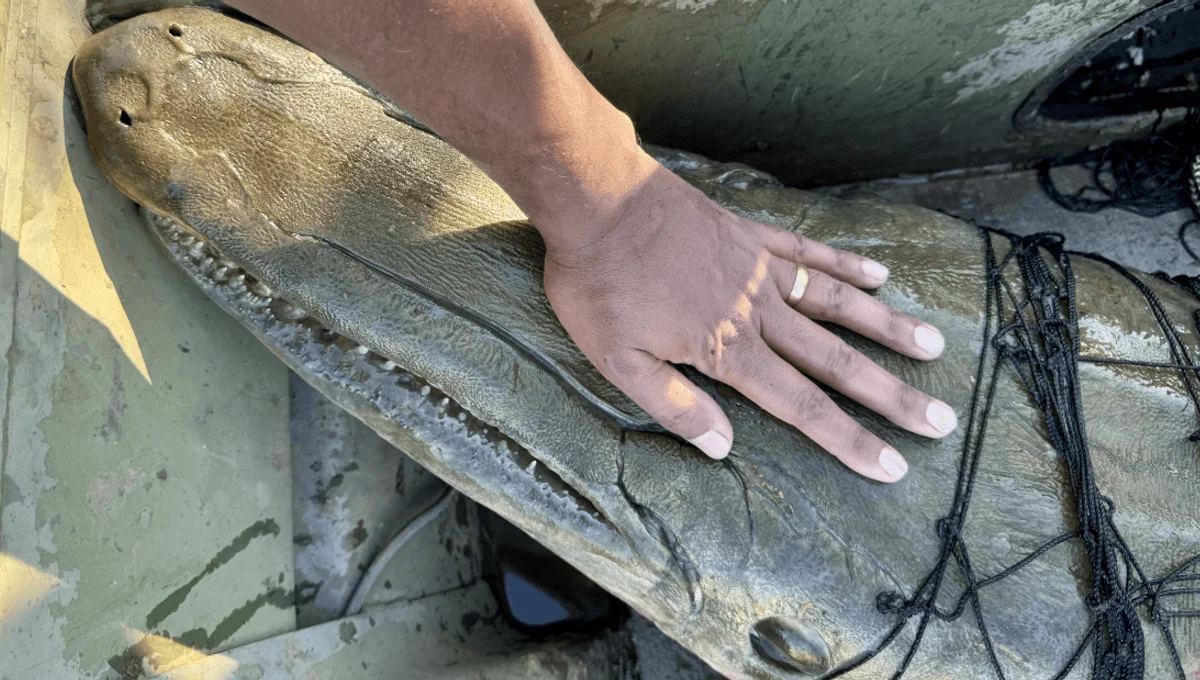
Scientists caught and released a massive 7-foot 10-inch, 136-kilogram alligator gar in the Mississippi River floodplains, highlighting its status as a living fossil and an indicator of river-floodplain connectivity, with implications for conservation and understanding of ancient fish species.
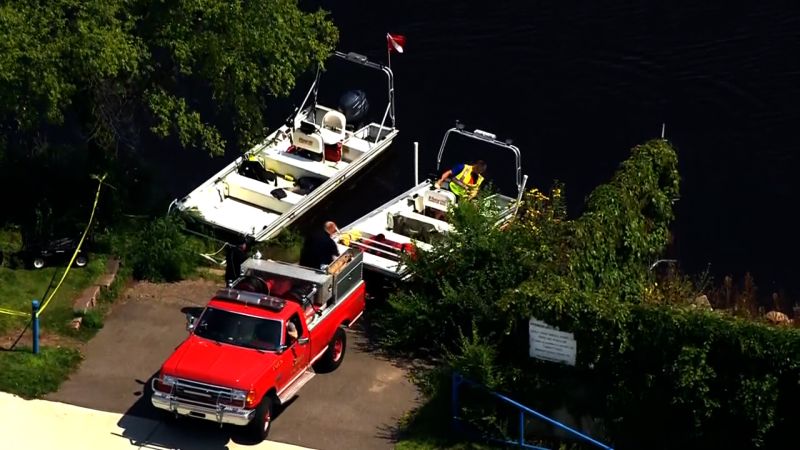
Two fishermen using sonar in the Mississippi River discovered a 1960s Buick with human remains inside, which investigators believe is linked to Roy Benn, a man who went missing in 1967, potentially solving a decades-old cold case and providing closure for his family.
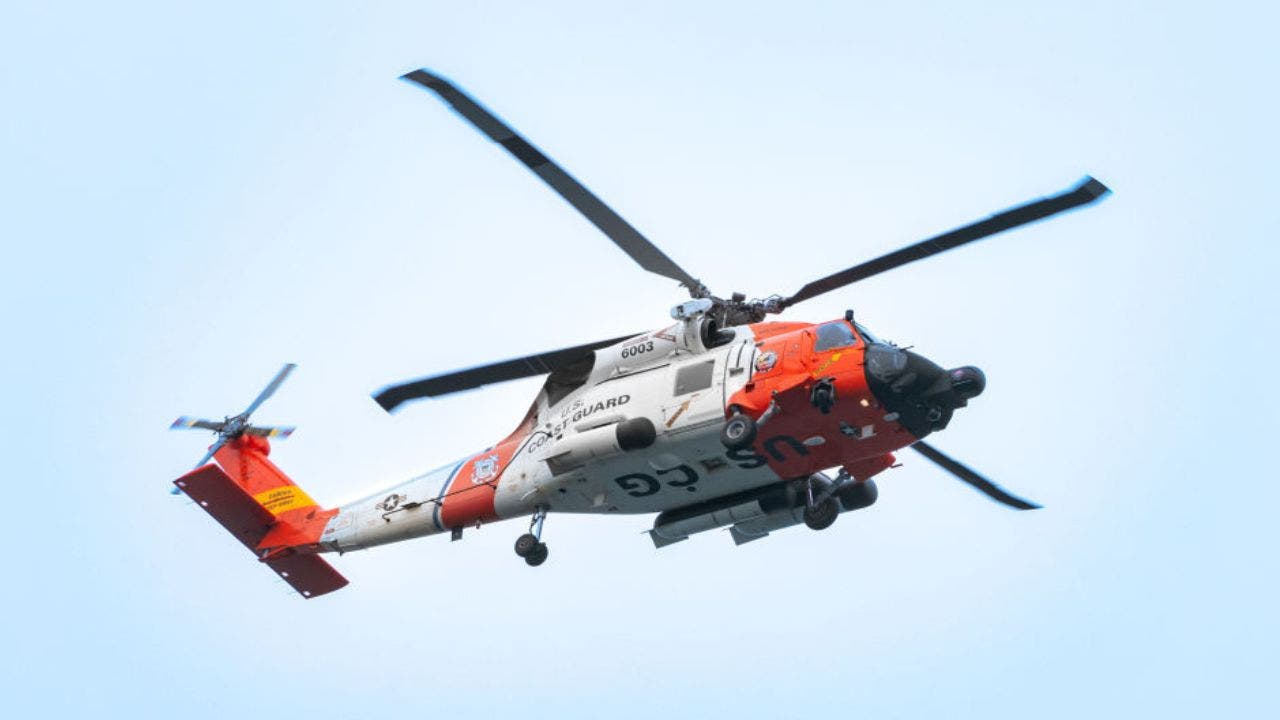
A helicopter crashed into a barge on the Mississippi River near Alton, Missouri, killing two people and causing a fire, leading to the temporary closure of a bridge into Illinois. The incident occurred around 11 a.m., and authorities are investigating the cause.
The body of Eliotte Heinz, a Hortonville High School graduate and Viterbo University student, was found in the Mississippi River near Brownsville, Minnesota, after she went missing in La Crosse, Wisconsin. Authorities are investigating her cause of death, with autopsy results pending.
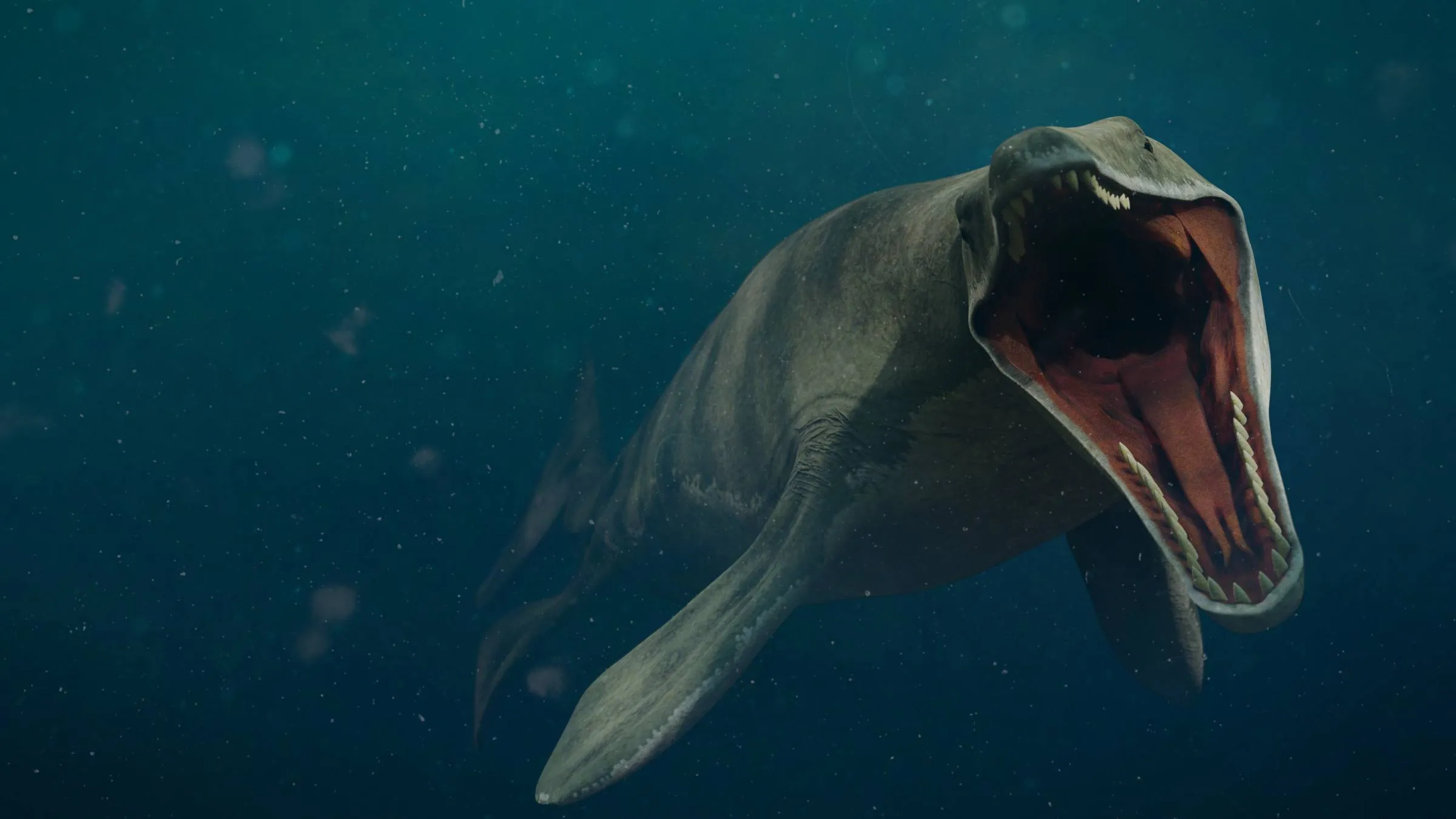
Scientists discovered the largest mosasaur vertebra ever found in Mississippi, revealing a massive prehistoric marine reptile from the Late Cretaceous period, highlighting the region's rich fossil history and the creature's formidable size.
American Queen Voyages, known for its cruises along the Mississippi River including stops in St. Paul, has ceased operations as its parent company, the Hornblower Group, files for bankruptcy. The company cites the pandemic's impact on travel preferences as a major factor in its financial struggles. Despite efforts to rebound, the cruise line has been unable to sustain operations. Other cruise companies, such as Viking River Cruises and American Cruise Lines, continue to offer trips in the region.
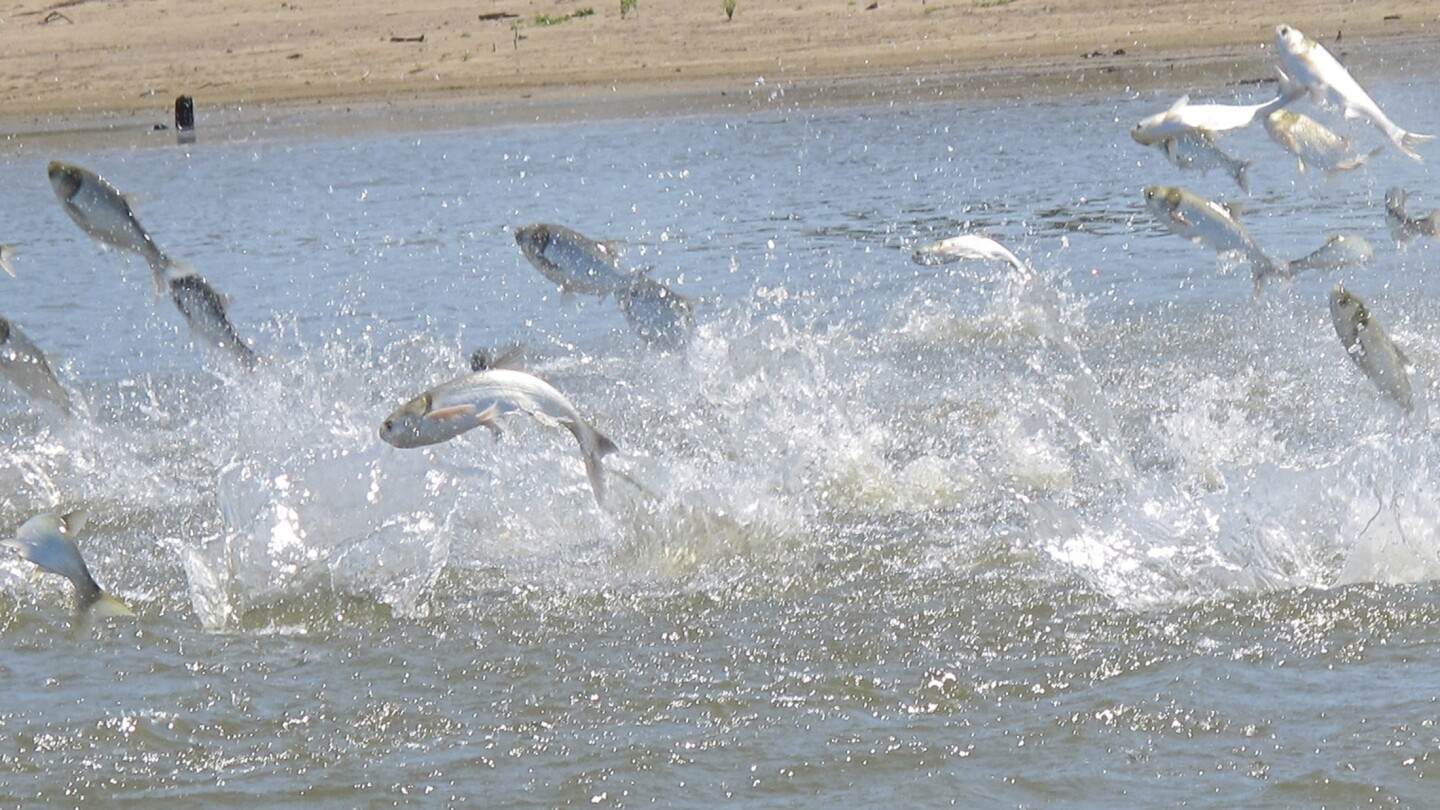
Wildlife officials from the Minnesota Department of Natural Resources have captured 323 invasive carp, including silver carp, grass carp, and bighead carp, from the Mississippi River near Trempealeau, Wisconsin. This is the largest single capture of invasive carp in Minnesota to date. The carp, which were imported to the U.S. in the 1960s and 1970s, have spread north through the Mississippi River, posing a threat to native species and aquatic ecosystems. Efforts are being made to prevent their entry into the Great Lakes and protect the fishing industry.
The United States Coast Guard (USCG) has called off the search for four crew members who went missing from a Bangladeshi bulk carrier vessel in the Mississippi River. The crew members failed to arrive at their vessel on Monday, prompting a search operation involving the USCG, local and state agencies. After searching approximately 495 square miles for 12 hours, the search was suspended as the missing men were not found. The incident is currently under investigation. The crew members are of Bangladeshi nationality, and their names have not been disclosed.
One person is dead and three others are hospitalized after an SUV struck a wheelbarrow on the U.S. 61 bridge over the Mississippi River in Dubuque, Iowa. When the occupants exited the vehicle to check for damages, they were struck by another vehicle. The accident is currently under investigation.
The Shelby County Sheriff's Office is investigating the discovery of a woman's body on a barge in the Mississippi River, which was found while the barge was in transit. The incident occurred two miles south of the Shelby Forest Boat Ramp, and the investigation is ongoing.
The Mississippi River is facing a saltwater intrusion problem as a surge of Gulf of Mexico saltwater creeps up the river, causing concerns for water supply and coastal erosion. The low-water river weakened by drought cannot keep the ocean water at bay, leading to compromised water plants, health concerns, and worries about the long-term effects on agriculture and fishing. Efforts are being made by the U.S. Army Corps of Engineers and Louisiana officials to combat the saltwater incursion, including installing reverse-osmosis filters and running new pipes to bring fresher water into New Orleans. While the threat to municipal drinking water has slowed, uncertainties remain about when the river will see enough freshwater to push the saltwater back to sea.
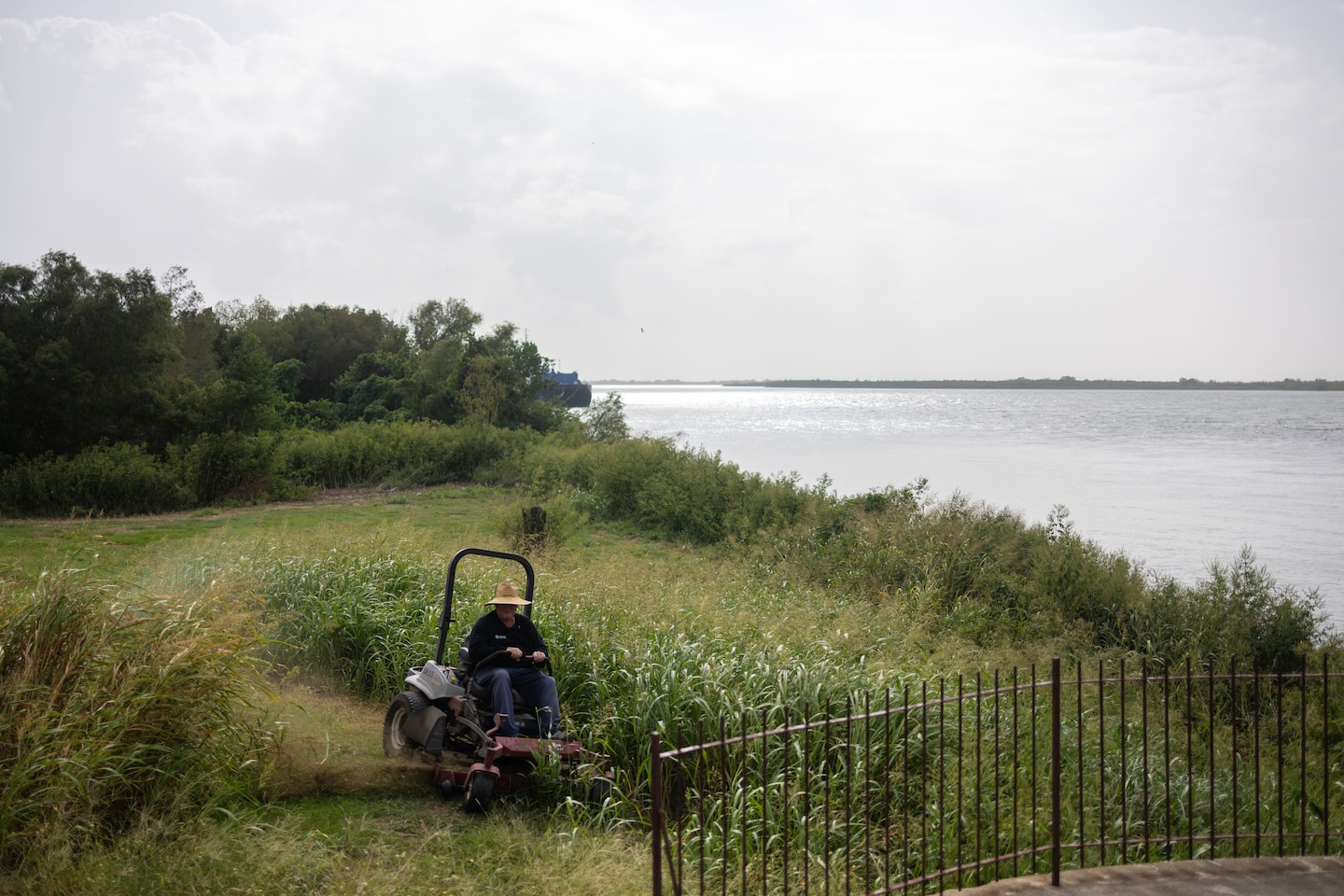
A mass of saltwater from the Gulf of Mexico has moved nearly 70 miles up the drought-stricken Mississippi River, causing drinking water advisories and infrastructure damage in Plaquemines Parish, Louisiana. While New Orleans has received more time to prepare, the rural community continues to face challenges such as hair and skin problems, corroded appliances, and the smell of rotten eggs from tap water. Temporary solutions, including reverse osmosis systems and barging in fresh water, are being implemented, but residents express frustration and fatigue, calling for permanent fixes to prevent future drought-related issues.
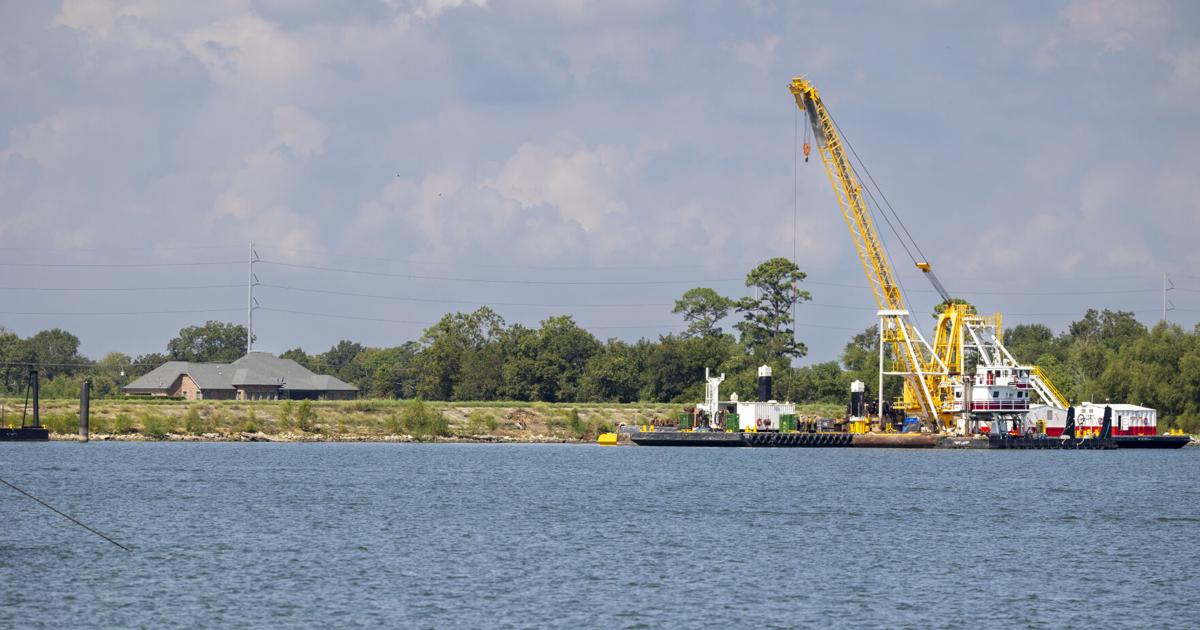
Forecasts for saltwater advancing up the Mississippi River towards New Orleans have been pushed back by around a month, potentially sparing most of the city and Jefferson Parish from the threat. The updated forecast by the Army Corps of Engineers has provided relief to officials in the area, who were scrambling to protect drinking water. While some areas are still predicted to be affected, the need for an emergency pipeline estimated to cost up to a quarter of a billion dollars may be avoided. New Orleans plans to proceed with pipeline construction if necessary, while Jefferson Parish will partially build smaller-scale pipelines.
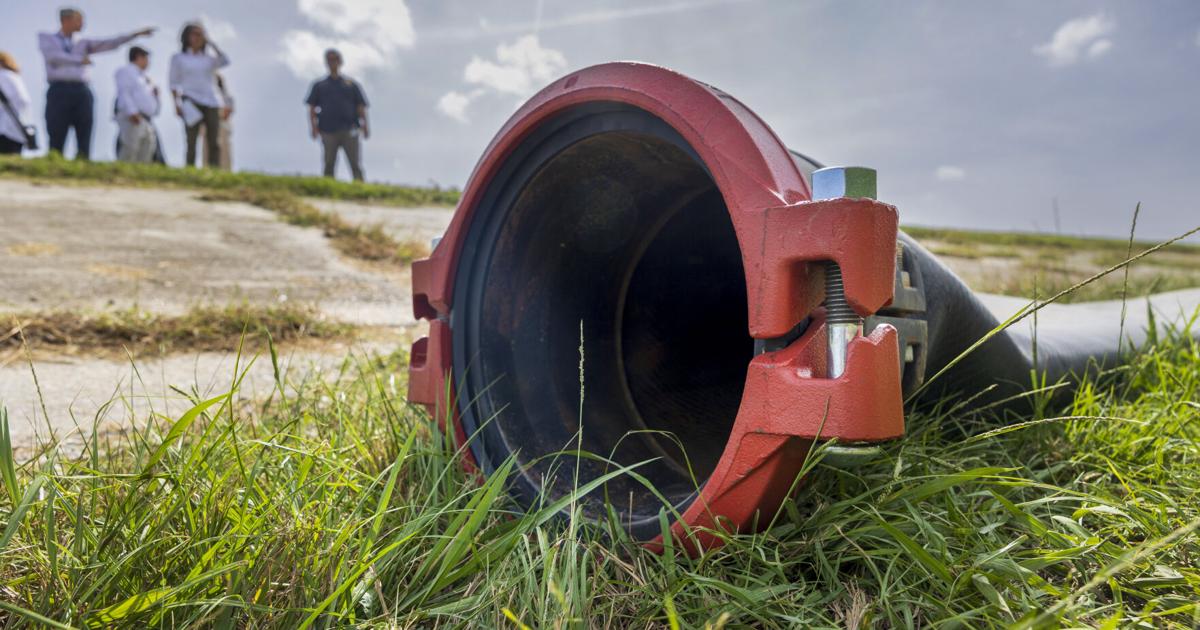
As saltwater intrusion continues to move up the Mississippi River, crews have begun laying out miles of flexible pipeline in Jefferson Parish to supply fresh water. Parish officials, including Jefferson Parish President Cynthia Lee Sheng, are overseeing the installation as a proactive measure to combat the encroaching saltwater.
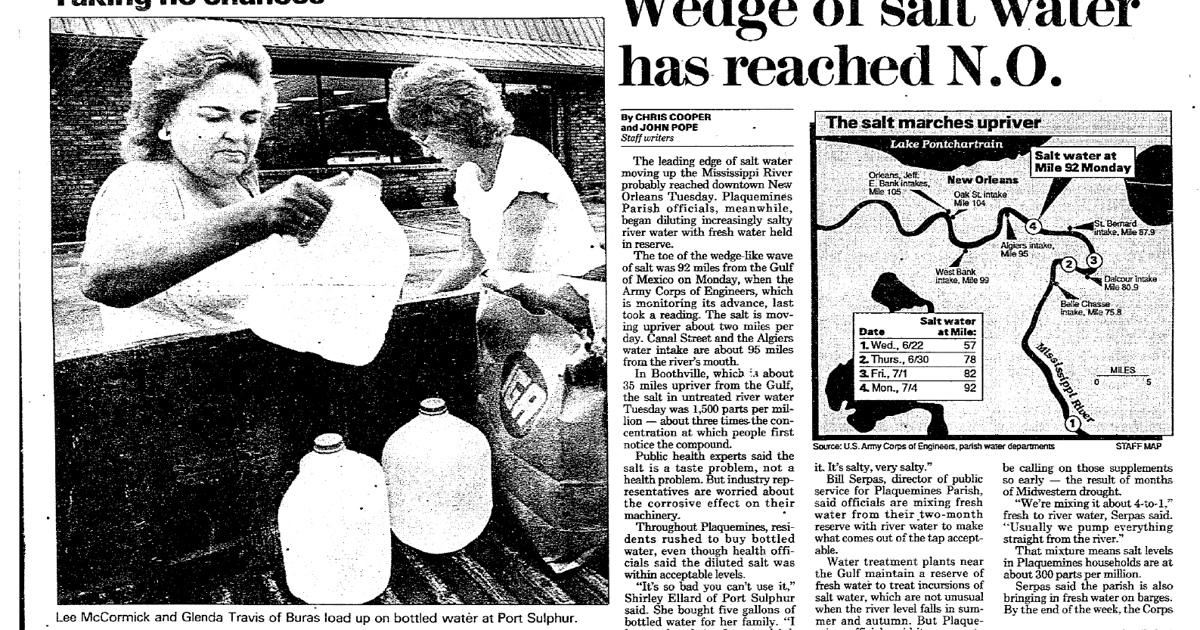
In 1988, New Orleans faced a saltwater intrusion crisis as the Mississippi River's salinity levels rose, threatening the city's drinking water supply. The salt wedge, caused by denser saltwater moving upstream, reached downtown New Orleans before being diluted with fresh water. Temporary underwater dams were built to block the saltwater intrusion in subsequent years. The intrusion in 1988 was exacerbated by a record drought across the country, leading to concerns about power outages, higher prices, and damage to marine life. Efforts were made to mitigate the crisis, including the construction of a river sill and exploring water diversion options, but the situation improved as rainfall increased and the river's flow rose.