Tag

Linguistics

All articles tagged with #linguistics

history21 days ago

Seven Unsolved Mysteries of Undeciphered Languages

Many ancient writing systems, such as Epi-Olmec, Indus Valley, Rongorongo, Linear A, and others, remain undeciphered due to limited texts and lack of a Rosetta Stone-like key. While AI offers some assistance, its effectiveness is limited by the small amount of available data, and deciphering these scripts continues to be a challenging puzzle that offers insights into lost civilizations.

world1 month ago

Linguists Criticize Carney for Using British Spelling in Canada

Canadian language experts have urged Prime Minister Mark Carney to use Canadian spelling in official documents instead of British spellings, emphasizing that Canadian English reflects national identity and history. The letter highlights the importance of maintaining Canadian linguistic distinctions, especially in government communications, and questions recent deviations from this standard. The issue is compounded by Carney's UK experience, which may influence his language choices.

linguistics1 year ago

Decoding the World's Most Understood Word

Researchers from the Max Planck Institute discovered a universal word, akin to "huh?", used globally to signal misunderstanding in conversations. This monosyllabic word, found in 31 languages, shares phonetic traits like interrogative intonation and a glottal stop, challenging the linguistic principle of arbitrariness. The phenomenon is explained by evolutionary convergence, where languages independently developed this tool to manage conversational misunderstandings. This discovery has implications for fields like cognitive science and language teaching, highlighting the shared aspects of human communication.

linguistics1 year ago

The Mystery of Zipf's Law in Global Languages

Zipf's Law, a statistical principle where word frequency inversely correlates with its rank, applies to nearly all languages, including undeciphered ones like the Voynich Manuscript. Despite its widespread occurrence, the reason behind this pattern remains unclear, with theories ranging from cognitive efficiency to language evolution. The law suggests a surprising predictability in human language use, challenging notions of linguistic unpredictability.

science1 year ago

Toddlers Decode New Words Using Grammar Cues

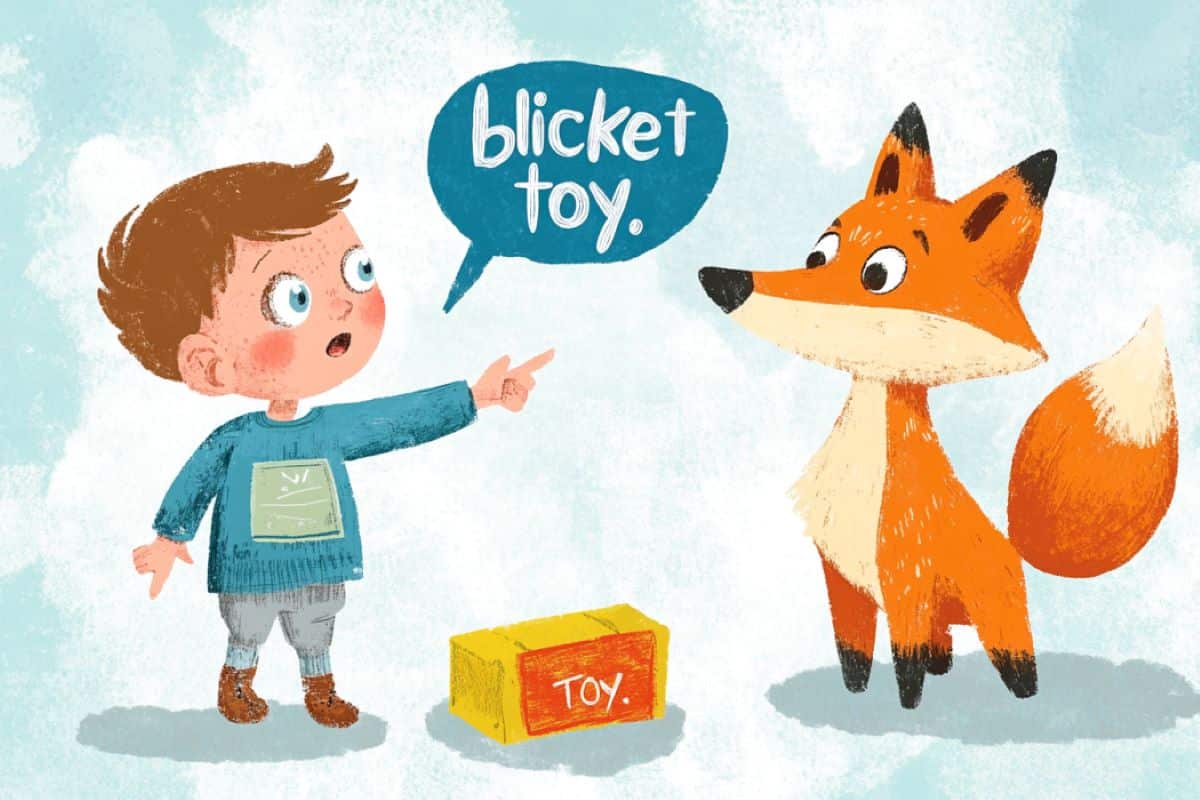
A study from MIT reveals that toddlers use grammatical focus cues, such as emphasis in speech, to learn new words, challenging the previous belief that children rely on mutual exclusivity to assign meanings. Experiments with 106 children showed that when a word was emphasized, children were more likely to associate it with a new object. This finding highlights the sophisticated linguistic abilities of young children and suggests that they leverage existing grammatical knowledge to acquire new vocabulary.

science1 year ago

Study Reveals Global Sound-Shape Associations: R is Jagged, L is Smooth

A study from the University of Birmingham reveals a strong cross-cultural association between the trilled R sound and rough textures or jagged shapes, and the L sound with smooth textures or straight lines. This pattern was observed in 94% of participants for the R sound and 84% for the L sound across 28 languages, surpassing the bouba/kiki effect in consistency. The findings suggest these sound-symbolic associations may have influenced language evolution, making trilled R sounds common despite their articulation difficulty.

culture-and-society1 year ago

The World's Most Recognizable Word Across Languages

The word "huh" is considered a universal interjection, understood across many languages worldwide, as explored by linguists from the Max Planck Institute for Psycholinguistics. Their study, which won an Ig Nobel Prize, found that "huh" is used similarly in 31 languages, suggesting it evolved as a minimal, easy-to-deploy signal to indicate conversational trouble and prompt clarification. This universality is attributed to convergent evolution in language, rather than being an innate human sound.

culture-and-society2 years ago

"Michigan's Lake Superior State University Unveils 2024's List of Banished Words"

Lake Superior State University has released its 2024 Banished Words List, a tradition that targets overused, misused, or meaningless words and phrases. This year's list includes terms like "pivot," "hack," "impact," "at the end of the day," "rizz," "slay," "iconic," "cringe-worthy," "obsessed," "side hustle," and "wait for it." The list, which began in 1975, is meant to encourage reflection on language use and provide a humorous take on the evolving English lexicon.

educationculture2 years ago

"2024 Banished Words: Lake Superior State University Unveils Latest List"

Lake Superior State University has continued its annual tradition since 1976 by releasing the 2024 Banished Words List, encouraging the public to avoid overused and cringe-worthy terms. The list includes words like "hack," "impact," "rizz," "slay," "iconic," "cringe-worthy," "obsessed," "side hustle," and the phrase "at the end of the day." The initiative aims to promote a more mindful approach to language as we enter the new year.