Alzheimer’s disease is the most common form of dementia, but many individuals with dementia often have multiple neurodegenerative conditions such as vascular dementia, Lewy body dementia, and others, highlighting the complexity of brain health in aging populations.
A study links fine particulate air pollution (PM2.5) to Lewy body dementia by showing that exposure triggers toxic alpha-synuclein protein clumps in the brain, increasing disease risk and suggesting pollution as a potential target for prevention and treatment.
A large study links long-term exposure to PM2.5 air pollution with an increased risk of developing Lewy body dementia, especially in genetically predisposed individuals, with experiments in mice supporting the connection between pollution, protein buildup in the brain, and dementia development.
Research suggests that fine-particulate air pollution (PM2.5) can trigger the formation of toxic protein clumps in the brain, leading to Lewy body dementia, and highlights the importance of improving air quality as a modifiable factor to prevent neurodegenerative diseases.
Jeff Bezos' mother, Jacklyn Gise Bezos, passed away at 78 due to Lewy body dementia, leaving a legacy of family dedication, education, and philanthropy, which Bezos commemorated with heartfelt tributes.
Jeff Bezos' mother, Jacklyn Gise Bezos, who suffered from Lewy body dementia, passed away at age 78 in Miami. She was a dedicated mother, educator, and founder of the Bezos Family Foundation and Scholars Program, celebrated for her resilience and commitment to family and education. Bezos expressed deep love and gratitude for her in his tribute.
A new study has shown that nilotinib, a drug traditionally used for blood cancer, can significantly improve cognitive and motor functions in patients with Lewy body dementia and Parkinson's disease-related dementia. The trial, involving 43 participants, demonstrated that the drug could slow or even reverse dementia symptoms, with some patients regaining abilities like speech and self-feeding. Experts suggest nilotinib may also slow Alzheimer's progression by reducing toxic protein build-up in the brain. This promising development offers a potential new treatment avenue for dementia, which affects millions and currently has no cure.
Researchers at the University of Tsukuba and IBM Research have used deep neural networks to identify disease-specific reductions in emotional vocalization in Lewy body dementia, distinguishing it from Alzheimer's disease. This reduction in vocal emotional expressivity is linked to cognitive impairment and brain region atrophy, suggesting that vocal emotion analysis could aid in early detection and proper care for Lewy body dementia patients.
Mike Martin, the legendary baseball coach of Florida State University, passed away at the age of 79 after battling Lewy body dementia. Martin spent 47 years with FSU as a player, assistant, and head coach, retiring with a record 2,029 wins and an NCAA tournament appearance in all 40 years as head coach. Despite never winning the College World Series, Martin's coaching legacy and impact on players and the community are unparalleled, leaving a lasting mark on FSU baseball and the sport as a whole.
Mike Martin, the former Florida State baseball coach and winningest coach in college baseball history, has passed away at the age of 79 after a battle with Lewy body dementia. During his 40-year tenure, he led the Seminoles to 19 conference titles, 40 NCAA tournament appearances, and 17 College World Series, but never secured a national championship. Known for his impact on players and his devotion to family, Martin leaves behind a lasting legacy in college athletics.
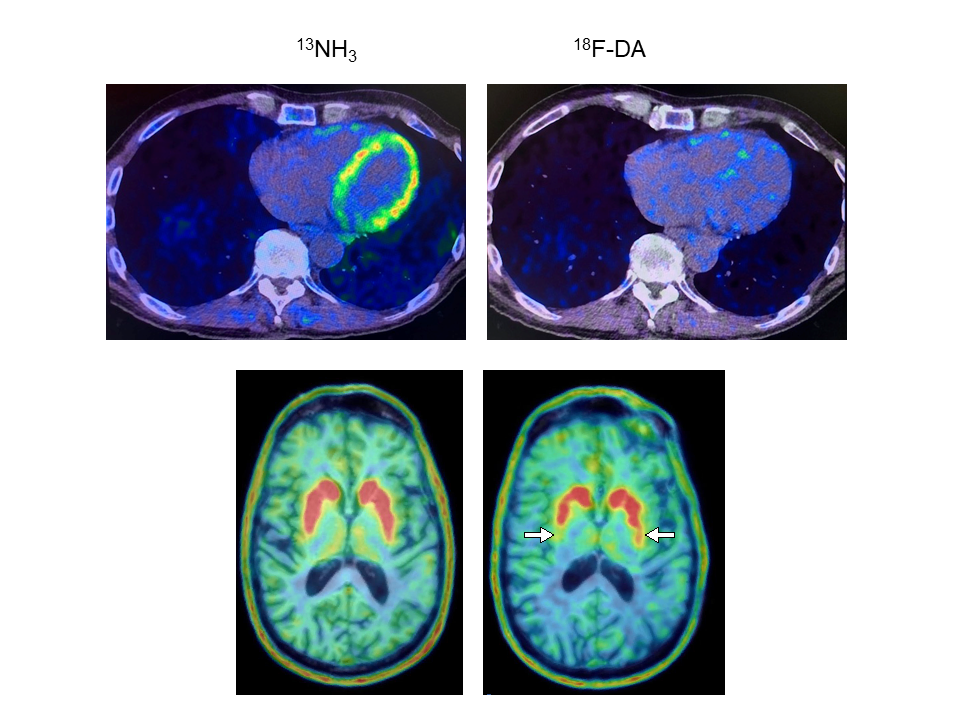
PET scans of the heart can potentially identify individuals at risk for Parkinson's disease or Lewy body dementia up to seven years before symptoms appear. The loss of norepinephrine in the heart, a signaling molecule derived from dopamine, precedes the loss of dopamine in the brain and the onset of symptoms. Early detection allows for interventions to start early, potentially increasing their effectiveness. The study highlights the potential of cardiac PET scans in diagnosing these neurodegenerative disorders before significant damage occurs.
PET scans of the heart may help predict the development of Parkinson's disease and dementia with Lewy bodies. Researchers found that low levels of dopamine in the heart were strong predictors of later development of these conditions. This could lead to earlier diagnosis and potential interventions before significant damage occurs. However, further research is needed to determine the effectiveness of this method in a larger population.
PET scans of the heart may be able to detect Parkinson's disease and Lewy body dementia in individuals at risk for these diseases. Researchers at the National Institutes of Health conducted PET scans on 34 people with Parkinson's disease risk factors and found that the scans could distinguish those who would later be diagnosed with the diseases. The scans measured levels of the neurotransmitter norepinephrine, which is derived from dopamine and is deficient in the brains of people with Parkinson's disease. Detecting these diseases early on could allow for early interventions and testing of preventative approaches.
Mary Lou Falcone, a renowned classical music publicist, has stepped into the spotlight to raise awareness about Lewy body dementia, the disease that claimed her husband. Falcone, who has worked with esteemed musicians and organizations throughout her career, has written a memoir titled "I Didn't See It Coming: Scenes of Love, Loss and Lewy Body Dementia," sharing her personal journey as a caregiver and shedding light on the disease. Now on a publicity tour for her book, Falcone is using her storytelling skills to craft a narrative and raise awareness about this devastating neurodegenerative disease.
Friends and colleagues of the late comedian Robin Williams have revealed the extent of his drug addiction, particularly his cocaine use, in a new documentary series. Williams' friends recalled moments when he would seek drugs before performing and how his fame made it easy for him to access them. The death of his friend John Belushi and the birth of his first son prompted Williams to quit cocaine "cold turkey." Despite his struggles, Williams' career continued to thrive until his death in 2014. It was later revealed that he had been suffering from Lewy body dementia, a neurological disorder.