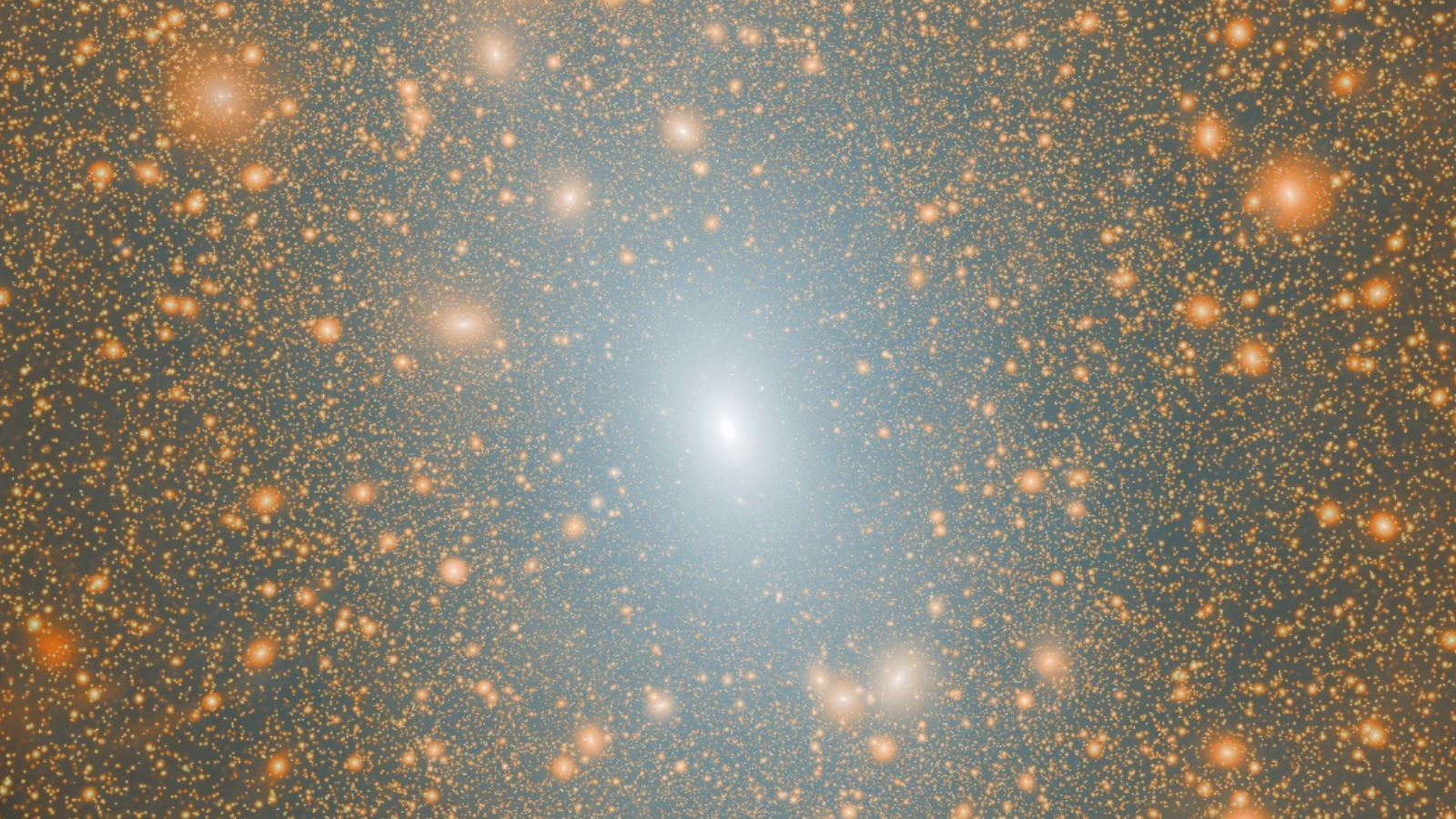
New research combining simulations and mathematical modeling suggests the Milky Way may have up to 100 undetected 'orphan' dwarf galaxies orbiting it, which could support the standard Lambda Cold Dark Matter (LCDM) cosmological model and help explain the discrepancy between observed and predicted satellite galaxies.
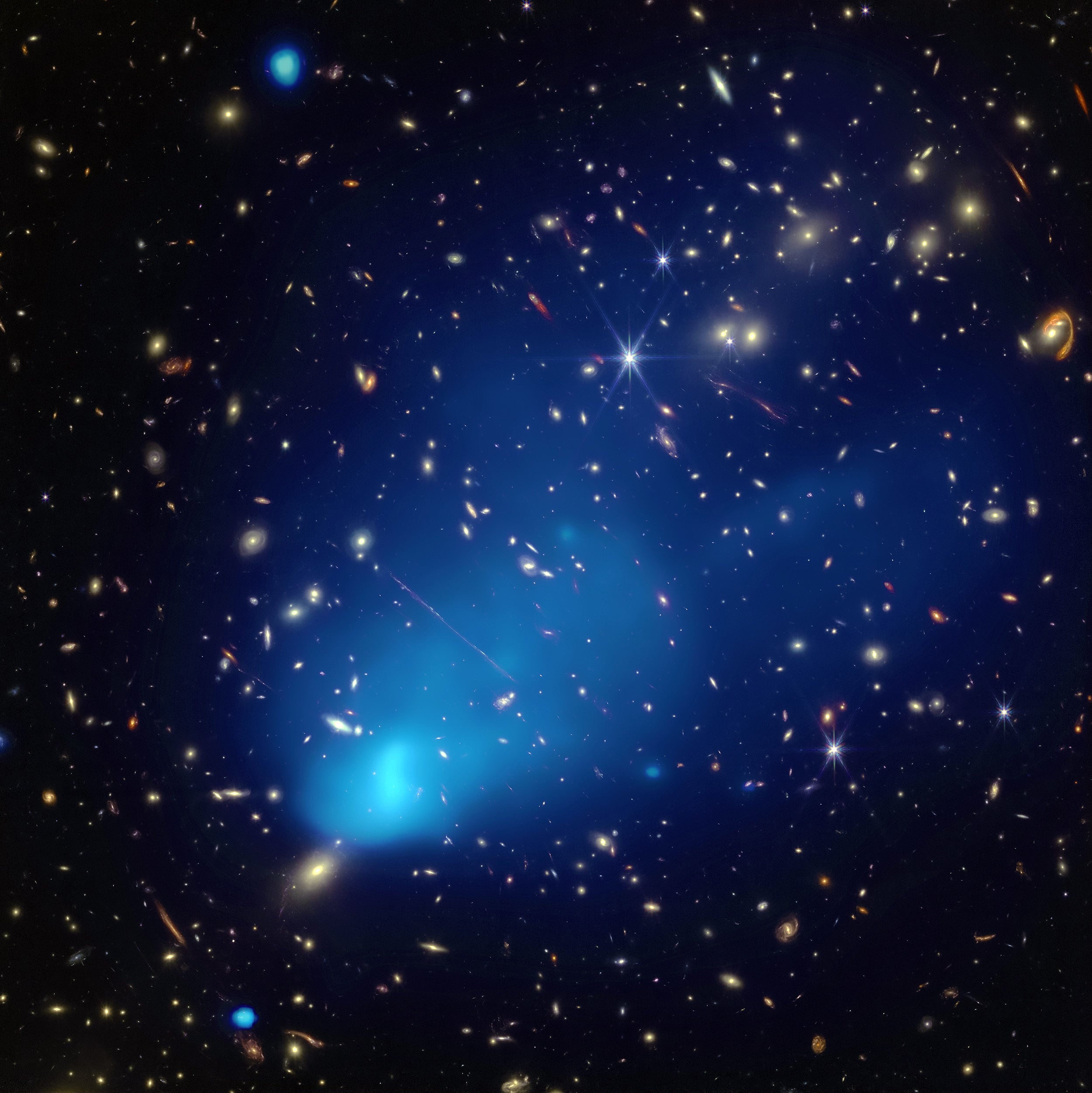
The recent discovery of a collision between two colossal galaxy clusters challenges the standard theory of cosmology, known as the Lambda-cold dark matter (ΛCDM) model. The collision, observed when the Universe was only half its current age, contradicts the belief that galaxy clusters form later in the cosmic timeline. The study, which focused on the El Gordo galaxy cluster, found that the collision clashes sharply with the ΛCDM model, raising questions about the accuracy of current cosmological understanding. This discovery not only reshapes our understanding of cosmic events but also calls for a fresh approach to the way we comprehend the evolution of the universe.
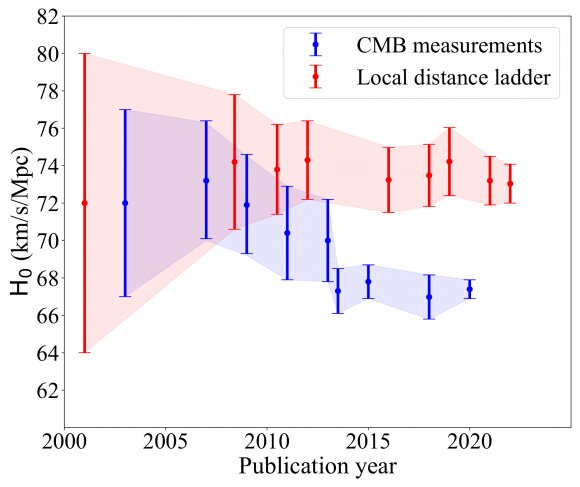
The Hubble tension problem, which refers to the disagreement between various measures of the Hubble parameter, is a deep mystery in cosmology. While much effort has been focused on understanding dark energy to solve this problem, a recent study suggests that tweaking dark energy alone may not be sufficient. The study outlines seven reasons, including the ages of distant objects, baryon acoustic oscillation, cosmic chronometers, descending redshift, early integrated Sachs-Wolfe effect, fractional matter density constraints, and the galaxy power spectrum, that indicate the complexity of the issue. Resolving the Hubble tension may require a combination of adjustments or a radical new understanding of fundamental physics.
The Hubble Tension problem, which refers to the disagreement between various measures of the Hubble parameter, is a deep mystery in cosmology. While much effort has been focused on understanding dark energy to resolve this tension, a recent article outlines seven reasons to suspect that dark energy alone may not be enough. These reasons include discrepancies between cosmic and stellar ages, Baryon Acoustic Oscillation and Cosmic Microwave Background observations, model-independent measures of the Hubble parameter, variations in the Hubble parameter with redshift, the Integrated Sachs-Wolfe effect, and constraints on matter density. Solving the Hubble Tension problem may require a combination of adjustments or a radical new understanding of physics.
A recent paper by cosmologist Rajendra Gupta proposes a new model suggesting that the universe is more than 10 billion years older than previously believed, based on observations from the James Webb Space Telescope. However, the proposed model introduces significant complexity and new physics, and fails to explain numerous other observations that the current ΛCDM model can account for. Additionally, the new model does not address the paradoxical young appearance of the observed galaxies, nor the absence of older stars. While Gupta's model is interesting for exploring potential physics explanations, it falls short as a fully functioning cosmological model.
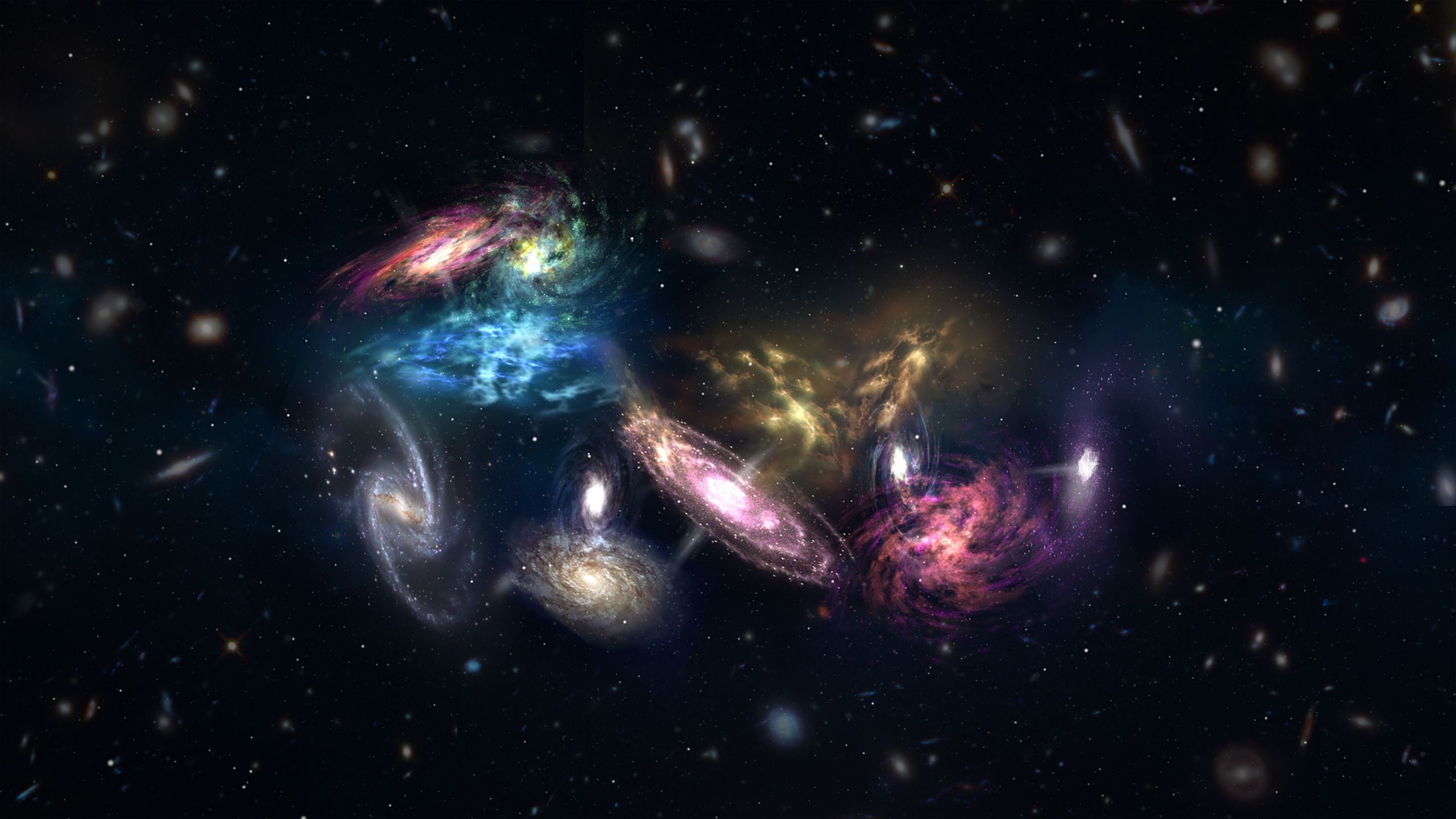
The James Webb Space Telescope (JWST) has not disproved the big bang, as some had argued. Initial data from JWST seemed to contradict the prediction that early galaxies should be small and irregular, building up through collisions to the larger galaxies we see today. However, a recent study using high-resolution simulations called Renaissance found strong agreement between the JWST observations and the LCDM big bang model. As JWST continues to gather data, more detailed simulations will be needed to test observations.