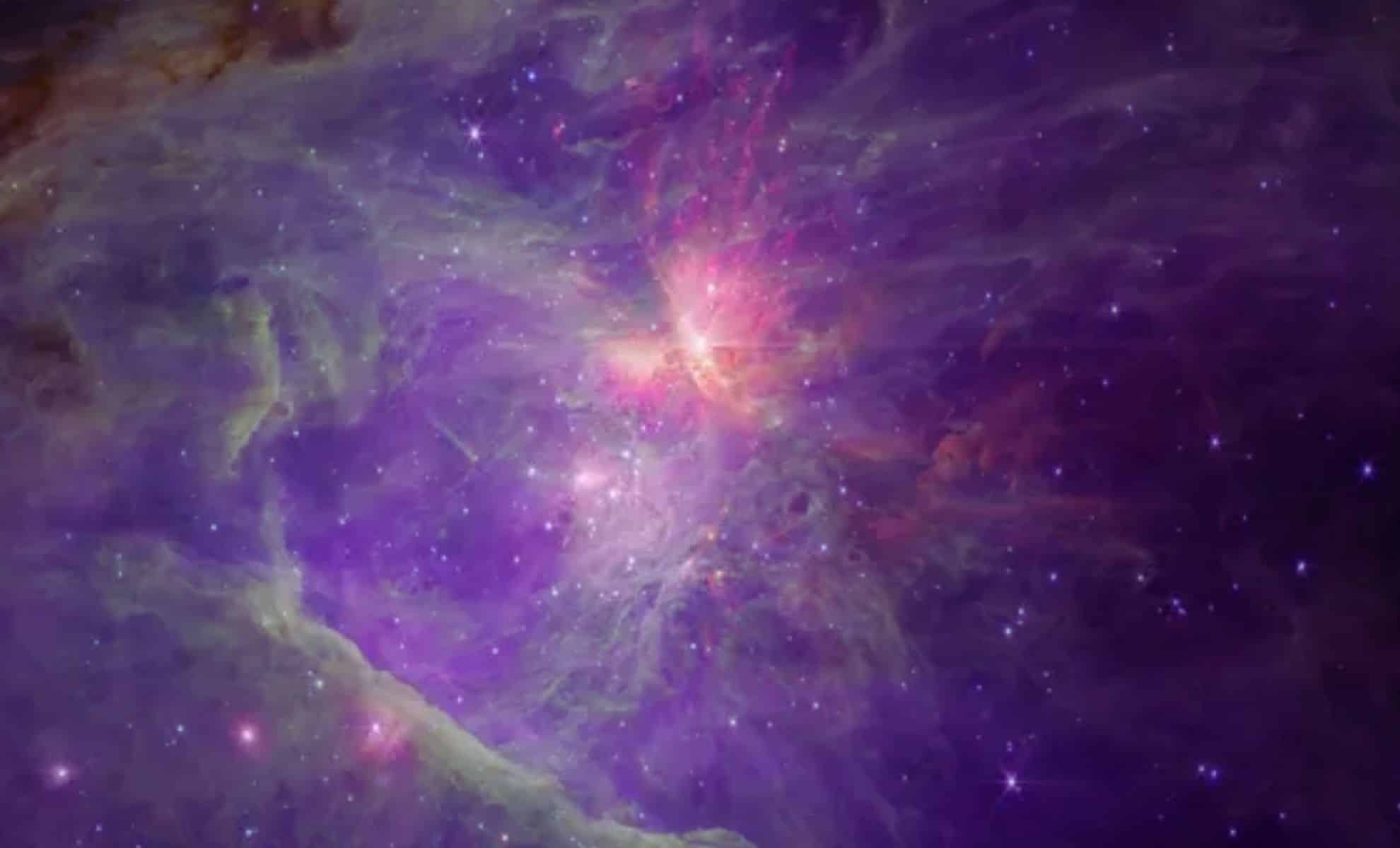
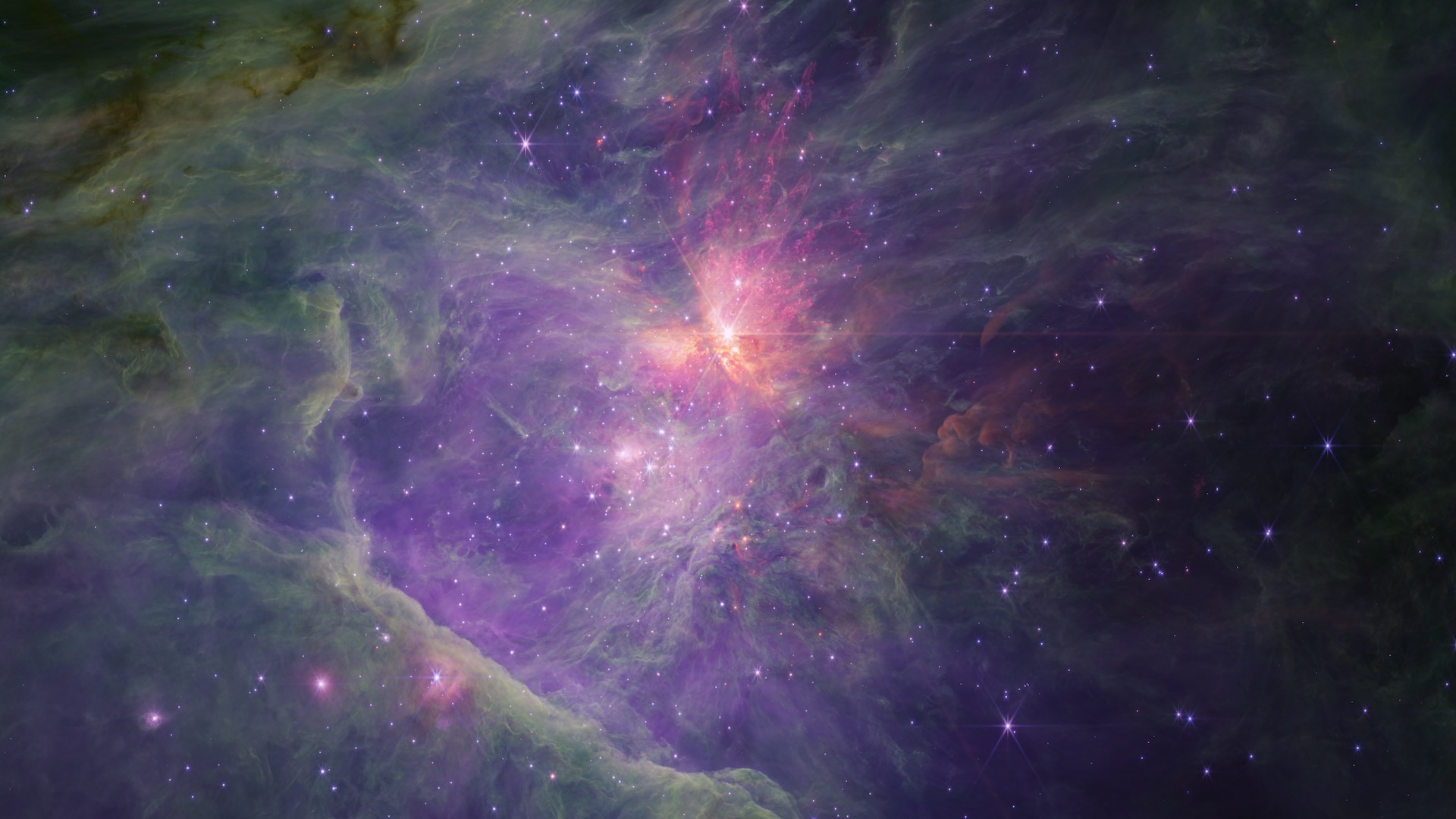
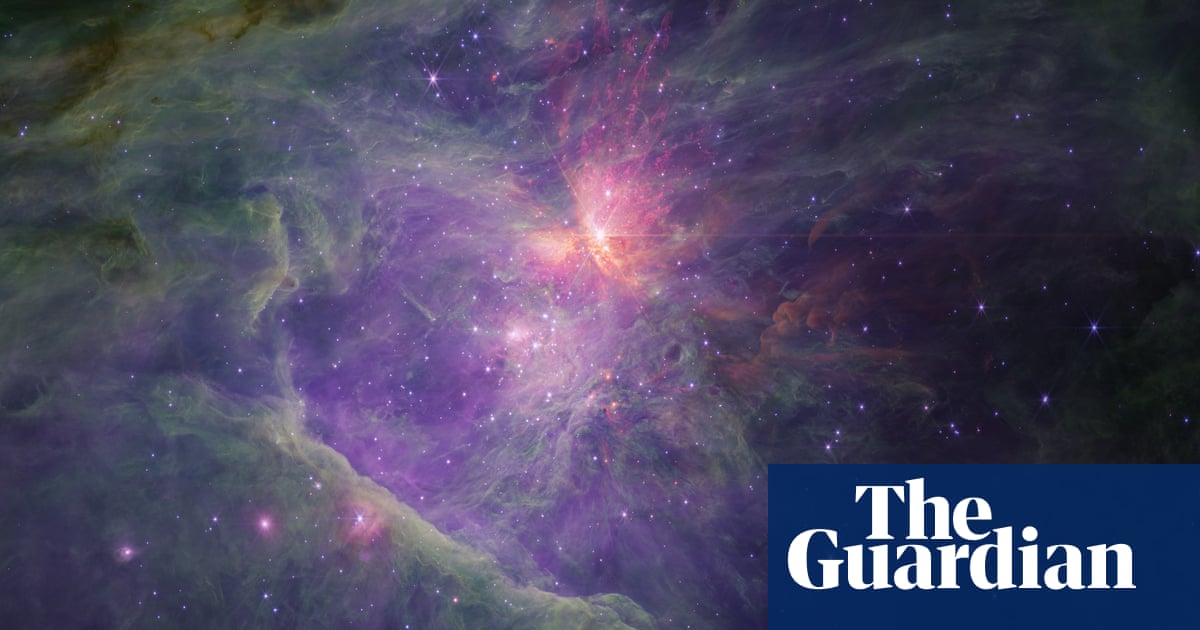
New simulations suggest that the Jupiter-like free-floating objects (JuMBOs) discovered by JWST in the Orion Nebula may not be real planets but background noise or artifacts, as their fragility in stellar environments makes their long-term existence unlikely, prompting a re-evaluation of their nature and origin.
New simulations suggest that the mysterious 'rogue' pairs of Jupiter-sized objects, known as JuMBOs, observed by the James Webb Telescope in the Orion Nebula, are likely extremely rare or may not exist at all, casting doubt on their initial detection and challenging previous notions of their formation.
New simulations suggest that the mysterious 'rogue' pairs of Jupiter-sized objects, known as JuMBOs, observed by the James Webb Space Telescope are likely very rare or may not exist at all, casting doubt on their initial detection and challenging previous notions of their formation and stability.
The James Webb Space Telescope has discovered mysterious Jupiter-sized binary objects, termed JuMBOs, in the Orion Nebula, which may be the remnants of embryonic stars rather than traditional planets. These JuMBOs, found orbiting each other without a parent star, could have formed from pre-stellar cores stripped by high-energy radiation from nearby massive stars, according to a new study. This theory suggests that the JuMBOs are not failed stars but rather products of a unique formation process, though more data is needed to confirm this hypothesis.
New research using data from the Karl G. Jansky Very Large Array (VLA) has deepened the mystery surrounding Jupiter-mass binary objects (JuMBOs) in the Orion nebula, with only one pair emitting strong radio waves. These objects challenge current star and planet formation models, as they don't fit neatly into either category. Their existence in binary pairs contradicts common observations of binary stars and raises questions about their formation. Further research and observations are needed to understand the processes creating radio waves from JuMBOs and to potentially reveal insights into the formation and evolution of stars and planets.
The James Webb Space Telescope has discovered hundreds of free-floating "rogue" planets in the Orion Nebula, with about 80 of them existing as pairs called Jupiter-mass binary objects (JuMBOs). Scientists have detected enigmatic radio signals from one of these pairs, JuMBO 24, challenging current theories of planet formation. The signals, which are steady and strong, do not match those expected from planets, brown dwarfs, or pulsars, leaving astronomers puzzled. Further research is needed to unravel the mystery behind these unusual radio emissions.
The James Webb Space Telescope (JWST) has made a surprising discovery in the Orion Nebula, finding over 500 Jupiter-mass planet-like objects, with 9% of them in binary systems, known as Jupiter-Mass Binary Objects (JuMBOs). These findings challenge current theories of star and planet formation. It is speculated that these JuMBOs may be remnants of failed stellar systems that were unable to grow into full-fledged stars due to the depletion of gas caused by the ultraviolet radiation from nearby stars. Further observations of star-forming regions will help unravel the mysteries of these objects.
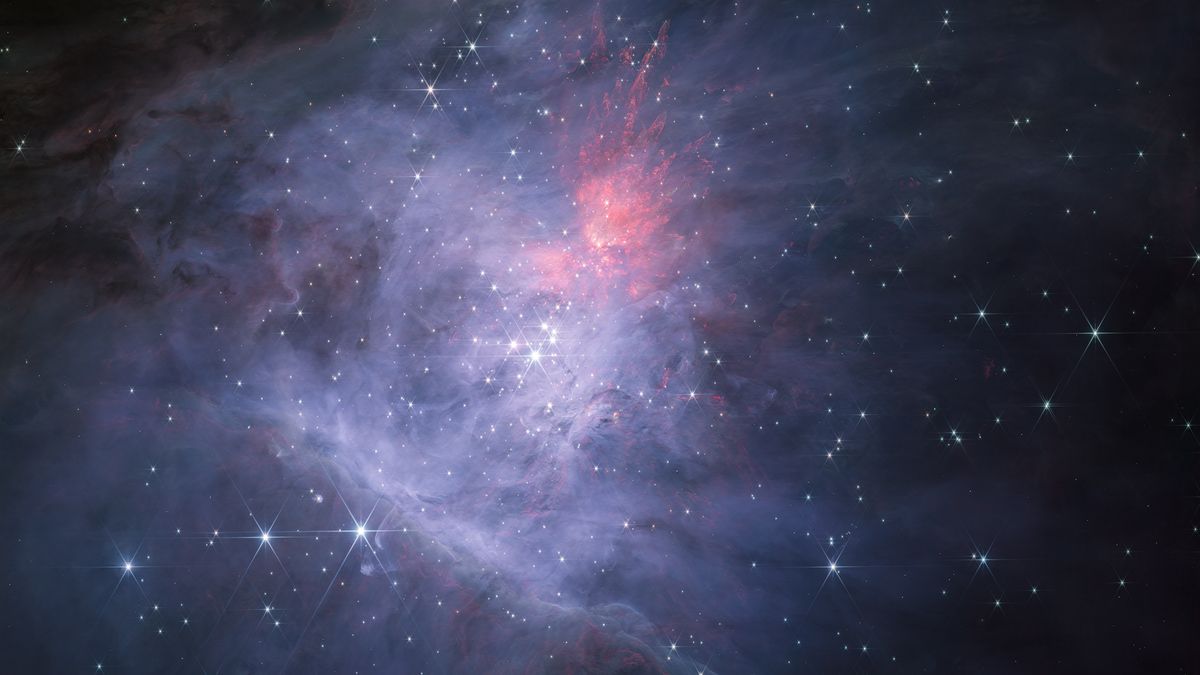
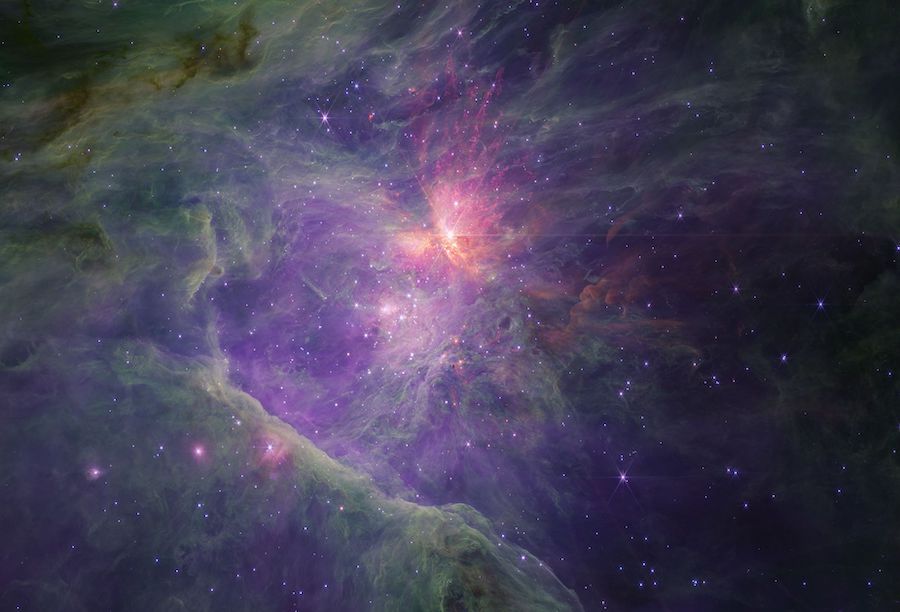
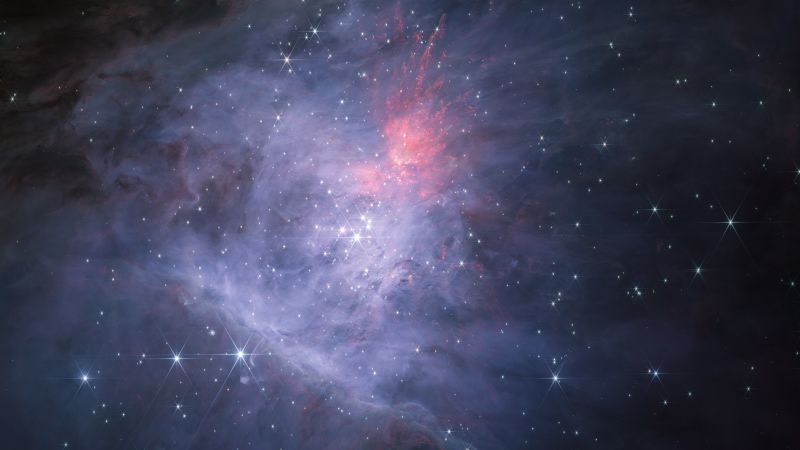
The James Webb Space Telescope (JWST) has provided astronomers with a new glimpse into the Orion Nebula, revealing a planet-like object located 1,300 light-years away from Earth. The object, known as a Jupiter Mass Binary Object (JuMBO), challenges current astronomical theories as it exists in pairs and is found in wide orbits around each other. Astronomers also discovered brown dwarfs and identified 40 pairs of JuMBOs and two triple systems within the Trapezium Cluster, a young star-forming region. These findings suggest that there may be something fundamentally wrong with our understanding of planet and star formation. Further observations and modeling are needed to explain these unexpected discoveries.
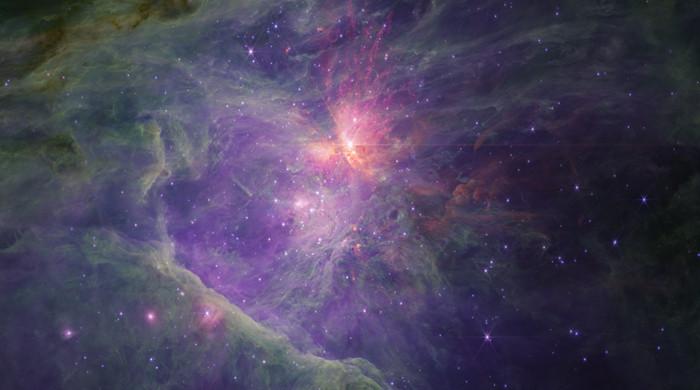
The James Webb Telescope has provided new insights into the Orion Nebula, revealing details about the gas, dust, and molecules within it. Astronomers studying the nebula have discovered a young star-forming region called the Trapezium Cluster, filled with thousands of new stars and brown dwarfs. They have also identified Jupiter Mass Binary Objects (JuMBOs), planet-like objects challenging current astronomical theories. These JuMBOs exist in pairs and are typically 200 astronomical units apart, with temperatures ranging from 1,000 to 2,300 degrees Fahrenheit. The observations raise questions about our understanding of planet and star formation, and further research is needed to explain these unexpected findings.
New images from the James Webb Space Telescope have revealed pairs of planet-like objects called JuMBOs in the Orion Nebula, defying current theories of planet formation. These JuMBOs have masses between 0.6 and 13 times that of Jupiter and are typically 200 astronomical units apart. They are young, about 1 million years old, and their temperatures range from 1,000 to 2,300 degrees Fahrenheit. Astronomers are puzzled by their existence and are working to understand how they formed and why they are present in the Orion Nebula. Further observations and research are needed to explain this unexpected discovery.
New images from the James Webb Space Telescope have revealed the presence of pairs of planet-like objects, called JuMBOs, in the Orion Nebula that defy current astronomical theories. These JuMBOs have masses between 0.6 and 13 times that of Jupiter and are typically 200 astronomical units apart. The objects are young, about 1 million years old, and their temperatures range from 1,000 to 2,300 degrees Fahrenheit. Scientists are puzzled by their formation and presence in the nebula, suggesting that there may be something fundamentally wrong with our understanding of planet and star formation. Further observations and modeling are needed to explain this unexpected discovery.
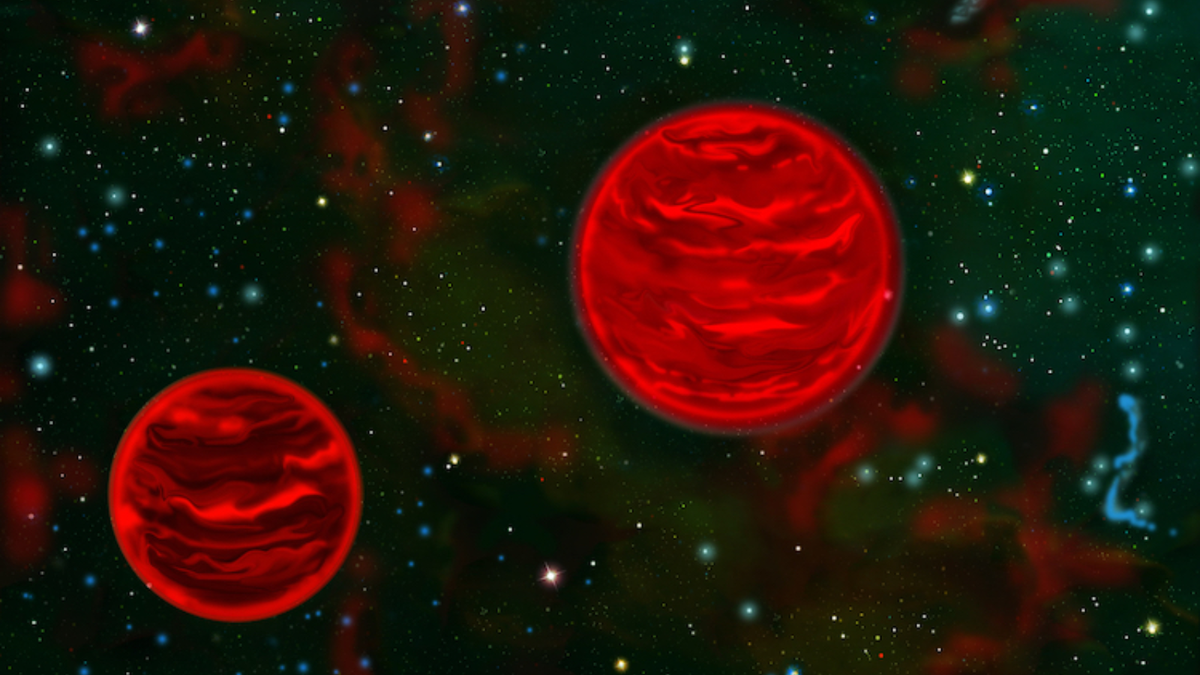
The James Webb Space Telescope has discovered pairs of physics-breaking rogue objects, known as JuMBOs, freely drifting through the Orion Nebula. These Jupiter-mass binary objects exist in 42 pairs, orbiting each other at distances up to 390 times that between Earth and the sun. Scientists are puzzled by their existence, as they are too small to be stars and unlikely to be rogue planets. The researchers suggest a new formation mechanism may be responsible for their creation. The objects are gas giants with temperatures around 1,300 degrees Fahrenheit and primarily consist of carbon monoxide, methane, and steam. The discovery raises questions about how these pairs formed and survived being ejected from their solar systems.
Scientists using NASA's James Webb Space Telescope have discovered Jupiter-sized objects, nicknamed JuMBOs, in the Orion Nebula, challenging our understanding of star and planet formation. These free-floating objects, formed in pairs, are neither stars nor planets and shouldn't exist according to current knowledge. Hypotheses suggest they were either formed in sparser areas of the nebula or were originally meant to orbit stars but were ejected for unknown reasons. The discovery has sparked astonishment among scientists, who are now questioning existing models and theories.
Dozens of Jupiter-mass binary objects, dubbed Jumbos, have been discovered in the Orion Nebula, challenging existing theories of star and planetary formation. These free-floating entities are too small to be stars and do not orbit a parent star, defying the conventional definition of a planet. The observations, made by the James Webb Space Telescope, suggest the existence of a new astronomical category. The Jumbos have planet-like compositions but are not technically planets. They are about 1 million years old and have infernal surface temperatures of roughly 1,000C. The discovery raises questions about the mechanisms behind their formation and their potential for hosting alien life.