Tag

Gravitationallensing

All articles tagged with #gravitationallensing

science-and-technology2 years ago

"Decline in Cosmic Clumpiness Puzzles Astronomers"

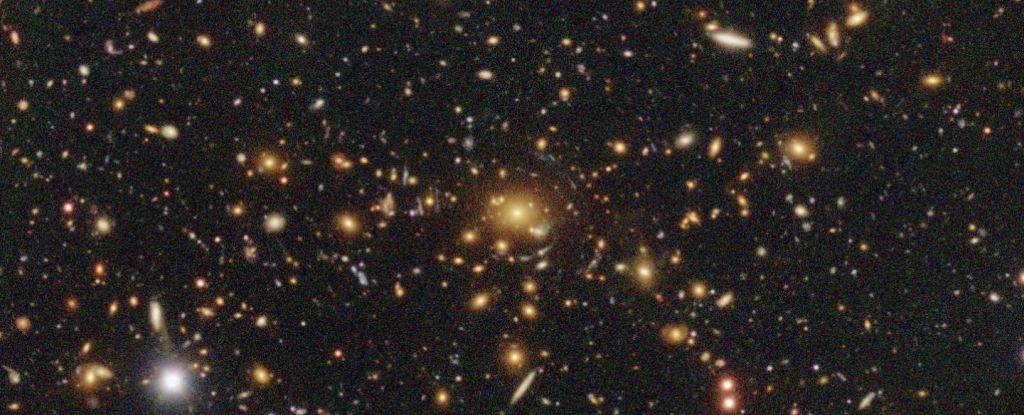
Recent observations have shown that dark matter is less clumpy in the current Universe than it was shortly after the Big Bang, challenging the standard cosmological model. This discrepancy, known as the sigma-eight (S8) tension, has been confirmed by multiple experiments, including a six-year weak gravitational lensing survey by the Hyper Suprime-Cam on the Subaru Telescope. The findings, which are not likely due to error, suggest there may be a fundamental aspect of the Universe that we do not yet understand, potentially related to our models of dark matter or cosmological expansion. This issue is detailed in five separate papers in Physical Review D, and future, more powerful surveys may provide further insights.
science-and-technology2 years ago

"ESA's Proximity Dilemma: Closer Than Ever or Out of Reach?"

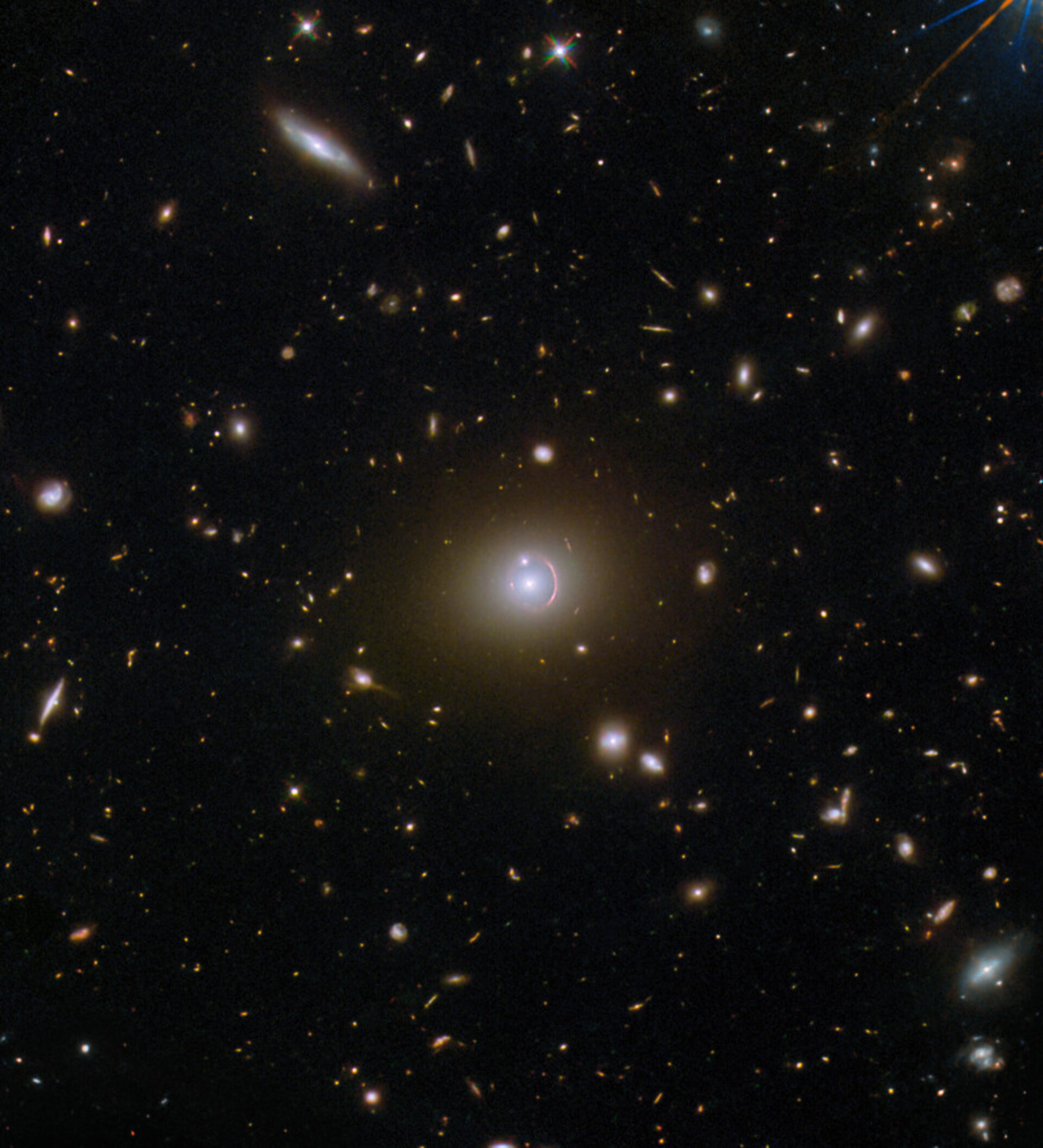
Astronomers have captured an image showcasing a rare cosmic phenomenon known as an Einstein ring, where light from a distant galaxy (19.5 billion light-years away) is bent around a closer galaxy (2.7 billion light-years away), creating a curved crescent of light. This visual effect is due to the precise alignment of the distant galaxy, the closer galaxy, and Earth. The Einstein ring was identified with the help of a citizen science project called SPACE WARPS, highlighting the contribution of the public to astronomical discoveries. The image features a central bright dot, the closer galaxy SDSS J020941.27+001558.4, and another bright dot, SDSS J020941.23+001600.7, with the lensed light forming the partial Einstein ring from the distant galaxy HerS J020941.1+001557.

science-and-technology2 years ago

"Discovery of Farthest Molecules Sheds Light on Early Universe"

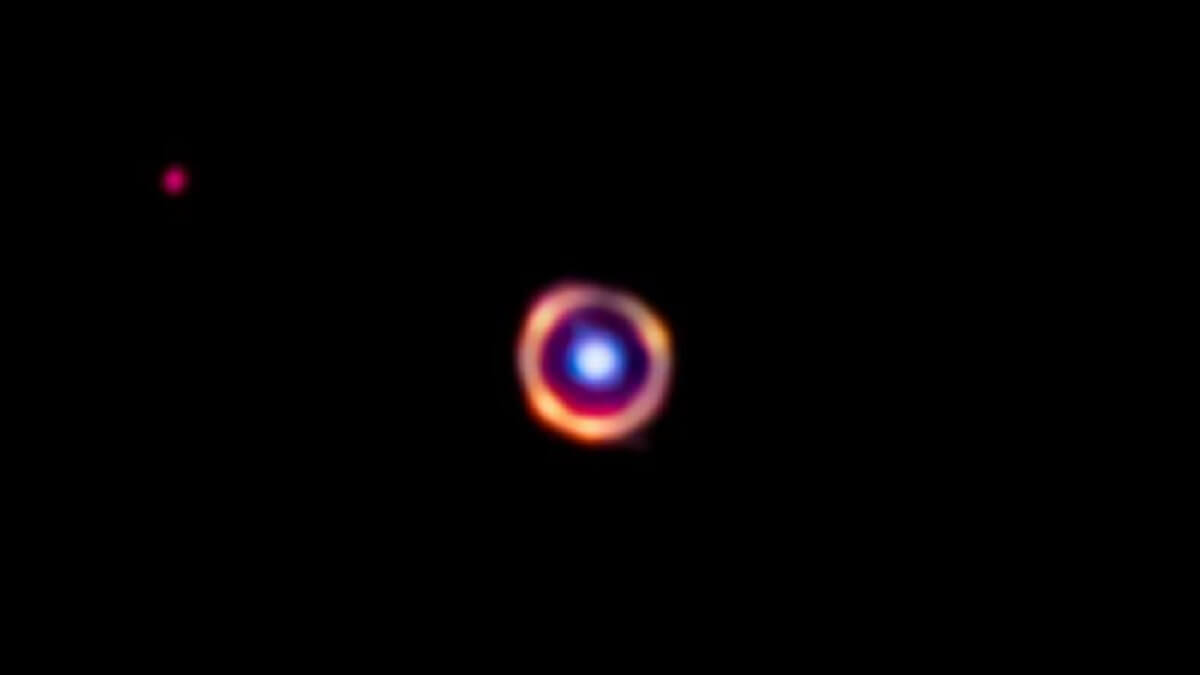
The James Webb Space Telescope has discovered the most distant molecules ever observed, 12 billion light-years away, in a galaxy from when the universe was only 10 percent of its current age. This was made possible by gravitational lensing, which magnified the light from the galaxy, allowing for detailed observation. The findings include large organic molecules similar to Earth's smog, challenging the assumption that such molecules always indicate star formation. This marks Webb's first detection of complex molecules in the early universe and suggests the potential for more discoveries about the composition of young galaxies.

science-and-technology2 years ago

"Webb Telescope Discovers Another Lensed Supernova in Far-Flung Galaxy"

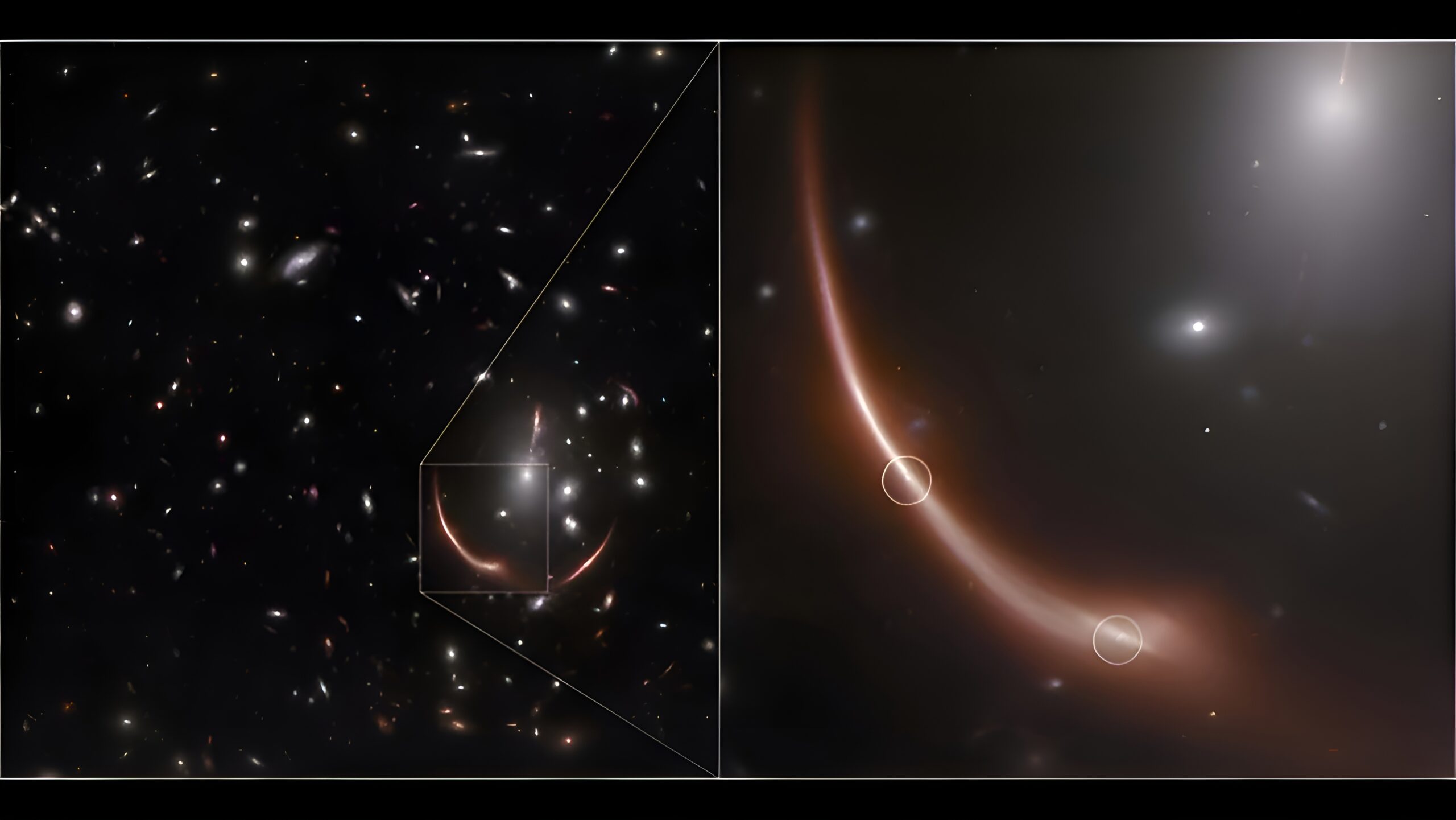
NASA's James Webb Space Telescope has detected a second lensed supernova in the distant galaxy MRG-M0138, thanks to the gravitational lensing effect of the galaxy cluster MACS J0138.0-2155. This rare event, following the first supernova named Requiem discovered in 2016, provides astronomers with a unique opportunity to study cosmic events and measure the universe's expansion rate, known as the Hubble constant. The newly discovered supernova, dubbed Supernova Encore, along with Requiem, represents the most distant pair of 'standard candle' supernovae ever found, which will help in obtaining a precise measurement of the Hubble constant when observed in infrared around 2035.