Tag

Interstellar Chemistry

All articles tagged with #interstellar chemistry

science1 year ago

Gamma Radiation Sparks Life's Building Blocks from Simple Gases

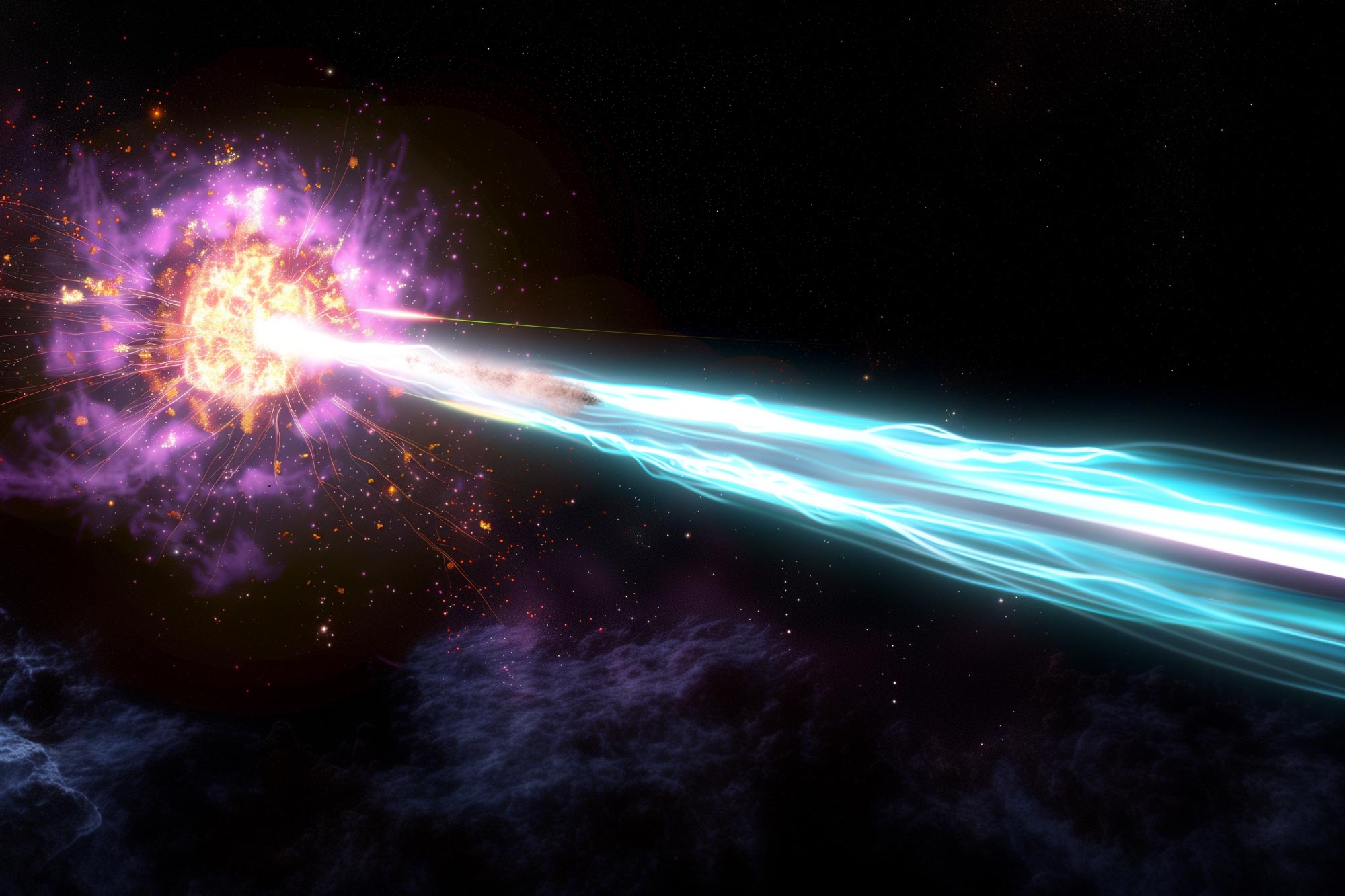
New research from the University of Science and Technology of China reveals that gamma radiation can transform methane into complex molecules, including amino acids like glycine, under mild conditions. This process, which occurs at room temperature, could provide insights into the formation of organic molecules in space and the origins of life. The study also suggests potential industrial applications for converting methane into valuable products using gamma radiation, a sustainable energy source. The findings highlight the role of interstellar dust and radicals in these chemical reactions.
space-science1 year ago

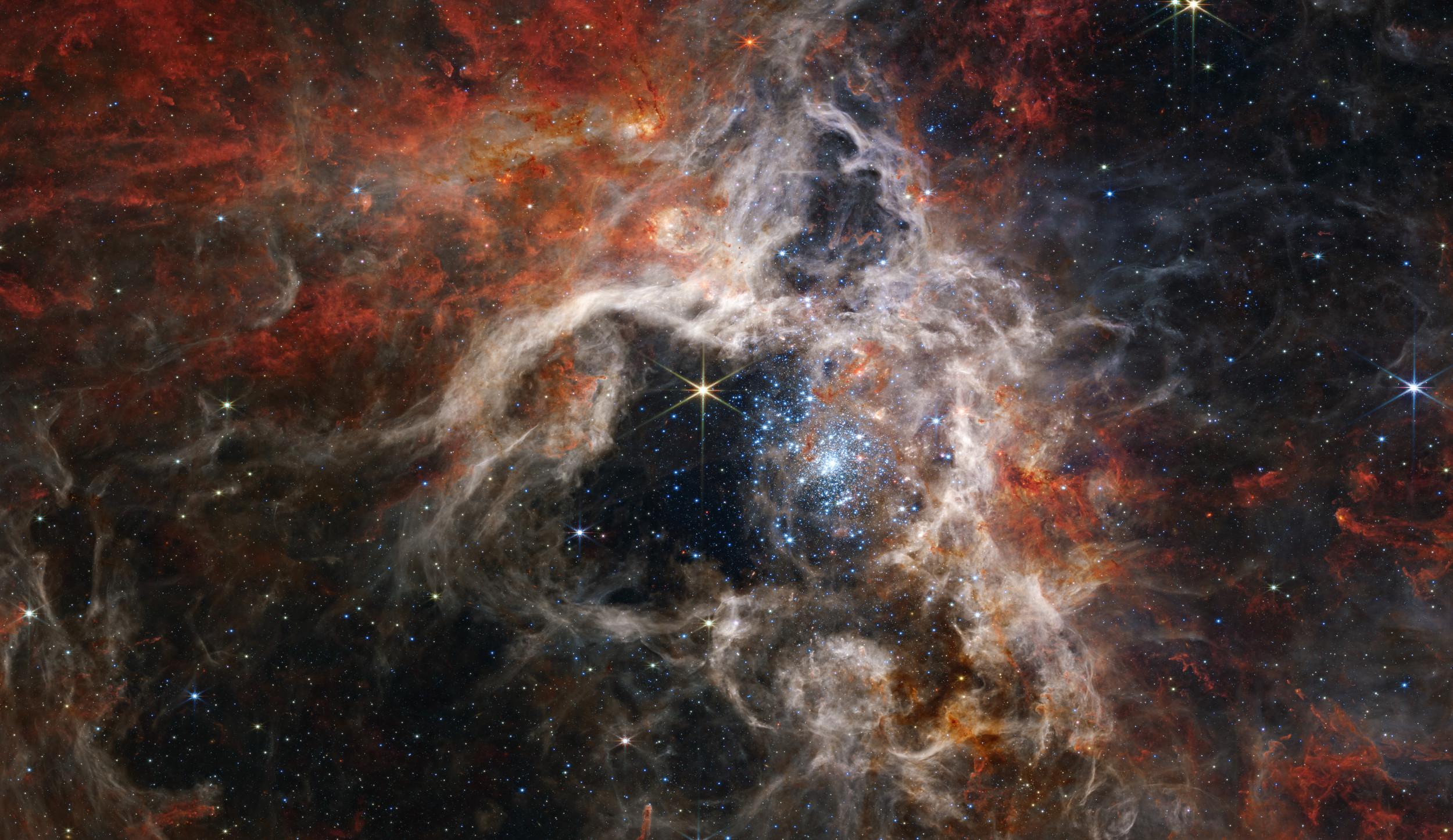
"NASA's Webb Uncovers Icy Ingredients and Organic Molecules in Space"

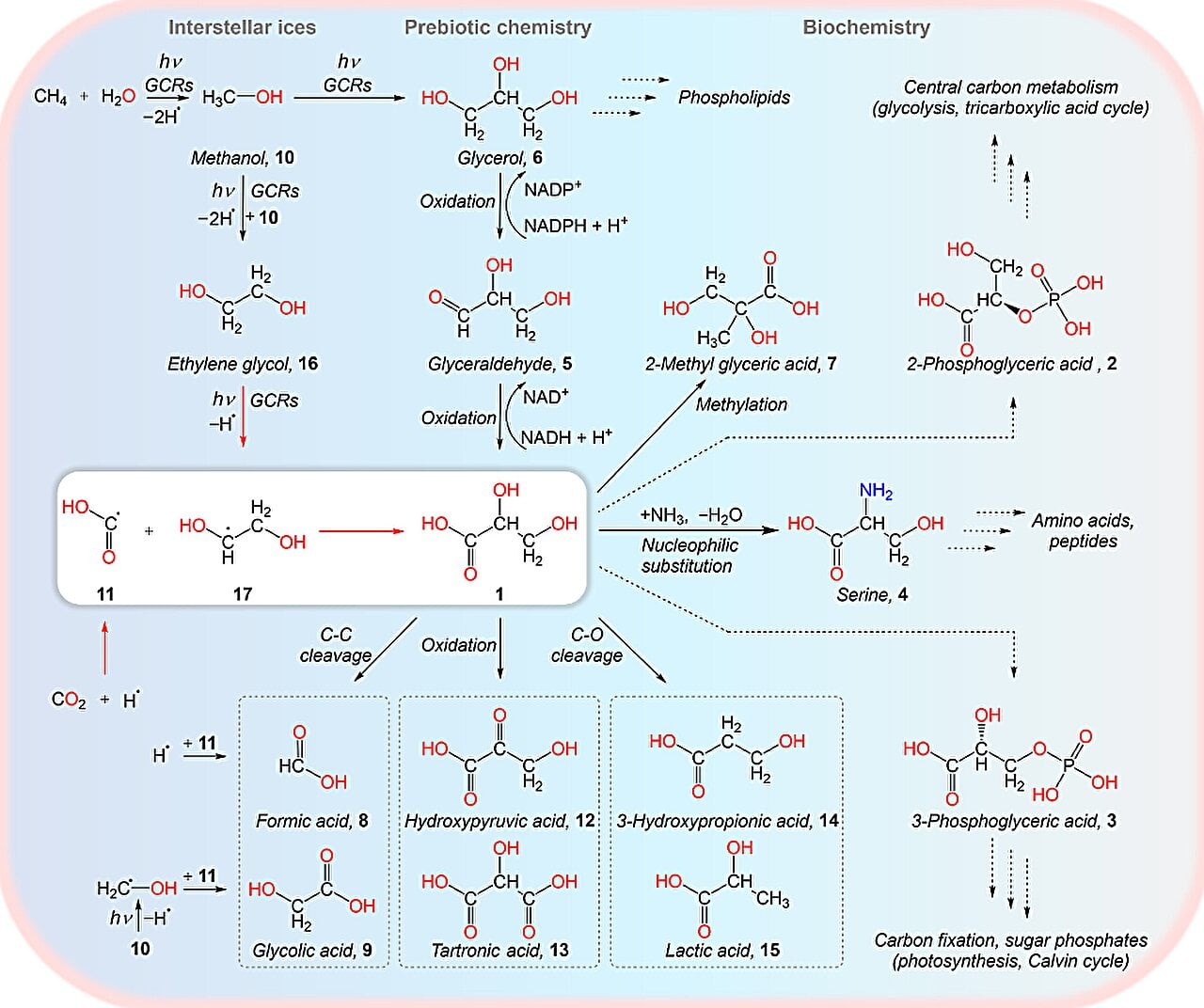
Researchers at the University of Hawaiʻi at Mānoa have synthesized glyceric acid, a critical molecule for the metabolism of living organisms, for the first time in low-temperature conditions mimicking deep space. This discovery sheds light on the potential formation of important biomolecules in interstellar ices and their possible role in the development of life on planets like Earth. The study suggests that molecules like glyceric acid could have been synthesized in molecular clouds and star forming regions before being delivered to Earth via comets or meteorites, contributing to the building blocks of life. The findings provide valuable insights into the origins of life and the interconnected chemistry of our bodies with the chemistry of space.

science2 years ago

"Breakthrough Discovery: Origin-of-Life Molecule Detected in Space"

Scientists have detected carbonic acid, a molecule associated with life on Earth, in the depths of space for the first time. This discovery marks the third time that carboxylic acids, considered building blocks of life, have been found in space. Carbonic acid is formed when CO2 dissolves in water and is present in increased concentrations in Earth's seas. The presence of these complex molecules in interstellar space may provide insights into the origins of life on our planet.

science-and-astronomy2 years ago

"James Webb Telescope Discovers Crucial Carbon Compounds for Life in Distant Star System"

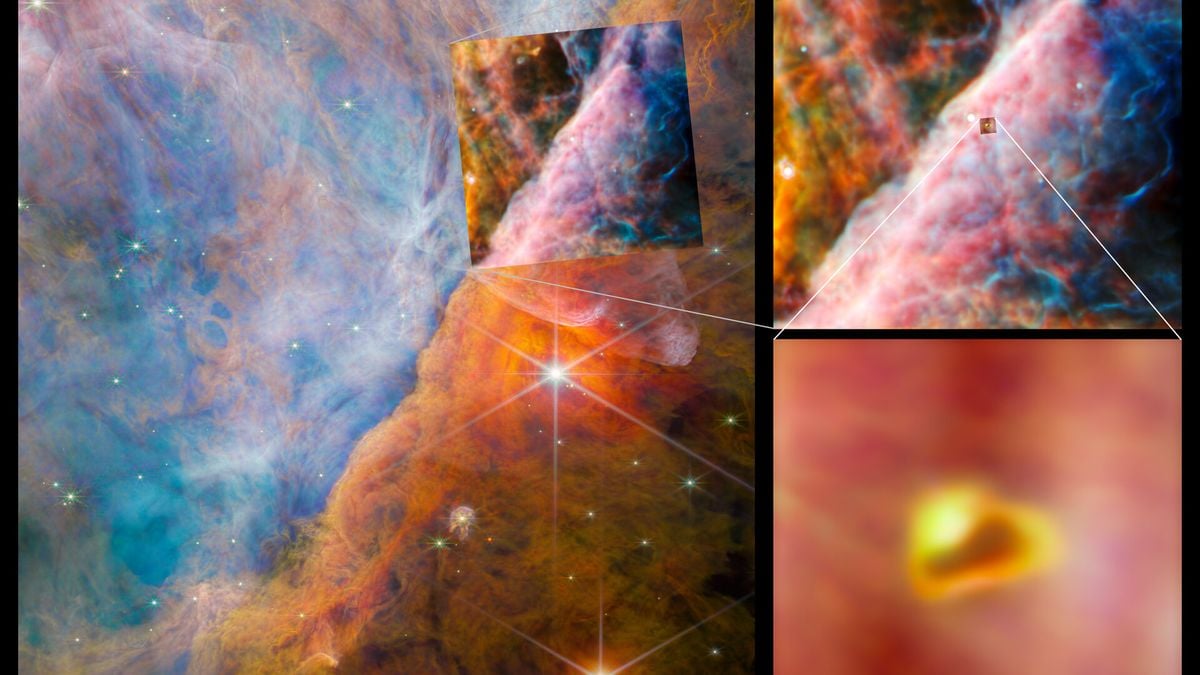
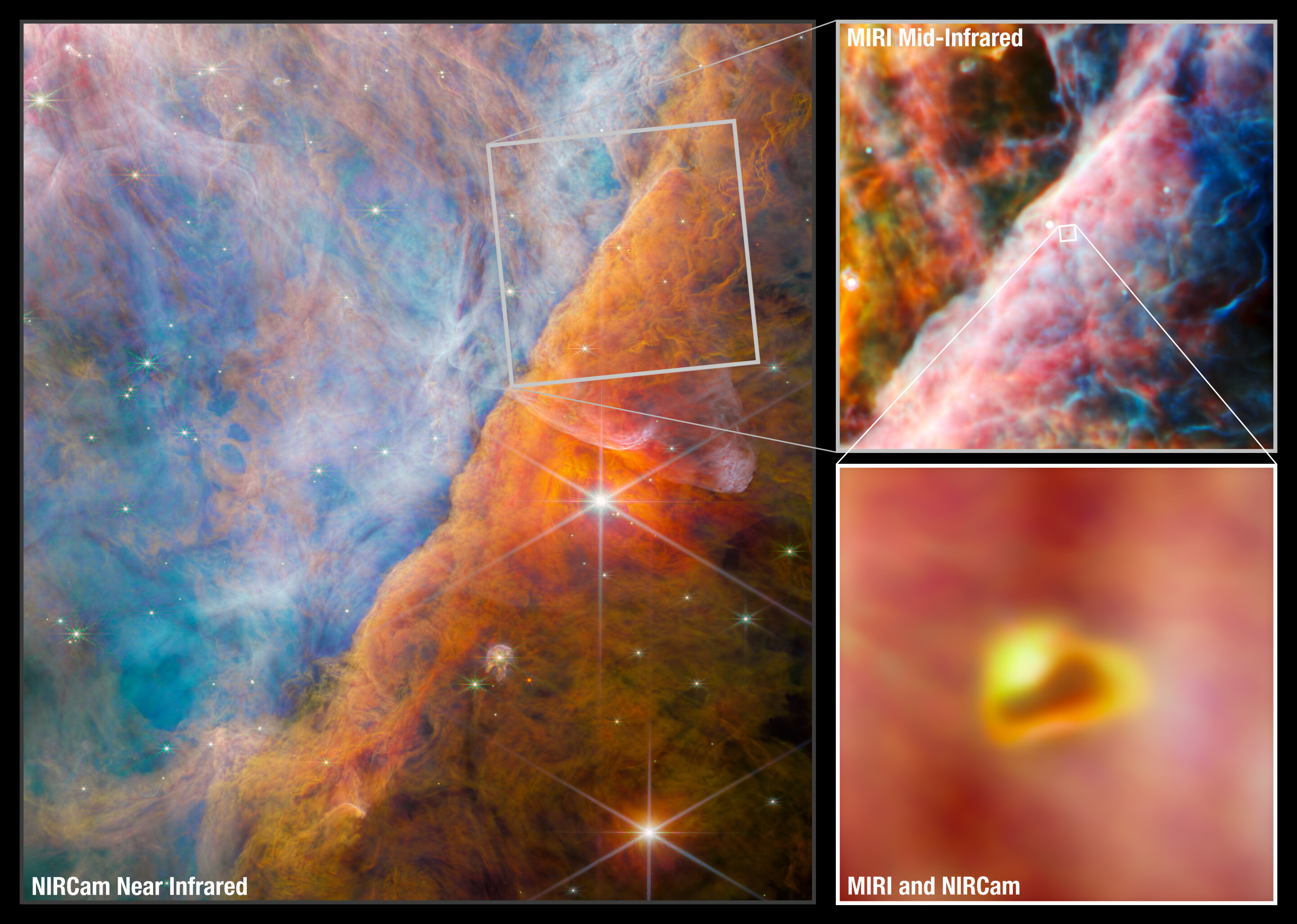
The James Webb Space Telescope (JWST) has detected a carbon molecule called methyl cation (CH3+) in a planet-forming disk around a young star in the Orion Nebula. This discovery is significant because it challenges the belief that intense ultraviolet radiation destroys complex organic molecules needed for life. Methyl cation is a key molecule in interstellar chemistry and can kick-start the growth of more complex carbon molecules. The detection of this molecule validates the sensitivity of JWST and provides insights into the early stages of life's origins.

astronomy2 years ago

James Webb Telescope Discovers Life's Building Blocks in Distant Star System

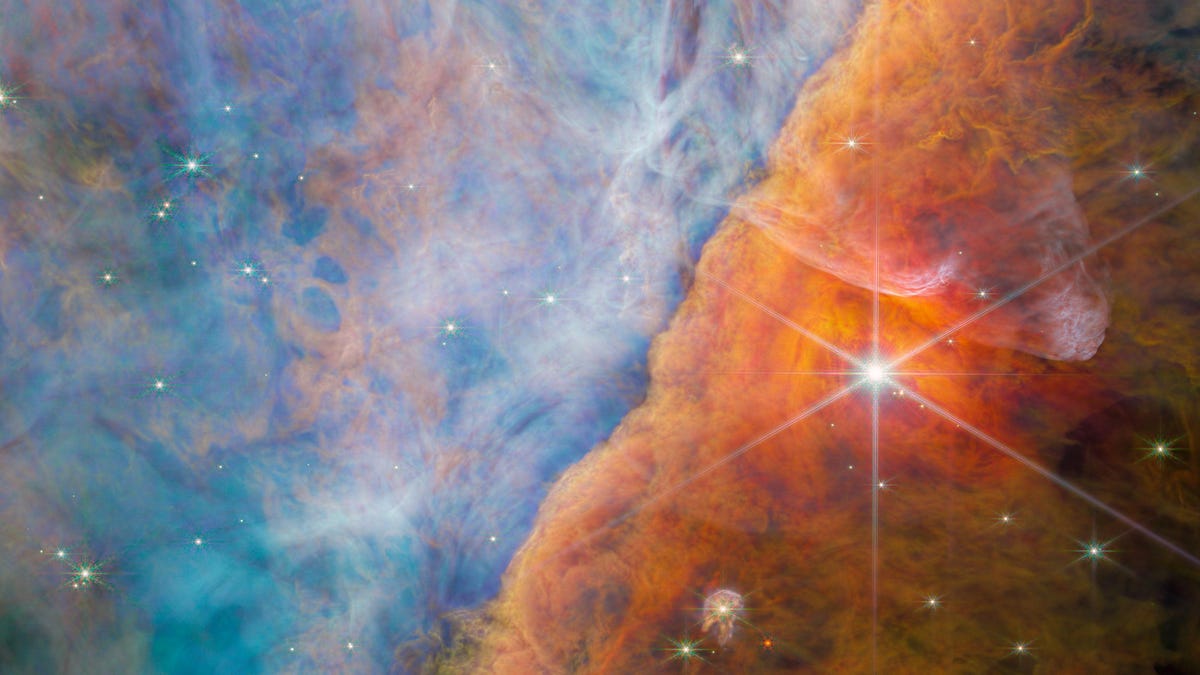
The Webb Space Telescope has discovered a never-before-seen carbon-based molecule, methyl cation (CH3+), in a distant star system called d203-506, located 1,350 light-years away from Earth. This molecule, theorized to be a crucial building block of interstellar carbon chemistry, was found in a gassy region of the Orion Nebula. The discovery validates the sensitivity of the Webb Telescope and highlights the importance of CH3+ in interstellar chemistry. The telescope's ability to image in infrared and near-infrared wavelengths allows it to penetrate gas and dust, providing unique insights into cosmic phenomena.

science2 years ago

NASA's Webb Telescope detects crucial carbon molecule in space.

NASA's James Webb Space Telescope has detected a new carbon compound, methyl cation, in space for the first time. The molecule is important because it aids the formation of more complex carbon-based molecules. Methyl cation was detected in a young star system, with a protoplanetary disk, known as d203-506, which is located about 1,350 light-years away in the Orion Nebula. The study of interstellar organic chemistry is an area of keen fascination to many astronomers.