Tag

Internet Addiction

All articles tagged with #internet addiction

Starlink Brings Internet and Porn Addiction to Remote Amazon Tribe

Originally Published 1 year ago — by Consequence

Featured image for Starlink Brings Internet and Porn Addiction to Remote Amazon Tribe
Source: Consequence

Elon Musk's Starlink has provided internet access to remote Amazonian tribes, leading to both benefits and concerns. While connectivity has brought job and education opportunities, it has also resulted in young men developing a porn addiction and engaging in more aggressive sexual behavior. Tribal leaders worry about the erosion of traditional values and increased exposure to harmful online content.


Study Reveals Internet Addiction's Impact on Teen Brain Development

Originally Published 1 year ago — by WMUR Manchester

Featured image for Study Reveals Internet Addiction's Impact on Teen Brain Development
Source: WMUR Manchester

A new study published in PLOS Mental Health reveals that internet addiction in teens disrupts brain signaling in regions responsible for attention, working memory, and executive functions. The review of 12 neuroimaging studies highlights the potential developmental and well-being impacts of excessive internet use. However, experts caution that the concept of internet addiction is not universally accepted and the studies have limitations, including a lack of longitudinal data. Treatment strategies may include behavioral therapies and, in severe cases, medication.

Study Reveals Internet Addiction's Impact on Teen Brain Development

Originally Published 1 year ago — by WBAL TV Baltimore

Featured image for Study Reveals Internet Addiction's Impact on Teen Brain Development
Source: WBAL TV Baltimore

A new study published in PLOS Mental Health reveals that teens diagnosed with internet addiction show disrupted signaling between brain regions responsible for attention, working memory, and executive functions. The review of 12 neuroimaging studies highlights the potential impact of excessive internet use on adolescent brain development. Critics, however, caution against drawing definitive conclusions due to limitations in the study's design and the controversial nature of internet addiction as a diagnosable condition. Experts suggest behavioral strategies and therapies to manage internet addiction and emphasize the importance of balancing internet use with other activities.

Starlink Connects Remote Tribe, Sparks Porn Addiction

Originally Published 1 year ago — by TMZ

Featured image for Starlink Connects Remote Tribe, Sparks Porn Addiction
Source: TMZ

Nine months after Elon Musk's Starlink connected a remote Amazon tribe to the internet, the Marubo tribe is facing issues like porn addiction among young men, aggressive sexual behavior, and increased laziness. While the internet has provided educational resources and emergency communication, it has also introduced challenges such as violent video games and excessive phone use.

Study Finds Internet Addiction Alters Teen Brain Development

Originally Published 1 year ago — by Neuroscience News

Featured image for Study Finds Internet Addiction Alters Teen Brain Development
Source: Neuroscience News

A review of neuroimaging studies reveals that internet addiction in adolescents disrupts brain networks responsible for attention, memory, coordination, and emotional processing, impacting mental health. The study highlights the need for more diverse research to fully understand these effects.

Study Finds Internet Addiction Rewires Teen Brains

Originally Published 1 year ago — by CNN

Featured image for Study Finds Internet Addiction Rewires Teen Brains
Source: CNN

A new study published in PLOS Mental Health reveals that internet addiction in teens disrupts brain regions responsible for attention, working memory, and executive functions. The review of 12 neuroimaging studies from 2013 to 2022 shows that excessive internet use can impair brain connectivity, similar to substance addiction. Experts caution that while the findings are significant, the concept of internet addiction is still debated, and more research is needed to understand its long-term effects. Parents are advised to monitor their teens' internet use and seek professional help if necessary.

Starlink Brings Internet to Remote Tribe, Leading to Porn Addiction

Originally Published 1 year ago — by New York Post

Featured image for Starlink Brings Internet to Remote Tribe, Leading to Porn Addiction
Source: New York Post

The Marubo tribe in the Amazon, connected to the internet via Elon Musk's Starlink service, is experiencing significant cultural disruption. While the internet has provided life-saving communication and educational opportunities, it has also led to addiction to social media and pornography, causing divisions within the community. Elders are concerned about the loss of traditional values and have imposed internet usage limits to mitigate the negative effects.

"Internet Addiction Trumps Drug Use Concerns for Parents of Teens, Study Reveals"

Originally Published 2 years ago — by Fox News

Featured image for "Internet Addiction Trumps Drug Use Concerns for Parents of Teens, Study Reveals"
Source: Fox News

A survey published in JAMA Network Open found that parents of adolescents are more concerned about internet addiction than substance addiction. The study revealed that while internet use fosters family connectedness, it also raises concerns about cyberbullying and addiction. The survey assessed parents' perceptions of the risks and benefits of internet use in areas such as physical and cognitive development, safety, addiction, and family connectedness. Excessive internet use has been associated with mental health problems, including alcohol dependence, depression, anxiety, and insomnia. The study highlights the need for greater education and support for parents in promoting healthy internet use in their young adolescents.

"Study reveals 22% exceed planned online time; simple strategies to reduce screen addiction."

Originally Published 2 years ago — by Yahoo Life

Featured image for "Study reveals 22% exceed planned online time; simple strategies to reduce screen addiction."
Source: Yahoo Life

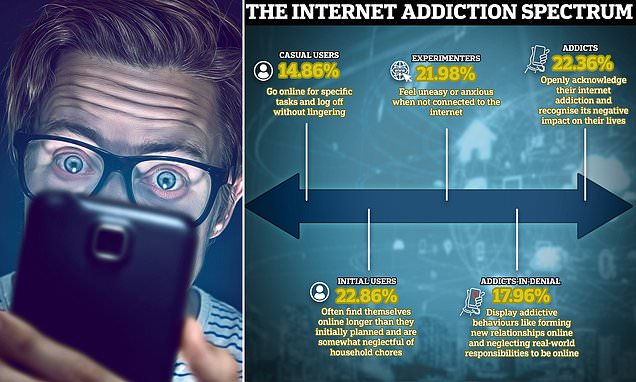
A study conducted by researchers from the University of Surrey in the UK categorized participants' online usage into five groups, offering a new measurement of the "internet addiction spectrum." The study found that younger individuals were more likely to be addicted to the internet, with those aged 24 and younger spending an average of six hours a day online. The study also identified different levels of addiction, ranging from casual users to addicts-in-denial. Mental health experts suggest strategies to cut back on screen time, such as using a rubber band around your phone, setting timers, finding alternative ways to fulfill needs met by social media, turning off push notifications, creating no-phone zones, and keeping track of positive moments when offline.

"Discover Your Place on the Internet Addiction Spectrum"

Originally Published 2 years ago — by New York Post

Featured image for "Discover Your Place on the Internet Addiction Spectrum"
Source: New York Post

A study conducted by researchers from the University of Surrey has categorized internet users into five groups based on their screen dependency: casual users, initial users, experimenters, addicts-in-denial, and true addicts. The study found that younger individuals were more likely to be addicted to the internet, with those aged 24 or younger spending an average of six hours online per day. Cell phone use was also linked to higher levels of addiction, and emotional responses to technology predicted future behavior toward augmented reality. The findings highlight the need for tailored interventions and support for individuals at different stages of internet addiction.

"Exploring the Internet Addiction Spectrum: Are You a Casual User or an Addict?"

Originally Published 2 years ago — by Study Finds

Featured image for "Exploring the Internet Addiction Spectrum: Are You a Casual User or an Addict?"
Source: Study Finds

Scientists at the University of Surrey have developed an internet addiction "spectrum" that categorizes internet users into five groups based on their online habits. The study found that younger individuals are more likely to be addicted to the internet, with addiction decreasing with age. The research also revealed that emotional experiences while using an app strongly predict future behavior, particularly when interacting with augmented reality. The findings highlight the need for tailored interventions and support for individuals at various stages of internet addiction.

"Unveiling the Internet Addiction Spectrum: Discover Your Place on the Scale"

Originally Published 2 years ago — by Daily Mail

Featured image for "Unveiling the Internet Addiction Spectrum: Discover Your Place on the Scale"
Source: Daily Mail

Scientists have developed a new internet addiction spectrum that categorizes users into five distinct groups: Casual Users, Initial Users, Experimenters, Addicts-in-Denial, and Addicts. The study found that younger individuals spend more time online and are more likely to be addicted to the internet, while older individuals spend less time online. The researchers emphasize the need for tailored interventions and support for individuals at different stages of internet addiction.

China Proposes Two-Hour Daily Limit on Kids' Smartphone Use

Originally Published 2 years ago — by CNN

Featured image for China Proposes Two-Hour Daily Limit on Kids' Smartphone Use
Source: CNN

China's top internet regulator, the Cyberspace Administration of China, has proposed new measures to limit the amount of time children and teenagers can spend on their phones. The proposal includes requiring mobile devices, apps, and app stores to have a built-in "minor mode" that restricts daily screen time to a maximum of two hours, depending on the age group. The draft rules also include restrictions on accessing screens between 10 p.m. and 6 a.m. for those under 18. The proposal aims to combat internet addiction, promote "good morality," and reduce exposure to "undesirable information." Parents would have the ability to override time restrictions, and certain educational and emergency services would be exempt. The effectiveness of the measures may depend on parental buy-in, and it could present challenges for tech companies responsible for enforcement.