Psychologists and experts argue that the 'Gen Z Stare' is more likely a result of young people's first workplace experiences and digital upbringing rather than poor social skills, emphasizing the importance of understanding generational differences and supporting skill development rather than criticism.
Social media platform X (formerly Twitter) will make "likes" private and remove the "Likes" tab from user profiles to prevent public scrutiny and encourage more genuine interactions. Users will still see who liked their posts and the like count, but others won't see which posts they liked. This change aims to reduce negative behavior and improve the user experience.
New research reveals that declining cookies on websites may actually reveal more information about users than accepting them. Advertisers use a technique called collaborative filtering to tailor content to users who reject cookies, assuming they belong to a specific demographic. This demographic is typically older Americans who are less trusting of tech companies. Younger Americans who reject cookies are more likely to protect their identity. The study highlights the complexity of privacy decisions and calls for stronger privacy laws and regulations. Users are advised to use privacy-conscious browsers and support transparency in data usage.
A study conducted by academics from various universities found that social media posts have limited impact on changing people's opinions or political behaviors. The researchers manipulated algorithms and content exposure on platforms like Facebook and Instagram, but found negligible effects on vote choice or political engagement. Another study focused on COVID-19 policies found that the number of likes and retweets did not significantly influence people's opinions. However, posting on social media can reinforce and polarize existing beliefs, making individuals more resistant to opposing viewpoints. The compulsion to post on social media is driven by a sense of agency and the desire for social affirmation, but it often leads to increased distress rather than alleviating anxiety.
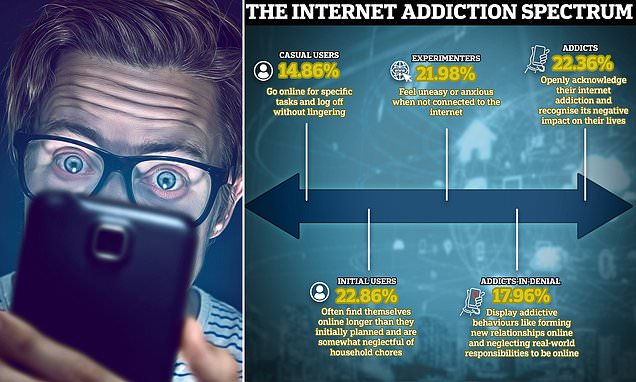
A study conducted by researchers from the University of Surrey in the UK categorized participants' online usage into five groups, offering a new measurement of the "internet addiction spectrum." The study found that younger individuals were more likely to be addicted to the internet, with those aged 24 and younger spending an average of six hours a day online. The study also identified different levels of addiction, ranging from casual users to addicts-in-denial. Mental health experts suggest strategies to cut back on screen time, such as using a rubber band around your phone, setting timers, finding alternative ways to fulfill needs met by social media, turning off push notifications, creating no-phone zones, and keeping track of positive moments when offline.
Pop star Doja Cat is facing controversy online for her edgy and controversial posts, but the "I miss the old Doja" meme fails to acknowledge that her provocative behavior has always been part of her brand. While some fans criticize her for her past associations with alt-right chat rooms and her recent choice to wear a T-shirt featuring a neo-Nazi sympathizer, others argue that her conduct should not be dismissed as mere edginess. As Doja Cat continues to court controversy, it becomes clear that she is a grown pop star who shows no inclination to learn from her actions.
Scientists have developed a new internet addiction spectrum that categorizes users into five distinct groups: Casual Users, Initial Users, Experimenters, Addicts-in-Denial, and Addicts. The study found that younger individuals spend more time online and are more likely to be addicted to the internet, while older individuals spend less time online. The researchers emphasize the need for tailored interventions and support for individuals at different stages of internet addiction.