Researchers have developed an AI-powered stethoscope that can detect major heart conditions like heart failure, valve disease, and abnormal rhythms in just 15 seconds, potentially enabling earlier diagnosis and treatment, especially in primary care settings.
Researchers have successfully created a crucial connection for the development of a quantum internet by producing, storing, and retrieving quantum information for the first time. This achievement is a significant step towards enabling quantum networks for distributed computing and secure communication, with potential applications in optimizing financial risk, decrypting data, designing molecules, and studying materials. The breakthrough involves interfacing a quantum dot light source with an atomic quantum memory device, allowing for the transmission of quantum data over long distances using regular optical fibers. This development, led by a collaborative effort involving researchers from Imperial College London, the University of Southampton, and the Universities of Stuttgart and Wurzburg in Germany, represents a key advancement in the field of quantum networking.
A study led by Imperial College London has identified five different subtypes of Long Covid, shedding light on the causes of ongoing symptoms such as fatigue and brain fog. The research suggests that existing drugs for conditions like arthritis could potentially be effective against Long Covid, and new human trials will focus on this. The study indicates that Long Covid is caused by post-viral inflammation and reveals the complexity of the condition, emphasizing the need for specific tests and treatments tailored to the different subtypes. This discovery offers hope for the estimated 65 million people worldwide suffering from Long Covid and could lead to a better understanding and management of the condition.
A study from Imperial College London suggests that catching Covid-19 can lead to a decline in intelligence, with severe infections resulting in the most significant reduction in IQ. Even those with mild cases or long Covid experienced cognitive decline. The original Covid strain was associated with a larger drop in IQ, while vaccination appeared to have a protective effect. The study did not directly compare individuals before and after infection, and it remains unclear if the brains of Covid patients will fully recover.
A study published in the New England Journal of Medicine by Imperial College London researchers suggests that even fully recovered survivors of mild COVID-19 may experience small deficits in memory, thinking, or concentrating, with a 3-point loss in IQ observed. The study compared cognitive function in COVID-19 survivors with uninfected counterparts and found that those with persistent symptoms or who had been admitted to an ICU experienced greater deficits. The implications of these longer-term cognitive deficits remain unclear, and further exploration is needed to understand the functional implications and trajectory of recovery.
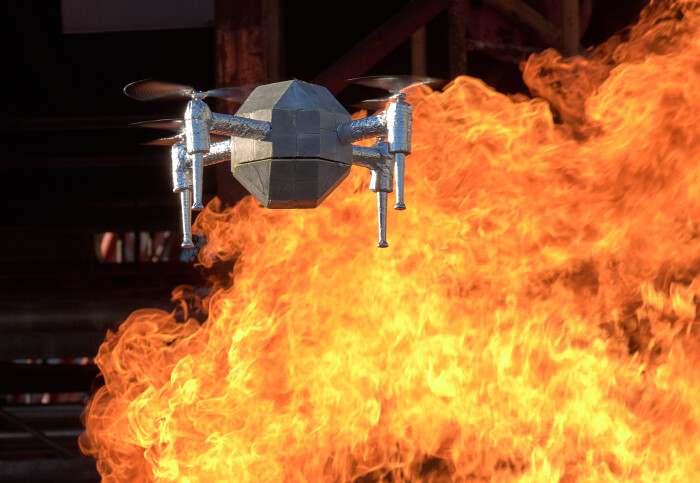
Researchers from Imperial College London and Empa have developed a prototype drone called FireDrone that can withstand temperatures of up to 200°C for ten minutes. The drone is made of a new thermal aerogel insulation material and houses an inbuilt cooling system. FireDrone could be sent into burning buildings or woodland to assess hazards and provide crucial first-hand data from danger zones. The data would then be sent to first responders to help inform their emergency response. The researchers hope that their further work to miniaturise and add more sensors to the drone might lead to its deployment in real-life firefighting missions and help save lives.
Scientists at Imperial College London have discovered that insects are not actually attracted to light bulbs, but rather their navigational abilities are disrupted by artificial lighting. Using high-resolution motion capture cameras and stereographic video recording, the scientists found that insects turn their backs towards the light source, creating flight paths perpendicular to it. The multitude of artificial lights causes confusion in their navigation, trapping them in a flight path around the bulb without being able to escape.