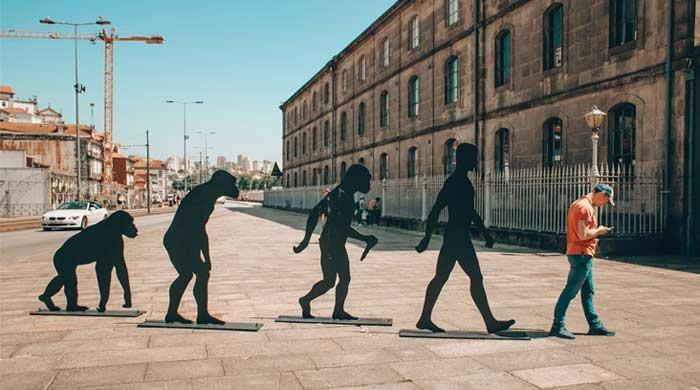
Recent studies show that an extra artery in human arms, the median artery, is becoming more common, increasing from 10% in the 19th century to about 30% today, indicating ongoing microevolution that could influence our health and anatomy in the future.
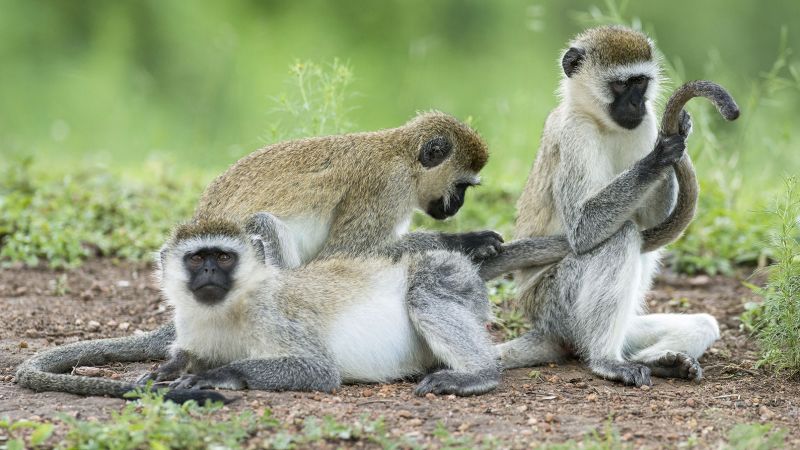
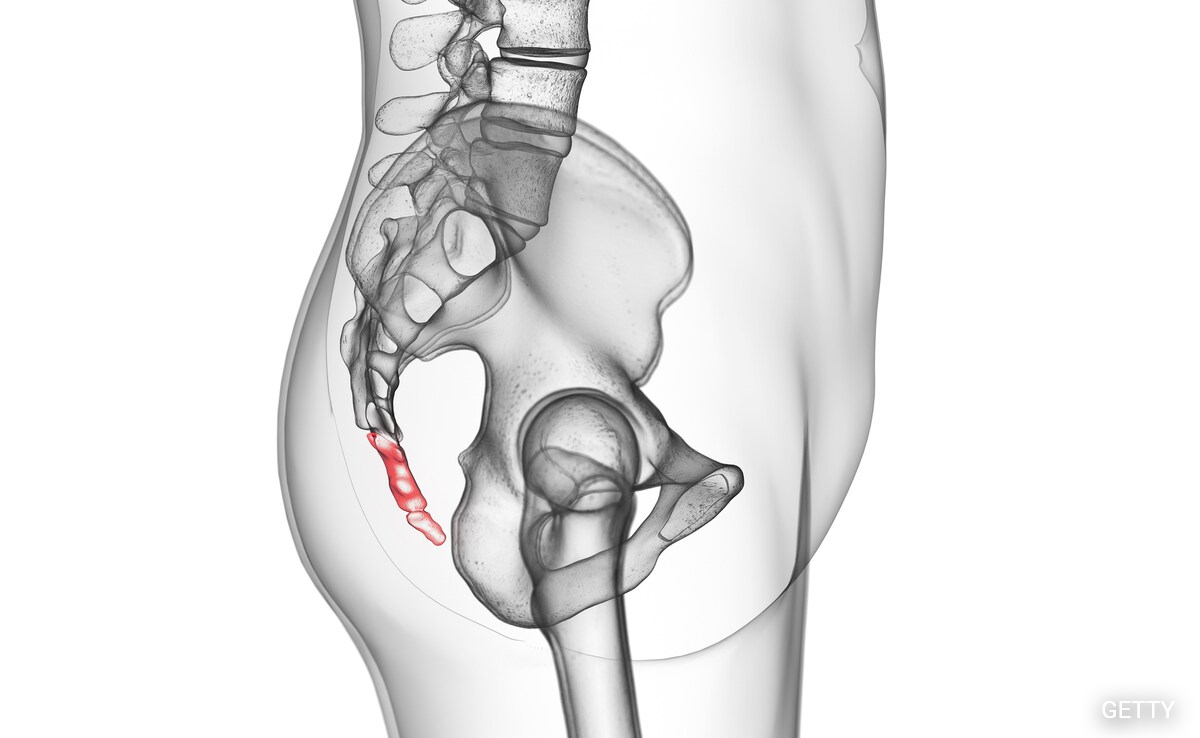
Scientists have discovered that humans lost their tails approximately 25 million years ago due to a genetic divergence from old world monkeys, as a result of transitioning to bipedalism. The study, published in Nature, identified a genetic connection between human tail loss and a type of birth defect, pointing to changes in DNA, particularly the Alu element. While the research explains how tail loss occurred, it does not address why humans lost their tails in the first place.
Scientists have discovered that the loss of tails in humans and great apes can be traced back to a genetic sequence called Alu element, previously dismissed as junk DNA, which disrupted the TBXT gene associated with tail length. This finding challenges previous hypotheses and sheds light on the genetic mechanism behind taillessness. The study also suggests implications for understanding neural tube malformations during human fetal development and may provide insights into the evolution of bipedalism. While the "why" of tail loss remains an open question, the research highlights the significance of genetic factors in shaping human anatomy and evolution.
A new study suggests that a single genetic tweak 25 million years ago caused humans to lose their tails, allowing for upright walking but also leading to birth defects like spina bifida. The tweak involved the insertion of Alu elements near the TBXT gene, preventing tail growth. While the loss of the tail may have provided evolutionary advantages, it also resulted in neural tube defects. The study sheds light on the genetic basis of tail loss in humans and its potential consequences.
Scientists have discovered that humans lost their tails about 25 million years ago due to the insertion of a genetic code "snippet" known as AluY, which affected the gene TBXT involved in tail length. This finding, published in Nature, sheds light on the evolutionary process and was tested using mice, showing that offspring had shorter or missing tails. The study also suggests a potential link between tail loss and an increase in neural tube defects, contributing to diseases like spina bifida in humans.
Humans don't have gills because they evolved from fish with lungs, which allowed them to survive on land. Gills need to stay wet to work, making them inefficient for land animals. Early lungs in fish allowed them to gulp air above the surface to supplement oxygen intake. Human embryos have pharyngeal arches resembling gills, which develop into parts of the jaw, throat, and ears. These arches are present in all creatures with heads and are a remnant of early gills.
The gluteus maximus is the largest muscle in the body by mass, accounting for about 12% to 13% of the total weight of all leg muscles. It is responsible for extending the thigh at the hip joint and is critical for activities like walking up stairs and running. On the other hand, the latissimus dorsi, commonly known as the "lats," is the largest muscle in terms of surface area. It measures about 7 inches in width and 14 inches in length. In contrast, the stapedius muscle, measuring only 0.2 inches in length, is the smallest skeletal muscle in the human body and plays a crucial role in dampening sound vibrations in the middle ear.
Researchers from Dartmouth propose that the ability of humans to freely move their shoulders and elbows originated as a natural braking system for primate ancestors descending from trees, a behavior known as "downclimbing." Through an analysis of climbing techniques and limb structures in chimps and mangabeys, they found that the unique limb flexibility in apes and early humans allowed them to descend safely, which eventually facilitated evolutionary advancements in tool use and hunting techniques. The study highlights the significance of downclimbing in the evolution of apes and early humans and sheds light on the role of limb mobility in human anatomy.
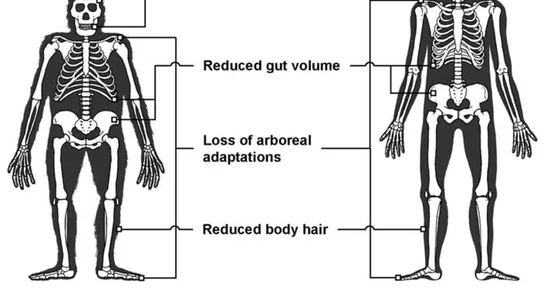
The invention of cooking, not baskets, may have led to the evolution of modern human anatomy from Australopithecus to Homo erectus. Cooked meat is easier to digest and provides more energy than raw meat, which may have allowed for more efficient foraging and hunting. Sharing cooked meat around a fire may have led to the development of social structures and gender roles, with men hunting and women gathering. The oldest evidence for hearths is only about 250,000 years old, so the exact timeline of these developments is still speculative.