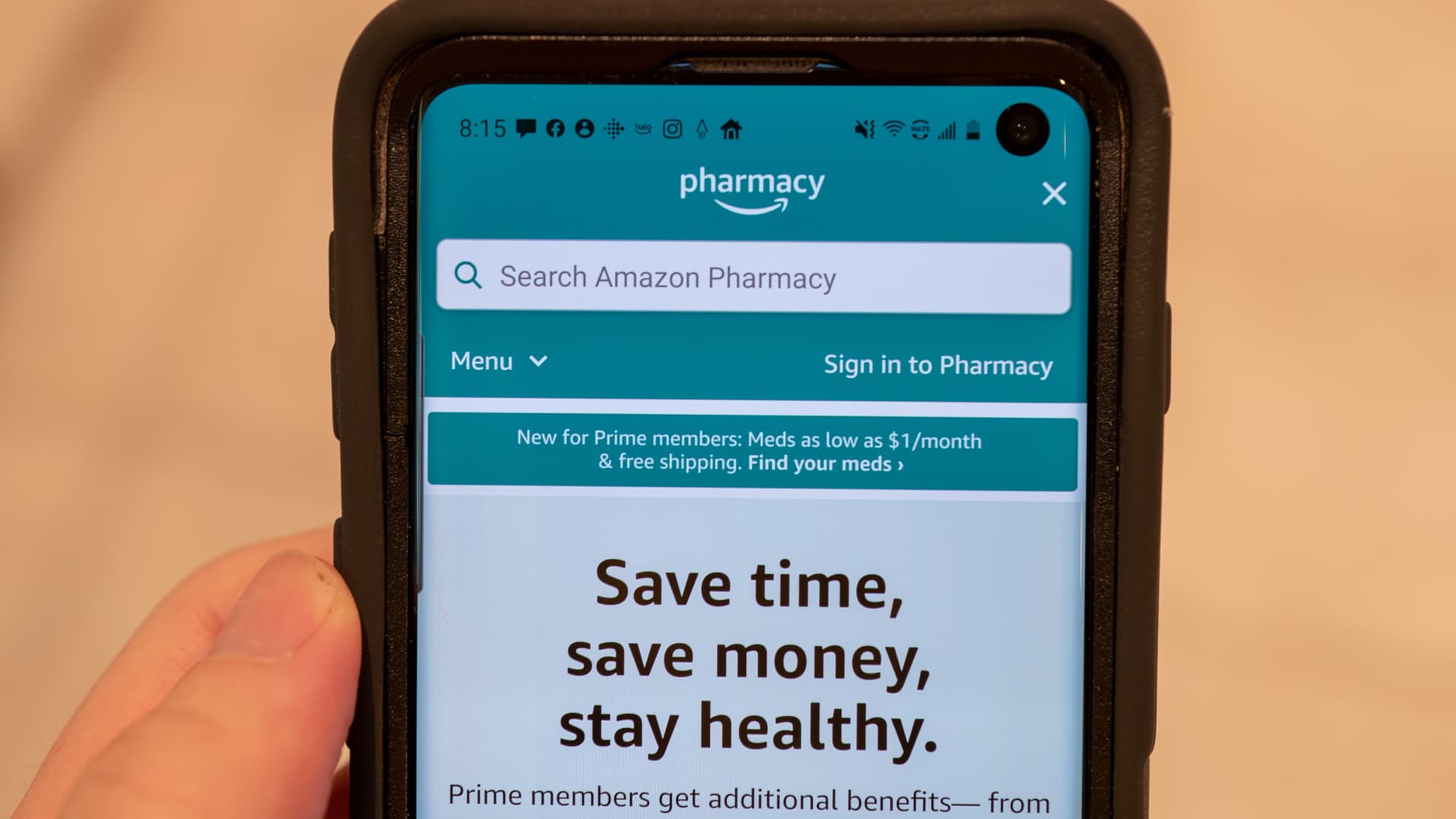
Eli Lilly has partnered with Amazon Pharmacy to deliver certain prescription drugs, including the weight loss treatment Zepbound, directly to patients' homes through the drugmaker's new direct-to-consumer program, LillyDirect. This partnership aims to make drugs more accessible to patients and eliminate the need to visit a doctor or pharmacy for prescriptions. Amazon Pharmacy will offer free two-day deliveries to patients, and Eli Lilly plans to expand the medicines it offers and the companies it partners with in the future.
Viking Therapeutics, a San Diego-based company, has announced promising results for its new weight loss drug, a GLP-1 drug similar to Ozempic, with users achieving an average 14% weight loss from baseline numbers after 13 weeks of treatment. This news has caused a surge in Viking Therapeutics' stock value as investors seek a cheaper path into the weight loss drug market currently dominated by Novo Nordisk and Eli Lilly. Other pharmaceutical companies like Regeneron, Amgen, and Zealand Pharma are also developing weight loss drugs to capture some of the market share held by the two giants. Zealand Pharma's stock soared after announcing strong results in a clinical trial for a liver disease drug that is also being tested for weight loss.
Zealand Pharma's stock surged 32% after positive trial results for its weight-loss drug, survodutide, which also showed efficacy in treating liver inflammation caused by excess fat cells. The drug has received fast-track designation from the FDA and is undergoing five Phase-3 trials for people who are overweight or obese, positioning the company as a key player in the highly lucrative obesity therapeutics market alongside competitors like Novo Nordisk and Eli Lilly.
Biotech and pharmaceutical companies are increasingly focusing on antibody-drug conjugates (ADCs) as a promising class of cancer drugs to drive growth, with Johnson & Johnson, Pfizer, and Merck making significant investments in ADCs. The recent rise of ADCs is attributed to advancements in technology, increased confidence in their potential, and the potential for longer market exclusivity. The market for ADCs is expected to continue growing, with estimates suggesting they could account for a significant portion of the worldwide cancer market by 2028. Companies are betting on ADCs to fuel growth and establish themselves as leaders in cancer treatment, with Pfizer's acquisition of Seagen and Merck's licensing agreement with Daiichi Sankyo being notable examples of this trend.
GSK has entered into an agreement to acquire Aiolos Bio for $1 billion upfront and up to $400 million in milestone payments, gaining access to AIO-001, a potentially best-in-class, long-acting anti-thymic stromal lymphopoietin (TSLP) monoclonal antibody. This acquisition expands GSK’s respiratory pipeline and offers the potential to redefine the standard-of-care for asthma treatment, with AIO-001 targeting the TSLP pathway and demonstrating initial safety and tolerability in early studies. The transaction is subject to regulatory clearances and underscores GSK’s commitment to advancing respiratory therapies.
Johnson & Johnson and Merck kick off a major U.S. healthcare conference by announcing plans to acquire cancer therapy developers, with combined deals worth over $6 billion, signaling a strong start for M&A in 2024. J&J is set to buy Ambrx Biopharma for $2 billion to gain targeted cancer therapies, while Merck plans to acquire Harpoon Therapeutics for about $680 million to access early-stage immunotherapies for lung cancer and multiple myeloma. Additionally, medical device maker Boston Scientific is entering the market with a $3.7 billion deal for Axonics Inc, reflecting a return to business as usual in the pharmaceutical industry after the challenges of 2023.
Johnson & Johnson has announced its $2 billion acquisition of Ambrx Biopharma, a company specializing in cancer treatment through antibody-drug conjugates (ADCs). This move reflects J&J's strategy to fill a revenue gap expected in 2025 and follows similar investments by other major pharmaceutical companies. The acquisition is expected to enhance J&J's oncology pipeline and provide opportunities for precision biologics in cancer treatment.
Johnson & Johnson has made a $2 billion cash deal to acquire Ambrx Biopharma, joining other major pharmaceutical companies in a spree of acquisitions focused on antibody-drug conjugates in the oncology sector. This move comes as the industry anticipates increased spending to bolster pipelines ahead of looming patent expirations at the end of the decade.