Tag

Gravitational Interactions

All articles tagged with #gravitational interactions

science1 year ago

Did an Unknown Visitor Reshape Our Solar System?

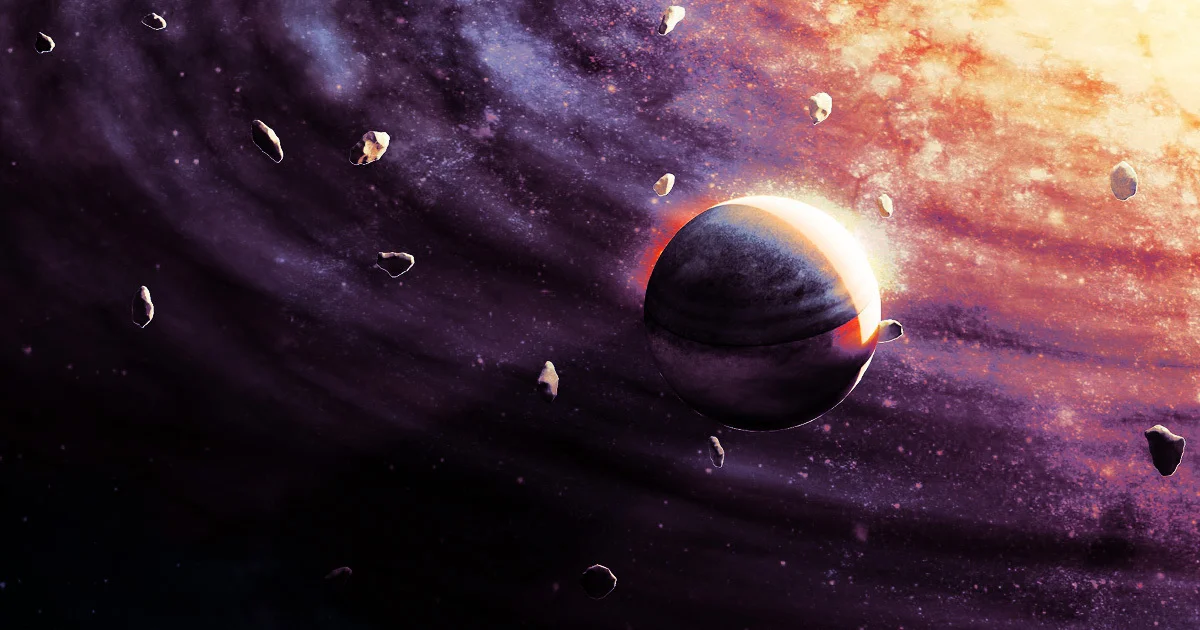
A new study suggests that an enormous interstellar object, possibly up to fifty times the mass of Jupiter, may have passed through the solar system in the distant past, altering the orbits of the planets. This theory challenges the traditional view that gravitational interactions among planets and the protoplanetary disk solely account for the current configuration of the solar system. The researchers' simulations indicate a 1 in 100 chance of such an event occurring, offering a potential explanation for the eccentricities observed in the orbits of gas giants like Jupiter and Saturn.
science1 year ago

"Mars' Surprising Influence on Earth's Climate Revealed by Scientists"

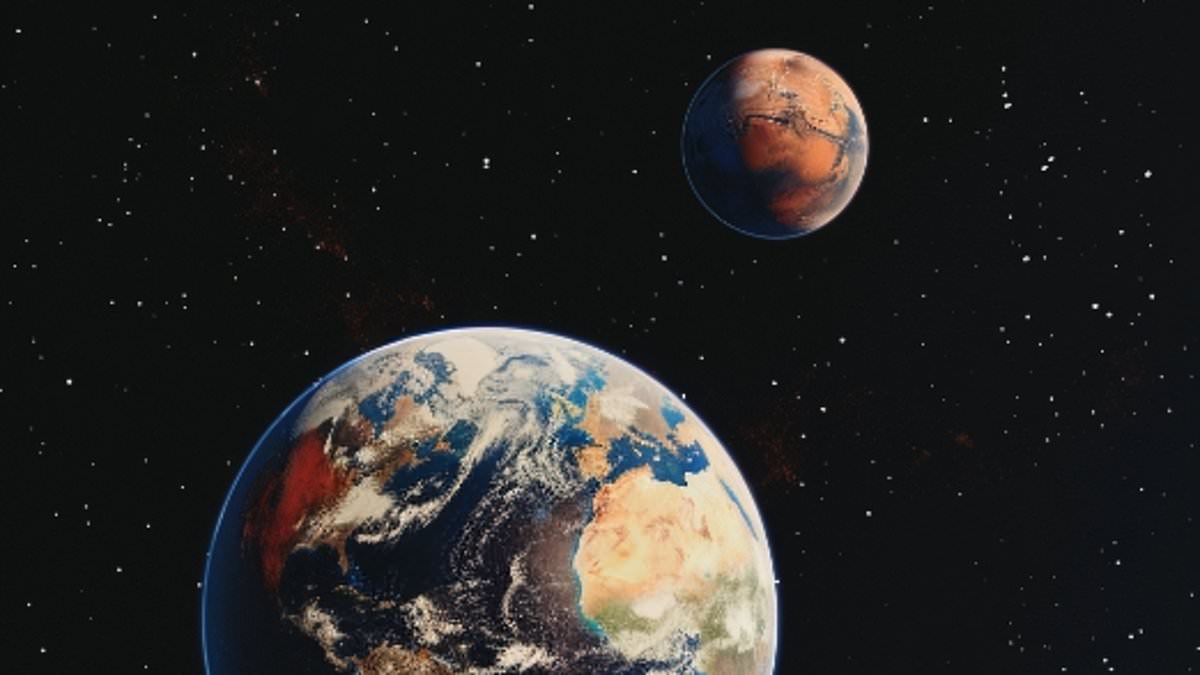
Scientists have discovered a 2.4-million-year cycle of giant whirlpools in Earth's deep-sea, which is linked to gravitational interactions between Mars and Earth, causing the Red Planet to pull Earth closer to the sun every few million years. This interaction affects Earth's climate, leading to increased solar energy and warmer weather. The study, conducted by researchers at the University of Sydney, involved drilling 370 holes in oceans across the globe to analyze sediments, revealing evidence of these cycles. The findings suggest that Mars and Earth have been interacting in a way that impacts our planet for over 40 million years, with potential implications for ocean circulation and climate stability.

astronomy2 years ago

"Dark Energy Camera Uncovers Galaxies Engaged in Cosmic Tug of War"

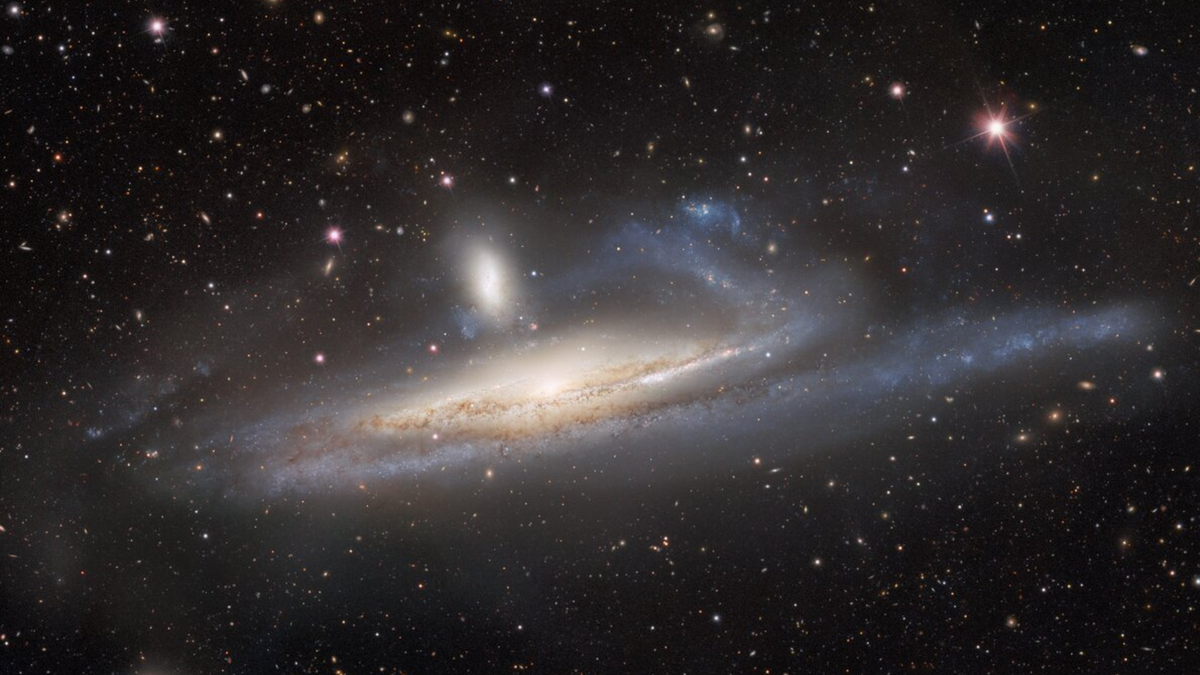
Astronomers have captured an image of a cosmic tug of war between a massive galaxy, NGC 1532, and its smaller dwarf galaxy neighbor, NGC 1531. The smaller galaxy is being dragged towards its larger counterpart and will eventually merge with it, resembling an act of cosmic cannibalism. The image, taken by the Dark Energy Camera, reveals the distorted spiral arms of NGC 1532 and a bridge of gas and dust connecting the two galaxies. This observation provides insights into how galaxies grow by merging with smaller companions. The Milky Way, too, has cannibalized smaller dwarf galaxies and is currently surrounded by satellite dwarf galaxies, some of which are being digested. In the future, the Milky Way is expected to merge with the Andromeda galaxy, resulting in the merger of their central supermassive black holes.

science-and-technology2 years ago

"Unveiling the Gravitational Forces that Saved us from 60-Hour Days"

Earth's rotation has been influenced by tidal forces from the Moon and the Sun, gradually lengthening our days over billions of years. However, from 2 billion to 600 million years ago, various tidal forces canceled each other out, keeping Earth's rotation at a consistent speed and resulting in days that were approximately 19.5 hours long. This period of stasis ended 600 million years ago, and our present 24-hour days are a result of the resonance between Earth's rotation and atmospheric waves. Rising temperatures due to global warming may disrupt this resonance and further lengthen our days.

astronomy2 years ago

Surprising Discoveries in Space: Newborn Planets and Stellar Midwives

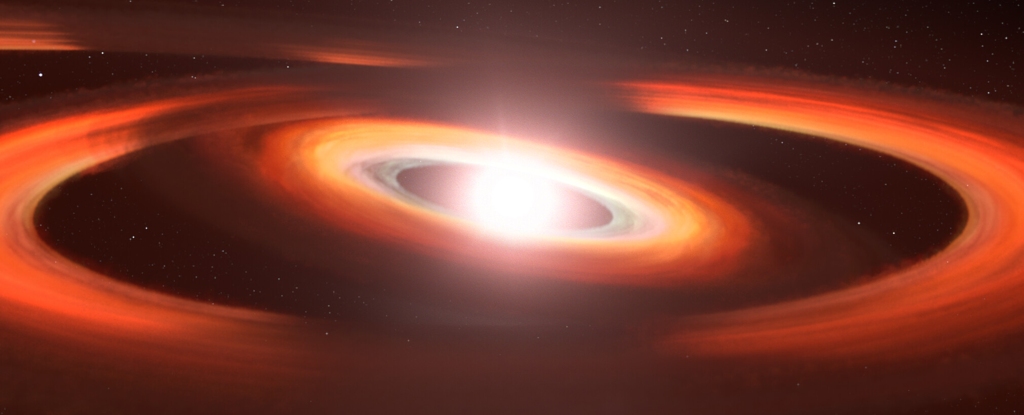
Shadows flickering around TW Hydrae, a young star, suggest the presence of three off-kilter disks of material, indicating the formation of multiple baby planets. The disks' gravitational interactions cause them to incline slightly with respect to each other, producing shadows that dim the reaches of the disk more distant from the star. This is consistent with the Solar System's architecture, offering insights into how its orbital inclinations got to be the way they are.

astronomy2 years ago

Runaway black hole leaves trail of stars in its wake

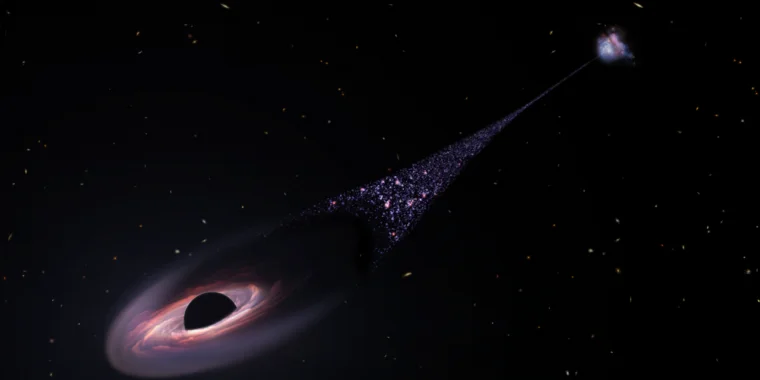
A team of researchers has discovered a long, thin smear in an image taken by the Hubble Space Telescope, which appears to be the wake left behind by a supermassive black hole that's been shot free of the galaxy that used to host it. Its liberation likely resulted from two additional supermassive black holes, all brought together by a merger of galaxies. The streak is estimated to be about 200,000 light-years long and started forming about 40 million years ago, and its tip has been progressively moving away from the galaxy at about 1,600 kilometers a second since.