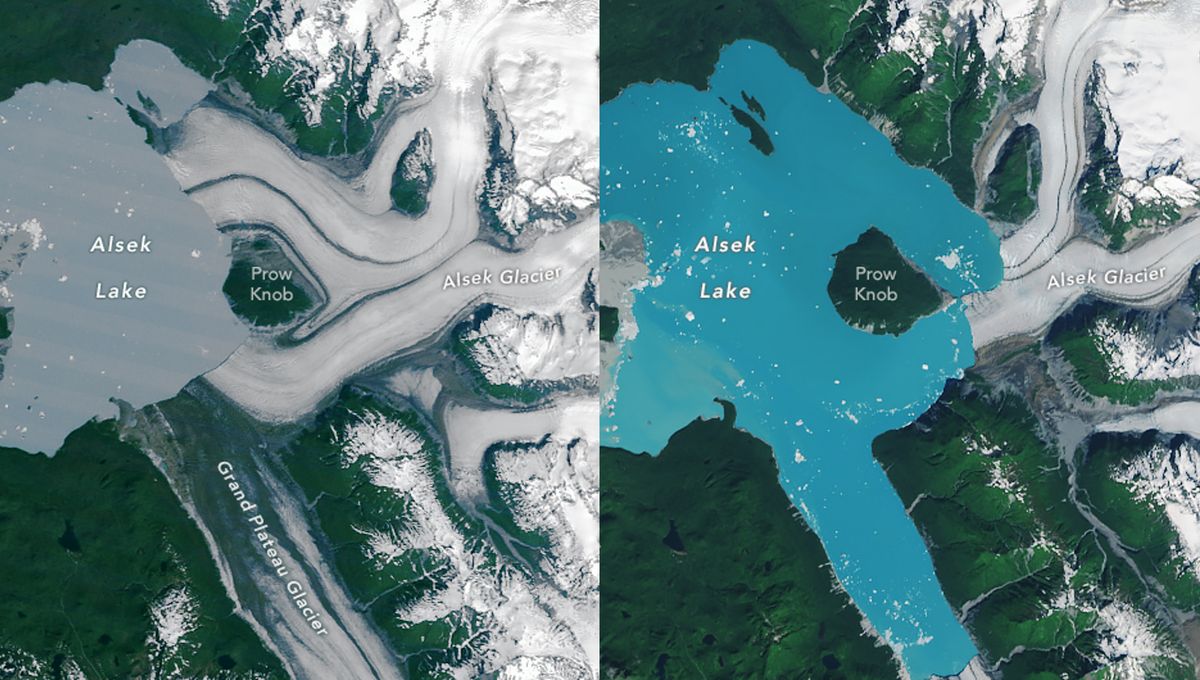
NASA satellite images reveal that due to rapid glacial melting in southeastern Alaska, a new island has formed around Prow Knob as the Alsek Glacier recedes, illustrating the dramatic effects of climate change on Arctic environments.
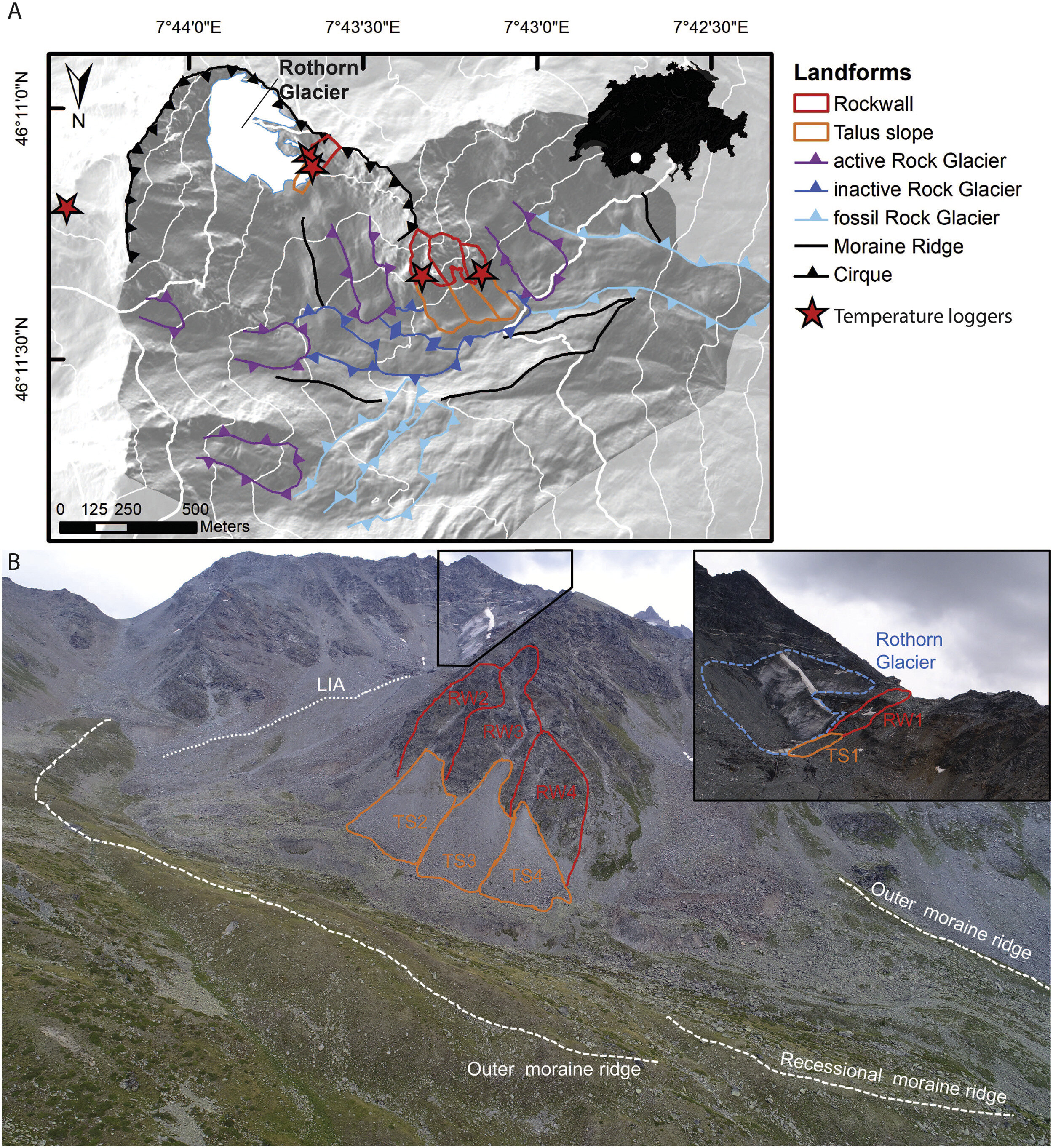
New research suggests that erosion rates in the European Alps may be declining in recent decades/centuries compared to over 10,000 years ago, attributed to reduced glacial load and climate warming. The study, focusing on rockwall erosion, found that higher erosion rates occurred in the middle to late Holocene, with a rapid decline in erosion rate over the past five decades. The researchers attribute this decline to a combination of increased frost cracking, thawing of permafrost, and landscape adjustment to glacial ice unloading. The findings are important for understanding the impact of deglaciation in a warmer world on rock erosion and rockfall events as climate change continues.
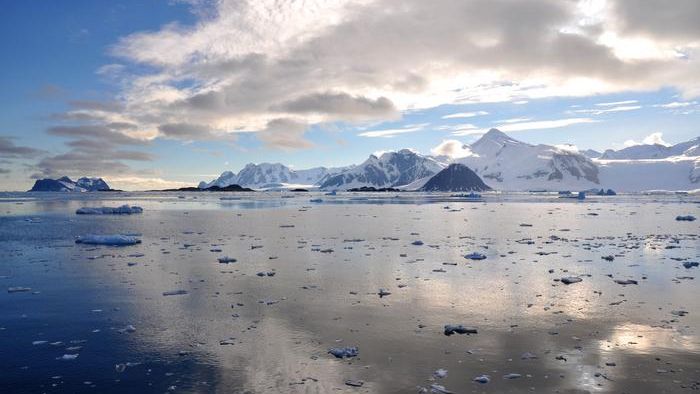
Satellite images and oceanographic measurements have revealed that Antarctica's Cadman Glacier on the western coast of the Antarctic Peninsula has experienced a dramatic retreat of 5 miles (8 kilometers) over a span of 2.5 years, followed by the complete collapse of its ice shelf. Warmer ocean temperatures, likely influenced by human-driven global warming, accelerated the process. The collapse of the ice shelf is expected to result in a faster loss of water from the glacier, contributing to sea level rise. The neighboring glaciers in the region did not react in the same way, suggesting the presence of underwater ridges acting as protective barriers. However, with rising ocean temperatures, these glaciers may also be at risk. The findings highlight the need for comprehensive ocean observing networks in Antarctica to better understand and predict the impact of climate change on the region.
Satellite images and oceanographic measurements have revealed the dramatic retreat of Antarctica's Cadman Glacier, located on the western coast of the Antarctic Peninsula. Over a period of just 2.5 years, the glacier retreated 5 miles (8 kilometers) and its ice shelf, which floats on the ocean's surface, completely collapsed. Warmer ocean temperatures, likely influenced by human-driven global warming, accelerated the process. The collapse of the ice shelf is expected to result in a faster loss of water from the glacier, contributing to sea level rise. The neighboring glaciers did not react in the same way, suggesting the importance of understanding the impact of climate change on this sensitive polar region. The study highlights the need for comprehensive ocean observations around Antarctica to better understand glacial dynamics.
The Quelccaya Ice Cap in Peru, like other tropical glaciers, is rapidly retreating due to climate change. Satellite images show a significant reduction in ice area from 1988 to 2023, with the ice cap now spanning just over 40 square kilometers. Meltwater lakes have formed along the ice cap's western side, some of which have lost contact with the ice that formed them. The ice cap is a crucial water source for nearby communities and feeds the Vilcanota River and Lake Sibinacocha. The retreat of tropical glaciers threatens the loss of temperature and climate records preserved in their ice, including a near-annual record dating back 1,800 years. Scientists warn that the Quelccaya Ice Cap could disappear by the end of the century.
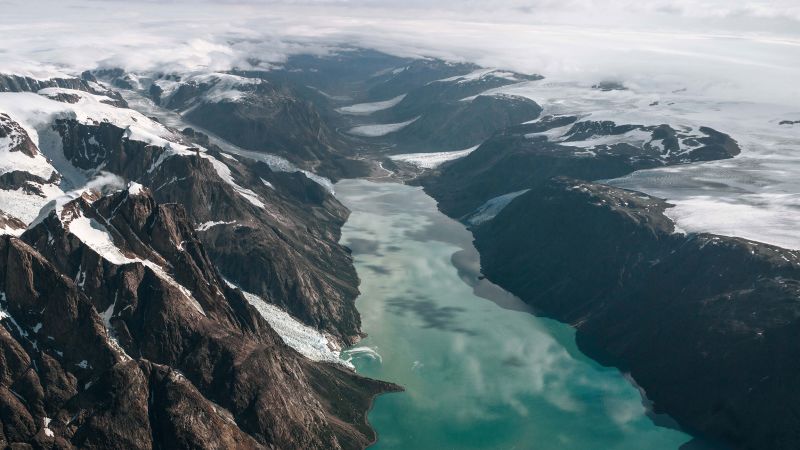
A study published in the journal Nature Climate Change reveals that Greenland's glaciers have experienced a rapid rate of retreat, which has accelerated over the past two decades. By comparing historical aerial photographs dating back to the 1930s with satellite images of Greenland today, researchers found that the rate of glacial retreat in the 21st century has been twice as fast as in the 20th century. The study highlights the alarming pace at which the Arctic is warming and changing, emphasizing the need for swift action to reduce emissions and limit global temperature rise to mitigate the future loss of glaciers and their contribution to sea level rise.
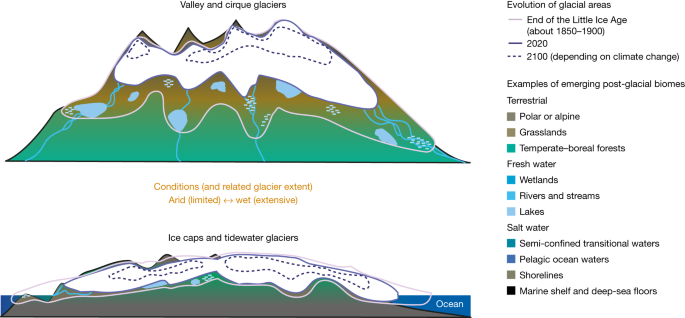
Glacial retreat caused by climate change is leading to the emergence of new ecosystems, according to a synthesis of scientific studies. As glaciers shrink, downstream systems are being affected, resulting in changes to biodiversity. Glacial ecosystems are crucial for understanding how biodiversity responds to glacier retreat. The loss of glaciers is also threatening habitats and poorly known biodiversity. The rapid growth of glacial lakes since 1990 is creating new habitat for Pacific salmon in western North America. The study highlights the importance of stewardship of lands exposed by deglaciation and the need for glacier protection laws.