Tag

Geostationary Orbit

All articles tagged with #geostationary orbit

space11 days ago

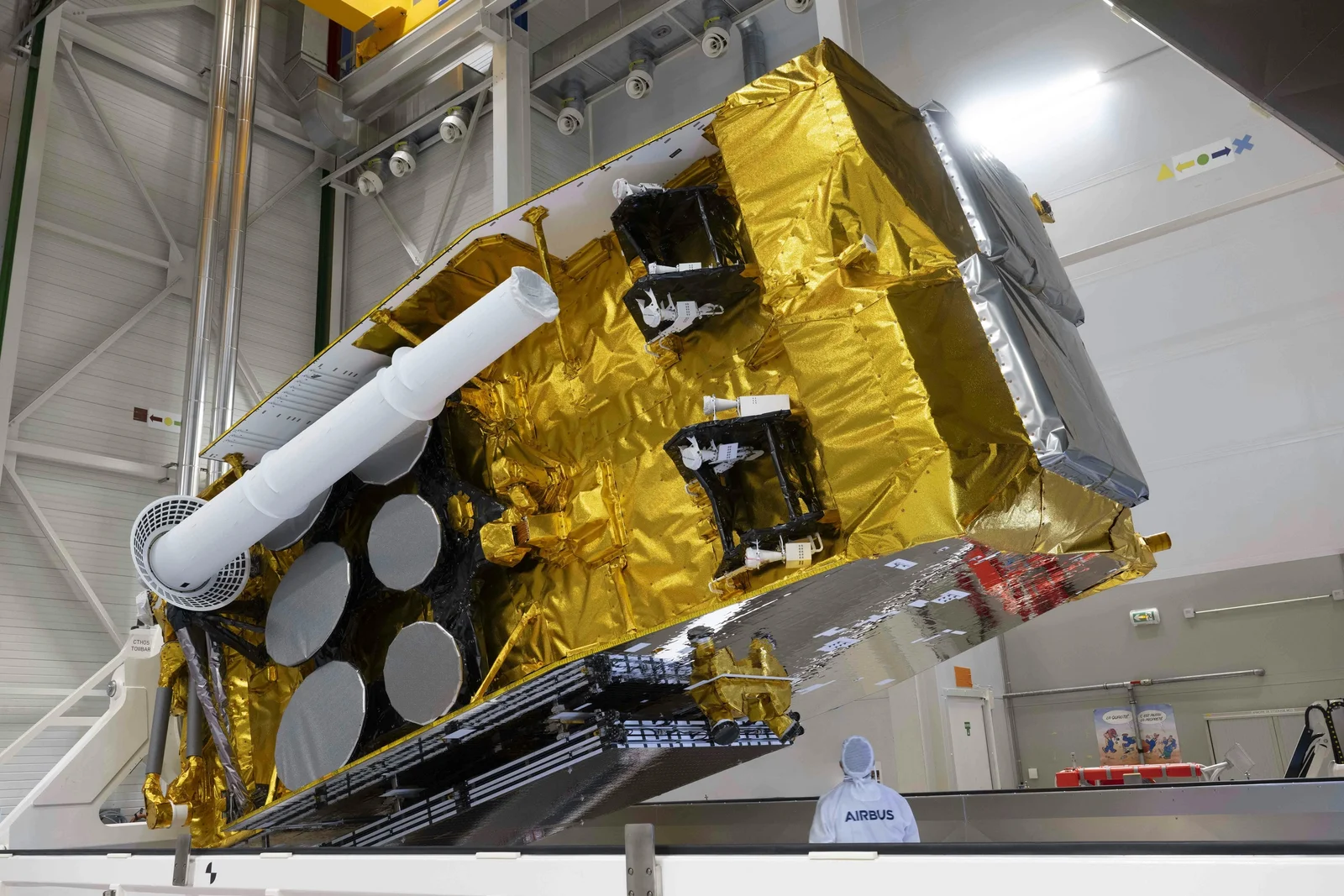
SpainSat NG 2 Satellite Encounters Space Particle Impact, Activates Contingency Plans

A Spanish military communications satellite, SpainSat NG 2, launched in October 2024, was struck by a 'space particle' while maneuvering in orbit, potentially affecting its mission. The incident occurred at about 50,000 km altitude, possibly involving micrometeoroids or space weather effects, but not orbital debris. The satellite's operator, Indra Group, is analyzing the damage and has contingency plans, including potential replacement, which could take years. The satellite is part of a European secure communications network.

space3 months ago

Mystery Surrounds 56-Year-Old Skynet-1A Satellite's Unexpected Orbit Shift

Skynet-1A, a British military satellite launched in 1969 and inactive since 1971, has mysteriously changed its orbit in 2024, likely due to onboard thrusters being used, raising concerns about space debris and collision risks in congested geostationary orbit. The incident highlights issues of space debris management, historical record loss, and the need for responsible space stewardship.

space1 year ago

Intelsat 33e Failure Highlights Space Domain Risks

The breakup of Intelsat 33e in geostationary orbit has created over 700 pieces of debris, highlighting vulnerabilities in space security. ExoAnalytic Solutions, which tracks space debris, warns that such incidents could be exploited by adversaries to hide activities in the cluttered environment. The event underscores growing concerns about space threats, particularly from China's expanding satellite capabilities and maneuvers. While the immediate threat from the debris has decreased, the incident has raised awareness about the need for improved space traffic management.

space1 year ago

Mystery Surrounds Skynet-1A Satellite's Unexpected Relocation

A defunct British satellite, Skynet-1A, launched in 1969, has mysteriously drifted from its graveyard orbit to a busy satellite area over the Pacific Ocean, raising collision risks. Experts suggest it was deliberately moved in the 1970s, possibly by the USAF, which had control during British maintenance periods. The satellite's new position in a 'gravity well' poses ongoing threats to active satellites, highlighting the persistent issue of space debris management.

science-and-technology1 year ago

Mystery Deepens as UK's Oldest Satellite Skynet-1A Relocates Unexpectedly

The UK's oldest satellite, Skynet-1A, launched in 1969, has mysteriously moved to a new position in its geostationary orbit, raising concerns about potential collisions with other satellites. The satellite's unexpected drift to a 'gravity well' at 105 degrees West longitude is puzzling scientists, as it defies expected orbital mechanics. This shift poses a risk of collision, contributing to the growing space junk problem. Efforts are underway to develop spacecraft capable of removing defunct satellites to prevent scenarios like the Kessler syndrome, where space debris collisions could escalate into a major crisis.

space-news1 year ago

Russian Inspector Satellite Approaches Spacecraft in Orbit

The Russian military satellite Luch-2 was detected closely approaching a geostationary satellite in April 2024, raising concerns about potential espionage. This follows a pattern of similar maneuvers by its predecessor, Luch-1, which had previously sparked international alarm. The incident was tracked by Aldoria, a French startup, and comes amid broader accusations from the U.S. that Russia is militarizing space.

space-technology2 years ago

"Ovzon 3 Deploys Solar Arrays in Geostationary Orbit: Space News Update"

Redwire's Roll-Out Solar Array (ROSA) technology successfully deployed two 10-meter-long solar array wings for Ovzon 3, a 1,500-kilogram broadband satellite, providing it with a combined 10 kilowatts of power for its journey to geostationary orbit. The successful deployment is a significant milestone for Swedish satcom service provider Ovzon, which aims to provide mobile connectivity to government customers, including the U.S. Department of Defense, upon entering service in mid-2024.

space2 years ago

China's Milestone: Classified Optical Satellite Launched to Geostationary Orbit

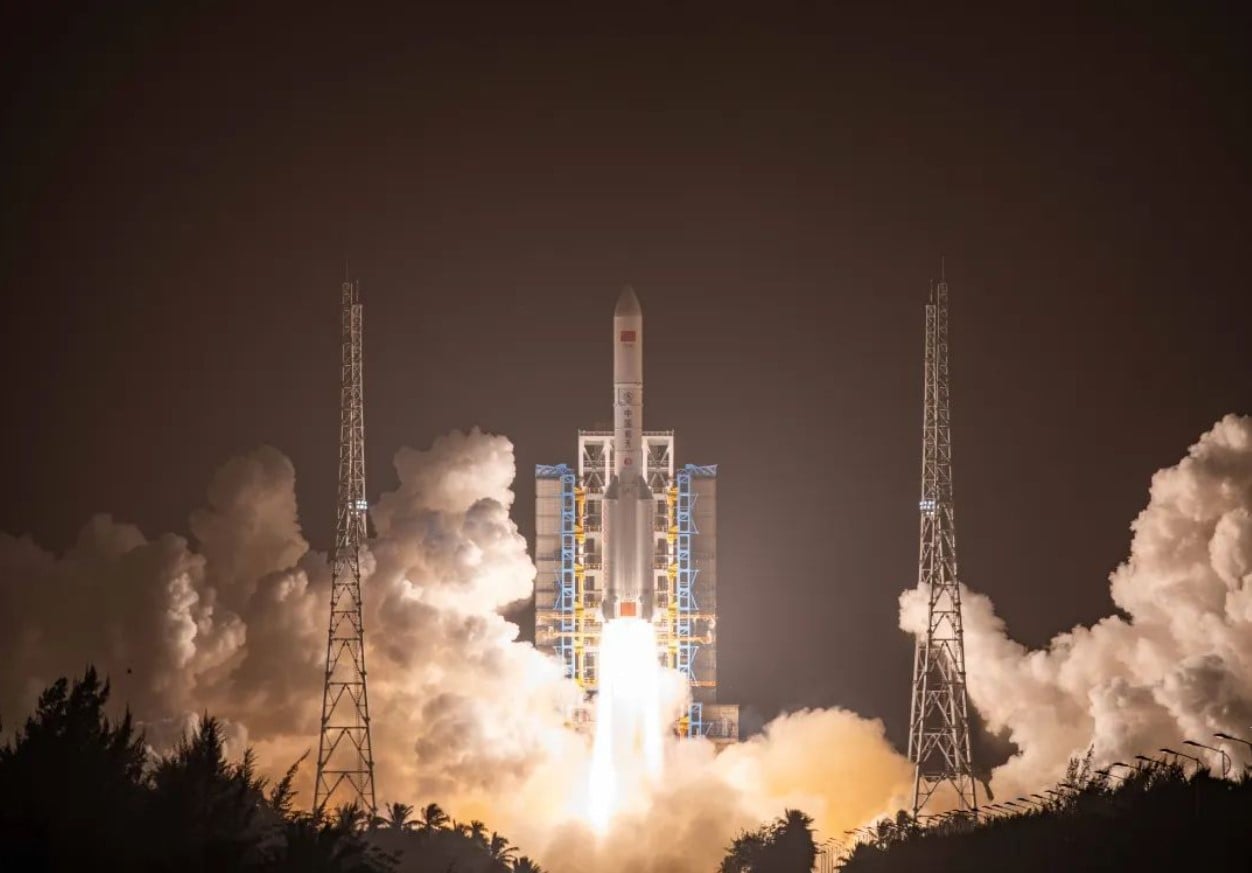
China successfully launched the classified Yaogan-41 optical satellite into geostationary orbit using its largest launch vehicle, the Long March 5. While the satellite's purpose was described as optical remote sensing for land survey, crop yield estimation, and environmental management, outside observers believe it has military applications. If positioned in geostationary orbit, Yaogan-41 will provide continuous observation of one-third of the Earth's surface, aiding in security, meteorology, climate studies, and environmental monitoring. The launch adds to China's growing on-orbit remote sensing capabilities and follows the recent launch of an experimental reusable spacecraft.

space2 years ago

"Tropical Storm Idalia Causes Delays for National Security Atlas 5 Launch"

United Launch Alliance (ULA) postponed the Atlas 5 launch from Cape Canaveral due to Tropical Storm Idalia, which is expected to become a Category 3 hurricane. The launch, carrying a critical national security payload for the Silentbarker mission, was rolled back to the Vertical Integration Facility for personnel safety. The mission aims to track satellites in geostationary orbit and detect any unexpected or threatening activities. ULA will determine a new launch date after the storm passes.

space2 years ago

"ULA's Silent Barker Mission Delayed, Atlas V Rocket Prepares for Threat Tracking"

United Launch Alliance (ULA) has postponed the launch of the classified NROL-107 Silent Barker mission due to safety concerns and the approaching Tropical Storm Idalia. Silent Barker is a joint project of the National Reconnaissance Office (NRO) and the United States Space Force, aimed at creating a constellation of satellites for tracking objects in geostationary orbit. The exact number of satellites onboard is classified, but the constellation is expected to be operational by 2026. This launch would have been the last NRO payload to launch on the Atlas V rocket, as future reconnaissance missions will fly on ULA's upcoming Vulcan rocket.