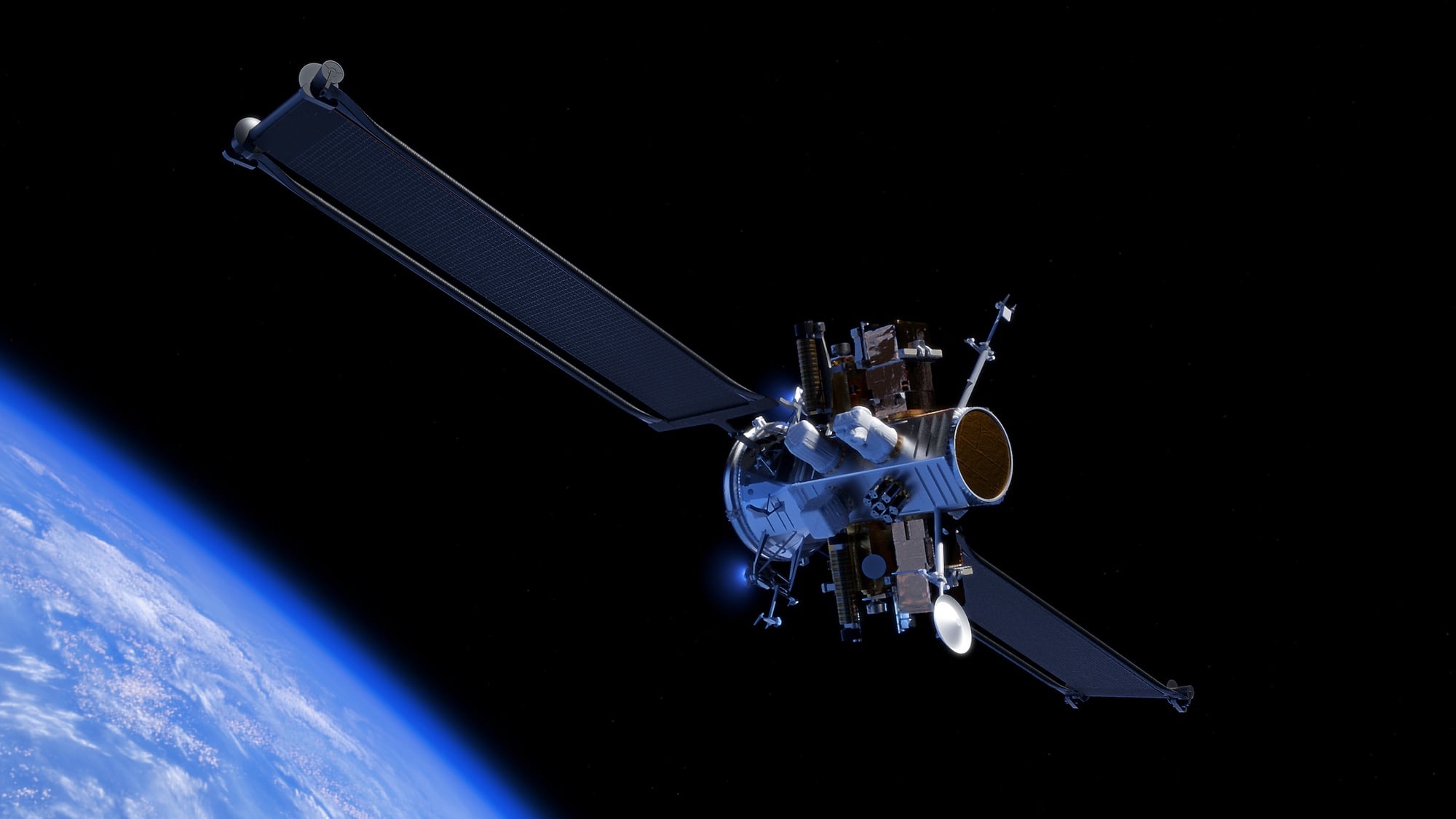
Redwire has won a contract from Blue Origin to provide solar panels and other components for the Blue Ring orbital transfer vehicle, including four Roll-Out Solar Array (ROSA) systems, cameras, and power distribution units. The vehicle is designed to carry up to 3,000 kilograms of payloads from medium Earth orbit to cislunar space. This contract marks another collaboration between the two companies, with Redwire also being a partner on the Orbital Reef commercial space station project led by Blue Origin and Sierra Space.

Redwire's Roll-Out Solar Array (ROSA) technology successfully deployed two 10-meter-long solar array wings for Ovzon 3, a 1,500-kilogram broadband satellite, providing it with a combined 10 kilowatts of power for its journey to geostationary orbit. The successful deployment is a significant milestone for Swedish satcom service provider Ovzon, which aims to provide mobile connectivity to government customers, including the U.S. Department of Defense, upon entering service in mid-2024.
Redwire's stock soared after receiving a buy rating from Roth MKM, citing significant revenue opportunities. Corteva gained after launching a new product to protect crops from nematode damage. Moderna's shares rose following CDC approval for updated Covid vaccines. Citigroup's stock advanced as the bank announced a corporate reorganization. Airline stocks, including American Airlines and Spirit Airlines, fell due to profit estimate cuts. Xpeng and Nio, Chinese EV makers, dropped after the European Commission launched an investigation into subsidies. Adobe's stock added ahead of quarterly results, and UBS recommended Ford and General Motors as buys.
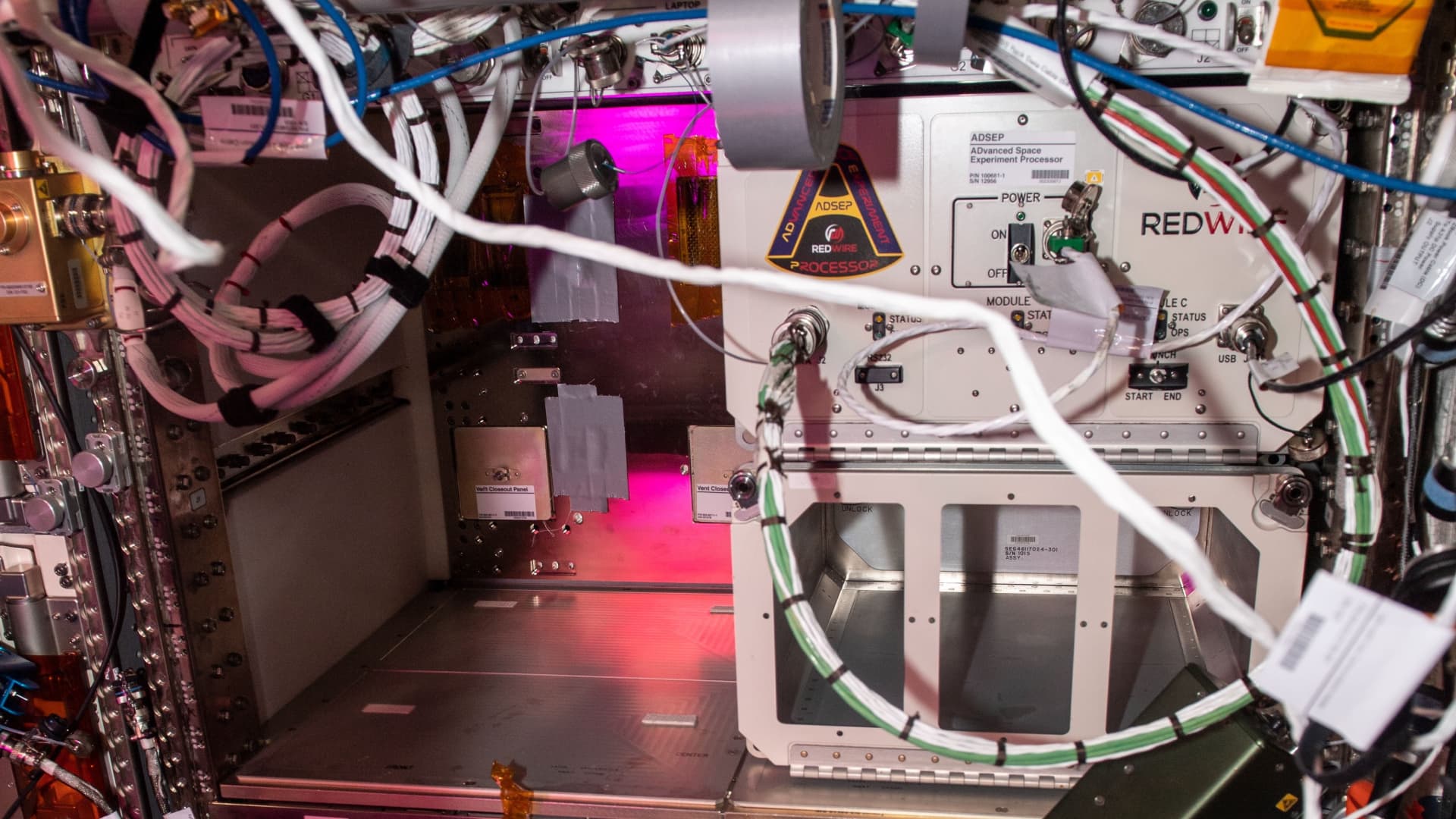
Redwire and Sierra Space have formed a partnership to develop a biotech technology testbed on Sierra's first mission with its inflatable space habitat. The goal is to manufacture drugs in space, taking advantage of the microgravity environment to create unique materials that can be used to develop more effective and longer-lasting drugs on Earth. Redwire will include its ADvanced Space Experiment Processors (ADSEP) on Sierra's LIFE habitat mission, expected in 2026. This collaboration is part of the companies' efforts to establish the business case for future space stations like Orbital Reef, which aims to succeed the International Space Station.
Redwire plans to demonstrate a machine-vision camera, developed by Deep Space Systems, as a security camera for military satellites. The camera will be updated with space-tracking algorithms to serve as a surveillance camera for satellites. The company is pitching this technology to the military as a security camera that could be installed on satellites to monitor potential hazards. The camera paired with ExoAnalytic’s software, a product Redwire named Cerebro, would give satellite manufacturers the option to replace star trackers and just use two cameras to provide 360-degree local proximity awareness and attitude control.