A Spring Hill woman died as Tennessee health officials investigate a cluster of histoplasmosis cases, a rare fungal infection; authorities warned doctors to be on alert for more cases amid the health department’s probe.
A model and social media influencer, Madelynn May, was hospitalized after smoking a joint with mold spores, leading to severe fungal infection and lung failure. She spent years in recovery, undergoing multiple procedures, and now shares her story to raise awareness, earning $2 million annually from social media.
Peter Redweik's severe illness after treatment for cryptococcal meningitis was caused by an autoimmune inflammatory response to dead fungus particles, not a recurrence of infection. Advanced diagnostics at the NIH helped identify this condition, leading to effective steroid treatment and recovery, despite lasting impairments.
Researchers at the University of Exeter have developed a prototype lateral flow test for black fungus disease (mucormycosis), which could be ready for hospital use within three years if it passes regulatory checks. The test is quick, accurate, and could significantly improve early diagnosis and treatment, potentially saving lives and reducing disfigurement caused by this deadly infection, especially in immunocompromised patients. The study validating the test involved patients with various fungal infections and was conducted in partnership with a French hospital.
Scientists have discovered that compounds in cannabis, cannabidiol (CBD) and cannabidivarin (CBDV), can effectively kill a dangerous fungus, Cryptococcus neoformans, in laboratory settings and in moth larvae models, suggesting potential for topical treatments for fungal infections in humans.
Celebrity hairstylist Jesus Guerrero, known for working with Kylie Jenner and others, died from pneumonia and a fungal infection likely related to AIDS, which compromised his immune system. His death was announced by his family and mourned by friends including Jenner and the Kardashians.
A deadly fungal infection called Aspergillosis is spreading rapidly across Europe, driven by climate change, and poses a significant health risk, especially to vulnerable populations, with potential to cause widespread fatalities and impact respiratory health.
California and Arizona are experiencing a significant rise in Valley Fever cases, a lung infection caused by the Coccidioides fungus, with California reporting a 46% increase and Arizona an 11% increase in 2024. The disease, which is not transmissible between humans, can lead to severe lung problems and even fatal complications in some cases. Efforts to develop a human vaccine are underway, with the University of Arizona Valley Fever Center for Excellence receiving $33 million in funding, following successful development of a canine vaccine.
A 30-year-old man in Phoenix, Arizona, experienced severe health complications after injecting a tea made from psilocybin-containing "magic mushrooms" into his bloodstream. This unusual method of administration led to a fungal and bacterial infection, causing multisystem organ failure and acute respiratory syndrome. The patient was treated with antibiotics and antifungal drugs and placed on a ventilator. This case underscores the dangers of using psychedelics in non-prescribed ways, particularly through injection, as the man attempted to self-medicate for bipolar disorder and opioid dependence.
Scientists in China have discovered a new drug-resistant fungal pathogen, Rhodosporidiobolus fluvialis, in clinical samples from two patients. The fungus, which thrives at human body temperature, evolved to become more virulent and drug-resistant, raising concerns about the impact of global warming on the emergence of new fungal pathogens. However, experts caution against viewing it as a major threat due to limited evidence of widespread infection.
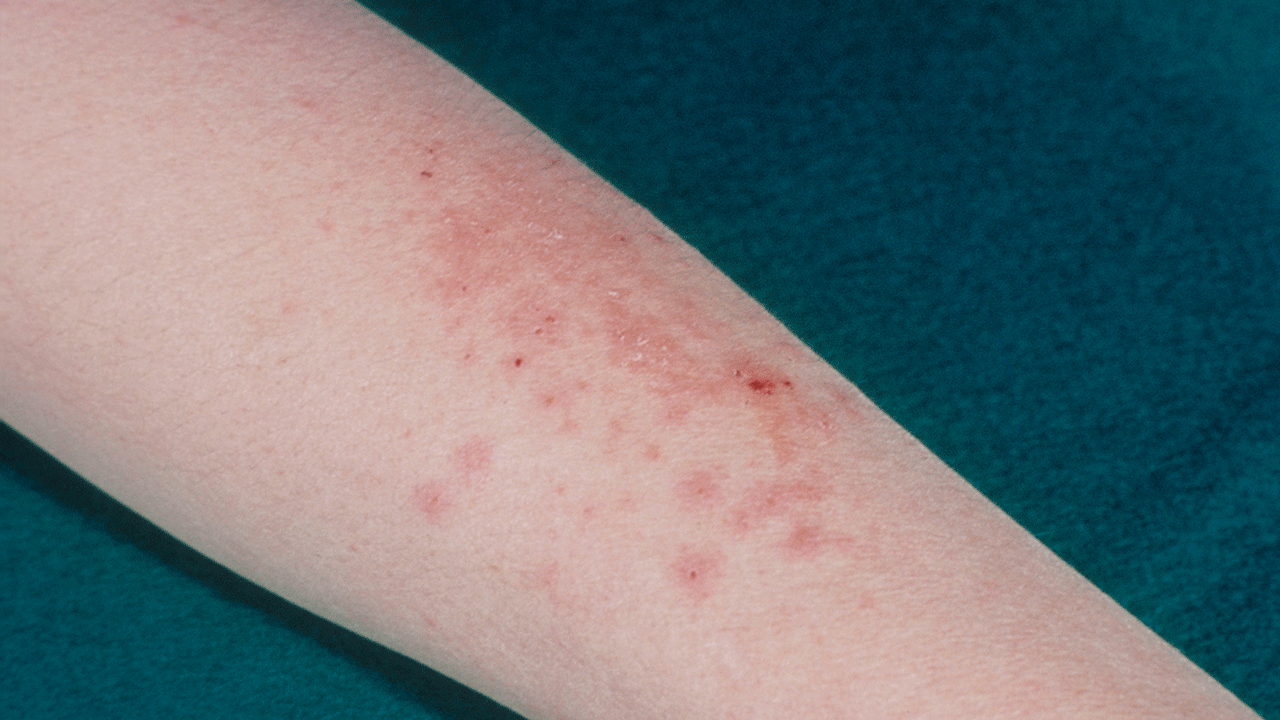
Health officials in New York City have reported the first U.S. case of a rare sexually transmitted ringworm, trichophyton mentagrophytes type VII (TMVII), in a man who had traveled to England, Greece, and California. The infection, which causes a red, itchy rash similar to eczema, took over four months to clear with antifungal treatments. While the public is advised not to be alarmed, doctors are encouraged to ask patients about genital rashes, especially those who are sexually active and have traveled recently.
Health experts in NYC have identified the first US case of a sexually transmitted fungal infection, Trichophyton mentagrophytes type VII (TMVII), in a man who developed rashes on his penis, buttocks, and limbs. The infection, which has been rising in Europe, particularly among men who have sex with men, responds to standard antifungal treatments but can be confused with eczema, delaying treatment. Another fungal strain, Trichophyton indotineae, widespread in India, has shown resistance to common antifungal medication, posing a greater challenge for dermatologists.
Athlete's foot, a fungal infection that affects the skin of the feet, can cause discomfort and is commonly contracted in warm, moist environments like public places or through exposure. Symptoms include scaling, dryness, blistering, redness, burning, or stinging, and can be treated with over-the-counter topical creams containing clotrimazole, tolnaftate, terbinafine hydrochloride, or butenafine hydrochloride. People prone to athlete's foot include athletes, those with weakened immune systems, and individuals who sweat excessively. Preventative measures include avoiding walking barefoot in public places and changing socks and shoes regularly.
University of Utah researchers are studying the spread of valley fever, a fungal respiratory infection, in Utah, with a focus on Washington County. The interdisciplinary research team aims to map where the fungus causing the disease can survive and potentially spread, especially as the climate changes. Valley fever is difficult to track as it doesn't spread from person to person, and its symptoms are similar to those of influenza. The researchers received funding to raise awareness and identify areas at risk of infection.
University of Utah researchers are studying the spread of Valley fever, a fungal respiratory infection, through soil and dust in Utah. The interdisciplinary team is mapping where the fungus can survive and spread, especially in the Washington County and St. George regions. With climate change impacting the range of the fungus, the researchers aim to raise awareness and educate the public about the signs, symptoms, and prevention of Valley fever, which poses a significant risk to outdoor workers.