Tag

Economicforecast

All articles tagged with #economicforecast

economy-and-labor2 years ago

"2024 Pay Raise Prospects Dim as U.S. Job Market Levels"

U.S. workers are expected to receive smaller raises in 2024, with companies planning an average salary increase of 4%, down from 4.4% in 2023. This trend is attributed to a cooler job market and is unlikely to reverse soon, according to labor experts. The demand for labor, which surged post-pandemic, has now moderated, leading to less aggressive wage growth compared to the "great resignation" period. Despite the decrease, the projected raises are still higher than the post-2008 financial crisis average of 3%. Companies are balancing the need to be competitive with the risk of overextending budgets, which could lead to layoffs.

economy-and-business2 years ago

"Mortgage Rate Wars Bring Relief as Lenders Slash Deals and Homeowners Save"

UK mortgage rates are showing signs of decline as lenders like HSBC and Halifax reduce their interest rates, with some rates falling below 5% for the first time since April 2023. This trend reflects market anticipation of the Bank of England cutting interest rates by mid-year. Despite a drop in house prices and a sluggish economy, there is a renewed sense of optimism in the market, with an increase in lender confidence and competition. The Bank of England's data indicates a rise in mortgage approvals and consumer borrowing, suggesting potential stimulation in new borrowing. However, the economic outlook remains cautious due to various factors, including the upcoming national election and geopolitical concerns. Capital Economics has moved its forecast for the Bank of England's first rate cut to June 2024, with an expected reduction in the key rate to 3% by 2025.

finance-and-economy2 years ago

"Preparing for a 'Soggy 2024': Experts Predict Stock Market Impact of Expected Fed Rate Cuts"

As 2024 approaches, investors are optimistic about the stock market due to a recovery from the 2022 bear market, excitement over generative AI, and expectations of interest rate cuts by the Federal Reserve. Historically, rate cuts have led to increased stock valuations, but the current situation is unique as the economy is not in a recession and inflation is under control. While the anticipated rate cuts may already be factored into stock prices, the market could still benefit from the Fed's accommodative policy, alongside other positive factors such as corporate earnings growth and advancements in AI. Investors are thus preparing for a potential continuation of the bull market into 2024.

business-and-finance2 years ago

"Copper Prices Poised for Record Surge Amid Chinese Demand and Deficit Forecasts"

Analysts predict a significant increase in copper prices, potentially over 75% by 2025, due to a combination of supply disruptions and surging demand from the renewable energy sector. Factors contributing to this forecast include expected U.S. Federal Reserve rate cuts, a weaker U.S. dollar, and ambitious global renewable energy capacity targets. Mining disruptions and environmental concerns have already impacted production, with major producers like First Quantum Minerals and Anglo American announcing output cuts. The anticipated deficits in copper supply, alongside growing demand, could lead to record-high prices, with Chile and Peru positioned to benefit as key exporters.

economy-and-finance2 years ago

"Expert Insights: Navigating the 2024 Housing Market and Mortgage Rates"

Logan Mohtashami predicts a similar range for the 10-year yield in 2024 as in 2023, with mortgage rates potentially dropping to sub-5% if economic conditions weaken. Home prices are expected to see low single-digit growth unless mortgage rates stay low and new listings don't increase, which could drive prices higher. Existing home sales need lower rates for growth, while new home sales could benefit from builders' ability to offer lower rates. The economic outlook remains cautiously optimistic, with no immediate recession concerns unless jobless claims rise significantly. Mohtashami emphasizes the importance of tracking weekly housing market data to stay informed of rapid changes.

economy-and-finance2 years ago

"Forecasting the Fed: Interest Rate Cuts and the 2024 Economic Outlook"

UBS chief US economist Jonathan Pingle predicts that the Federal Reserve will cut interest rates below 3% by December 2023, starting with a quarter-point cut in March. This forecast is based on the expectation of a mild recession in 2024, driven by a pullback in consumer spending. Pingle's projection of more than 225 basis points in cuts is significantly deeper than current market expectations and the Fed's own projections. The anticipated easing cycle is in response to a slowing economy and aims to prevent severe economic downturns, with a "soggy 2024" expected due to reduced consumer support.

economy2 years ago

"Anticipating the Impact: Fed Rate Cuts Expected in 2024 Amid Economic Downturn"

UBS chief US economist Jonathan Pingle predicts the Federal Reserve will cut interest rates below 3% by December 2023, starting with a quarter-point cut in March. This is in anticipation of a mild recession driven by a pullback in consumer spending, leading to a "soggy 2024." Pingle's forecast suggests a more aggressive easing of monetary policy than current market expectations and the Fed's own projections, as he expects a slowdown in the economy and cooling inflation to prompt the Fed to act to prevent worse economic outcomes.

finance-and-economics2 years ago

"S&P 500 Bull Run Hits Decade-High Valuation Barrier"

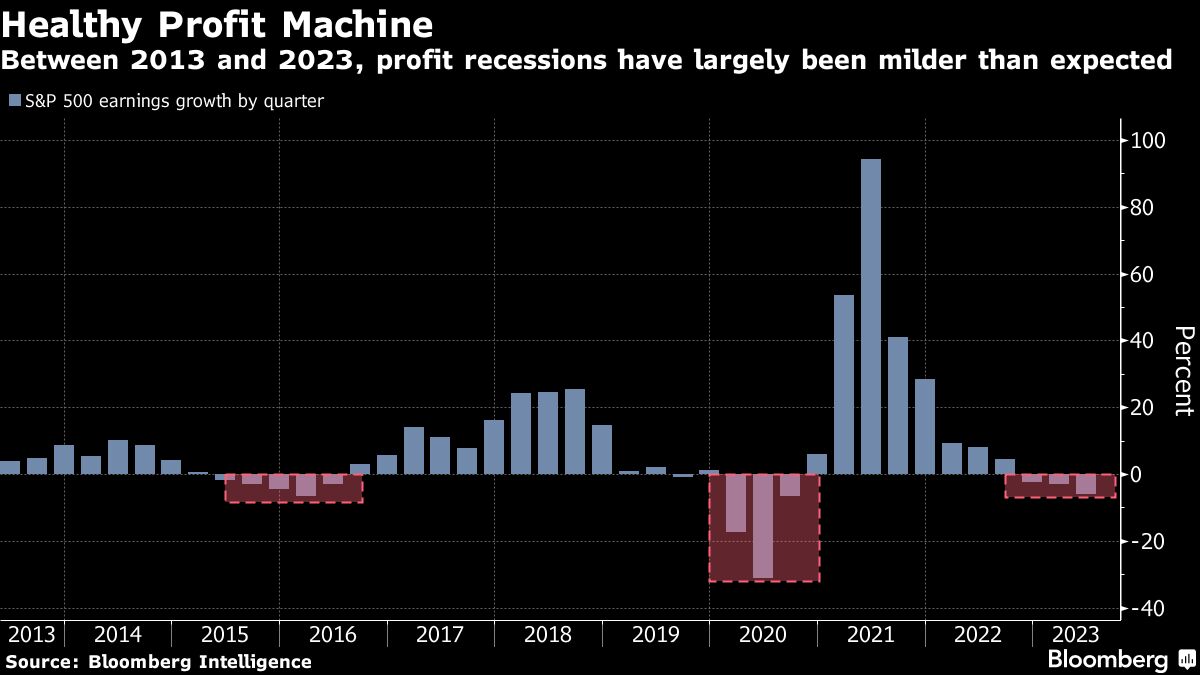
The S&P 500's decade-long bull run is facing challenges due to high valuations, making a repeat of the past decade's significant gains unlikely without unprecedented earnings growth or further valuation expansion. With the S&P 500's cyclically adjusted price-earnings ratio already above 30 times profits, analysts suggest that for stocks to appreciate, earnings must grow, valuations expand, or dividends increase. However, the end of near-zero interest rates and a shift in the economic structure may hinder the kind of multiple expansion seen in the past. Despite recent optimism and a rally in tech shares and junk bonds, the market's high valuation means it cannot rely on multiple expansion alone and will need substantial earnings growth to sustain high returns.