US unemployment benefit applications dropped below 200,000 last week, indicating low layoffs despite signs of a weakening labor market, with recent data showing mixed signals about job growth and economic health.
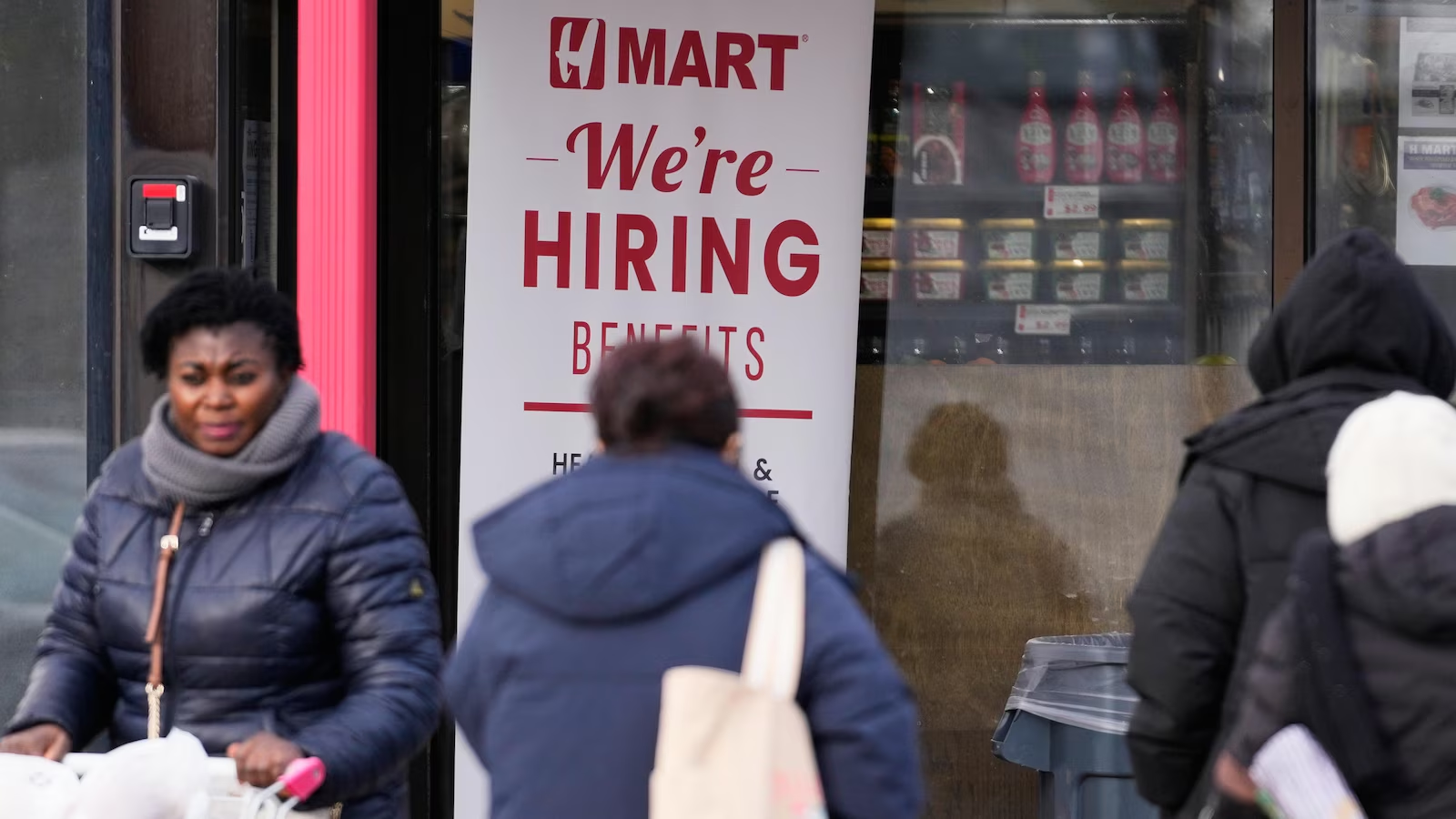
US jobless claim applications decreased by 13,000 to 224,000 last week, indicating low layoffs and a healthy labor market despite concerns over recent job gains and economic uncertainties. The labor market remains resilient, though recent data and revisions suggest some weakening, with notable layoffs at major companies and a cautious Federal Reserve.
Wall Street is awaiting the November CPI report, the first after the government shutdown, with expectations of a 3.1% inflation rate, potentially lower, which could influence interest rate policies and market momentum for 2026. The report's timing and data collection issues due to the shutdown add uncertainty to its impact.
Investors face a risky week with a busy earnings season, key economic data releases, a crucial trade deadline, and central bank meetings, amid concerns that high valuations and recent gains may lead to volatility or a market correction.
Stanley Fischer, a renowned macroeconomist and influential policy maker who served as vice chairman of the US Federal Reserve and governor of the Bank of Israel, has died at 81. He was a mentor to many leading economists, authored influential textbooks, and played key roles in global economic crises and policy decisions worldwide.
Major U.S. stock indexes, including the S&P 500 and Dow Jones, are experiencing slight fluctuations and are on track for weekly losses as a recent rally loses steam. Broadcom's shares surged, pushing its market cap over $1 trillion, driven by strong AI-related sales. Meanwhile, investors are anticipating the Federal Reserve's upcoming policy meeting, with expectations of a rate cut despite persistent inflation. Other tech stocks like Nvidia and Apple saw mixed performances, and economic indicators remain a focus for market participants.
The Nasdaq composite hit a new record high, driven by a surge in Broadcom shares, which rose over 15% and pushed the company's market cap past $1 trillion. Other AI-related stocks like Nvidia also saw gains. However, broader market indexes like the S&P 500 and Dow Jones showed mixed performance, with small caps lagging. The 10-year Treasury yield increased ahead of the Federal Reserve's expected rate cut next week. Broadcom's strong AI revenue growth and custom chip development contributed to its stock surge.
Tech stocks led gains in US equity futures, indicating a positive end to the week on Wall Street as traders anticipate the Federal Reserve's final interest-rate decision of the year. Despite a slight dip in European and Asian markets, US markets showed resilience, with Nasdaq 100 contracts rising 0.5%. The pound weakened following unexpected economic contraction in the UK, while global markets remained cautious after China's Central Economic Work Conference ended without detailed fiscal stimulus plans. European stocks are expected to underperform US stocks in 2025, amid political and economic challenges.
The stock market experienced a downturn as the S&P 500, Nasdaq, and Dow Jones all fell, driven by concerns over inflation and interest rate decisions. Despite a record high for Apple, Adobe's weak revenue forecast and Nvidia's decline contributed to the negative sentiment. The producer price index rose more than expected, complicating the Federal Reserve's potential rate cut decision. Meanwhile, mortgage rates fell for the third week, and YouTube TV announced a price increase. Bitcoin remained above $101,000, buoyed by optimism over potential crypto-friendly policies under President-elect Trump.
U.S. stocks slipped on Thursday as the market pulled back from record highs, with major indices like the S&P 500, Dow Jones, and Nasdaq Composite all declining. Technology stocks, which had surged the previous day, were mostly lower, with notable declines in Nvidia, Alphabet, and Amazon. Adobe shares fell sharply due to a weak revenue outlook, while Warner Bros. Discovery shares rose on restructuring news. Economic data showed higher-than-expected wholesale inflation and disappointing jobless claims, but did not alter expectations of a Federal Reserve rate cut next week. Meanwhile, Donald Trump made a historic visit to the NYSE, promoting tax cuts and investment in AI.
U.S. Treasury yields rose slightly as investors processed recent inflation data and awaited further economic reports, including the producer price index and jobless claims. The 10-year Treasury yield increased by nearly 3 basis points to 4.3%, while the 2-year yield rose over 2 basis points to 4.184%. The recent consumer price index showed a 2.7% annual inflation rate, aligning with expectations. With the Federal Reserve's policy meeting approaching, there's a strong anticipation of a quarter-point rate cut, as traders are nearly certain of this move.
The Nasdaq Composite surged to a record high above 20,000 points, driven by gains in major tech stocks like Alphabet and Tesla. The rally was supported by a Consumer Price Index report showing 2.7% inflation, reinforcing expectations of a Federal Reserve rate cut. Meanwhile, Match Group shares fell due to currency exchange impacts, and Netflix hit a record high after a JPMorgan price target increase. Macy's shares dropped following a delayed earnings report and an accounting error investigation.
The recent inflation report has not hindered the anticipated year-end 'Santa Claus' rally in the stock market, providing relief to investors. While transportation and shelter costs were significant contributors to inflation, a slight decrease in shelter costs is seen as positive. The Federal Reserve is expected to cut interest rates by 25 basis points next week, but concerns about potential inflation resurgence in 2025 remain.
Stock futures remained largely unchanged as investors await key inflation data, with Dow Jones, S&P 500, and Nasdaq 100 futures showing minimal movement. The upcoming consumer price index (CPI) report is expected to show a 0.3% monthly increase and a 2.7% annual rise, with core CPI anticipated to rise 0.3% monthly and 3.3% annually. This data, along with the producer price index, will be crucial ahead of the Federal Reserve's policy meeting, where there's an 85% chance of an interest rate cut. Investors are also monitoring corporate earnings, including Adobe's results.
U.S. stock futures were mostly higher as investors awaited the final inflation data of the year, with the S&P 500 and Nasdaq 100 futures slightly up, while Dow futures dipped. The upcoming consumer price index report is expected to show a slight increase in inflation, which could influence Federal Reserve rate cut expectations. Investors are also navigating global geopolitical risks and China's recent antitrust probe into Nvidia, alongside its economic stimulus plans. Despite a recent surge in U.S.-listed Chinese stocks, disappointing trade data from China poses challenges.