Tag

Dscovr Satellite

All articles tagged with #dscovr satellite

space2 years ago

Stunning Satellite Image Reveals Moon's Shadow During U.S. Solar Eclipse

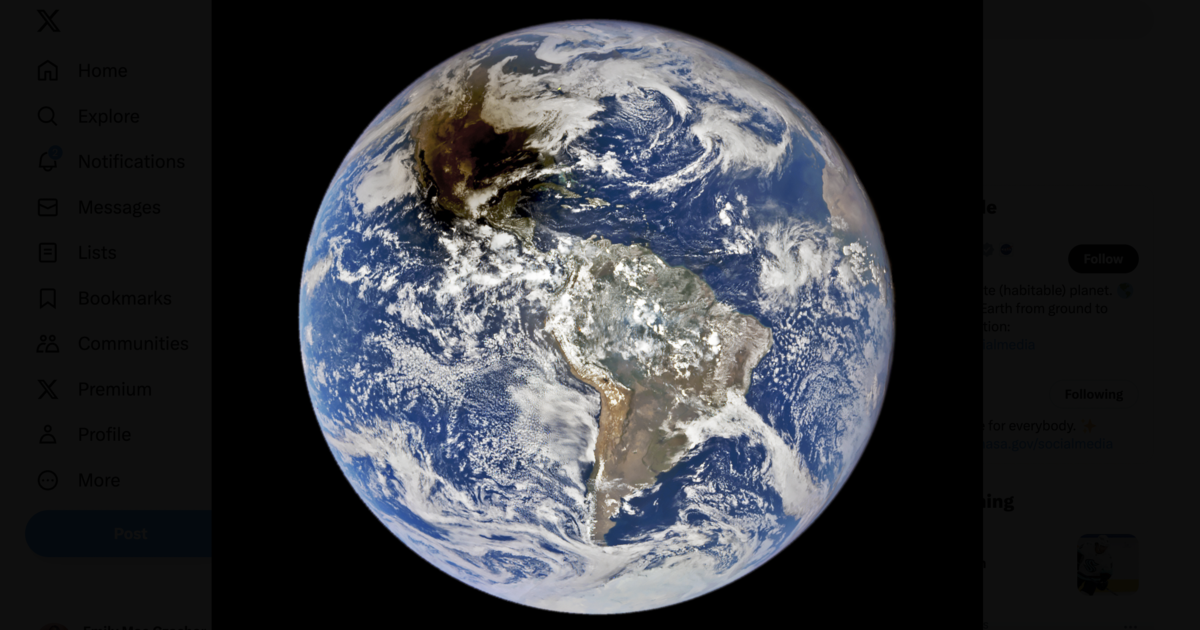
A satellite image captured by NASA's DSCOVR satellite shows the moon casting a shadow over a large portion of the United States during an annular eclipse. The image, taken by the Earth Polychromatic Imaging Camera (EPIC), shows the moon's shadow falling across the southeastern coast of Texas. An annular eclipse occurs when the moon passes in front of the sun but is too far away to completely block its light, creating a "ring of fire" effect. The next annular solar eclipse visible from the U.S. will be on June 21, 2039.
space2 years ago

"Stunning Views of Annular Solar Eclipse from Space, San Diego, and the U.S."

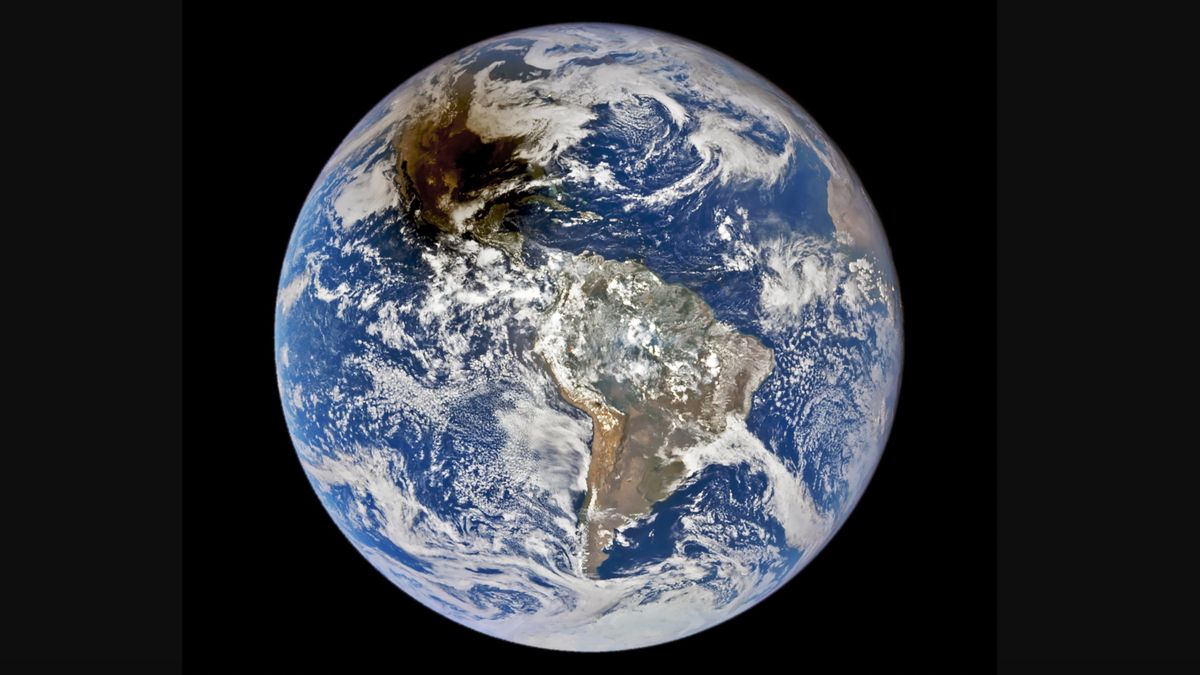
NASA's DSCOVR satellite, located nearly 1 million miles away from Earth, captured a stunning photo of the annular solar eclipse that occurred on October 14, 2023. The image shows the moon's dusky shadow partially covering North America, with our blue planet against the blackness of space. DSCOVR, a joint effort of NASA, NOAA, and the U.S. Air Force, primarily monitors the solar wind but also conducts Earth observation using NASA's EPIC camera. Other satellites in Earth's orbit also recorded the eclipse, showcasing the moon's shadow sweeping across the contiguous United States.

science-and-technology2 years ago

Incoming Solar Storms: NASA Warns of Gigantic CMEs and Geomagnetic Fury

A massive coronal mass ejection (CME) is expected to strike Earth on October 7, following a sunspot explosion on October 3. NASA has recorded the explosion and shared a video of the event. Minor solar storm-like conditions are already occurring, with solar winds hitting Earth at 440 kilometers per second. The NOAA's DSCOVR satellite monitors the Sun's behavior and provides data for analysis by the Space Weather Prediction Center.

science-and-technology2 years ago

Impending Solar Storm Threatens Earth's Power Grid

A new sunspot on the Earth-facing side of the Sun has the potential to produce X-class solar flares, which could lead to radio blackouts and the possibility of blackouts on Earth. While there is a 35% chance of an M-class solar flare eruption and a 5% chance of an X-class solar flare, it is uncertain if a coronal mass ejection (CME) will be directed towards Earth. The NOAA's DSCOVR satellite is monitoring the Sun's behavior to provide accurate predictions and analysis of solar storms.

science-and-technology2 years ago

Impending Solar Storm Threatens Earth as NASA Warns of Massive CME Clouds

NASA has revealed that a solar storm is approaching Earth, with a CME expected to pass close to our planet on July 13th. While there is some uncertainty about whether the storm will strike or not, if it does, it could disturb Earth's magnetic field, produce high latitude auroras, and potentially damage smaller satellites and disrupt wireless frequencies such as GPS and low-frequency radio waves. NOAA's DSCOVR satellite is monitoring the situation and providing data for analysis.

science-and-technology2 years ago

Decaying Sunspot Poses Threat of M-Class Solar Flares and Possible Solar Storm.

The unstable magnetic field of the large sunspot AR3315 has decayed, reducing the threat of an X-class solar flare but still leaving a 40% chance of an M-class flare eruption. If an M-class solar flare does occur, it could still cause a geomagnetic storm, damaging smaller satellites, disrupting communication and internet connectivity, and potentially causing power grid failures. NOAA's DSCOVR satellite monitors solar storms and the Sun's behavior to predict and prepare for potential impacts.

science-and-technology2 years ago

Sun unleashes powerful storms, triggers blackouts and auroras.

A rare double solar flare eruption has triggered blackouts over North America and the Pacific Ocean. The eruption also hurled a coronal mass ejection (CME) cloud, but it remains to be confirmed whether it was Earth-directed or not. Solar storms can damage small satellites, impact mobile networks, GPS, and even pose a threat to ground-based electronics and power grids by increasing the magnetic potential by huge amounts. NOAA's DSCOVR satellite monitors solar storms and the Sun's behavior.

science-and-technology2 years ago

"Earth Braces for Potential Geomagnetic Storm from Strong Solar Flare and Multiple Sunspots"

NOAA has warned that a strong M-class solar flare may hit Earth, which could generate a geomagnetic storm. The sunspot AR3280, which has a beta-gamma magnetic field, is the probable origin of the impending solar flare. Although Earth's magnetosphere is effective in blocking solar flares, some charged particles can penetrate through and result in magnetic disruptions referred to as geomagnetic storms or substorms, which can interfere with radio communications and the power grid. NOAA monitors solar flares and the Sun's behavior using its DSCOVR satellite.

science2 years ago

Solar Storm Triggers Terrifying Geomagnetic Phenomenon in Danish Skies.

A solar storm caused a G4 Geomagnetic storm that resulted in radio communication shutdowns, GPS malfunctions, auroras, and a rare phenomenon known as SARs, which appeared as a hazy red streak of light across the sky in parts of Scandinavia. SARs are not actually auroras but are caused by the leakage of thermal energy into the upper atmosphere from Earth's ring current system. The DSCOVR satellite by NOAA tracks different measurements of the Sun and its atmosphere to predict space weather phenomena.

science-and-technology2 years ago

"Sun unleashes powerful solar flares, sparking fears on Earth"

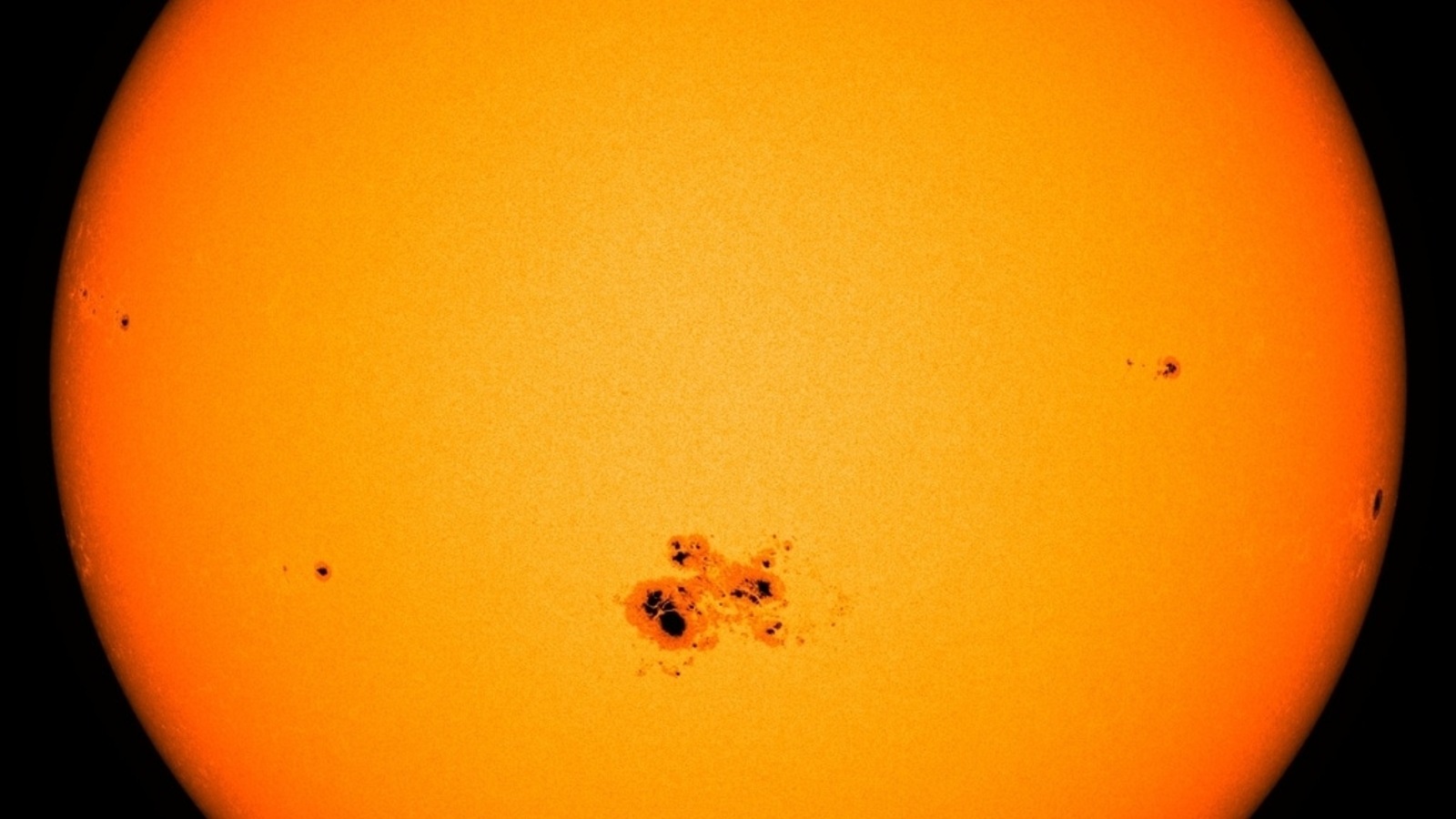
Nine dangerous sunspots have been detected on the Sun, raising fears of potential solar storms that could damage satellites, mobile networks, internet services, power grids, and sensitive electronics. Sunspots are caused by intense magnetic activity that inhibits the flow of heat from the sun's interior, resulting in a cooler region that appears darker than the surrounding area. If even one of these sunspots explodes, it could cause a solar flare eruption and release coronal mass ejections (CME) that could lead to geomagnetic storms on Earth. NOAA's DSCOVR satellite monitors solar storms and the Sun's behavior to predict potential impacts on Earth.

science2 years ago

Solar Storms Set to Illuminate the Skies: What You Need to Know.

A G4-class geomagnetic storm, the strongest seen in six years, hit the Earth on March 23, caused by huge amounts of solar winds entering the upper atmosphere of the Earth through a crack open in the planet's magnetic field. The storm can damage satellites, cause fluctuations in power grids, and disrupt GPS and shortwave radio. The event went undetected for several hours till disturbance in the upper atmosphere of the higher latitudes. The DSCOVR satellite by NOAA tracks different measurements of the Sun and its atmosphere to predict such events.

science-and-technology2 years ago

Impending Solar Storm Threatens Earth with High-Speed Winds and Dazzling Auroras

The National Oceanic and Atmospheric Administration (NOAA) has warned that a G2-class geomagnetic storm, caused by a solar storm, will hit Earth on March 24th. While this could result in intense auroras, powerful solar storms can also cause damage to wireless communications, electronic infrastructure, satellites, mobile networks, internet services, power grids, and sensitive ground-based electronics. NOAA monitors solar storms and the Sun's behavior using its DSCOVR satellite to predict the impact of such storms on Earth.