Tag

Default Risk

All articles tagged with #default risk

finance2 years ago

"Utilizing Seized Russian Assets to Rebuild Ukraine: Expert Insights"

Moody's and S&P Global stated that countries whose sovereign bonds were purchased by Russia would not be considered in default if Western governments decide to confiscate frozen Russian reserves worth $300 billion. The rating agencies' interpretation may allay concerns around default risk, as they do not typically reflect holder-specific considerations and believe that interest payments would continue to be disbursed to other creditors. Russian authorities are privately leaning towards the view that the reserves are all but lost, but are determined to mount a legal challenge and retaliate strongly, while also threatening retaliation such as confiscating Western assets trapped in Russia and breaking off diplomatic relations with foreign powers deemed unfriendly.


economy2 years ago

Fitch Downgrades Ethiopia and Egypt's Credit Ratings on Rising Default Risk

Fitch has downgraded Ethiopia's credit rating to CC from CCC-, citing increased risk of default due to gaps in external financing. The country has struggled with debt, requesting a debt restructuring under the G20's Common Framework agreement. Delays in the process and slow movement on a requested bailout from the IMF have left Ethiopia short of cash. Fitch expects bilateral liquidity relief to be insufficient to address the financing gaps without renewed financing from international financial institutions.

finance2 years ago

Impending Trouble: Fading Optimism and Debt Wall Threaten Economy

Fading optimism on interest rates signals trouble for the $425 billion debt wall facing corporate America. The strong US jobs report increases the likelihood of another Federal Reserve rate increase this year, which is negative for companies that have been increasing their debt levels as yields have surged. Companies face higher borrowing costs, which could cut into profits and increase default risk. The higher yields have already shut down new junk bond sales, and the average yield on the Bloomberg Global High Yield index has reached its highest level since November last year. The corporate private credit market is also expected to see more defaults.

finance2 years ago

"High Fed Rates Threaten Leveraged Loans with Wrecking Ball Impact"

Companies in the U.S. leveraged loan market could face distress if the Federal Reserve maintains high interest rates, according to Oaktree Capital Management. Elevated interest rates are making it challenging for companies to service their floating-rate debt, potentially leading to defaults. Moody's Investors Service estimates that about 62% of B-rated companies would struggle to pay interest on their debts if the Fed's policy rate remains unchanged. While leveraged loan defaults have been rising, total returns have remained positive. However, if the Fed keeps rates high for longer, the grace period for borrowers will narrow, exposing a significant portion of the sector to higher borrowing costs. Investors should prepare for potential disruptions in credit markets and consider buying opportunities.

businesseconomy2 years ago

Country Garden, China's Largest Property Developer, Faces Default Risk and Record Losses

China's largest property developer, Country Garden, has reported a loss of nearly $7 billion for the first half of the year, putting the company at risk of default. The real estate crisis in China, exacerbated by post-pandemic uncertainty and a government crackdown on the sector, has weakened sales and affected broader confidence in the economy. Country Garden's default would pose a significant risk to China's fragile economy and undermine the government's target of 5 percent economic growth this year. The collapse of the company could have ripple effects on new construction, building materials, consumer spending, and banking, but the risk of global contagion is relatively low.

politics2 years ago

Debt limit negotiations cause anxiety and clash over spending cuts.

Negotiations over raising the US debt limit are ongoing, but major differences remain between White House and House GOP negotiators, particularly on spending cuts and work requirements for social safety net programs. The debt ceiling would be raised for two years while capping federal spending, except for defense and veterans spending, under a potential agreement being eyed by negotiators. Treasury Secretary Janet Yellen has warned Congress that it has little time left to address the debt ceiling before the nation defaults on its obligations, and the uncertainty of the deadline makes it harder to know exactly how much time Congress has to act.

politics2 years ago

Impending U.S. Debt Default Threatens Global Economy and National Security

The Bipartisan Policy Center has warned that the US faces an "elevated risk" of defaulting on its debt between June 2 and 13 if Congress does not raise or suspend the nation's debt limit. The Treasury Department will be operating on "dangerously low" cash reserves after Memorial Day, and each day in June will come with increasing risk. Treasury Secretary Janet Yellen has reiterated her estimate that the X-date could arrive as soon as June 1 and warned that a failure to increase the debt limit would cause severe hardship to American families, harm the country's global leadership position, and raise questions about its ability to defend national security interests.

business2 years ago

Impending U.S. Debt Default Threatens National Security.

The Bipartisan Policy Center has warned that the US faces an "elevated risk" of running out of cash to pay its bills between June 2 and 13 if Congress does not raise or suspend the nation's debt limit. The Treasury Department will be operating on "dangerously low" cash reserves after Memorial Day, and each day in June would come with increasing risk. The federal government could get a reprieve if it can muster sufficient revenue to make it to June 15, when quarterly tax payments are due.

finance2 years ago

U.S. Treasury Yields Reach New Highs in March

The yield on the 2-year and 10-year U.S Treasury notes briefly traded near their highest levels since March as investors pondered the economic outlook as debt ceiling negotiations pressed on. Unless a resolution is struck, the U.S. risks defaulting on its debt as soon as June 1, according to Treasury Secretary Janet Yellen reiterated Monday. Uncertainty about the Fed's next interest rate moves persisted Tuesday.

finance2 years ago

US Government Faces Cash Crunch Deadline of June 8 or 9: Goldman Sachs

The US could default on its debt on June 8 or 9, about a week later than the June 1 "X-date" indicated by Treasury Secretary Janet Yellen, according to Goldman Sachs' chief political economist. The X-date is when the US can no longer pay its bills if the debt ceiling isn't raised. While the delay may buy the US more time to negotiate a deal over raising the debt ceiling, it's still better to do it sooner or later, said Goldman Sachs' Alec Phillips. The federal government relies on debt for its spending, and a default could have a domino effect on the domestic and global economy.

finance2 years ago

US Treasury's Cash Reserves Reach Critical Low Amid Debt Ceiling Impasse

The US federal government's cash balance has dropped to $57.3 billion, the lowest since December 2021, as lawmakers have yet to resolve the debt ceiling crisis. The Treasury General Account is used to pay for debt service on government bonds, among other outlays like entitlements and federal employee salaries. The government has spent $3.6 trillion so far this fiscal year, and last fiscal year, it spent $6.3 trillion in total. The sudden drawdown this week raises the risk that the Treasury Department may not have enough to last until more tax payments come in starting on June 15, setting up a potential default. Lawmakers remain at odds on lifting the debt ceiling, and negotiations hit a new impasse on Friday.

finance2 years ago

Debt ceiling crisis and its impact on Bitcoin and the dollar.

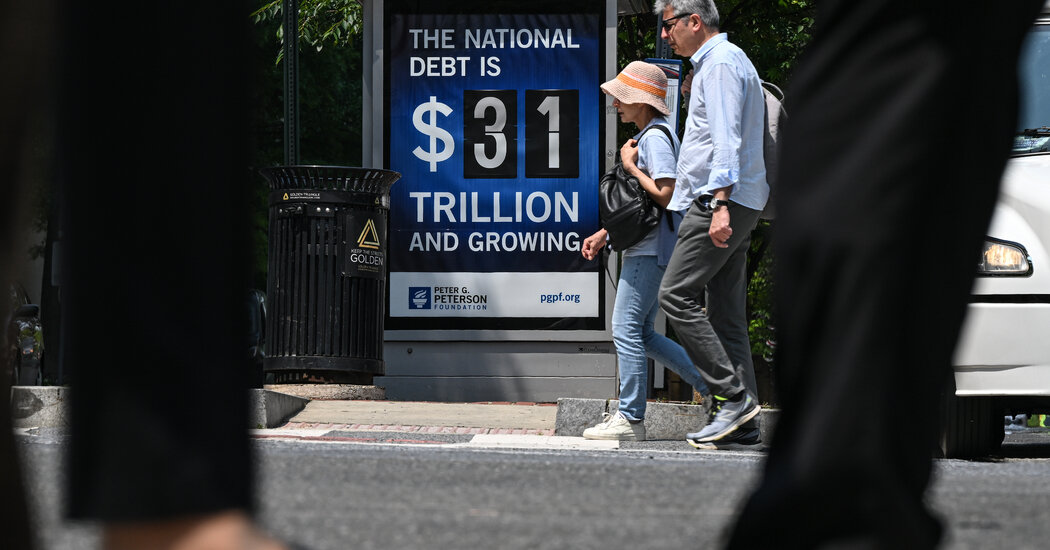
The U.S. has hit its $31.4 trillion debt ceiling and risks defaulting on its sovereign debt if the ceiling is not lifted before June 1. Bipartisan negotiations are underway, but no agreement has been reached yet. A U.S. government default would have catastrophic effects on the global financial system, causing stock markets to crash, millions of job losses, and a likely recession. The impact of the debt ceiling crisis on cryptocurrency and the broader market remains uncertain.

politics2 years ago

US Debt Default Looms in June Despite Tax Receipts, Yellen Warns.

The Congressional Budget Office has warned that there is a "significant risk" the US will default on its debt "at some point in the first two weeks of June." This is an escalation from the agency's previous assessment of how soon the government won't be able to pay its bills. The new assessment underscores the tight timeline lawmakers are facing to reach a deal to lift the debt ceiling, or risk an unprecedented default that analysts have warned would wreak havoc on the economy.

politics2 years ago

Impending US Default Looms as Debt Ceiling Deadline Approaches

The US risks defaulting on its debts for the first time in history as early as June 1, according to Treasury Secretary Janet Yellen. Yellen urged Congress to act as soon as possible to raise or suspend the debt limit, which is currently set at about $31.4 trillion. The House Republican majority has said they won't raise the limit further without a compromise from Democrats on spending and the federal government's budget, which President Joe Biden has rejected. The president called all four congressional leaders to a May 9 meeting on the debt limit.

finance2 years ago

Debt Ceiling Worries Mount as US Approaches Deadline.

The US government's deadline to raise the $31.4tn debt ceiling could be sooner than expected, with weaker-than-expected tax receipts for the April filing season pulling forward the risk of a debt default that could have wide repercussions across global financial markets. The Treasury can use cash on hand and extraordinary measures to generate cash once the debt limit is reached. Some Treasury bills are featuring a premium in their yields that may be tied to an elevated default risk, according to some analysts. An actual US debt default would likely send shockwaves through global financial markets, as investors would lose confidence in the US ability to pay its bonds, which are seen as among the safest investments and serve as building blocks for the world's financial system.