
"New Study Reveals Surprising Planetary Formation Potential in Nearby Galaxy"
TL;DR Summary
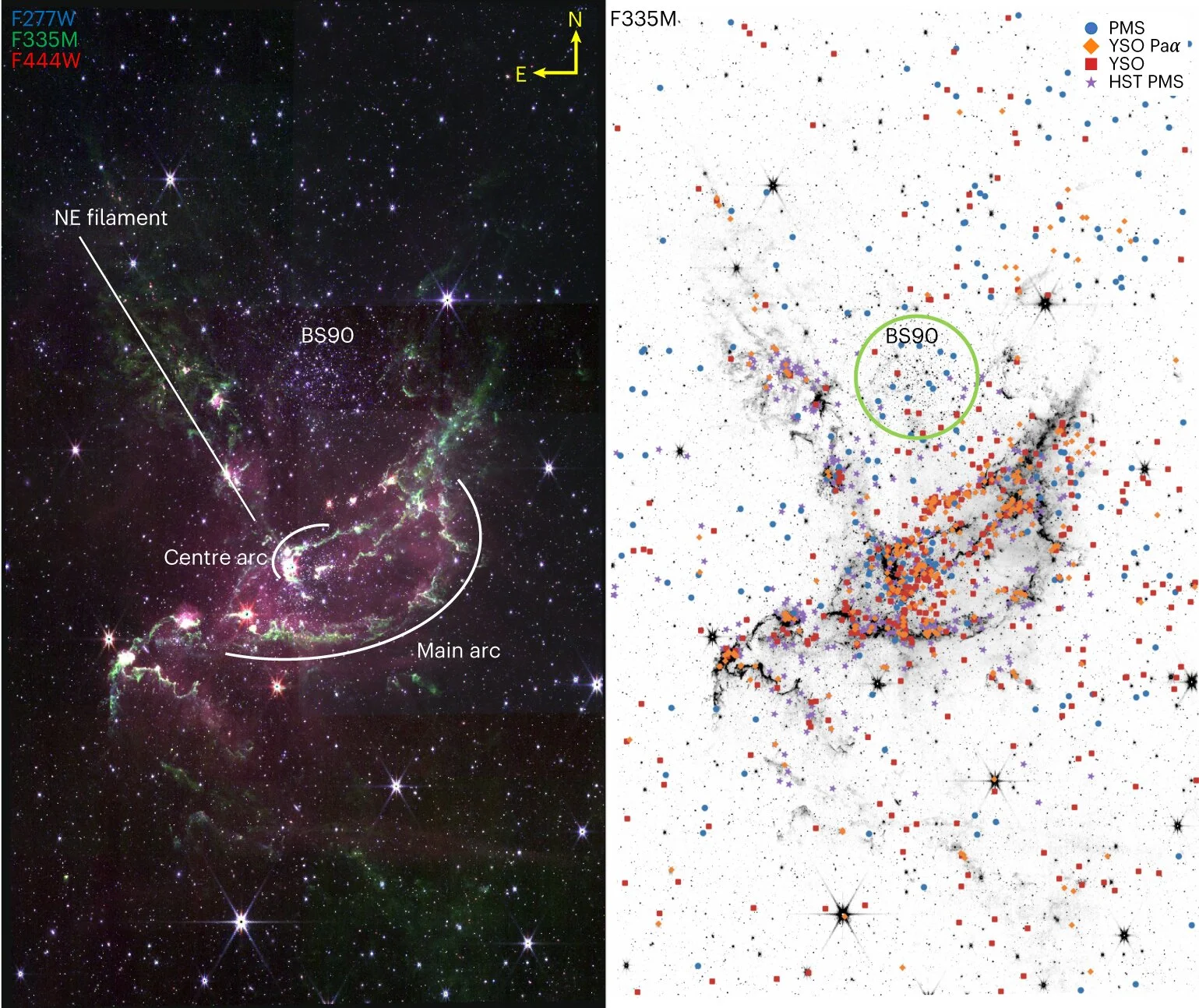
An international team of space scientists has used data from the James Webb Space Telescope to study a part of the Small Magellanic Cloud and found evidence suggesting that planets could have formed during the "cosmic noon." The team focused on a part of the SMC called NGC 346, which is made up of hundreds of young, low-mass stars, and found evidence of rock-forming elements in the SMC, despite the lack of metals, suggesting that many planets may have been forming around them at that time.
Topics:science#astronomy#cosmic-noon#james-webb-space-telescope#planet-formation#small-magellanic-cloud#young-stars
- Study of Small Magellanic Cloud suggests planets could have formed during 'cosmic noon' Phys.org
- Rocky planets might have been able to form in the early universe Science News Magazine
- JWST spots planetary building blocks in a surprising galaxy Nature.com
- A Tiny Nearby Galaxy Has More Planet-Building Potential Than We Thought Inverse
- JWST Spies Planetary Ingredients In Galaxy Next Door IFLScience
Reading Insights
Total Reads
0
Unique Readers
6
Time Saved
2 min
vs 3 min read
Condensed
80%
440 → 86 words
Want the full story? Read the original article
Read on Phys.org