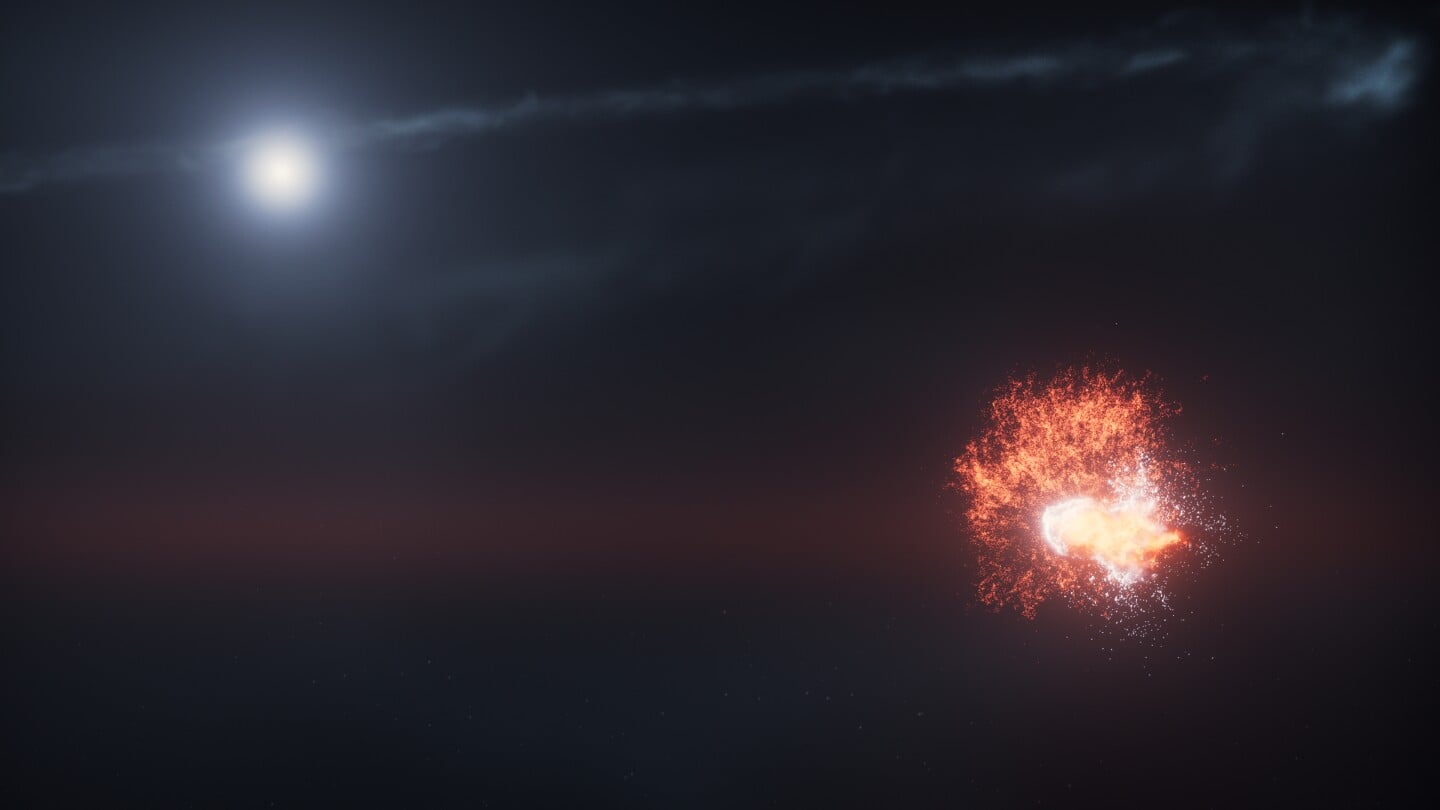
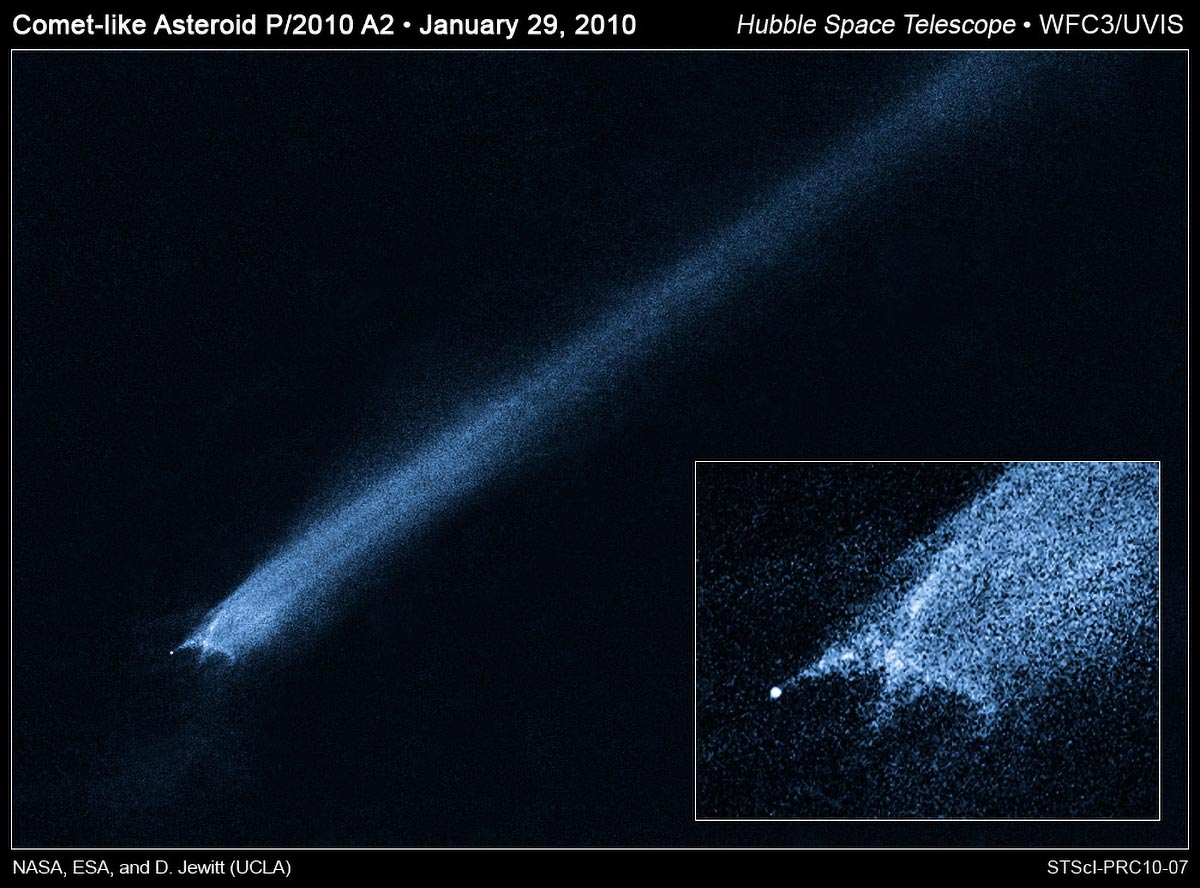
NASA's Hubble Space Telescope captured images of two massive cosmic collisions near the star Fomalhaut, revealing dust clouds from space rocks at least 37 miles wide. These rare observations suggest such collisions may be more common than previously thought, providing valuable insights into planet formation processes.
New data from ESA's Gaia mission reveals how collisions and internal friction influence asteroid spins, explaining why some tumble chaotically while others spin smoothly, with implications for understanding asteroid composition and planetary defense strategies.
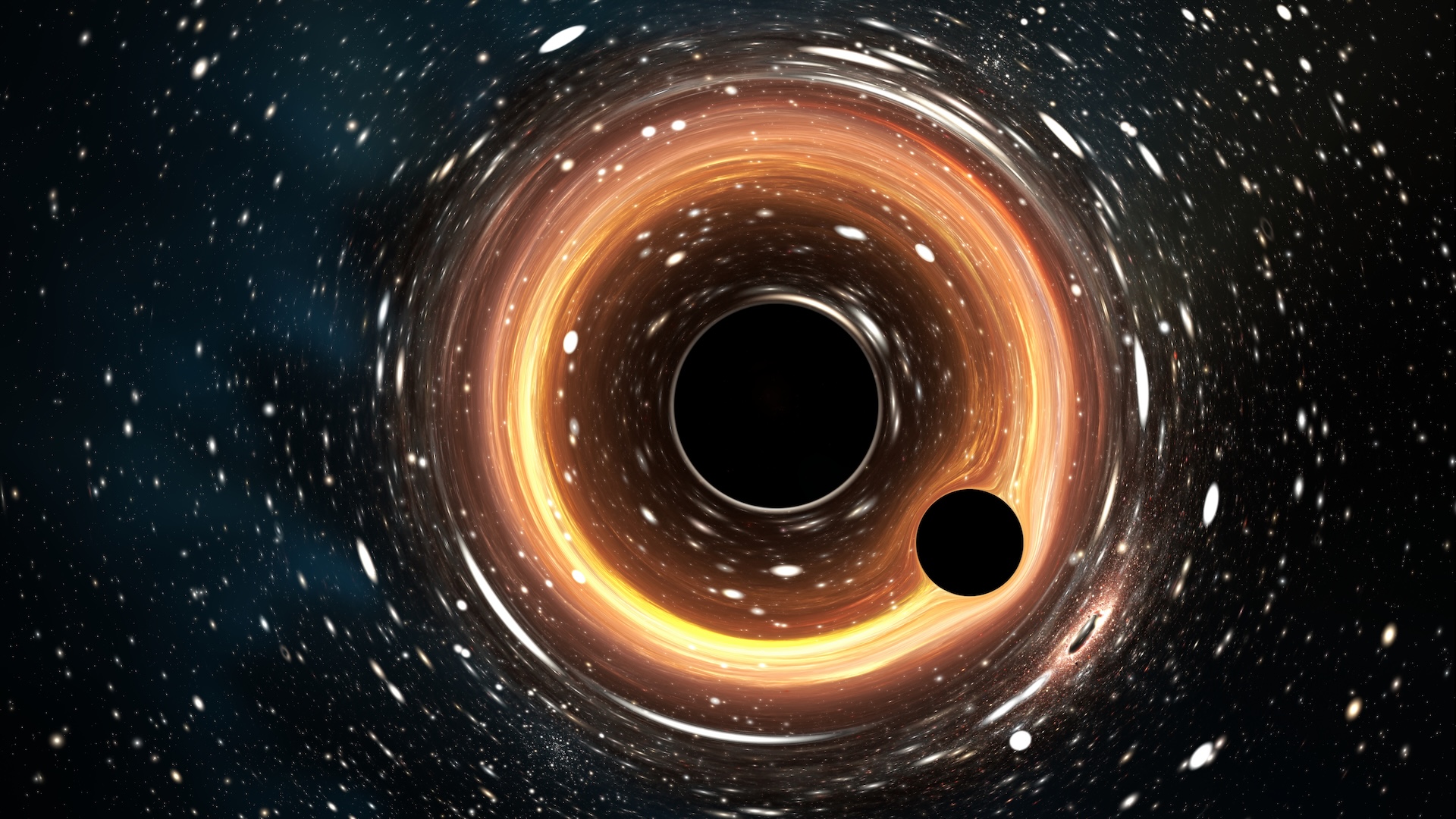
Scientists propose that tiny black holes, formed during cosmic collisions, could emit detectable radiation revealing new physics, including insights into quantum gravity, with current instruments potentially capable of observing these signals.
Astronomers from the University of Southampton have discovered that ancient cosmic collisions between galaxies may have led to the formation of massive elliptical galaxies, solving a long-standing mystery in astronomy. Using the Atacama Large Millimeter Array (ALMA), the team observed over 100 distant galaxies, finding that these collisions caused cold gas to sink towards galaxy centers, creating trillions of new stars and feeding supermassive black holes. This research, published in Nature, provides new insights into galaxy formation in the early universe.
Astronomers from the University of Southampton, in collaboration with the Purple Mountain Observatory and the Chinese Academy of Science, are close to solving the mystery of how the universe's largest elliptical galaxies formed. Their research suggests that cosmic collisions between disc galaxies 8 to 12 billion years ago led to intense star formation, creating these massive galaxies. Using the world's largest radio telescope, Alma, they have gathered evidence that supports this theory, and plan to integrate data from other space telescopes to further understand early galaxy formation.
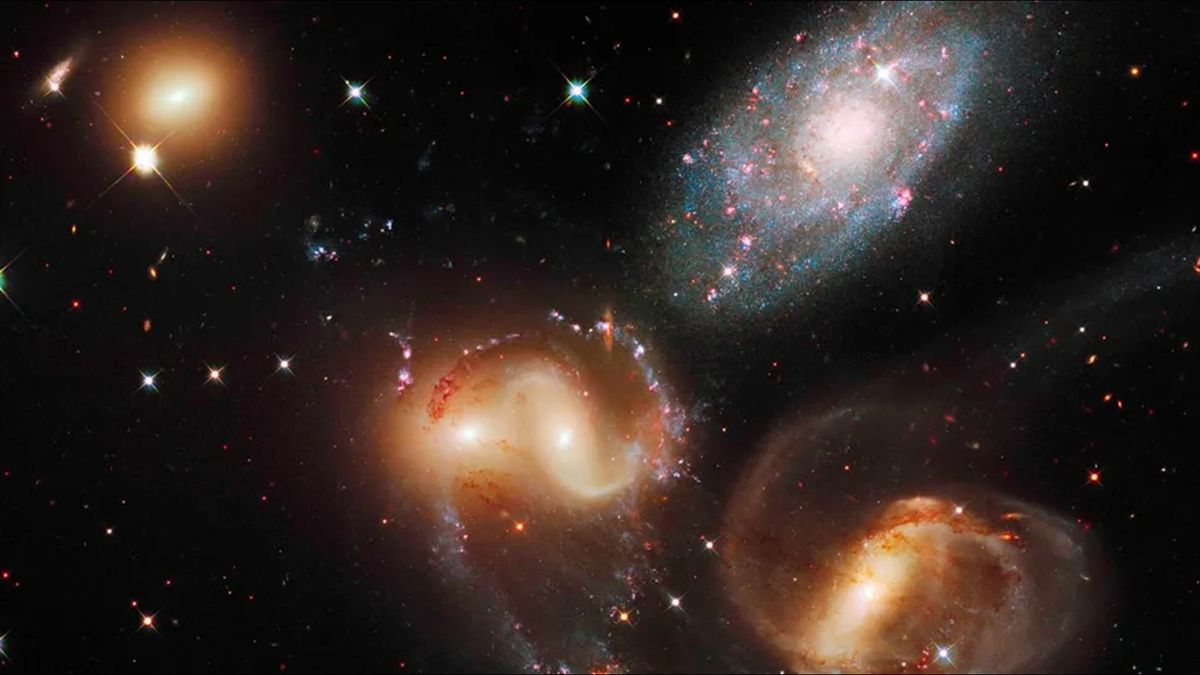
Astronomers have observed a powerful shock wave in Stephan's Quintet, caused by the galaxy NGC 7318b colliding with its neighbors at 2 million mph. This cosmic event, akin to a sonic boom, has energized plasma and possibly triggered star formation. The study, using the WEAVE spectrograph, aims to provide insights into galaxy interactions and cosmic history, with findings published in the Monthly Notices of the Royal Astronomical Society.
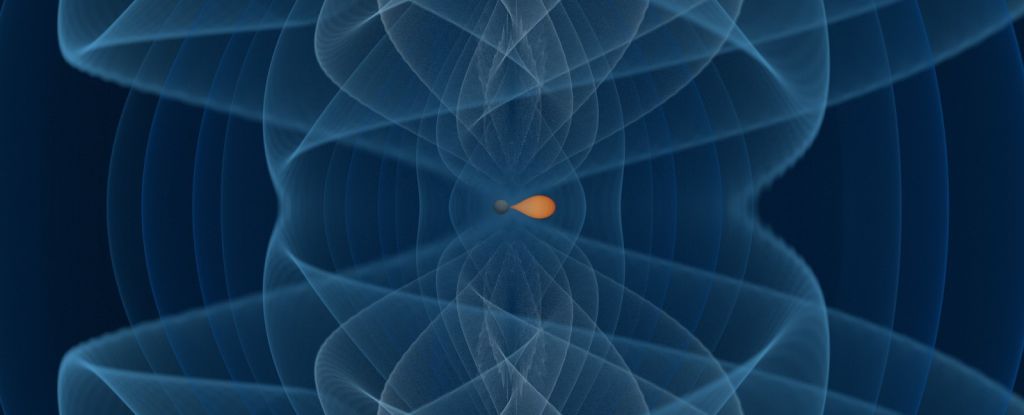
A gravitational wave detected in May of last year has revealed a cosmic collision involving a neutron star and a mysterious object within the lower mass gap, a region between the heftiest neutron stars and lightest black holes. This marks the first gravitational-wave detection of a mass-gap object paired with a neutron star, suggesting that these elusive mystery objects could be common in the galaxy. The discovery has important implications for theories of binary evolution and electromagnetic counterparts to compact-object mergers, and it hints at the lower mass gap being less empty than previously thought. The LIGO, Virgo, and KAGRA gravitational wave detectors are set to resume their observing run in April 2024, with expectations of more exciting black hole discoveries in the near future.
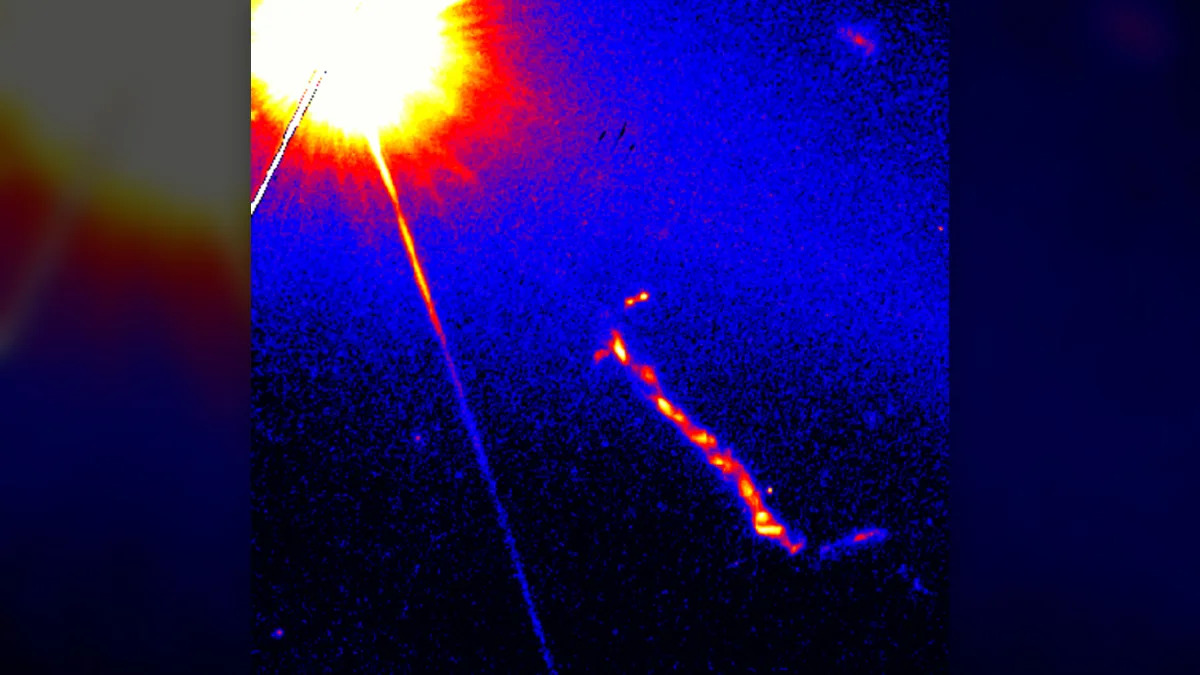
The hottest place in the universe is likely near a supermassive black hole that is actively accreting gas and producing relativistic jets. The quasar 3C273, located around 2.4 billion light-years away, is currently the hottest known region with a core temperature of about 10 trillion kelvin. However, the precise temperatures of black holes are difficult to measure, and there is still uncertainty surrounding temperature estimations. Cataclysmic events such as collisions between celestial bodies can also generate extremely high temperatures, but these events are often fleeting. Scientists rely on measuring the energy emitted by supermassive black holes to estimate temperature, and future observatories may provide more accurate measurements.