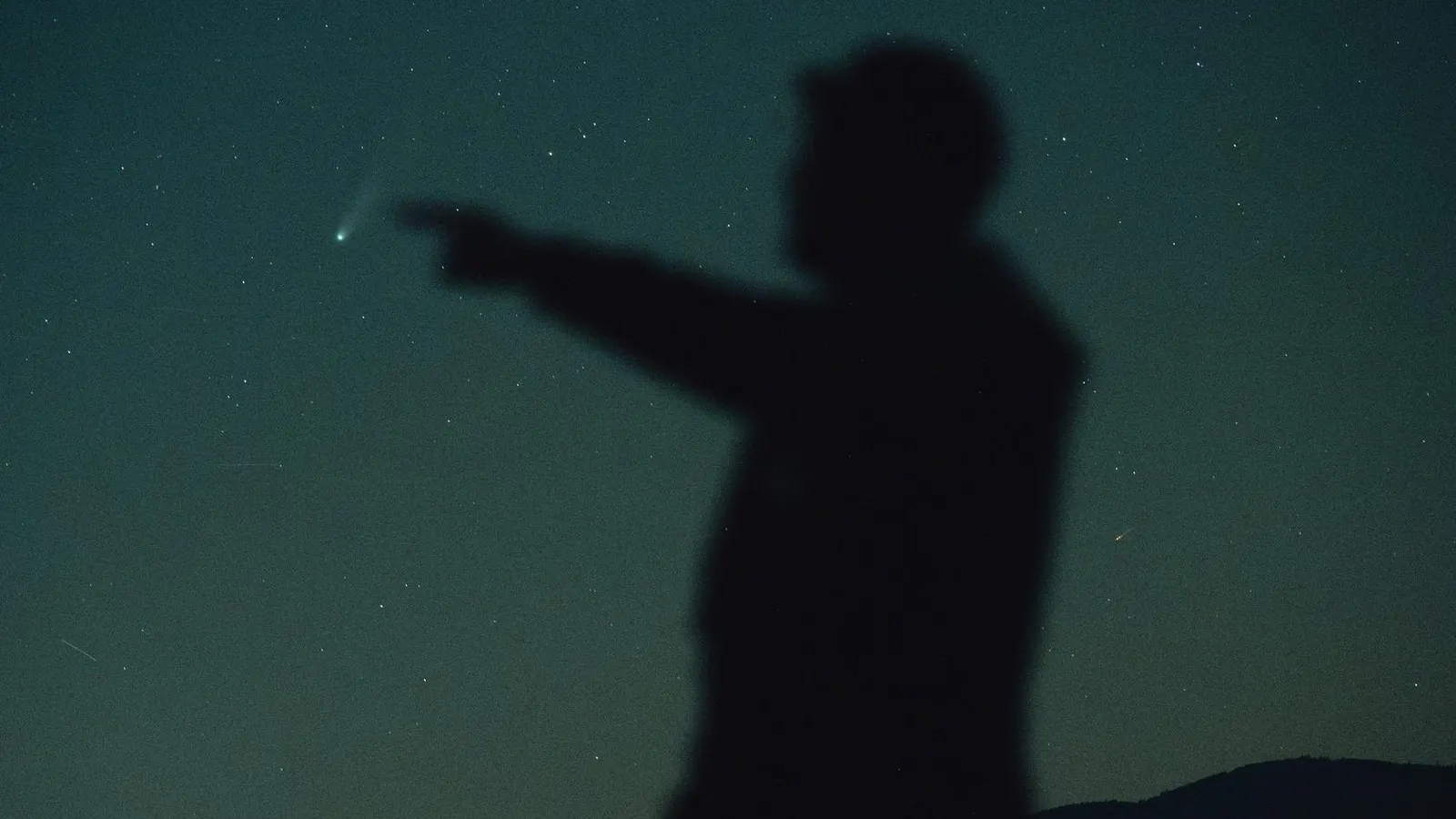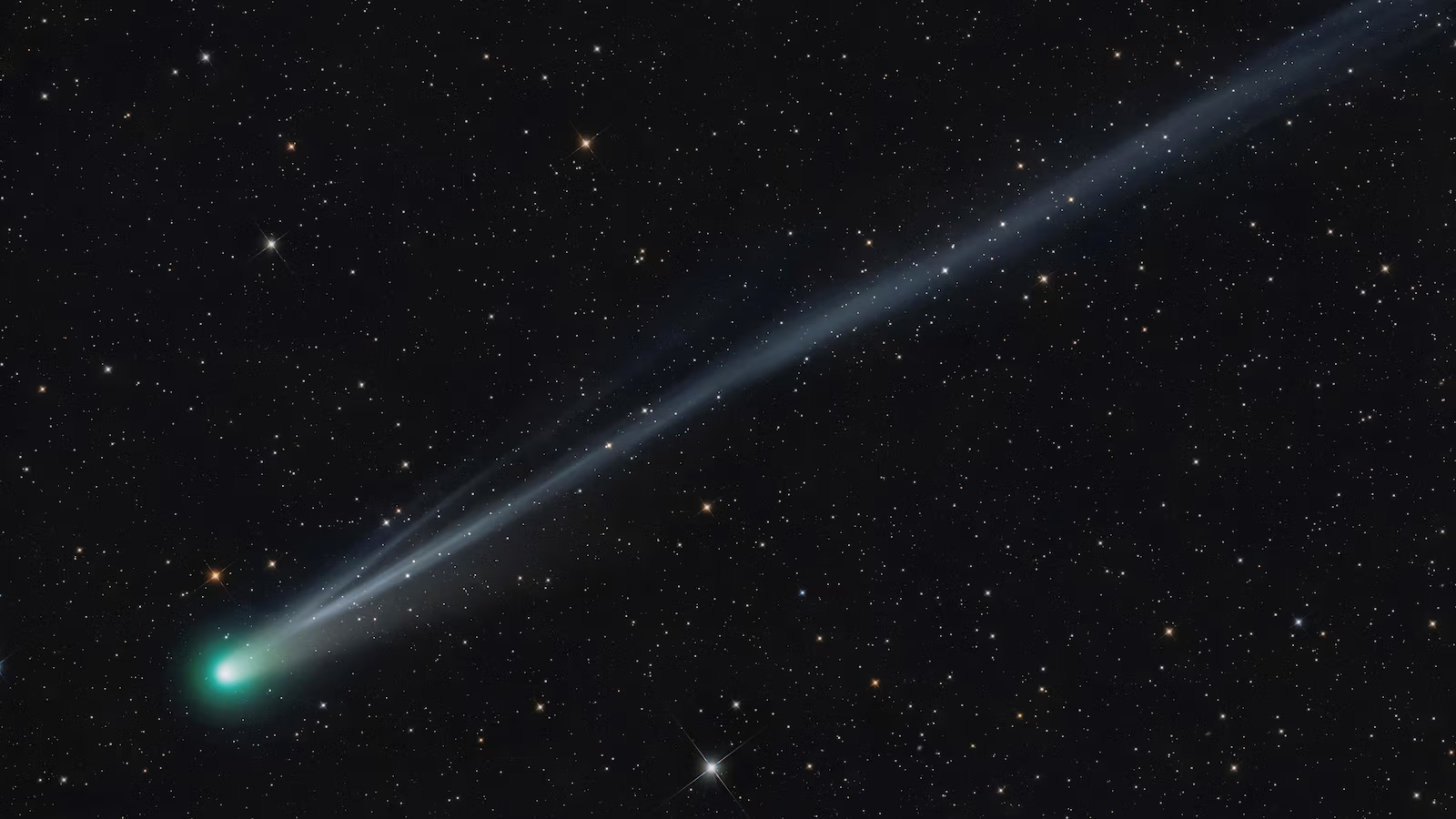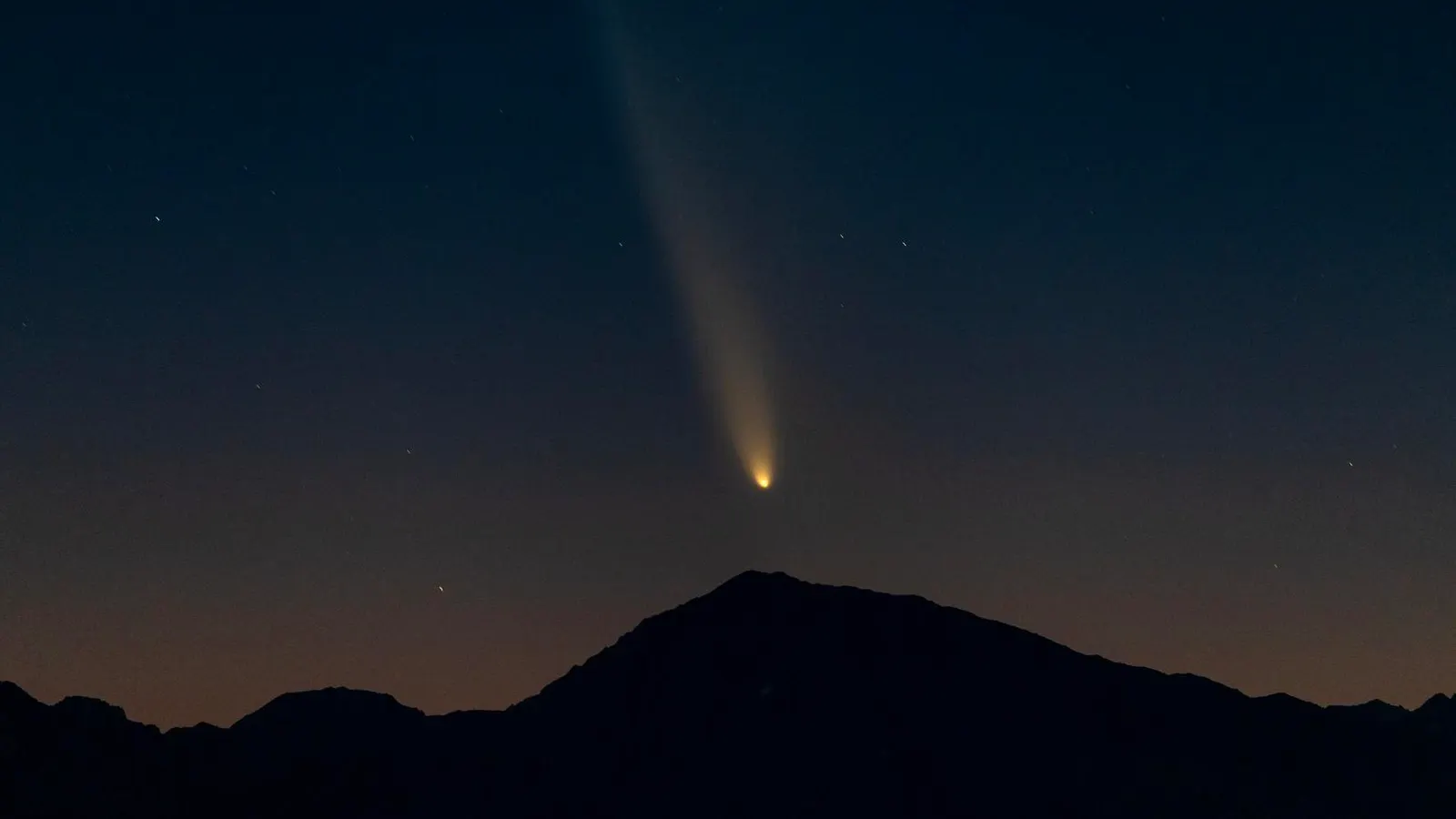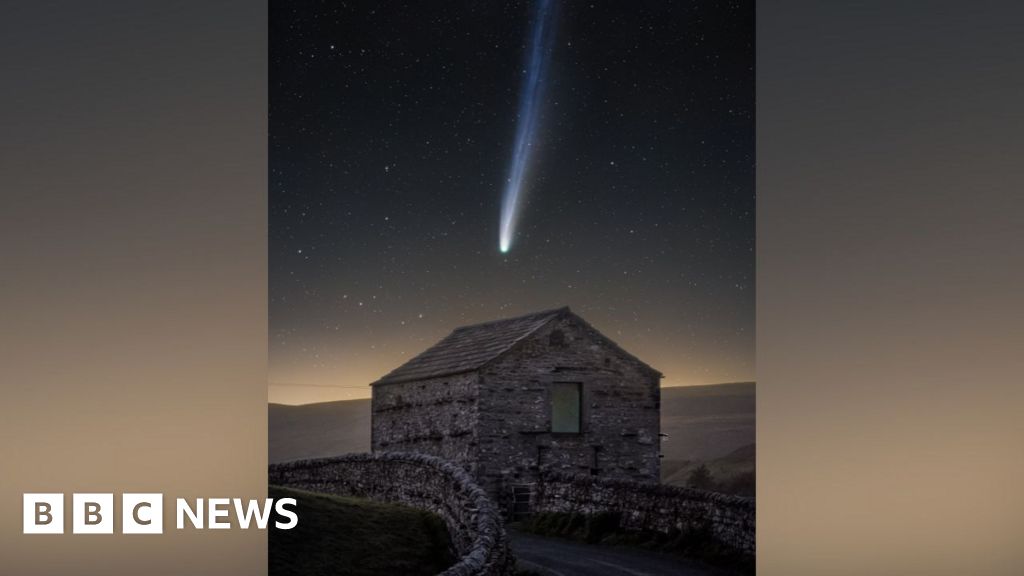
Photographer Dominic Reardon captured a rare view of Comet Lemmon above the Yorkshire Dales after weeks of waiting for clear skies, using advanced photography techniques to document the celestial event, which coincided with the Orionid meteor shower and will not be visible again for 1,300 years.
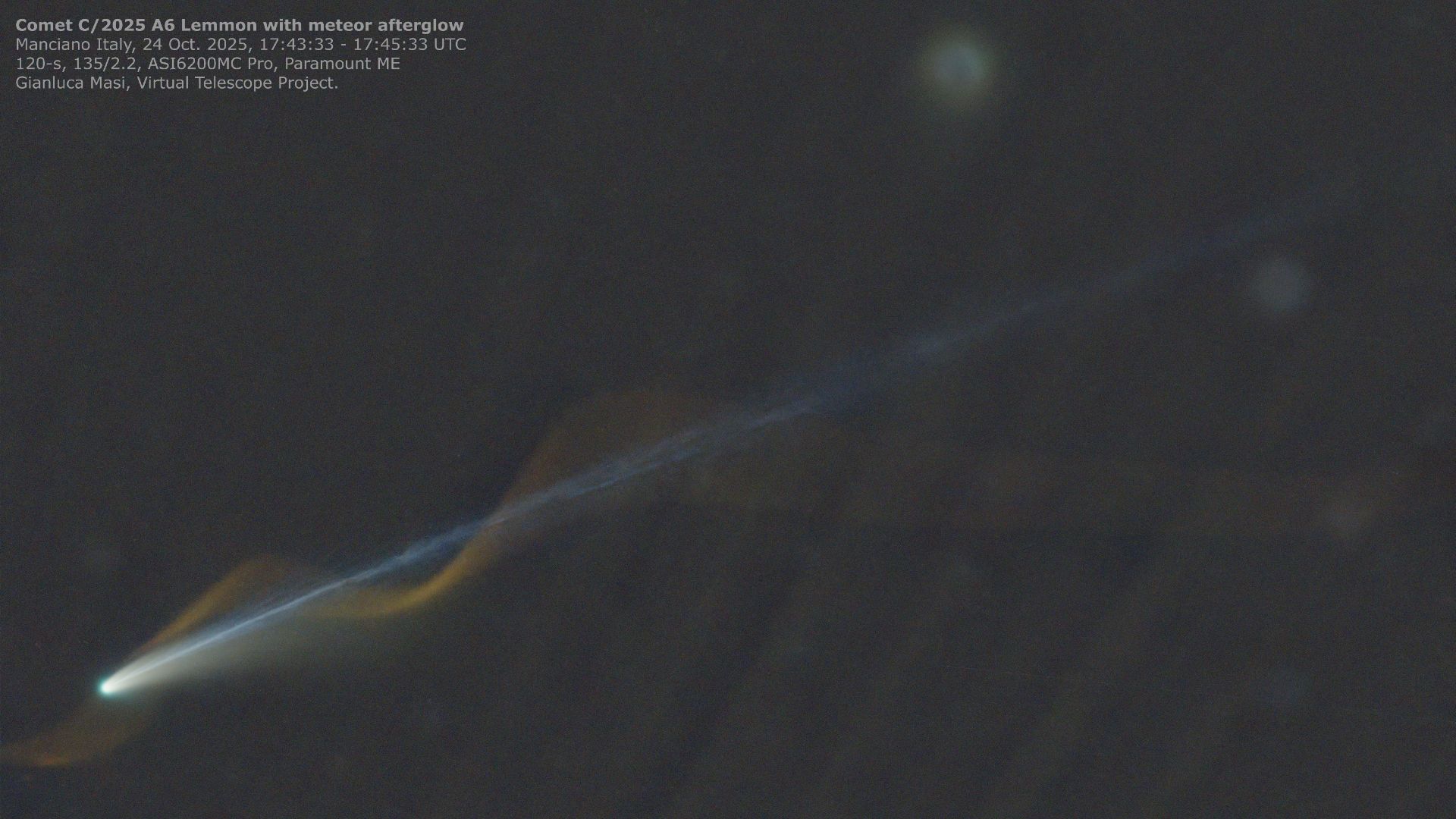
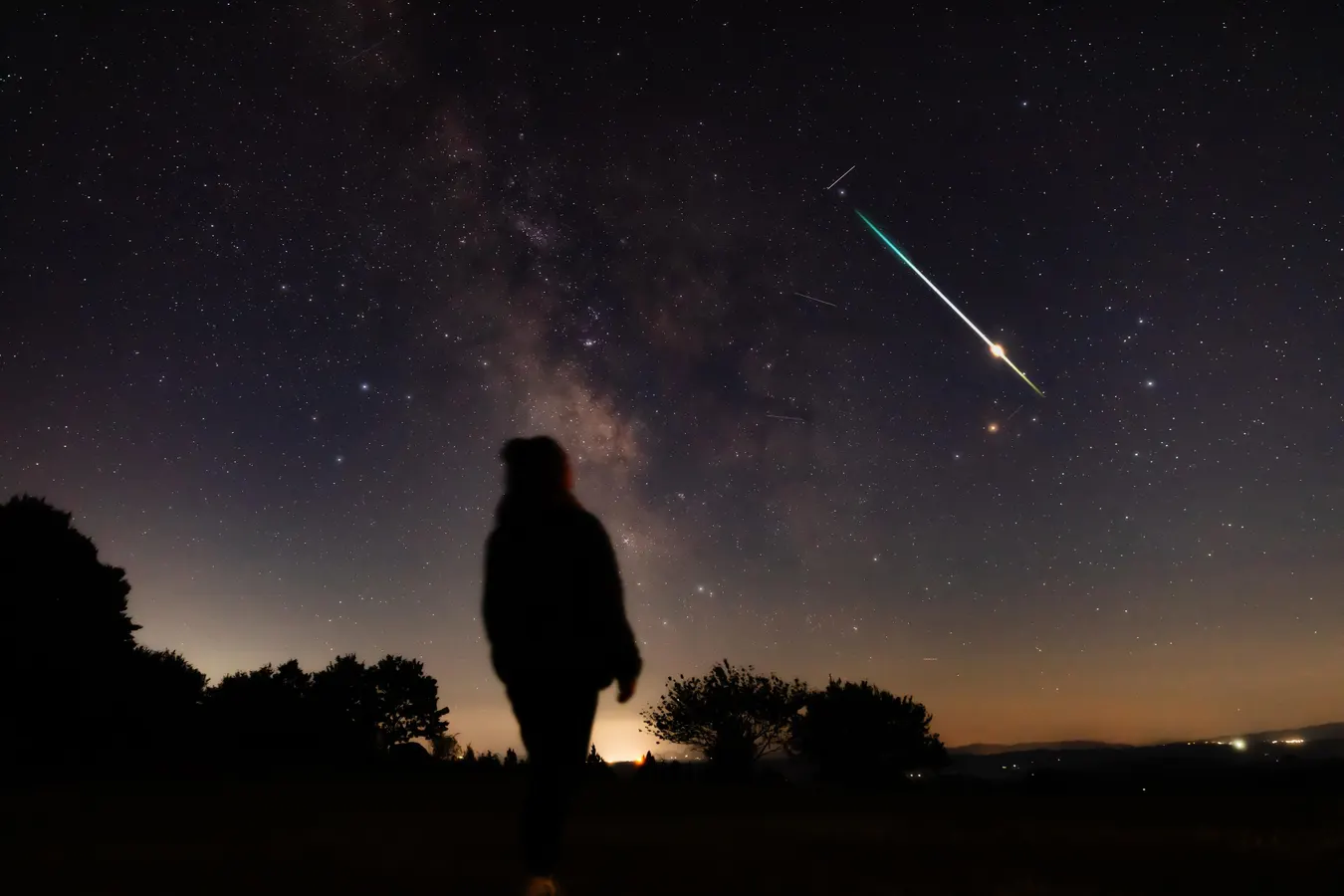
Astronomer Gianluca Masi captured stunning footage of a meteor trail appearing to wrap around Comet Lemmon's tail, creating a visual illusion due to perspective, while the meteor's ionized gas trail was far from the comet itself. The event highlights atmospheric effects and the visibility of Comet Lemmon in October's night sky.
On October 26, 2025, viewers have their last chance in over a millennium to see Comet Lemmon and Comet SWAN with binoculars shortly after sunset, as they move away from Earth and dim. Comet Lemmon appears in the northwest near Arcturus, while Comet SWAN is visible in the south near the Summer Triangle, with optimal viewing about 90 minutes after sunset.
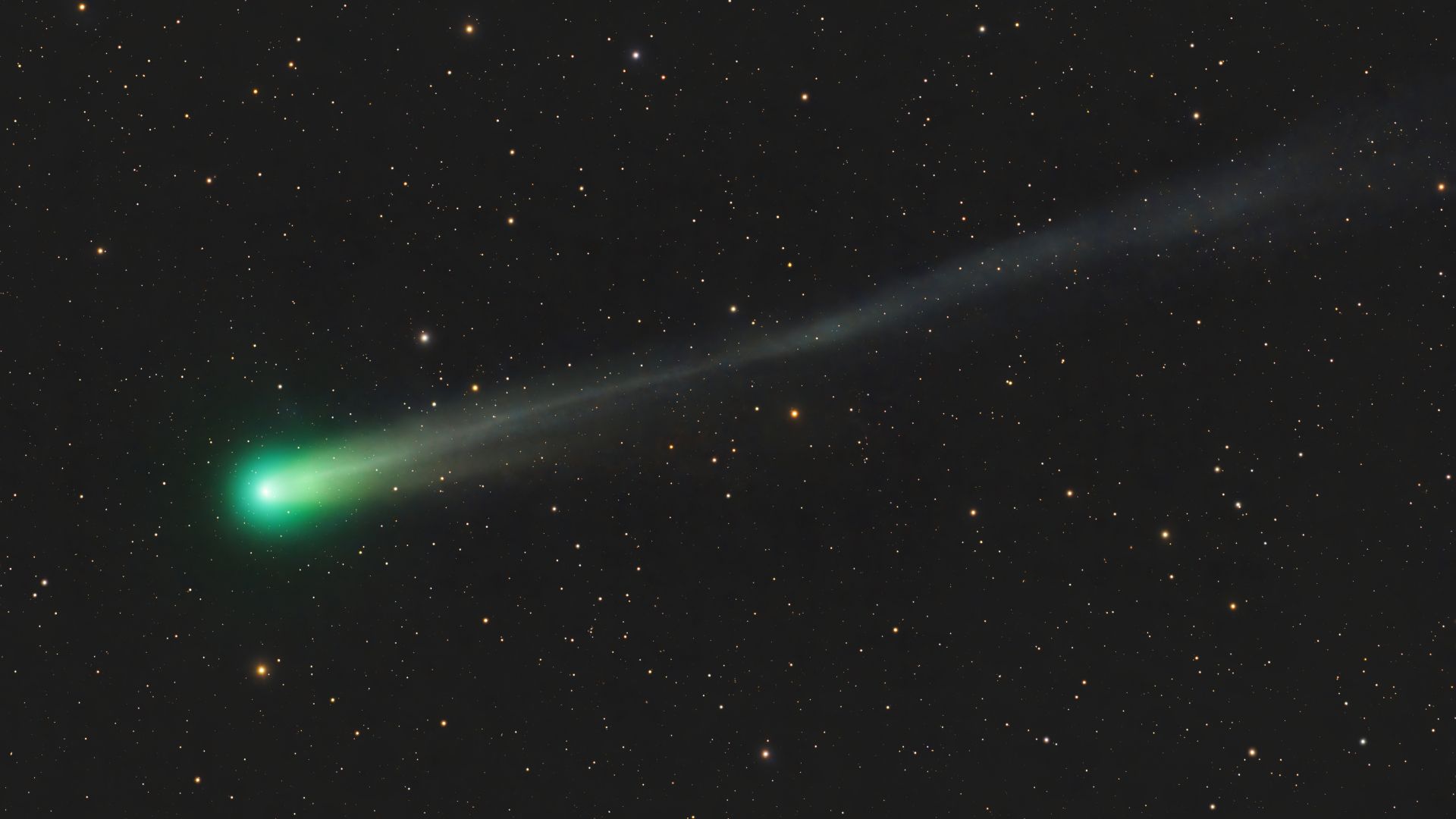
The green comets Lemmon and SWAN are visible in the northern hemisphere's evening sky on October 24, with the best viewing conditions occurring about 90 minutes after sunset before moonlight dims the view. Lemmon is in Boötes near Arcturus, and SWAN is in Sagittarius near the Summer Triangle, offering a rare opportunity to see these long-period comets before they recede from Earth.
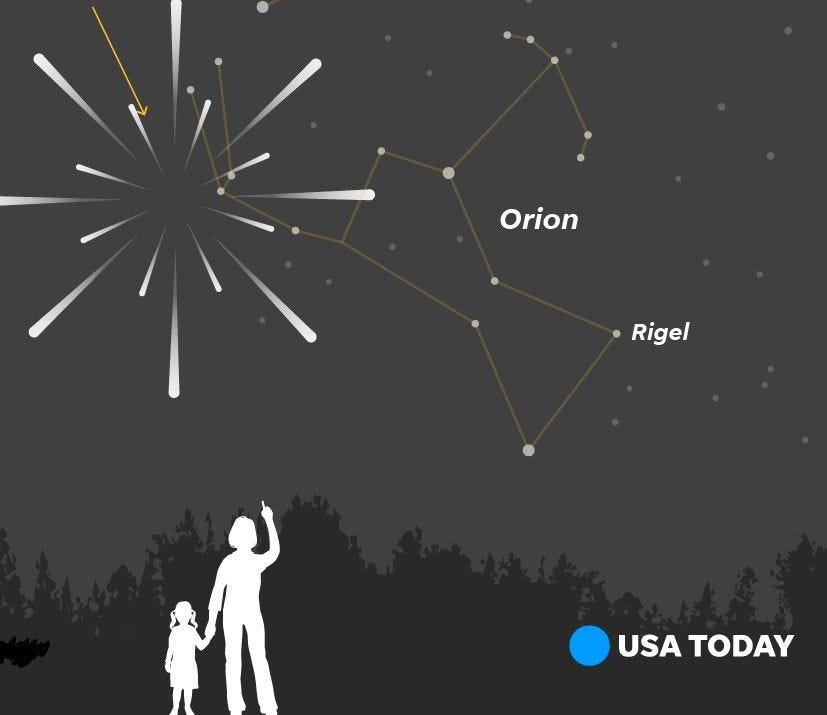
The October new moon provides ideal dark skies for viewing the Orionid meteor shower and the rare Comet Lemmon, which is closest to Earth on October 21, 2025. The meteor shower peaks around October 20-21, with 10-20 meteors per hour, visible from dark locations between midnight and pre-dawn. Comet Lemmon can be seen near the Big Dipper in the northwest, brightest until late October. The new moon on October 21 offers optimal conditions for stargazing, with brighter stars and minimal moonlight interference.
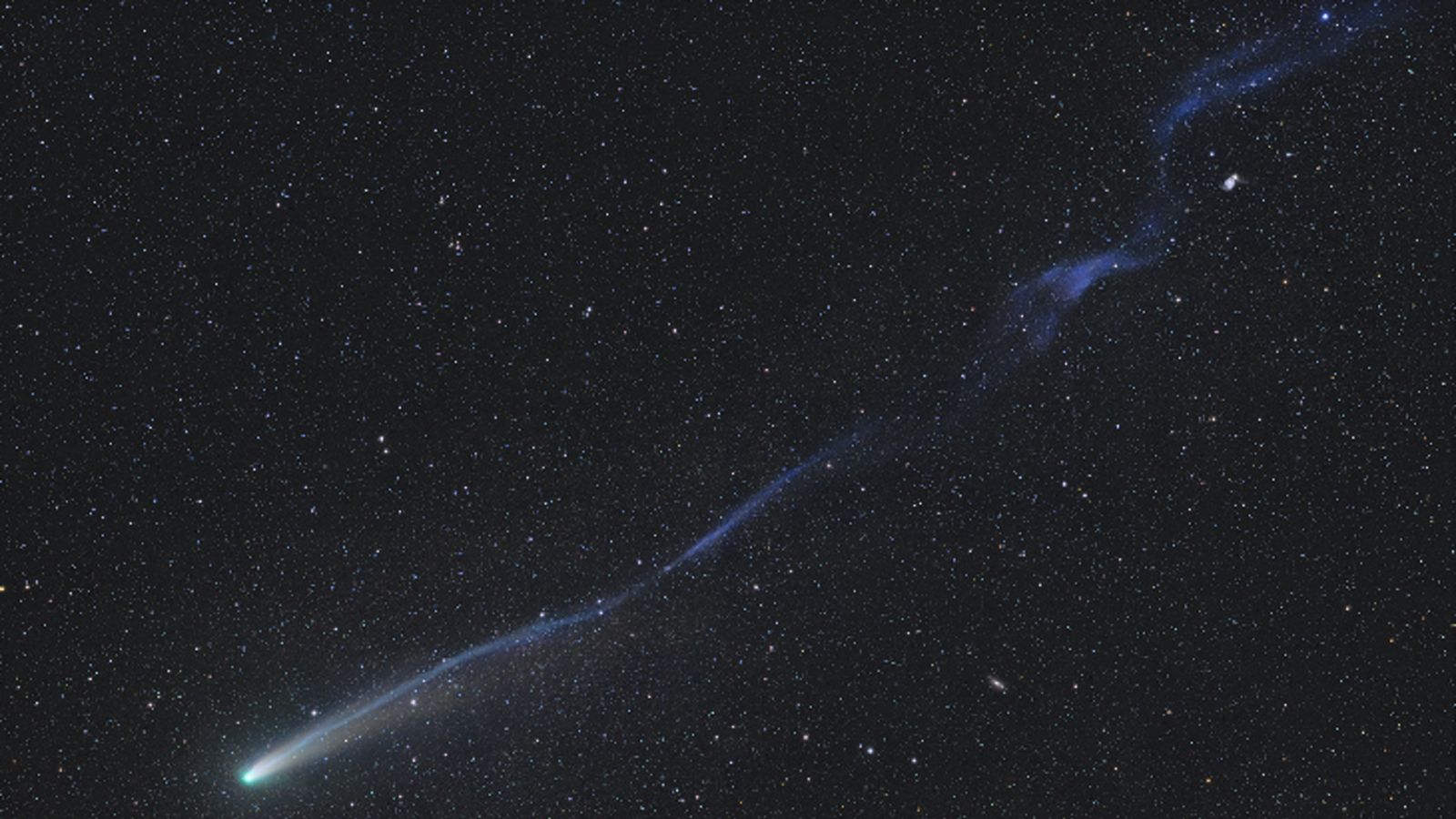
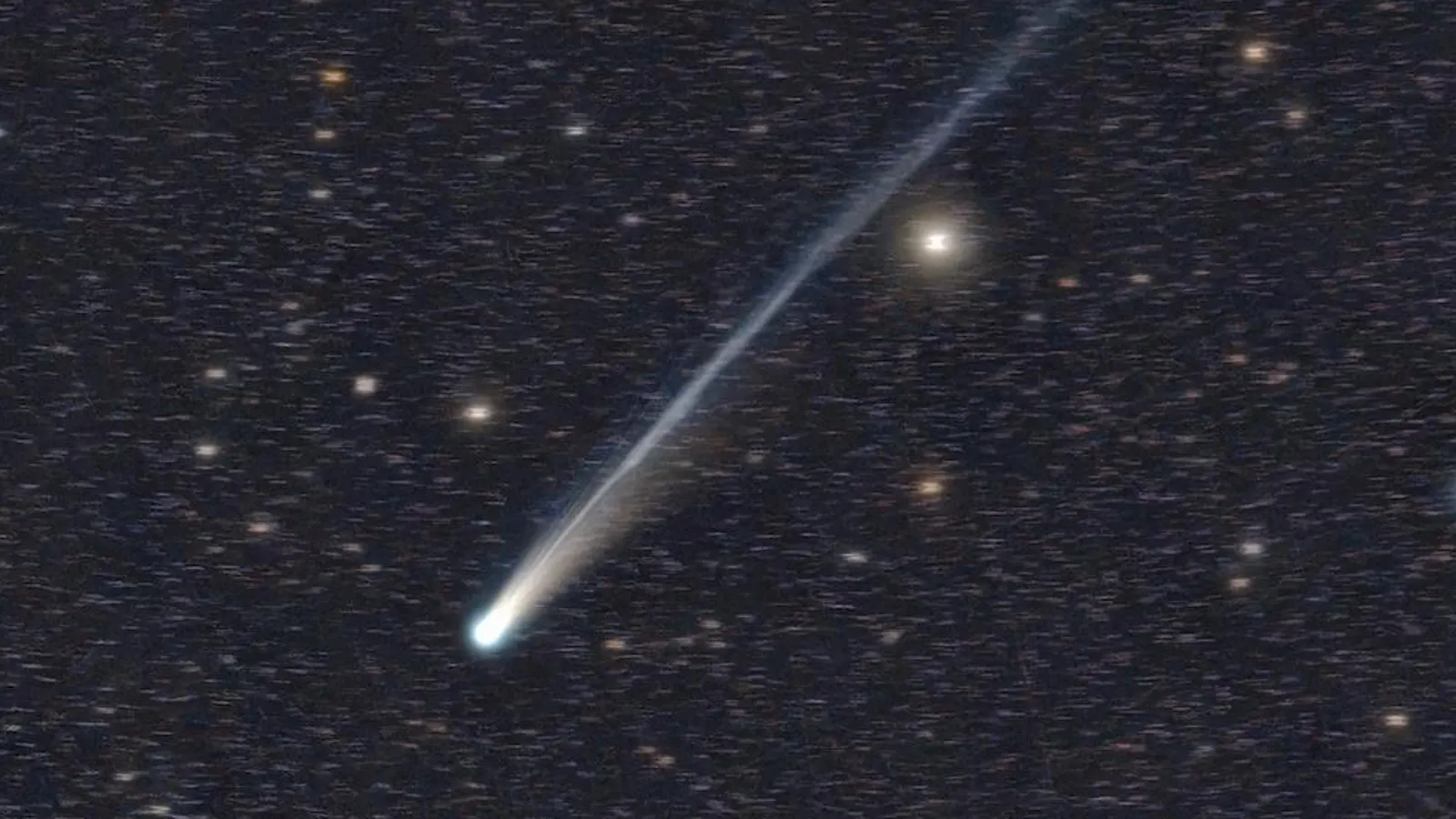
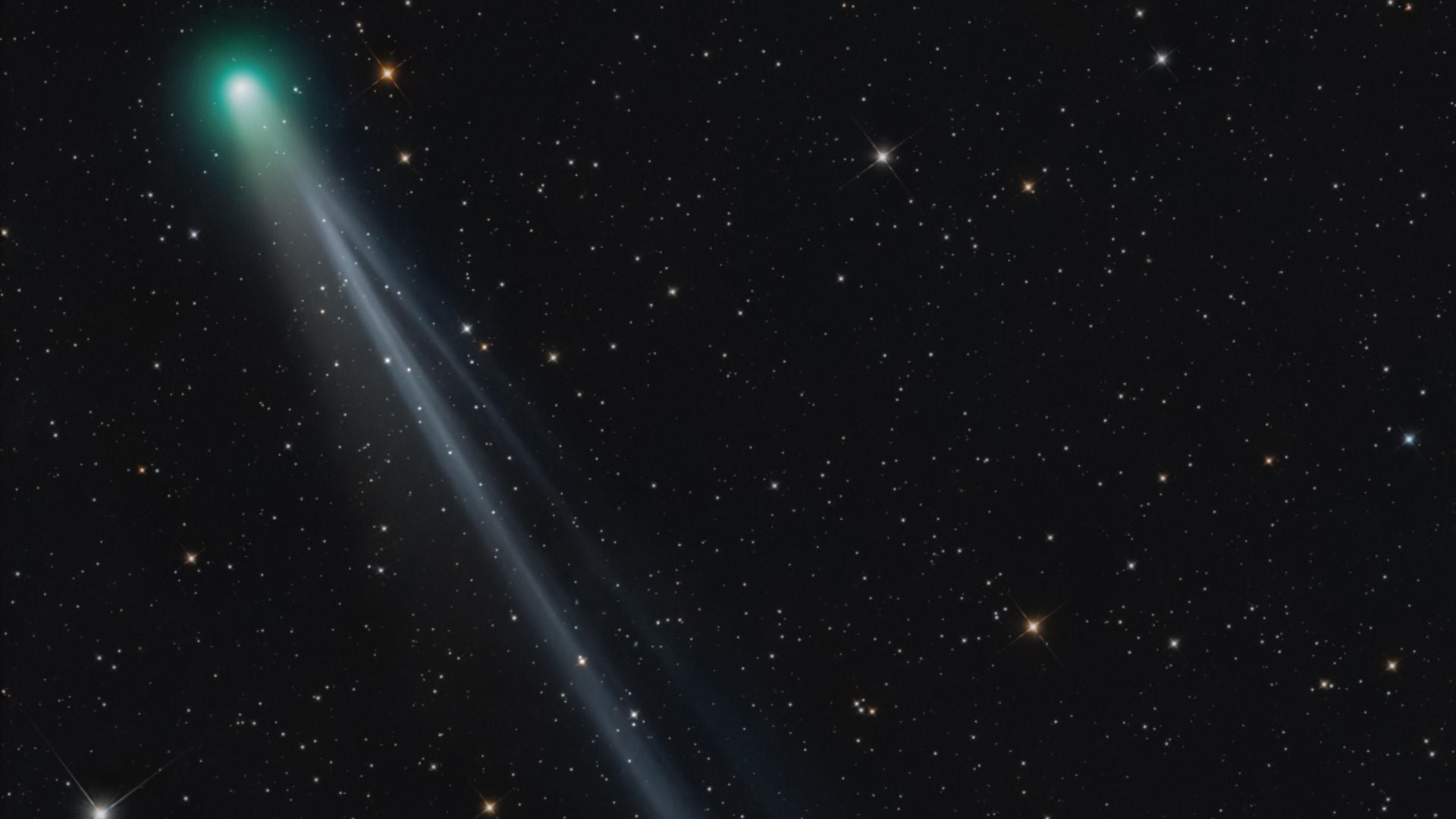
A new photo of Comet Lemmon shows its tail temporarily torn apart by a strong gust of solar wind just before its closest approach to Earth on Oct. 21, highlighting the dynamic effects of solar activity on comets.
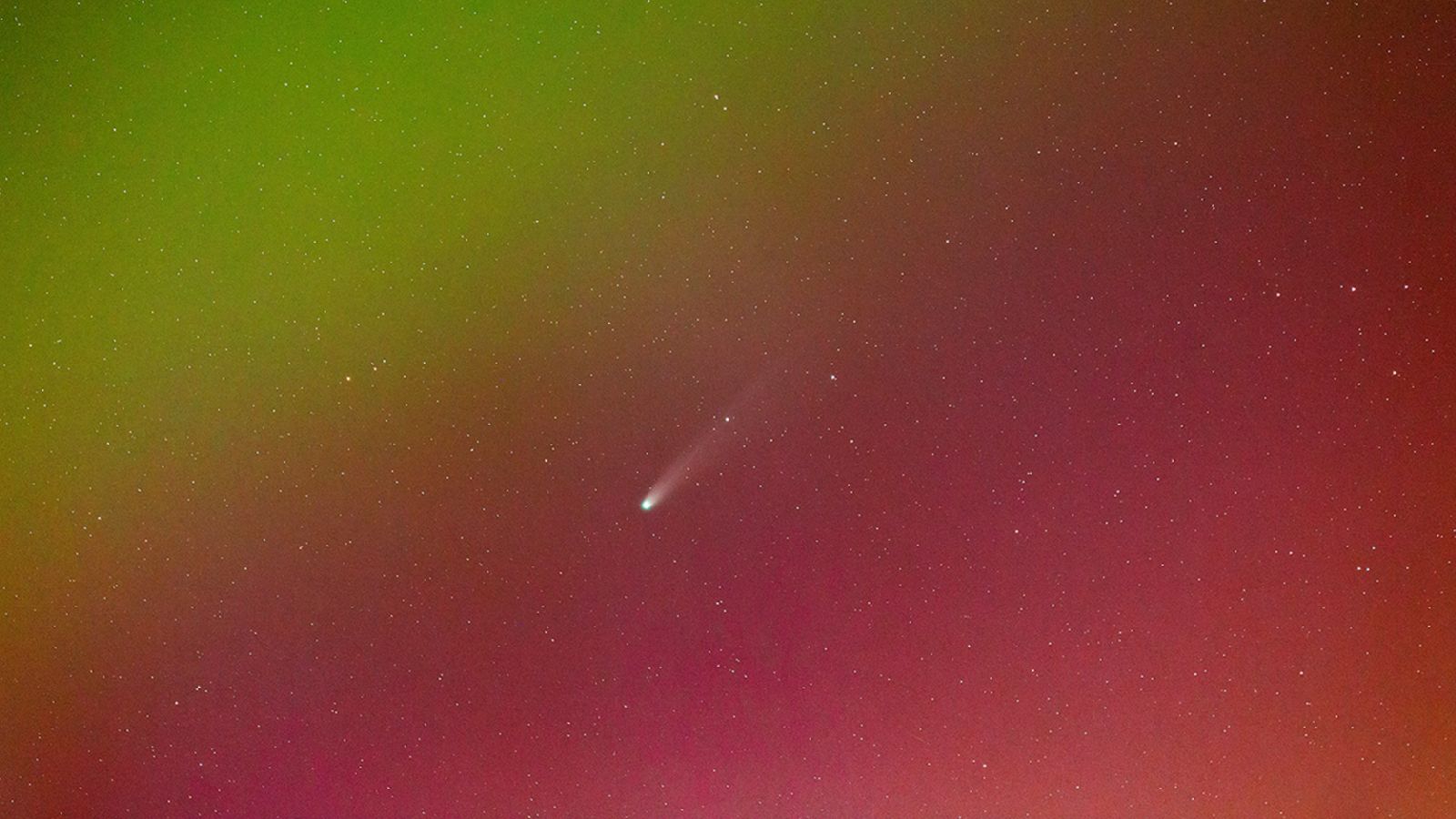
Comet Lemmon was photographed flying through vibrant auroras over Scotland on October 18, just days before its closest approach to Earth, revealing a spectacular display of colors during a surprise solar storm, as the comet approaches its perihelion on November 8.
Two rare comets, Lemmon and SWAN, are visible tonight and through October 2025, offering a rare celestial viewing opportunity with tips on how to spot them in the night sky, especially in clear weather conditions.
South Carolinians have a rare opportunity to see the green Comet Lemmon, visible in the night sky on October 21-22 for the first time in 1,350 years, along with other celestial events like the Orionids meteor shower and the Andromeda Galaxy, with tips for optimal viewing away from city lights.
On October 19, 2025, Comet Lemmon and Comet SWAN will be visible in the night sky, with Lemmon visible before dawn and after sunset, and SWAN visible after sunset in binoculars, offering a rare opportunity for stargazers to observe these comets with the help of finder charts and dark sky locations.
The article advises viewers to leave city areas this week to witness the peak of the Orionid meteor shower, Northern Lights, and bright comets, emphasizing the importance of dark skies for optimal viewing due to light pollution and providing tips for observing these celestial events.
Two bright green comets, Lemmon and SWAN, are visible in the Northern Hemisphere's night sky, with Lemmon making its closest approach to Earth and both visible with binoculars until the end of the month, offering a rare celestial spectacle from the outer edges of our solar system.
Comet Lemmon will be visible near the Big Dipper on October 16, 2025, especially about 90 minutes after sunset, with the best viewing time in the evening and early morning. Comet SWAN may also be visible in binoculars in the southwest after sunset. Both comets are not visible to the naked eye but can be seen with binoculars, and their positions can be found using star charts and apps.
Astrophotographer Brennan Gilmore captured stunning images of Comet Lemmon's tail being torn apart by solar wind, highlighting a disconnection event as the comet approaches Earth in October. The comet has brightened significantly and is expected to be visible to the naked eye from dark skies, with ongoing observations and photography tips provided.
Comet Lemmon is brightening as it approaches its closest point to Earth on October 21, 2025, and may become visible to the naked eye in dark sky conditions. It will be visible in the early morning sky in early October and shift to the evening sky by mid-October, passing near stars in Ursa Major and Canes Venatici. Observers are encouraged to look for it with binoculars or telescopes, especially as it continues to brighten.