A recent study in mice suggests that restoring NAD+ levels with the compound P7C3-A20 can reverse brain damage and cognitive decline associated with advanced Alzheimer's disease, challenging the notion that the disease is irreversible. The findings highlight the potential for treatments targeting brain energy balance to repair damage and improve function, though further research in humans is needed.
A recent study demonstrates that restoring NAD+ levels in the brain can reverse Alzheimer's symptoms in mice, challenging the belief that the disease is irreversible and opening new possibilities for treatment and recovery in humans.
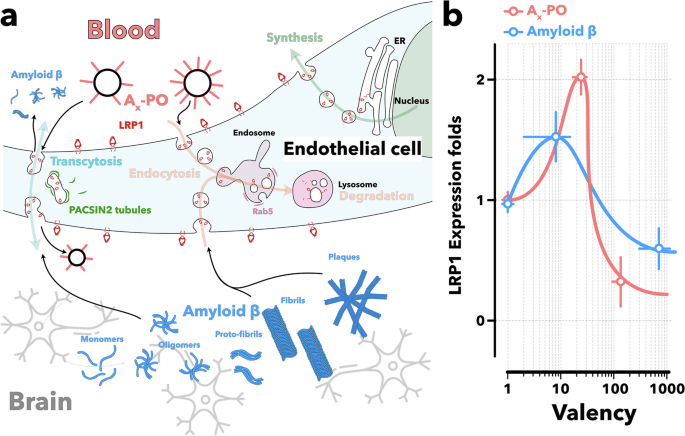
Scientists developed a nanotechnology-based treatment that reverses Alzheimer's symptoms in mice by repairing the blood-brain barrier and enhancing clearance of toxic proteins like amyloid-β, leading to significant cognitive recovery.
Scientists developed nanoparticle-based supramolecular drugs that successfully reversed Alzheimer's symptoms in mice by repairing the blood-brain barrier and promoting clearance of amyloid-beta, showing promising potential for future human treatments.
The article discusses a novel nanomedicine approach using mid-affinity, multivalent polymersomes targeting LRP1 to restore blood-brain barrier function, enhance amyloid-β clearance, and improve cognitive outcomes in Alzheimer's disease models, highlighting a shift from transport to repair strategies.
A long-term study found that most cognitive functions improve over years after COVID-19, but some deficits like processing speed and flexible thinking may persist, highlighting the need for ongoing support and research into recovery interventions.
A preliminary study conducted in China suggests that intravenous injections of ginkgo biloba components, specifically ginkgo diterpene lactone meglumine (GDLM), could significantly improve early cognitive recovery in ischemic stroke patients. The study, funded by the drug's manufacturer, found that stroke survivors treated with GDLM showed significant cognitive improvement over those receiving a placebo, indicating potential benefits for post-stroke recovery. While the results are promising, further research is needed to confirm the safety and effectiveness of GDLM before considering clinical use, emphasizing the importance of cautious integration of complementary medicines into cardiovascular care.