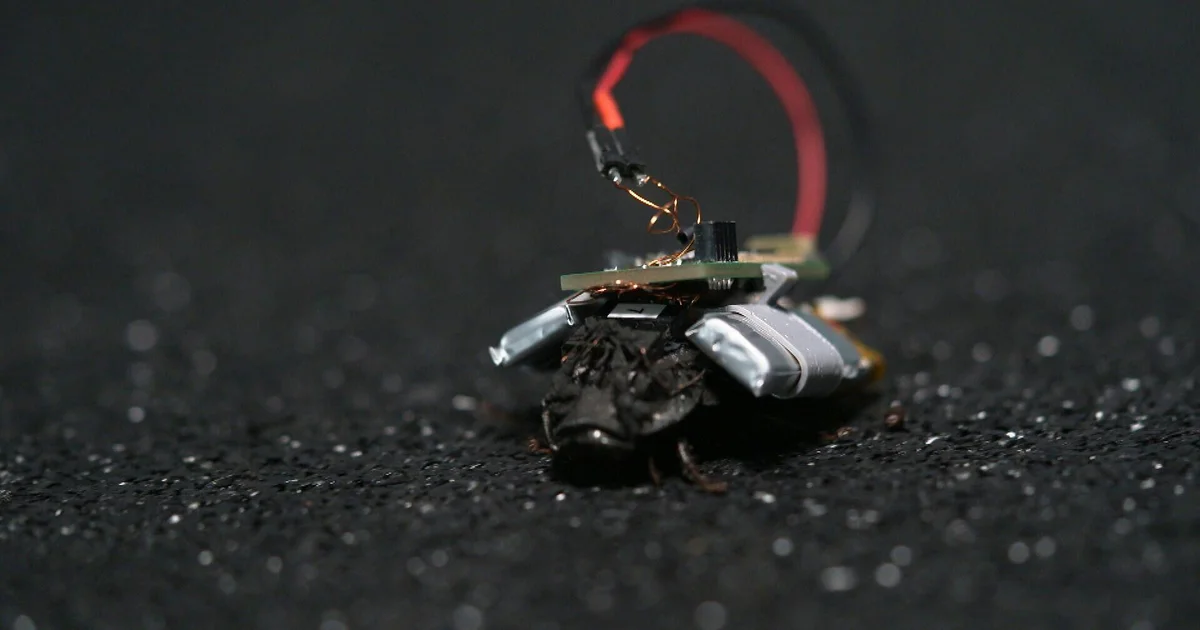
A German startup, SWARM Biotactics, is developing tiny backpacks for Madagascar hissing cockroaches to use them in espionage and search-and-rescue missions, leveraging their resilience and ability to carry sensors for reconnaissance in dangerous or inaccessible environments.
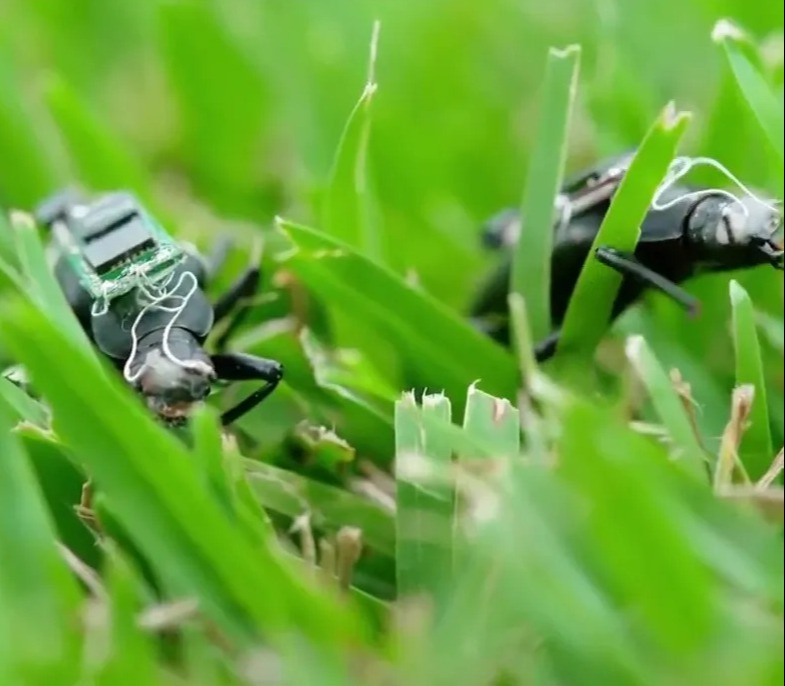
Researchers in Australia and Singapore are developing cyborg cockroaches equipped with tiny circuit board backpacks that allow humans to control their movements. These part-living, part-machine insects could potentially be used in search and rescue operations in disaster zones, where they can navigate complex terrains more efficiently than traditional robots. The technology aims to help locate survivors and deliver lifesaving aid, although further refinement is needed before practical application. The research highlights the adaptability of insects compared to artificial robotic systems.
A pest control company in North Carolina is offering $2,500 to homeowners who are willing to allow technicians to release approximately 100 cockroaches into their homes for a 30-day study on pest control techniques. Participants must reside in their homes during this period and cannot use other pest control methods. The company assures that traditional treatment options will be used if the new technique fails. Interested homeowners have until December 31 to apply, and the selected household will be contacted in early 2024.
Catnip, a fragrant herb loved by cats, can also be used as a natural and humane way to repel cockroaches. The aroma of catnip is enough to ward off roaches, and if they do appear, they will be slower and easier to remove. Catnip does not harm roaches but simply slows them down. However, it's important to use catnip in moderation to avoid gastrointestinal issues in cats. Starting with dried catnip in bags or minimal sprinkling is recommended for a more conservative approach.
7-Eleven issued a recall for its Pickled Plum Shiso, Sesame rice balls in Saitama Prefecture after two customers found cockroaches inside them. The contamination is believed to have occurred at the manufacturing factory, which has since halted production for cleaning and sterilization. The company has apologized and pledged to strengthen quality control measures. Customers who purchased the affected rice balls can return them for a refund.
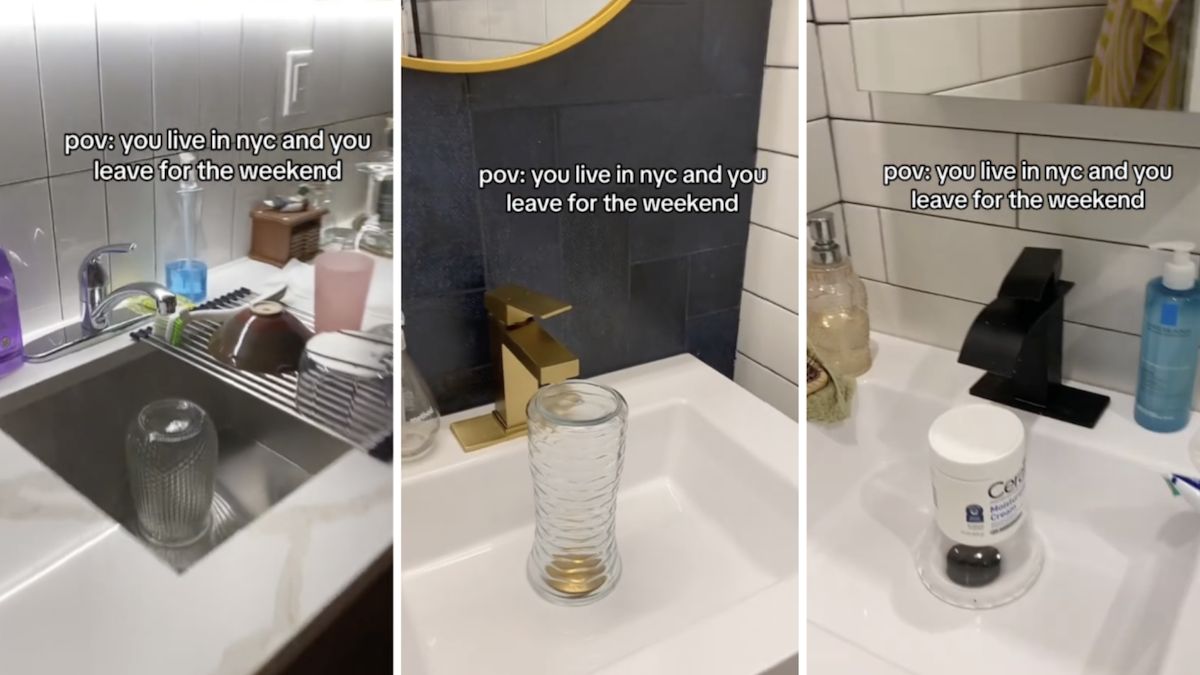
A TikTok video showing a New York City resident's hack for preventing cockroaches from climbing up drains in her apartment has gone viral. By covering the drains with cups, she prevents the pests from exploring her unattended apartment. The video sparked a discussion about other cockroach prevention hacks, including using dish soap and cooking oil to make drains slippery and trapping cockroaches. Additionally, a former exterminator on TikTok shared tips for eliminating cockroaches, such as using Gentrol Point Source products and caulking gaps in baseboards.
A new study has found that Wolbachia, a type of bacteria commonly found in insects, is present in four out of 16 cockroach species across three families. Researchers hope that further study may lead to new management methods for pest cockroach species, potentially using Wolbachia as a tool for urban insect management instead of relying on conventional insecticides. Wolbachia can manipulate the reproductive biology of its insect host, and the type of manipulation depends on the strain found in an insect.
TikTok creator Lexi Stout advises pouring Dawn dish soap down all the drains in your home before leaving for summer travel to prevent pests like cockroaches from crawling up. The surfactants in the soap reduce the surface tension of water, suffocating and immobilizing insects that come into contact with it. Bleach can also be poured down the drain to keep rats and mice away, while steel wool can be used to seal holes in the apartment. A spray bottle with equal parts dish soap and water can be used to spray cockroaches instead of using toxic roach repellents.
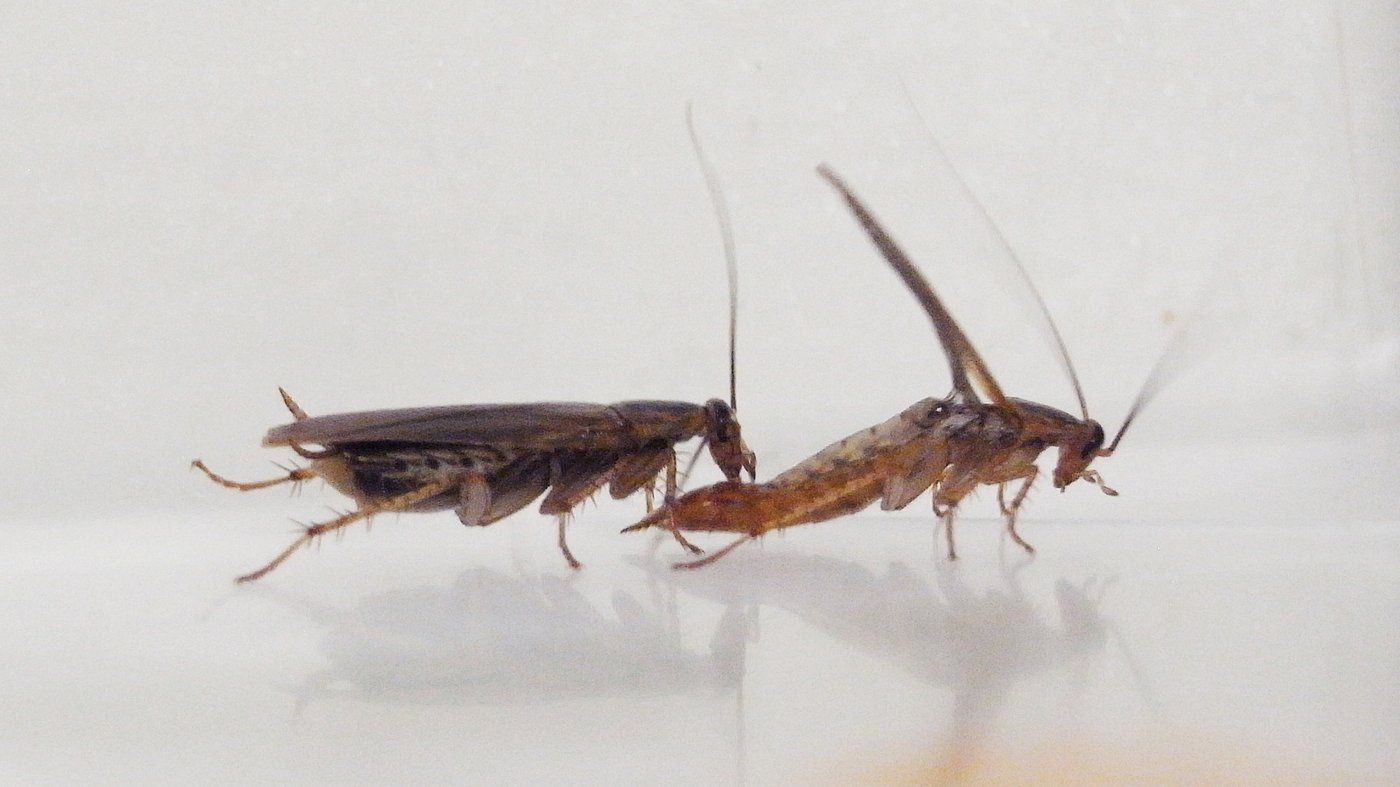
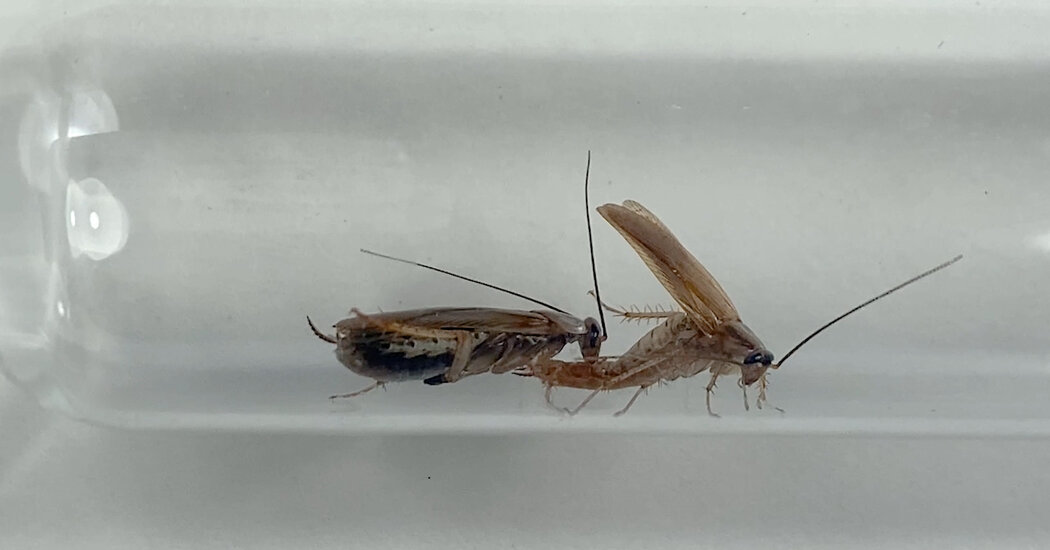
German cockroaches have adapted to pest control by evolving a glucose aversion, which made the glucose in the male's nuptial gift repulsive to glucose-averse females. However, they have found a workaround by tweaking the recipe for the sweet substance that males use to woo females, reducing the amount of glucose and elevating the amount of a sugar called maltotriose, which the females love and which doesn't break down into glucose as readily. They have also managed to shave off more than a second in the time it takes for the male to lock onto the female's genitalia.
German cockroaches have developed a "sensory conflict" called glucose aversion to avoid insecticides that use glucose to attract and kill them. However, glucose is also a key component in the mating process, as male roaches offer females a sugary secretion called maltose during courtship. To overcome this issue, male roaches have started producing more maltotriose, which is more resistant to glucose aversion, and they also start the mating process faster before the female can leave. Scientists say this is an example of compensatory behavioral evolution and that the origin of the trait is likely due to human imposition, such as insecticide bait.
The use of glucose in cockroach traps has led to some female cockroaches developing an aversion to the sugar, affecting their mating behavior. Male cockroaches have adapted by changing the composition of their "nuptial gift," including slashing the glucose content and shortening the courtship process. Glucose-averse males start mating almost twice as fast as other cockroaches. The study highlights the importance of understanding glucose aversion in cockroaches to develop new ways to control their numbers.
Cockroaches have developed mutations in response to glucose aversion caused by poisoned roach baits. The mutation interfered with their mating strategies as the nuptial gift that males secrete contains maltose, a sugar that cockroach saliva transforms into glucose. However, males with glucose aversion have accumulated additional mutations, producing nuptial gifts containing a more complex sugar, maltotriose, which is preferred by females. The latest mutations emerged among lab-reared roaches, and it is uncertain whether these traits will emerge in nature.