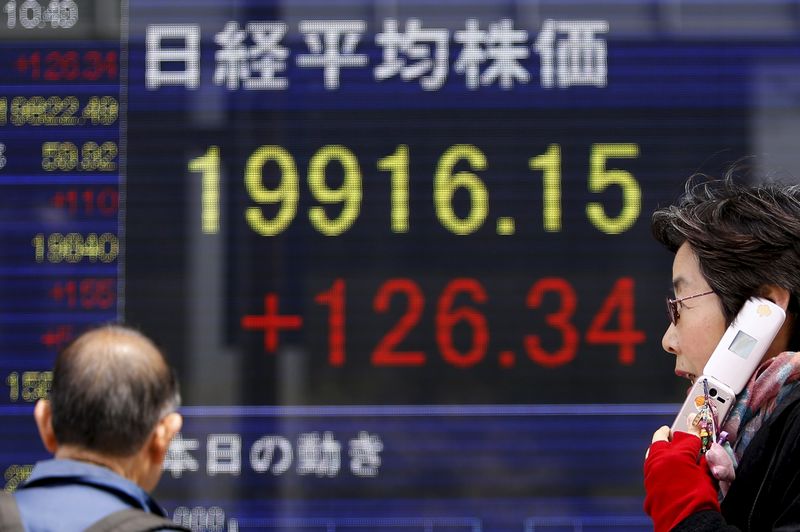
Sanae Takaichi's rise as Japan's potential first female prime minister boosts the Nikkei to an all-time high, amid mixed Chinese economic data and ongoing US government shutdown concerns, with markets focusing on corporate earnings and global economic policies.
Alibaba's stock has surged over 100% this year, driven by its strategic investments in AI and cloud computing, recent strong earnings, and the return of founder Jack Ma, signaling a potential end to previous regulatory crackdowns and making it an attractive buy despite inherent risks.
Most Asian stocks rose as investors awaited US nonfarm payrolls data, with Japan leading gains on trade optimism following a US-Japan trade deal and positive economic data, while Chinese markets steadied after recent losses and regional markets showed mixed performance amid global economic cues.
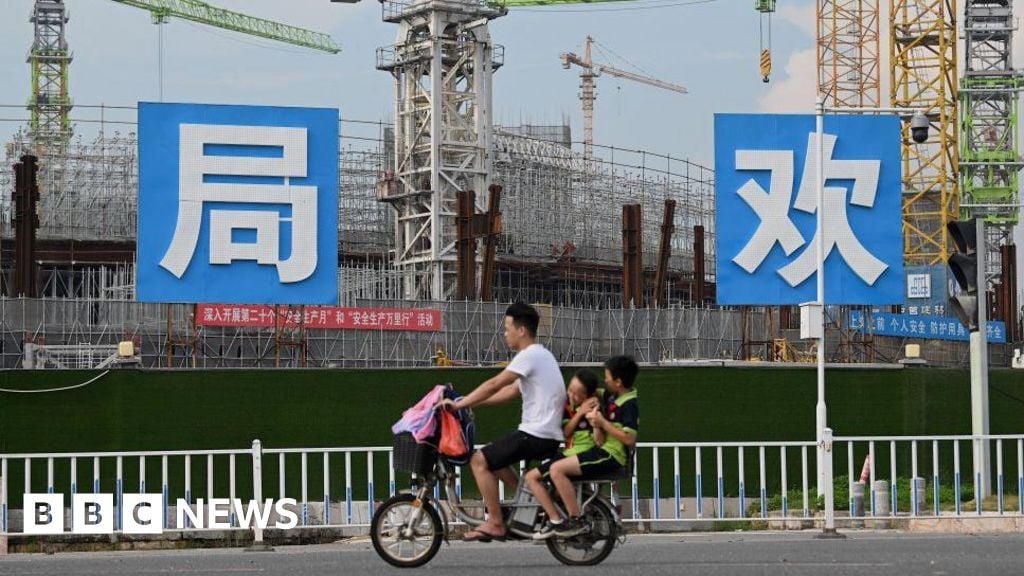
Evergrande, once China's largest property developer with diverse business interests, is in severe financial trouble due to excessive borrowing and new government regulations, impacting China's economy and highlighting a shift in China's economic priorities away from real estate towards high-tech industries.
US Treasuries recovered slightly amid concerns over inflation and a potential rate cut by the Federal Reserve, while Chinese economic data showed signs of slowdown, impacting global markets. Traders are cautious about rate cuts due to rising inflation and geopolitical tensions, with markets awaiting key events like the Jackson Hole symposium.
JD.com reported a 5.1% increase in quarterly revenue, indicating cautious consumer spending in China as the government implements economic stimulus measures. Despite a 48% rise in net income, the modest revenue growth reflects ongoing challenges in the Chinese consumer market post-Covid. JD.com and Alibaba are key indicators of consumer trends, with JD.com seeing increased shopper numbers during Singles Day. Analysts suggest JD.com may pursue more aggressive growth strategies, leveraging improved consumer sentiment and government support.
JD.com reported a 5.1% increase in quarterly revenue, indicating cautious consumer spending in China as the government implements economic stimulus measures. Despite a 48% rise in net income, the modest revenue growth reflects ongoing challenges in the Chinese consumer market post-Covid. JD.com and Alibaba are key indicators of consumer trends, with JD.com seeing increased shopper numbers during the Singles Day shopping season. Analysts suggest JD.com may pursue more aggressive growth strategies, leveraging improved consumer sentiment and government support.
Asian stocks are expected to face challenges in early trading due to underwhelming Chinese economic measures and weak inflation data. Bitcoin surged past $81,000 following Donald Trump's electoral success in key US states. Australian shares declined, and futures in Tokyo and Hong Kong indicate potential losses, as China's plan to address local government debt lacks new domestic demand-boosting measures. Meanwhile, US stock futures rose slightly after the S&P 500's 0.4% gain on Friday, driven by optimism over Trump's pro-growth policies.
Xi Jinping is concerned about the decline in Chinese startups achieving unicorn status and is seeking to revive entrepreneurial spirit to boost economic growth and technological self-sufficiency. Recent figures show a significant slowdown in GDP growth, adding to the urgency. Despite previously leading in unicorn creation, China has seen a sharp decline in new billion-dollar startups compared to the U.S. and previous years.
Shares of Chinese tech giants Alibaba, Baidu, and JD.com fell due to disappointing economic data from China, which reported only 4.7% growth in Q2, below expectations. Retail sales growth was also weak, indicating a sluggish consumer market. This has raised concerns about the companies' upcoming earnings and the broader economic outlook, despite recent measures by China to stimulate growth.
Alibaba's Hong Kong-listed shares dropped over 5% following reports of a potential $5 billion convertible bond sale, later confirmed at $4.5 billion. The proceeds will be used to repurchase American depositary shares. This move follows a challenging year for Alibaba, marked by a significant profit decline and corporate restructuring. The company aims to boost its core e-commerce sector and expand in AI and cloud services.
Chinese stocks, including Alibaba, JD.com, and PDD Holdings, slid as China's exports fell more than expected in March, signaling weakness in the world's No. 2 economy. The export report underscores the struggles of the Chinese economy, impacting the performance of these companies. While PDD Holdings stands out with rapid growth and market share gains, the challenges facing Chinese stocks suggest caution for investors considering investment in these companies.
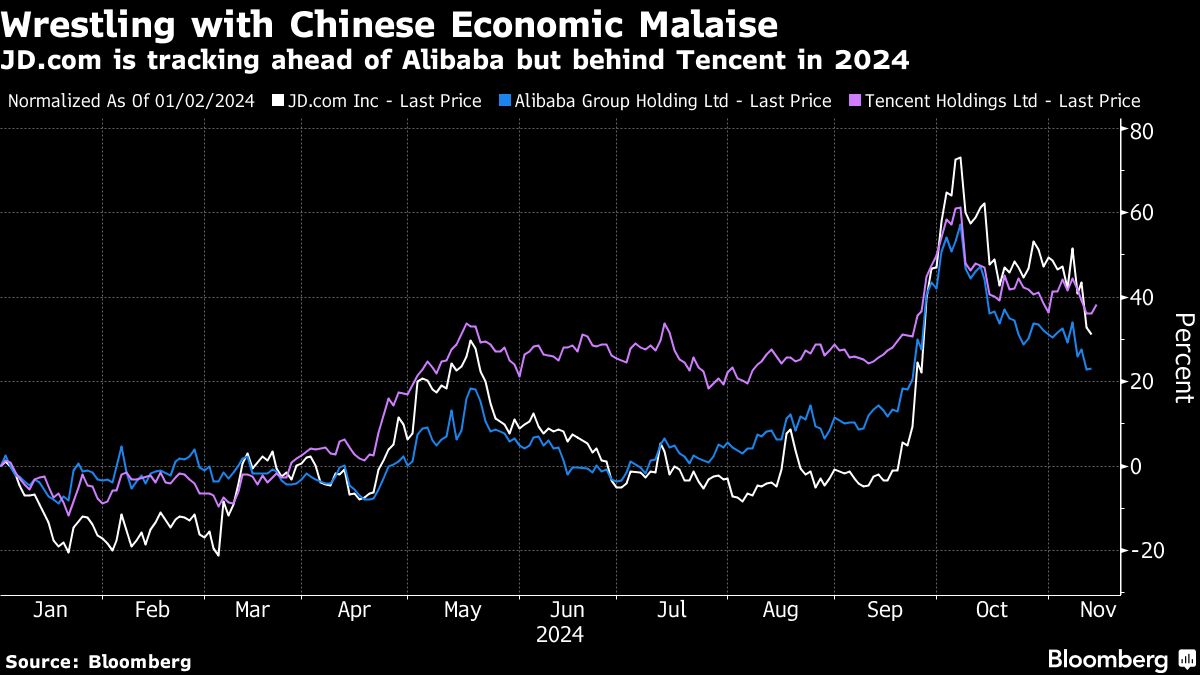
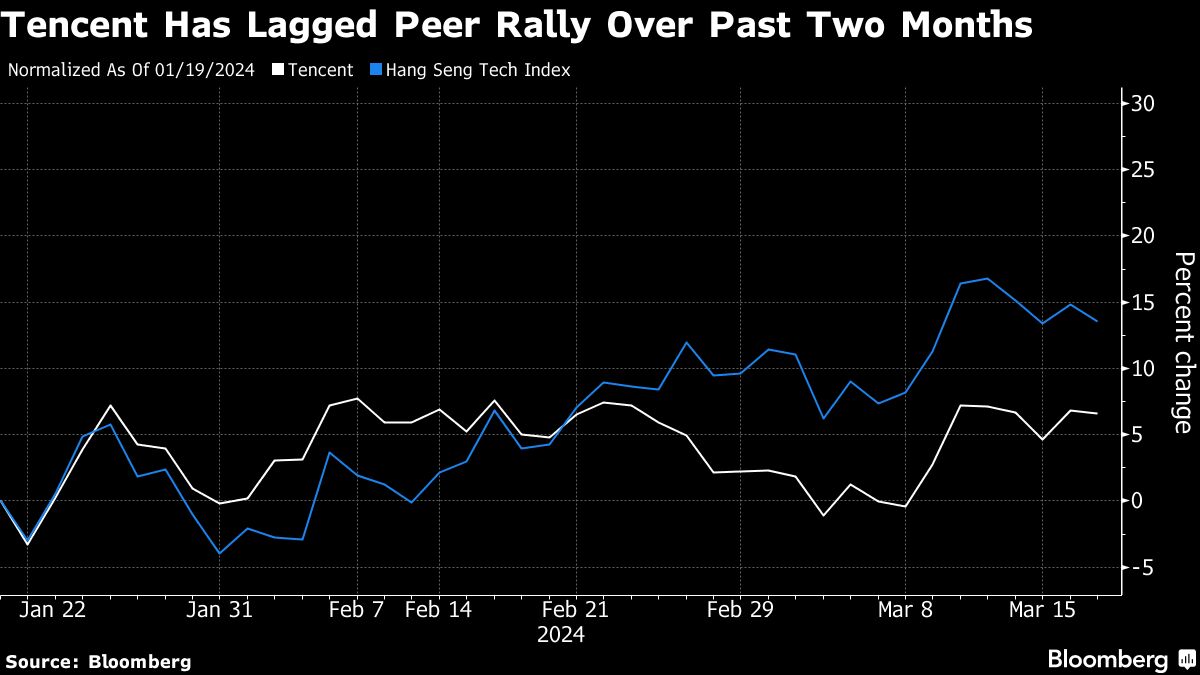
Tencent Holdings Ltd. plans to double its stock buyback program to at least $12.8 billion in 2024 after reporting a lower-than-expected 7% rise in revenue, with gaming sales disappointing, particularly in China. The move aims to mollify investors concerned about a gradual dissipation of growth during a Chinese economic downturn. Tencent faces challenges in retaining paid subscribers for its video and music streaming services, and its cloud computing arm is engaged in a price war with Alibaba and JD. The company is also seeking its next big hit in the gaming sector amidst regulatory uncertainties.
Most Asian stocks were muted as investors exercised caution ahead of key central bank meetings, particularly from the Federal Reserve and the Bank of Japan. Japanese stocks rallied ahead of the BOJ meeting, with speculation that the central bank may end its ultra-dovish monetary policies. Chinese stocks inched higher despite mixed production and retail sales data, while Australian and Indian markets showed caution ahead of central bank meetings.
Many young Chinese are opting out of the traditional Lunar New Year family reunion due to economic hardships, unemployment, and family pressure. The country's slowing economy, exacerbated by government crackdowns on private enterprises and a declining real estate market, has left many feeling uncertain about their future. Some, like Yuwen and Qingfeng, are unemployed and struggling to find stable employment, while others, like Xiaoba, are avoiding family pressure to get married and settle down. As a result, many young people are choosing to spend the holiday alone or with friends, reflecting a broader trend of declining marriage rates and a shrinking population in China.