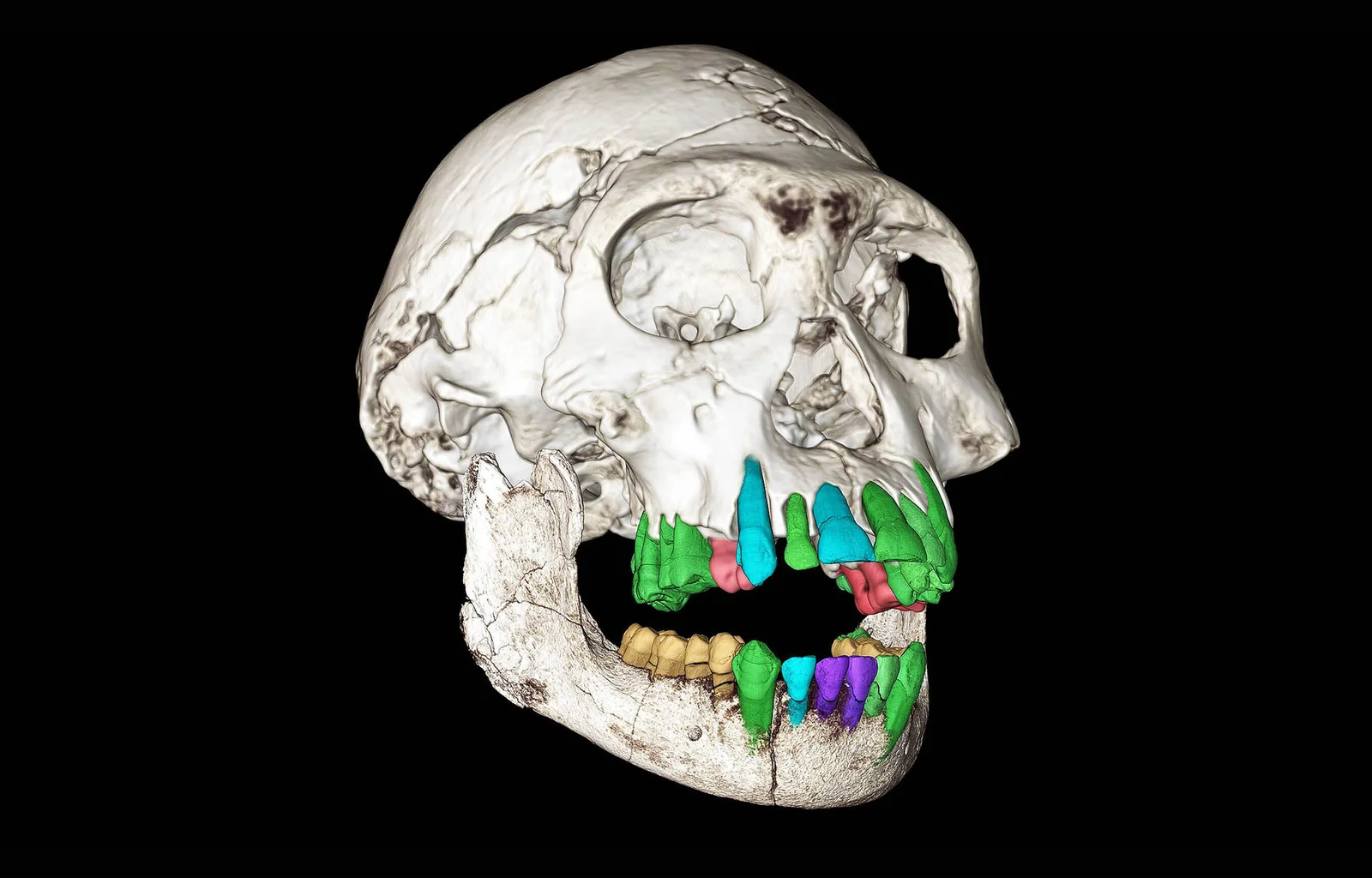
Fossil teeth from an 11-year-old early Homo individual suggest that prolonged childhood in humans may have evolved to support cultural learning and social support, rather than solely brain size increase, challenging traditional views on human development.
A study conducted by researchers at the University of Wisconsin-Madison reveals that children who perceive their parents as reliable and predictable are more likely to take risks and engage in exploratory behavior. The study involved over 150 children aged 10 to 13 and used game-based scenarios to assess risk-taking tendencies. The findings highlight the significant impact of parental predictability on a child's willingness to explore, suggesting that stable and predictable environments play a crucial role in fostering children's learning and development.
A study conducted by researchers from Boston Children's Hospital found that nearly 37% of children diagnosed with autism spectrum disorder (ASD) as toddlers no longer met the criteria for an autism diagnosis by the time they were 5 to 7 years old. Female children and those with higher baseline adaptive skills were more likely to outgrow the disorder. The study highlights the importance of ongoing evaluations and monitoring of a child's development. The findings suggest that some children diagnosed with autism at a young age may not continue to meet the criteria a few years later, emphasizing the need for further research to understand the effectiveness of current treatments for autism.
The author shares their experience raising a child with severe anxiety, ADHD-like symptoms, and oppositional behavior. Despite the challenges, they emphasize their child's positive qualities and the importance of understanding and supporting their unique needs. Through therapy and coping strategies, the child's anxiety and aggressive outbursts have decreased, allowing for increased independence and improved overall well-being. The author acknowledges the ongoing vigilance required and the need for continued support in the future.
A study conducted by researchers at Tohoku University found that increased screen time in one-year-olds is associated with developmental delays. The study examined over 7,000 mother-child pairs and assessed screen time exposure using parental questionnaires. The children's development was evaluated in various domains at ages two and four. The results showed that increased screen time at age one was correlated with developmental delays in communication and problem-solving skills at age four. The study highlights the need to consider different domains of development when examining the association between screen time and child development. However, it is important to note that the study only suggests an association, not causation, between screen time and developmental delay.
Resting brain activity observed during early childhood, specifically in the theta frequency band, has been found to predict cognitive outcomes and IQ at age 18, according to a study published in Developmental Cognitive Neuroscience. The research, conducted on a sample of 202 children, suggests that variations in resting brain activity during critical developmental periods can provide insights into long-term cognitive trajectories. The study also found that experiences like institutional rearing and the timing of foster care placement had significant effects on cognitive development, with resting theta power acting as a mediator between these experiences and long-term cognitive outcomes. However, further research is needed to understand the underlying mechanisms behind these associations.
A concerned grandmother is troubled by her granddaughter's participation in a sexualized cheerleading program and wants to protect her childhood. However, the parents have made it clear that they do not want any input or support. The advice columnist suggests that the grandmother should maintain a healthy relationship with her granddaughter and try to understand the parents' values, even if they differ from her own. She can express her concerns, but should be prepared for a negative reaction. In another question, a person moving to a new town wonders if they should bake brownies to introduce themselves to their neighbors, but the columnist suggests starting with friendly waves and joining community groups instead. Lastly, the columnist responds to a reader's amusement over a graduation party invitation that expanded to include congratulations for a sibling's job promotion, stating that a gift is not necessary in such a situation.
A concerned grandmother seeks advice on how to approach her son and daughter-in-law about her concerns regarding their 3-year-old daughter's participation in a pee-wee "cheer" program that she believes sexualizes young girls. The grandmother, who has respected her son and daughter-in-law's wishes for no input or support, is unsure how to advocate for her granddaughter's childhood. The advice columnist suggests maintaining a healthy relationship with the child's parents while expressing concerns, but warns that the parents may react negatively.
A triple dose of vitamin D3 supplementation in the first two years of life reduces the chance of mental health problems later on by around 50 percent, a high-quality experiment finds. Infants who were given 30 µg of vitamin D daily, which is three times the recommended dose, were only half as likely to have internalizing problems by age 6-8. Vitamin D plays an important role in the development of the brain, and around half the world’s population are thought to have an insufficiency of vitamin D.
Certain genes expressed in the brain before birth could influence the risk of developing various mental illnesses during childhood, according to a study by researchers at Massachusetts General Hospital. The study identified a “neurodevelopmental gene set” as the strongest genetic predictor for childhood mental health symptoms, with the genes in this set most active in the cerebellum and peaking in their expression before birth. The discovery suggests the need for earlier interventions to mitigate the risk of mental illnesses.