Tag

Arrokoth

All articles tagged with #arrokoth

space-science1 year ago

"Arrokoth: The Sweet Red 'Sugar World' in the Kuiper Belt"

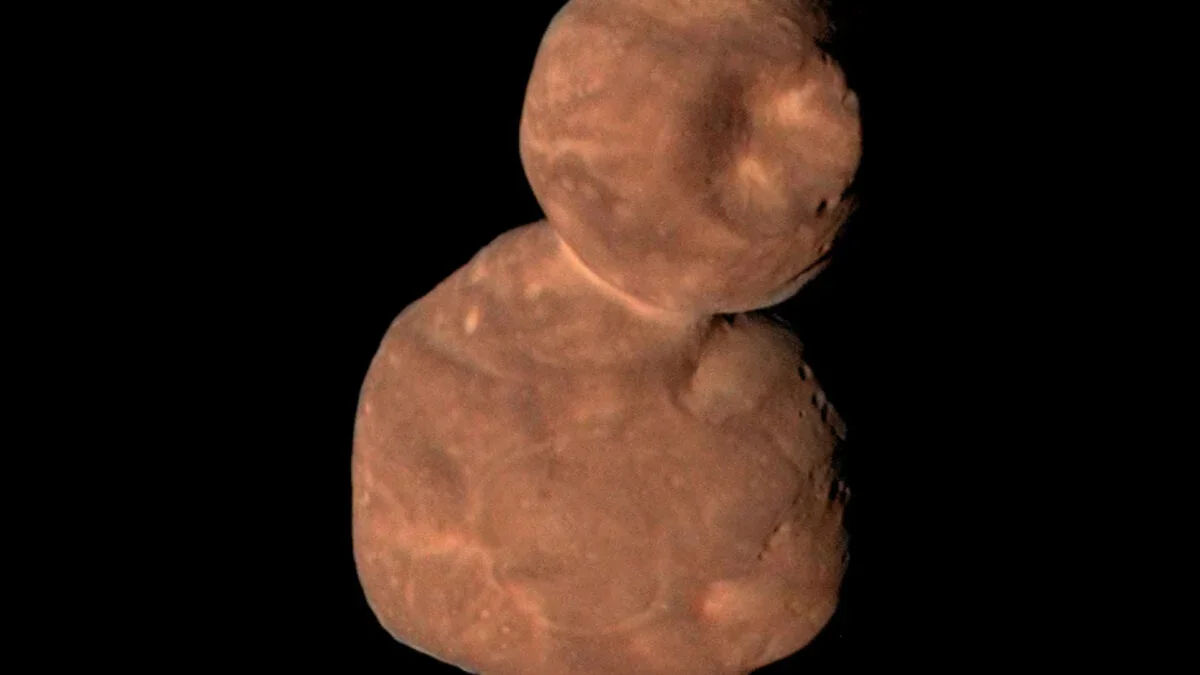
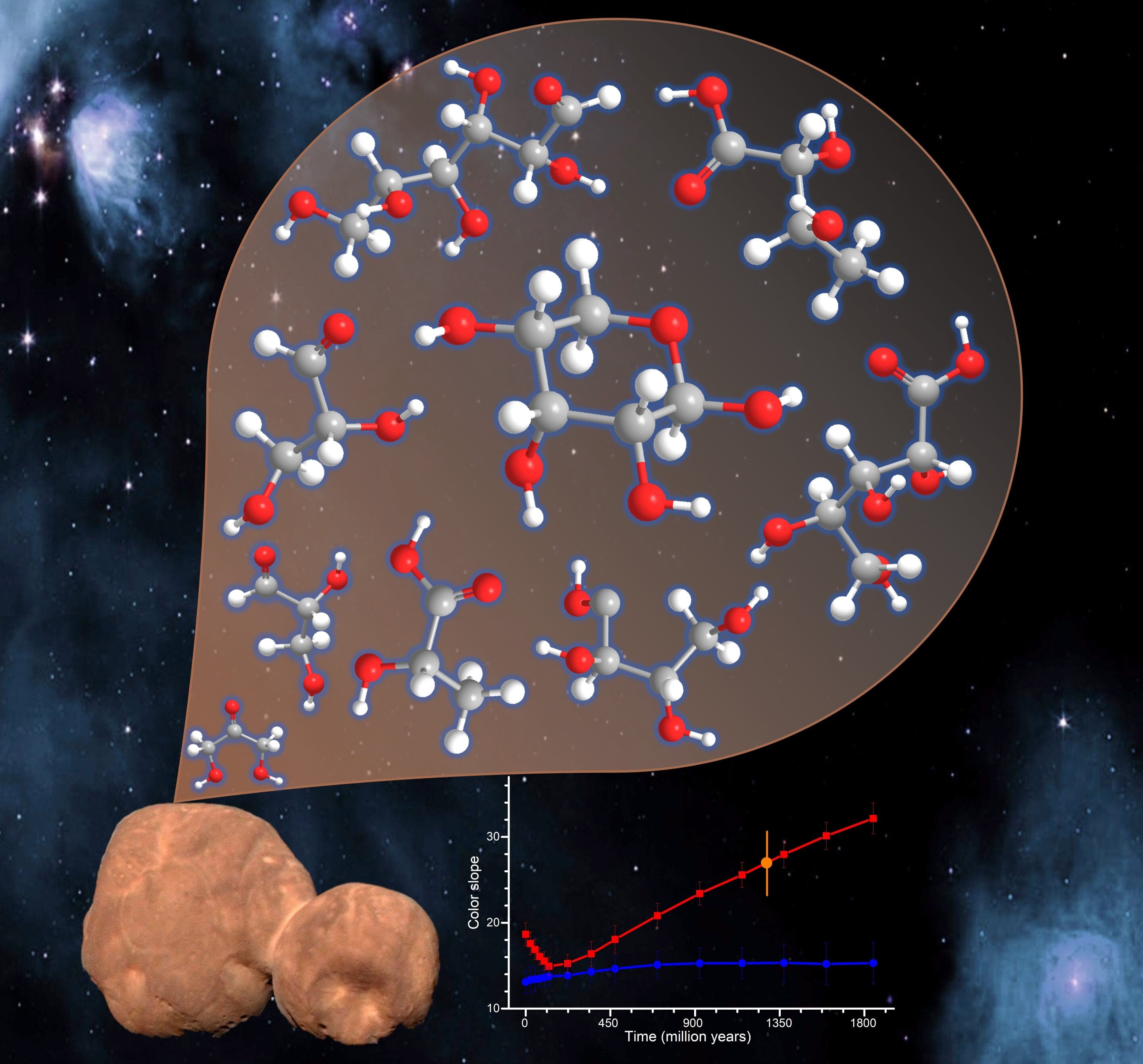
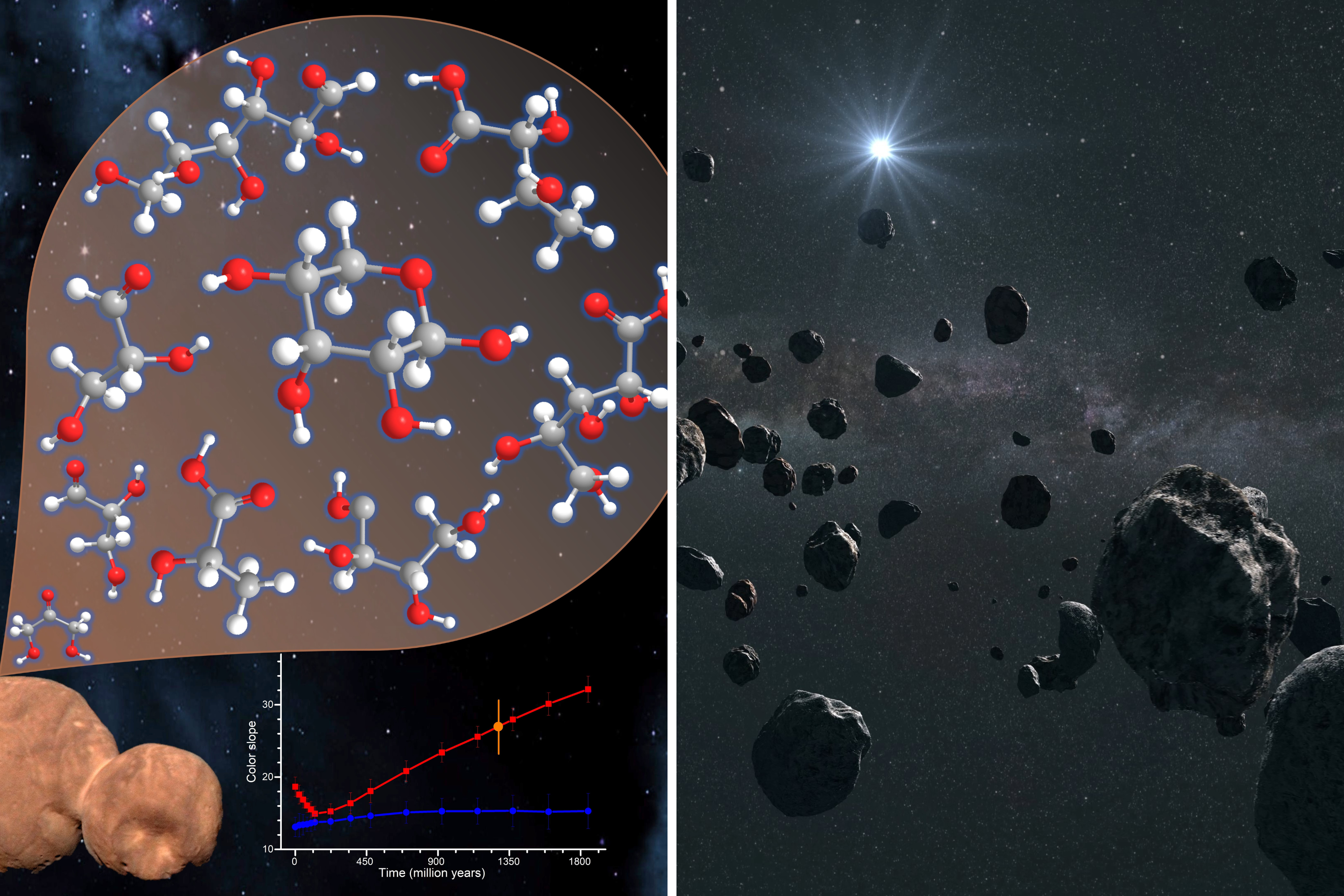
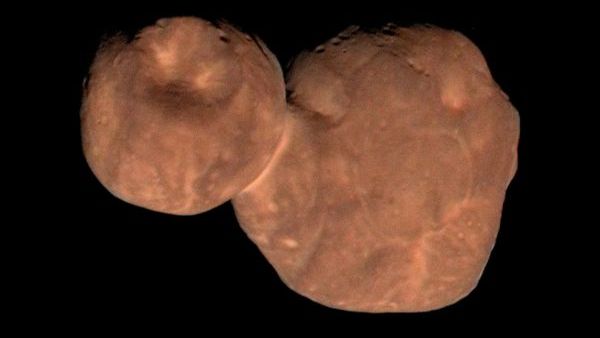
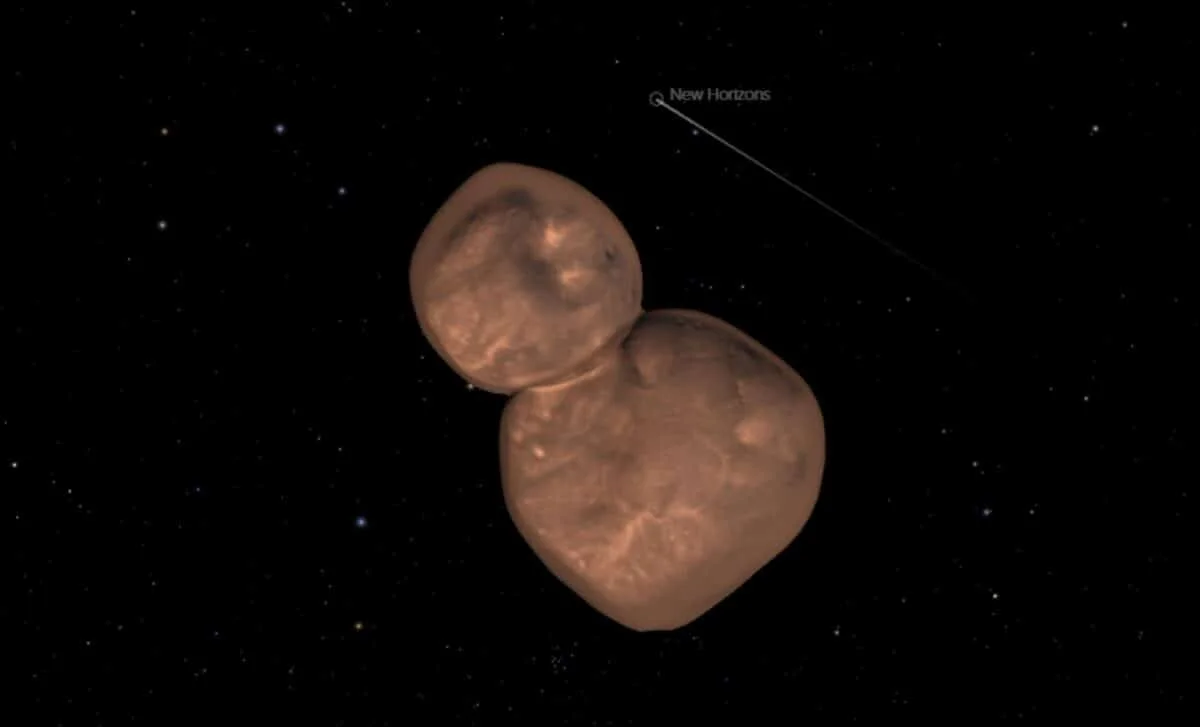
Researchers have simulated the conditions on the planetesimal Arrokoth and found that its red color likely comes from a surface rich in sugars formed by cosmic ray bombardment over 1.8 billion years. This discovery, made using data from NASA's New Horizons spacecraft, suggests that similar processes on comets could have contributed to the origins of life on Earth.

science1 year ago

"Sweet Discovery: Sugar-Rich World Found in Kuiper Belt"

A study led by planetary scientist Alan Stern has discovered significant amounts of complex organic molecules, including sugars, on Arrokoth, a distant object in the Kuiper Belt. This finding, made possible by the New Horizons mission's 2019 flyby, provides new insights into the chemical processes of the early solar system and potentially the origins of life on Earth.

space1 year ago

"Unveiling Ancient Ice in Kuiper Belt Objects"

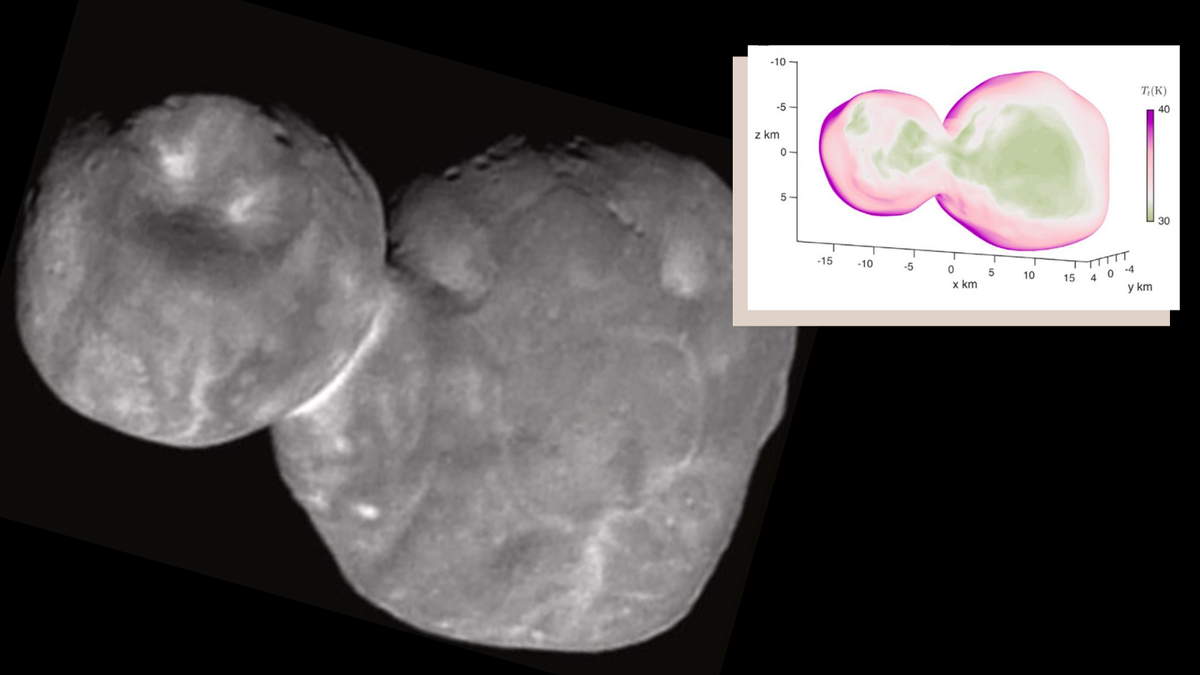
New research suggests that the Kuiper Belt object Arrokoth, also known as "Ultima Thule," may contain ancient ice, challenging previous models of Kuiper Belt object evolution. The findings could change our understanding of comets and explain explosive behavior observed in some of these bodies. The research team's model proposes that Kuiper Belt objects like Arrokoth maintain volatile ice for billions of years by forming a subsurface atmosphere that slows ice loss. This fresh approach to cometary interiors has implications for our understanding of the evolution of these important frozen remnants of the early solar system.

space2 years ago

Unveiling the Secrets of Arrokoth: Insights into Solar System Formation

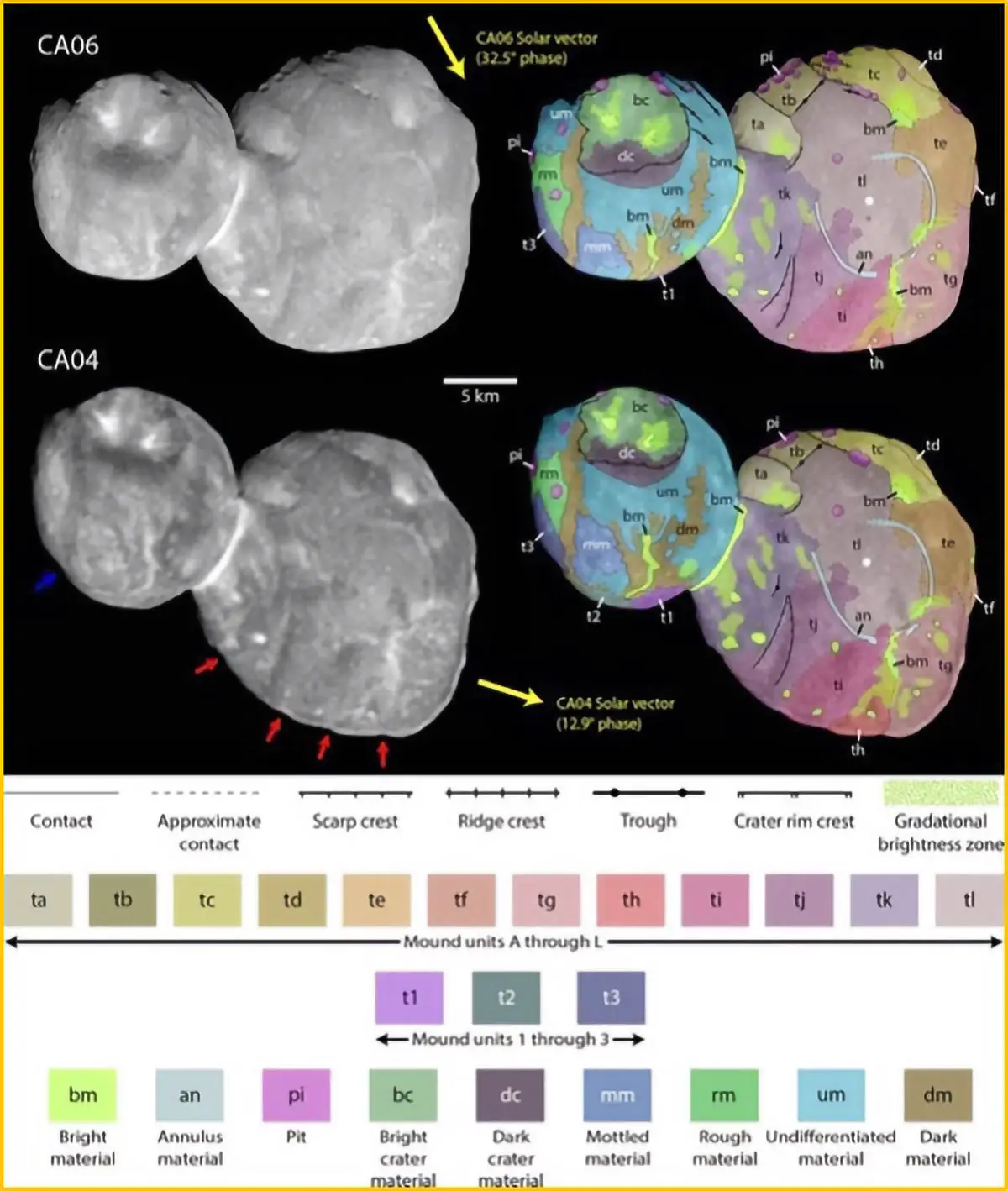
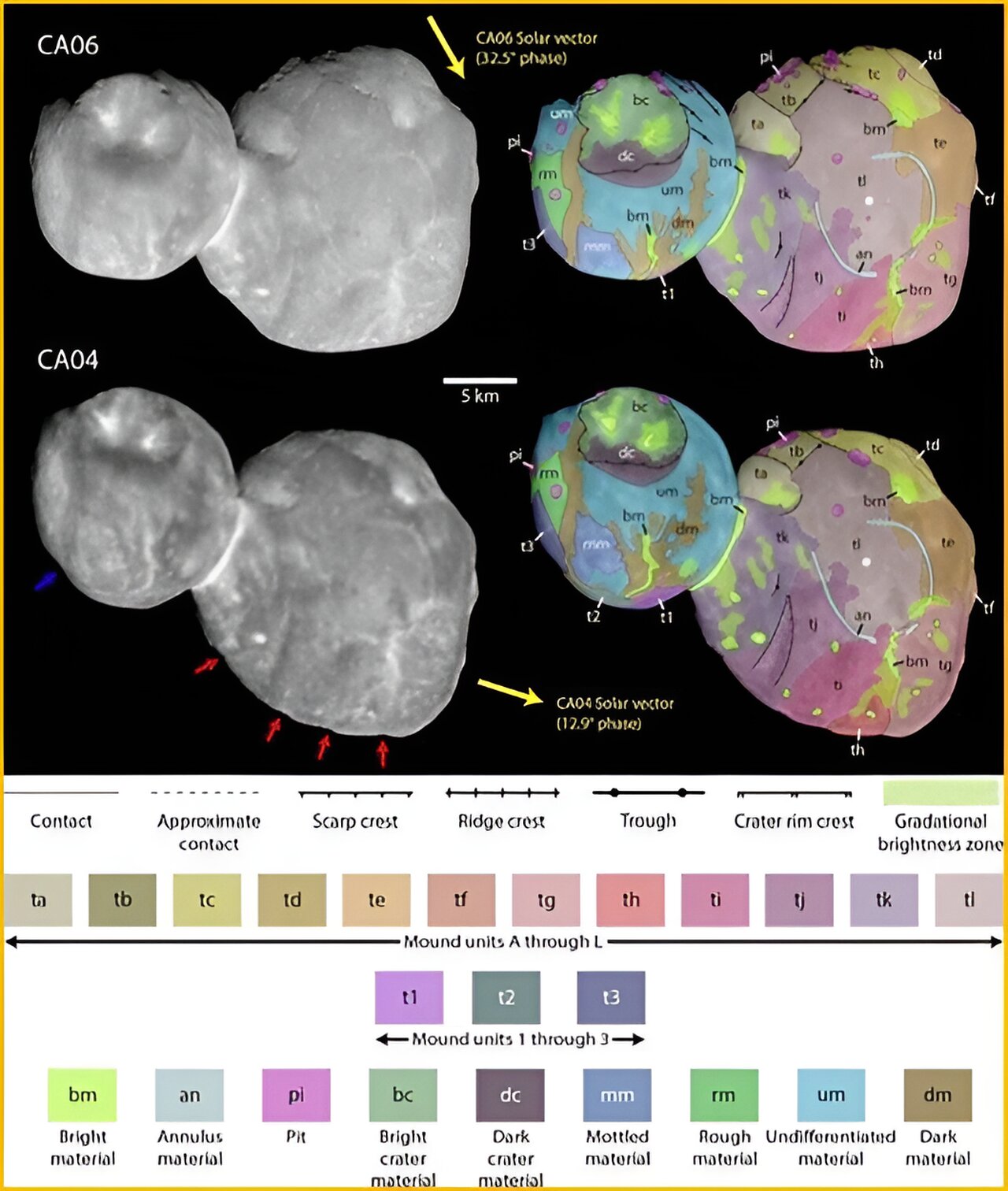
A new study on the trans-Neptunian object Arrokoth has revealed that its lobes are dotted with mounds, suggesting a common origin and shedding light on the formation of planetesimals in our solar system. The mounds share similar shape, size, color, and albedo, indicating that they clumped together to form the lobes. This discovery supports the streaming instability model of formation, where gentle collisions allow smaller objects to accumulate into larger ones. The findings may require a reevaluation of theories about planetesimal formation and could have implications for future missions targeting similar objects.

space-science2 years ago

Unraveling the Enigma of Arrokoth's Mysterious Mounds in the Kuiper Belt

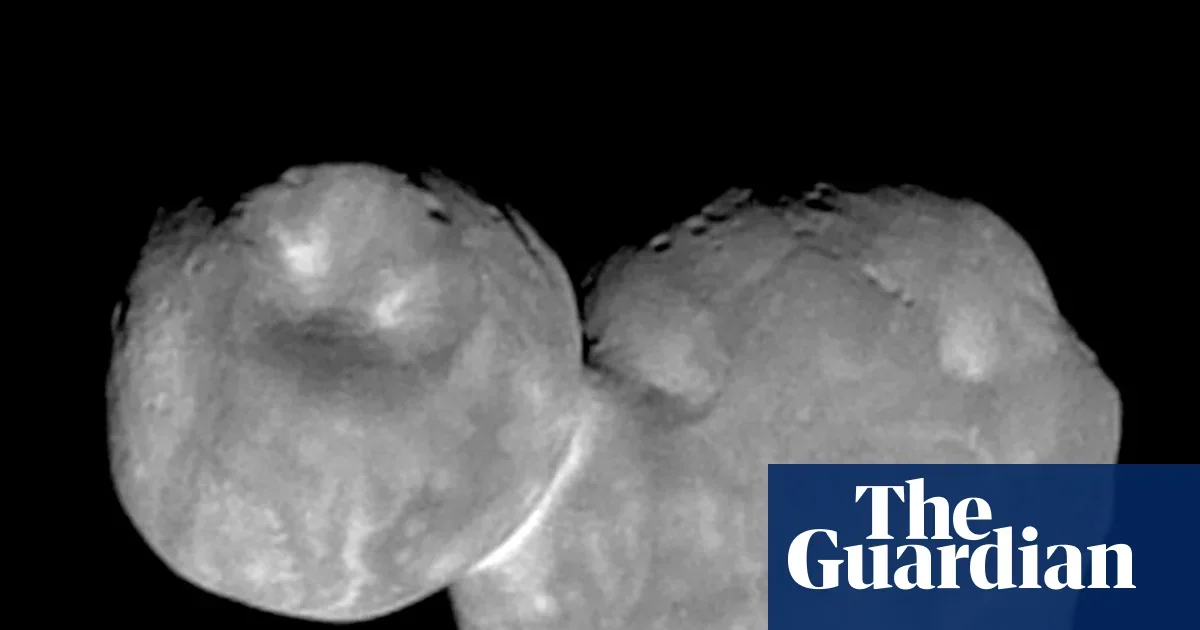
The Kuiper Belt object Arrokoth, known for its unique shape, has bumpy mounds on its larger lobe that may be remnants of boulders that fused together during its formation. Using data from the New Horizons spacecraft, researchers discovered 12 bumps with similar characteristics, suggesting they are the building blocks of Arrokoth. This supports the idea that planet formation begins with smaller objects merging together. Arrokoth's pristine condition and location in the Kuiper Belt make it an important object to study. Further research is needed to understand why the rocks are all similar in size. The findings provide insights into the early stages of planet formation and may help explain the preferred size of building blocks in the formation of ancient planetesimals like Arrokoth.

space-science2 years ago

Unraveling the Origins of Arrokoth's Mysterious Mounds in the Kuiper Belt

A new study led by Southwest Research Institute (SwRI) suggests that the large mound structures on the Kuiper Belt object Arrokoth may have a common origin, providing insights into planetesimal formation. These mounds, identified during NASA's New Horizons flyby in 2019, exhibit similar shape, size, color, and reflectivity. The findings support the streaming instability model, where low-speed collisions allow objects to accumulate and form planetesimals. Further exploration of pristine planetesimals, such as those targeted by NASA's Lucy mission and ESA's comet interceptor, could shed light on the accretion processes in the ancient solar system.

space-science2 years ago

Uncovering the Origins of Arrokoth's Mysterious Mound Structures

A study led by Southwest Research Institute suggests that the large mound structures on the Kuiper Belt object Arrokoth may have a common origin. These mounds, identified during NASA's New Horizons flyby in 2019, are similar in shape, size, color, and reflectivity. The findings provide insights into planetesimal formation models and could guide future missions to study other pristine planetesimals. The study highlights the need to explain the preferred size of these building blocks and suggests that similar mound structures may be common in the ancient solar system.

space2 years ago

New Horizons Probe Makes Three Discoveries in Outer Solar System.

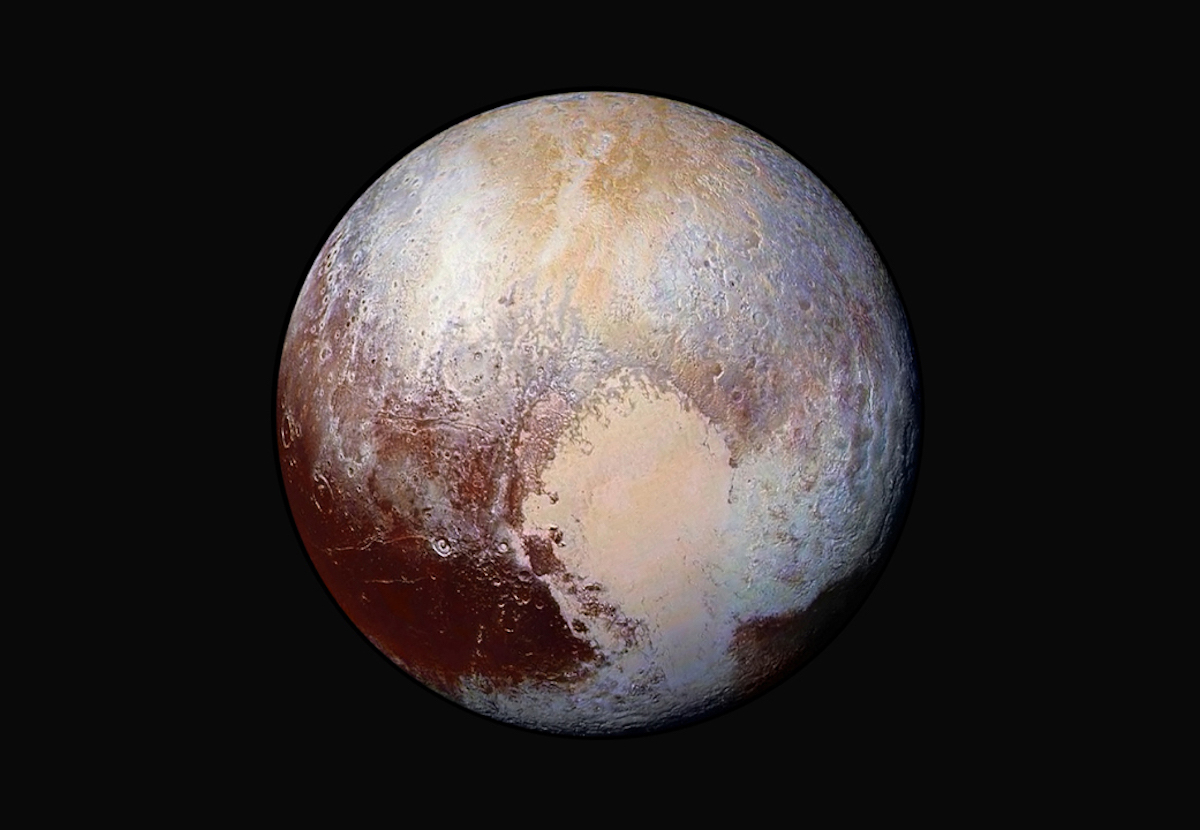
NASA's New Horizons probe, which flew by Pluto in 2015, has made three new discoveries in the outer solar system. The first is that Pluto's flip was caused by the formation of Sputnik Planitia, a 620-mile-wide basin that makes up half of the iconic heart-shaped region on Pluto. The second is that massive knife-like methane ice deposits extend to Pluto's far side. The third is that Arrokoth, a small object in the Kuiper Belt, is a gentle fusion of two objects that once orbited each other. New Horizons will also take color images of Uranus and Neptune as it studies distant Kuiper Belt objects.