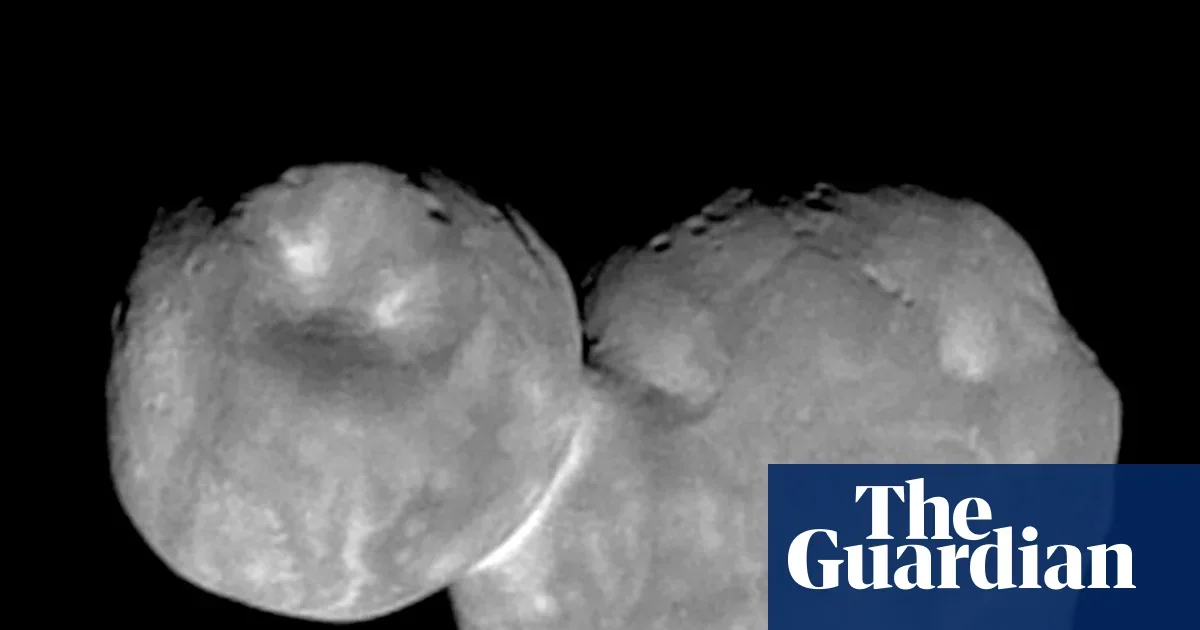
NASA's Lucy spacecraft discovered that the asteroid Dinkinesh, also known as "Dinky," has an ultra-rare double moon named Selam, which is a contact binary. This discovery was made during a flyby on November 1, 2023, and researchers have proposed a model explaining Selam's formation. The findings, published in Nature, provide new insights into asteroid formation and could help understand planetary formation.
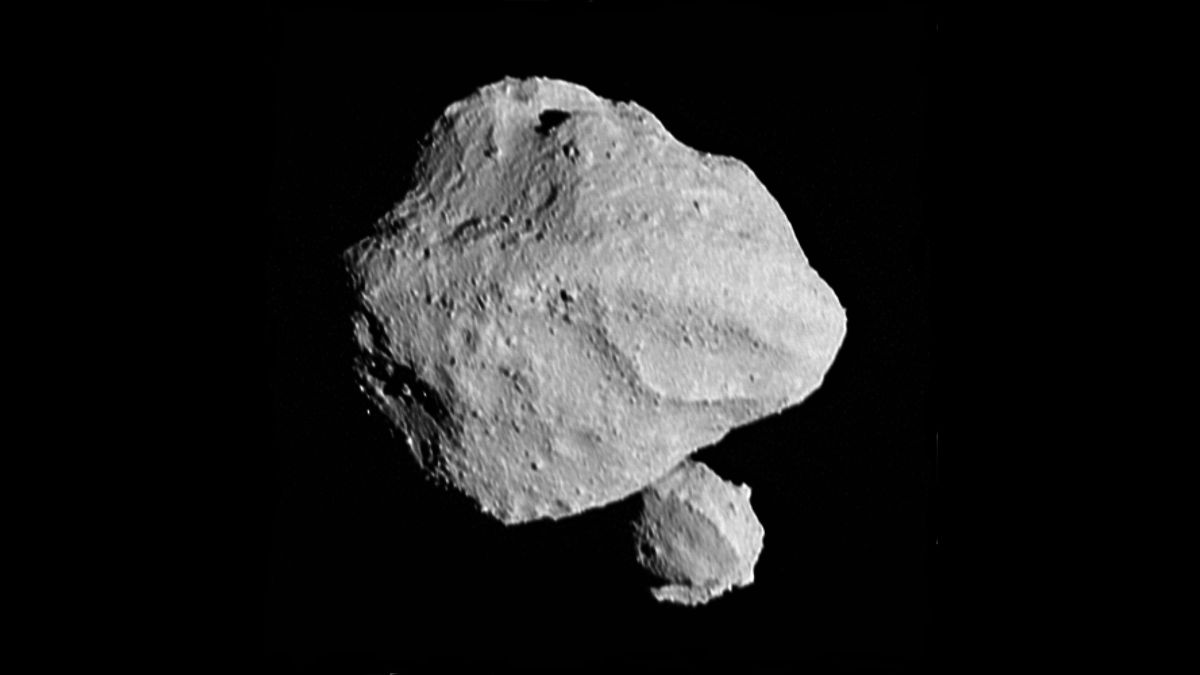
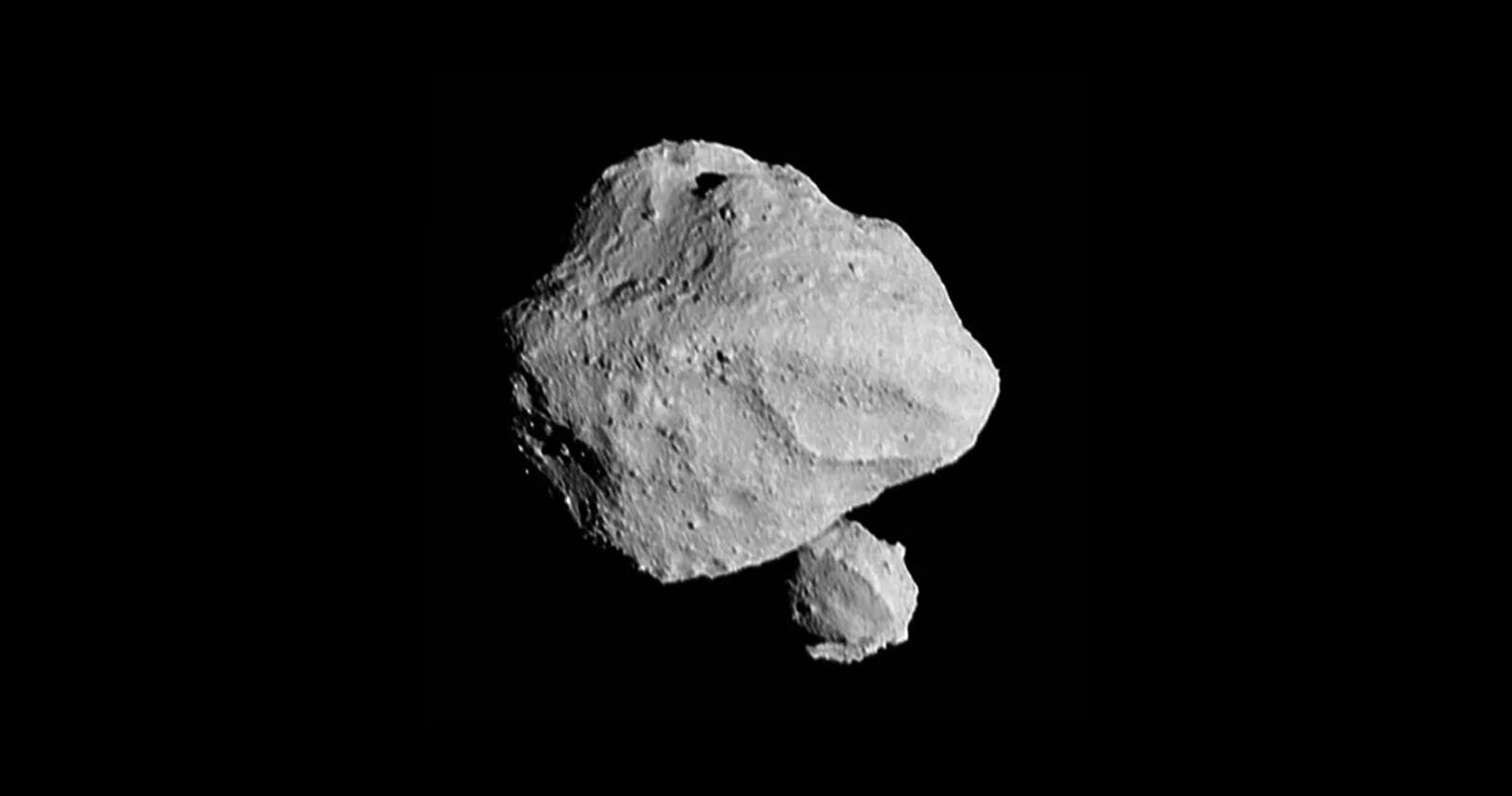
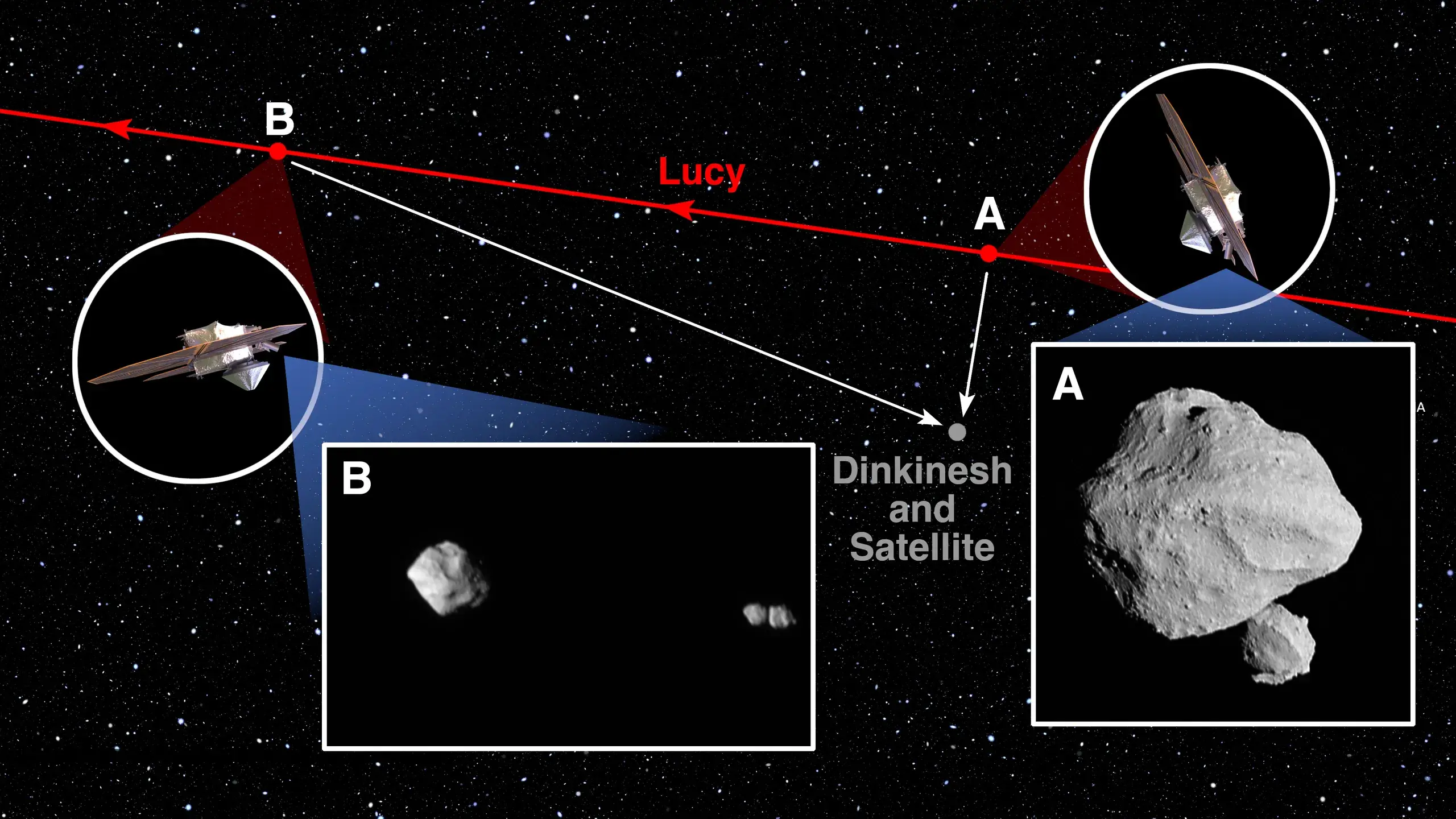
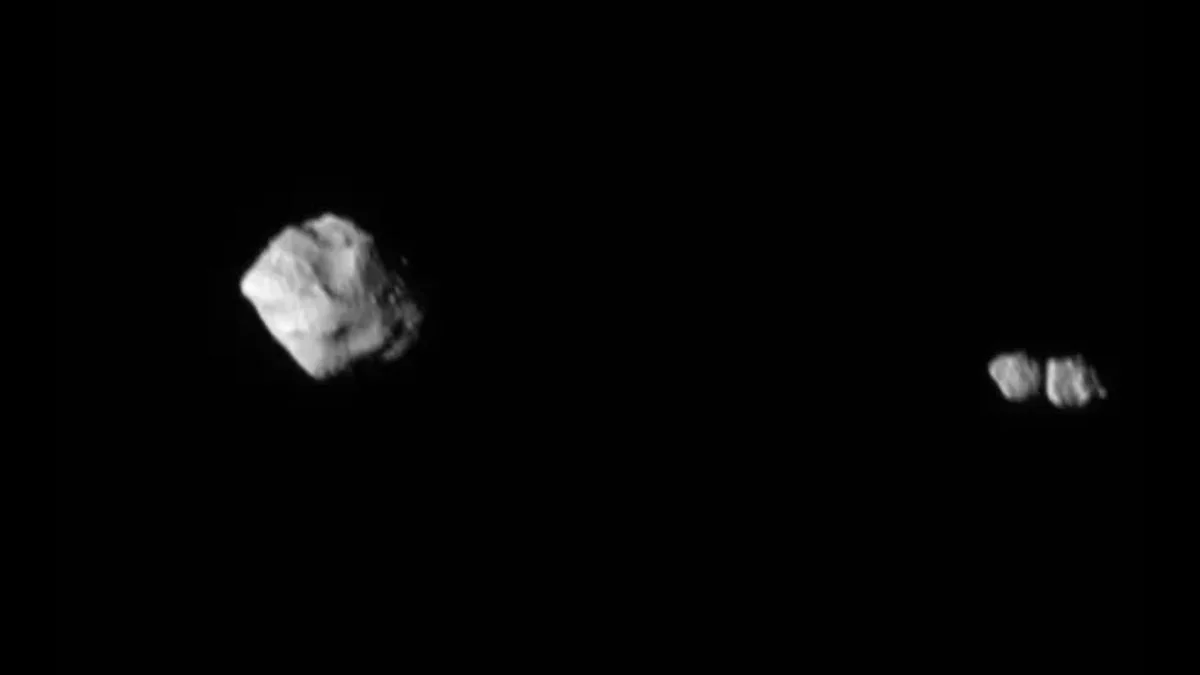
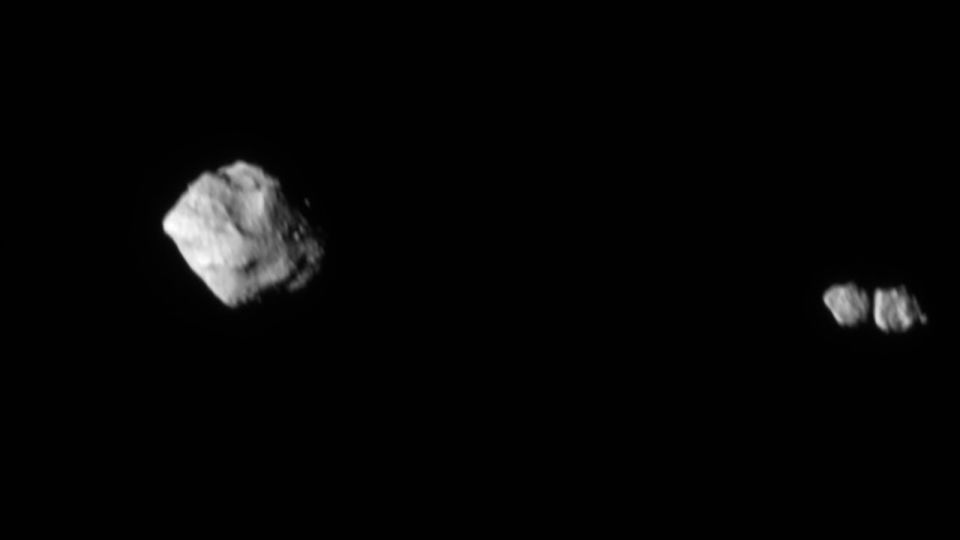
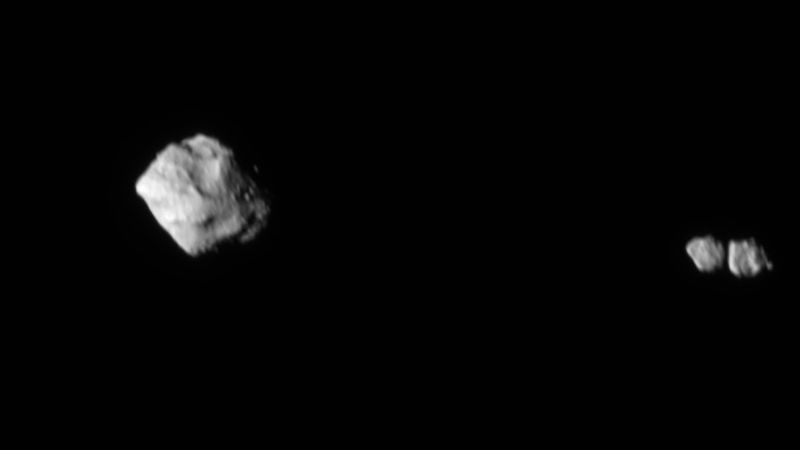
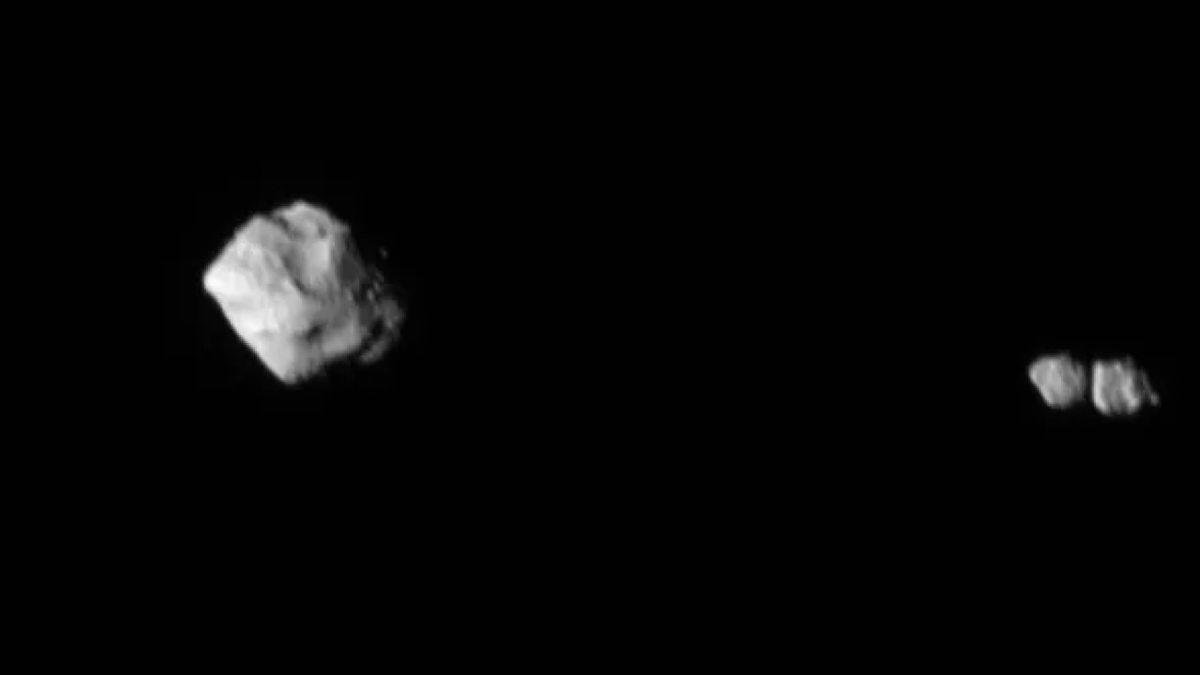
NASA's Lucy spacecraft, on its mission to explore Jupiter's Trojan asteroids, captured its first-ever asteroid encounter, revealing a surprise. The spacecraft's Long Range Reconnaissance Imager (L'LORRI) returned an image of what was initially thought to be a single asteroid, but further analysis showed that it was actually a contact binary, consisting of two smaller objects touching each other. This is the first time a contact binary has been observed orbiting another asteroid. The larger asteroid, Dinkinesh, is about half a mile wide, while its small satellite is about 0.15 miles in size. The discovery adds to the excitement of the Lucy mission, which aims to study the Trojan asteroids and prepare for future encounters.
NASA's Lucy spacecraft, on a 12-year mission to study Trojan asteroids, encountered its first target, Dinkinesh, and made a surprising discovery. Dinkinesh is actually a binary system, with two smaller asteroids orbiting it closely to form a contact binary. This is the first time astronomers have observed such a system orbiting an asteroid. Lucy has now visited three asteroids instead of one, and will continue its mission to study a total of 11 objects. The scientific community is excited to unravel the mysteries of this peculiar contact binary.
NASA's Lucy spacecraft, on its mission to survey Jupiter Trojan asteroids, made an unexpected discovery during its first encounter with the asteroid Dinkinesh. The team found that Dinkinesh's satellite is a contact binary, composed of two smaller objects touching each other. This is the first time a contact binary has been observed orbiting another asteroid. The discovery was made through multiple perspectives captured by Lucy's imaging system, providing insights into the asteroids' shapes. The team is excited to unravel the mysteries of this bizarre system and continue exploring the remaining 10 asteroids on Lucy's 12-year journey.
NASA's Lucy mission, during its first asteroid flyby, discovered that the small moon orbiting the main belt asteroid Dinkinesh is actually two moons that appear as one because they are touching. Dinkinesh is the smallest main belt asteroid ever explored by a spacecraft, and its moons are approximately the same size, which is unusual for contact binaries. Scientists are intrigued by how these equally-sized bodies stick together gravitationally and are eager to study them further. This unexpected finding demonstrates that Lucy's equipment is working well, and the mission will continue to survey other asteroids in the future.
NASA's Lucy mission, which recently flew by the small asteroid Dinkinesh, has made a surprising discovery. Initially believed to be part of a binary pair, new images reveal that Dinkinesh is actually a contact binary, consisting of two smaller asteroids touching each other. The close approach was primarily a test for the spacecraft's equipment, but the unexpected finding has left scientists puzzled. Lucy's main goal is to survey the Trojan asteroids around Jupiter, and its next close encounter will be with another main belt asteroid in 2025 before heading towards the Trojans in 2027.
NASA's Lucy mission, which recently flew by the small asteroid Dinkinesh, has made a "puzzling" discovery. Initial images suggested that Dinkinesh was part of a binary pair, with a smaller asteroid orbiting it. However, subsequent images revealed that the smaller asteroid is actually a contact binary, two smaller space rocks that touch each other. This unexpected finding has surprised scientists and will provide valuable insights into the formation and composition of asteroids. The Lucy mission aims to survey the Trojan asteroids around Jupiter and will continue its exploration in the coming years.
NASA's Lucy spacecraft, on its mission to explore asteroids near Jupiter, discovered that the asteroid Dinkinesh is not one, but two objects. Further analysis revealed that Dinkinesh's smaller satellite is a contact binary, meaning the two smaller objects are in contact with each other. This makes Dinkinesh a triple-component system, which is puzzling to scientists. Contact binary systems are common in the solar system, but this is the first time one has been observed orbiting another asteroid. Lucy will continue its mission to study other asteroids and the Trojan asteroids in the coming years.
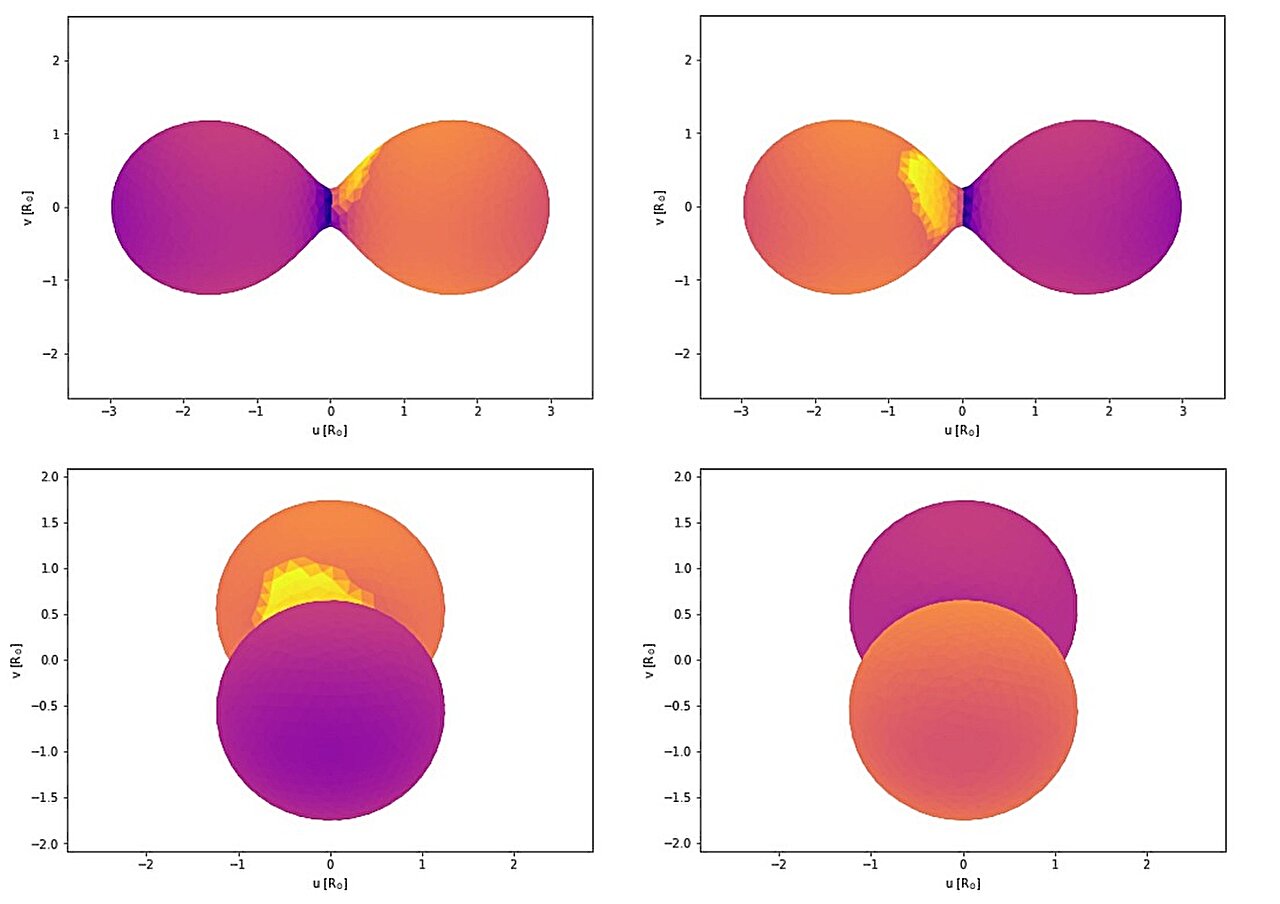
Astronomers have conducted photometric observations of the binary star system V0610 Virgo and found that it is a low-mass contact binary. The system consists of two stars with similar size and mass, sharing a common envelope of material. The observations also revealed a decrease in the orbital period variation trend, suggesting the potential for planet formation within the system. Further observations are needed to determine if V0610 Virgo could be a birthplace for extrasolar planets.