Tag

Antifungal Resistance

All articles tagged with #antifungal resistance

Deadly Fungus Spreads Nationwide Amid Rising Drug Resistance

Originally Published 9 days ago — by International Business Times UK

Featured image for Deadly Fungus Spreads Nationwide Amid Rising Drug Resistance
Source: International Business Times UK

A drug-resistant fungus called Candida auris has been reported in 27 US states with over 7,000 cases, posing a serious threat in healthcare settings due to its resistance to multiple antifungal drugs and ability to spread easily, highlighting a growing global concern about antifungal resistance and the need for strict infection control measures.


Scientists Warn of Growing Drug Resistance in Common Infections

Originally Published 1 month ago — by ScienceAlert

Featured image for Scientists Warn of Growing Drug Resistance in Common Infections
Source: ScienceAlert

The article warns that common fungal infections like thrush are increasingly resistant to antifungal drugs due to factors like misuse, environmental changes, and Candida's adaptability, making treatment more challenging and highlighting the importance of good hygiene and microbiome health to prevent resistant strains.

Antifungal Resistance Challenges Thrush Treatment

Originally Published 1 month ago — by The Conversation

Featured image for Antifungal Resistance Challenges Thrush Treatment
Source: The Conversation

Antifungal resistance in Candida, the fungi causing thrush, is rising, making infections harder to treat and increasing the risk of severe and recurrent cases. This resistance is driven by genetic mutations, biofilm formation, misuse of antifungal drugs, and environmental factors, highlighting the importance of proper medication use and microbiome health to prevent resistant strains.

First Sexually Transmitted Ringworm Case Reported in U.S.

Originally Published 1 year ago — by Yahoo! Voices

Featured image for First Sexually Transmitted Ringworm Case Reported in U.S.
Source: Yahoo! Voices

The first U.S. case of a rare sexually transmitted ringworm caused by the fungus Trichophyton mentagrophytes type VII has been reported in a New York City man. The infection, which took over four months to heal, highlights the growing issue of antifungal resistance. While not widespread, doctors advise seeking medical attention for persistent rashes, especially in the groin area.

"Sexually Transmitted Drug-Resistant Ringworm Detected in U.S."

Originally Published 1 year ago — by NBC News

Featured image for "Sexually Transmitted Drug-Resistant Ringworm Detected in U.S."
Source: NBC News

The first U.S. case of a rare sexually transmitted ringworm caused by the fungus Trichophyton mentagrophytes type VII has been reported. The infection, which was contracted by a New York City man in his 30s, took over four months to treat with various antifungal medications. While not widespread, the case highlights the growing issue of antifungal resistance and the need for awareness among clinicians and the public.

Deadly Fungal Outbreak Hits Washington State

Originally Published 1 year ago — by Yahoo News

Featured image for Deadly Fungal Outbreak Hits Washington State
Source: Yahoo News

Washington state faces its first outbreak of the deadly and drug-resistant fungal infection Candida auris, with four cases detected at Kindred Hospital Seattle First Hill. The pathogen, which tends to infect people with weakened immune systems, has been on the rise in the U.S. since 2016, with over 5,600 infections recorded. The outbreak highlights the challenges of controlling the spread of Candida auris in healthcare facilities and the urgent need for improved infection control practices.

"Deadly C. auris Fungus Outbreak Confirmed in Washington State"

Originally Published 1 year ago — by NBC News

Featured image for "Deadly C. auris Fungus Outbreak Confirmed in Washington State"
Source: NBC News

Washington state is facing its first outbreak of the deadly and drug-resistant fungal infection Candida auris, with four cases detected at Kindred Hospital Seattle First Hill. The pathogen, which tends to infect people with weakened immune systems, has been on the rise in the U.S. since 2016, with over 5,600 infections recorded. The outbreak highlights the challenges of controlling the spread of Candida auris in healthcare facilities, and experts emphasize the importance of active surveillance and infection control measures to prevent further transmission.

Global Fungal Infection Deaths Double in a Decade

Originally Published 2 years ago — by Gizmodo

Featured image for Global Fungal Infection Deaths Double in a Decade
Source: Gizmodo

A new study led by fungal infection researcher David Denning at the University of Manchester has found that fungal infections are responsible for nearly 4 million deaths annually, almost double the previous estimate from a decade ago. Factors such as co-infections, lack of reliable diagnostic testing, and antifungal resistance contribute to the increase. The rise in fungal-related deaths is linked to other health issues, and the impact of the COVID-19 pandemic on fungal infections is yet to be fully understood. More accurate diagnostic tools and additional antifungal drugs are needed to address this growing global health threat.

Global Fungal Infection Deaths Double in 10 Years

Originally Published 2 years ago — by ScienceAlert

Featured image for Global Fungal Infection Deaths Double in 10 Years
Source: ScienceAlert

Deaths from fungal infections have nearly doubled worldwide in the past decade, with an estimated 3.8 million deaths annually, comprising about 6.8% of total global deaths. The lack of timely diagnosis, limited access to diagnostic tests, and ineffective antifungal drugs contribute to unnecessary fatalities. Aspergillus and Candida are among the most lethal fungi, causing lung infections and bloodstream infections, respectively. The COVID-19 pandemic has led to a surge in fungal infections, particularly mucormycosis, and there is concern about a potential double epidemic of fungal infections and respiratory viruses. Accurate and timely diagnosis of fungal diseases is crucial, as there are currently no vaccines available.

"Rapid Surge of Deadly Super Fungus Infections in Nevada Sparks Concern"

Originally Published 2 years ago — by Daily Mail

Featured image for "Rapid Surge of Deadly Super Fungus Infections in Nevada Sparks Concern"
Source: Daily Mail

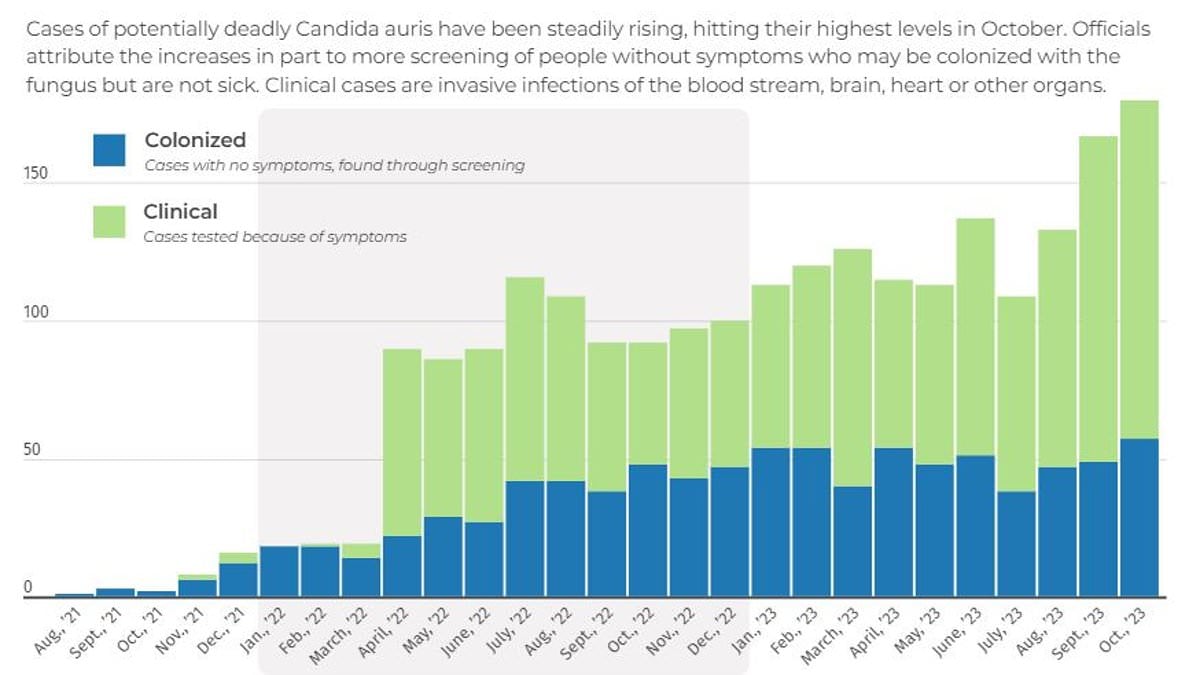
Health officials in Nevada are raising concerns about a surge in cases of Candida auris, a "super fungus" that can cause deadly infections in the bloodstream and organs. In October alone, nearly 200 people in southern Nevada tested positive for C auris, more than double the number in 2021. The rise of C auris is a nationwide issue, with cases tripling in recent years. Nevada, California, and Florida have the highest number of cases. The fungus is becoming resistant to drugs, and there is currently no vaccine. Experts speculate that climate change and human migration may have contributed to its spread. Infections are primarily transmitted in healthcare facilities, making infection prevention and control practices crucial.

Climate Change Linked to Rise of Dangerous Fungus Candida Auris

Originally Published 2 years ago — by CBS News

Featured image for Climate Change Linked to Rise of Dangerous Fungus Candida Auris
Source: CBS News

The dangerous fungus Candida auris, which poses a significant risk in healthcare settings, may be experiencing a sudden increase in cases due to climate change, according to scientists. Candida auris infections can cause severe illness and have a mortality rate of 30% to 60%. The fungus was first identified in the United States in 2016 and has since spread to other states, with New York remaining a major hotspot. Rising temperatures may allow fungi to develop tolerance to warmer environments, potentially reducing human resistance. The number of cases has been increasing globally, and public health agencies are working to mitigate transmission in healthcare settings. Candida auris is difficult to treat and diagnose, making it a significant threat to human health.

Drug-resistant ringworm cases discovered in NYC, first in the US.

Originally Published 2 years ago — by CDC

Featured image for Drug-resistant ringworm cases discovered in NYC, first in the US.
Source: CDC

Two cases of severe tinea caused by Trichophyton indotineae, a novel dermatophyte species that is highly transmissible and frequently resistant to terbinafine, have been reported in New York City. The cases highlight the potential for local transmission of the infection in the United States and the need for correct identification through genomic sequencing. Health care providers should consider T. indotineae infection in patients with widespread tinea that does not improve with first-line treatments and contact their state or local public health department for assistance with testing. Antimicrobial stewardship efforts are essential to minimize the misuse and overuse of antifungal drugs and corticosteroids.

Superbug fungus infections highest in Nevada.

Originally Published 2 years ago — by KRNV

Featured image for Superbug fungus infections highest in Nevada.
Source: KRNV

Nevada has reported the highest number of superbug fungus infections in the United States, with 90 cases confirmed so far. The fungus, Candida auris, is resistant to most antifungal medications and can cause severe infections, particularly in healthcare settings. The rise in cases highlights the growing concern over antifungal resistance and the need for improved infection control measures in healthcare facilities.

CDC warns of alarming spread of deadly drug-resistant fungus.

Originally Published 2 years ago — by Livescience.com

Featured image for CDC warns of alarming spread of deadly drug-resistant fungus.
Source: Livescience.com

Candida auris, a potentially deadly and highly infectious fungus, is spreading faster in US healthcare facilities and becoming more resistant to treatments, according to a new study. The number of clinical infections has increased year on year, and the number of screening colonizations has also risen significantly. The fungus is mainly transmitted in hospitals and other healthcare settings, and researchers suspect that the COVID-19 pandemic may have played a role in its spread. The risk of infection for healthy people who are not regularly exposed to healthcare settings remains low, but increased screening and better transmission control are needed to keep the fungus under control.