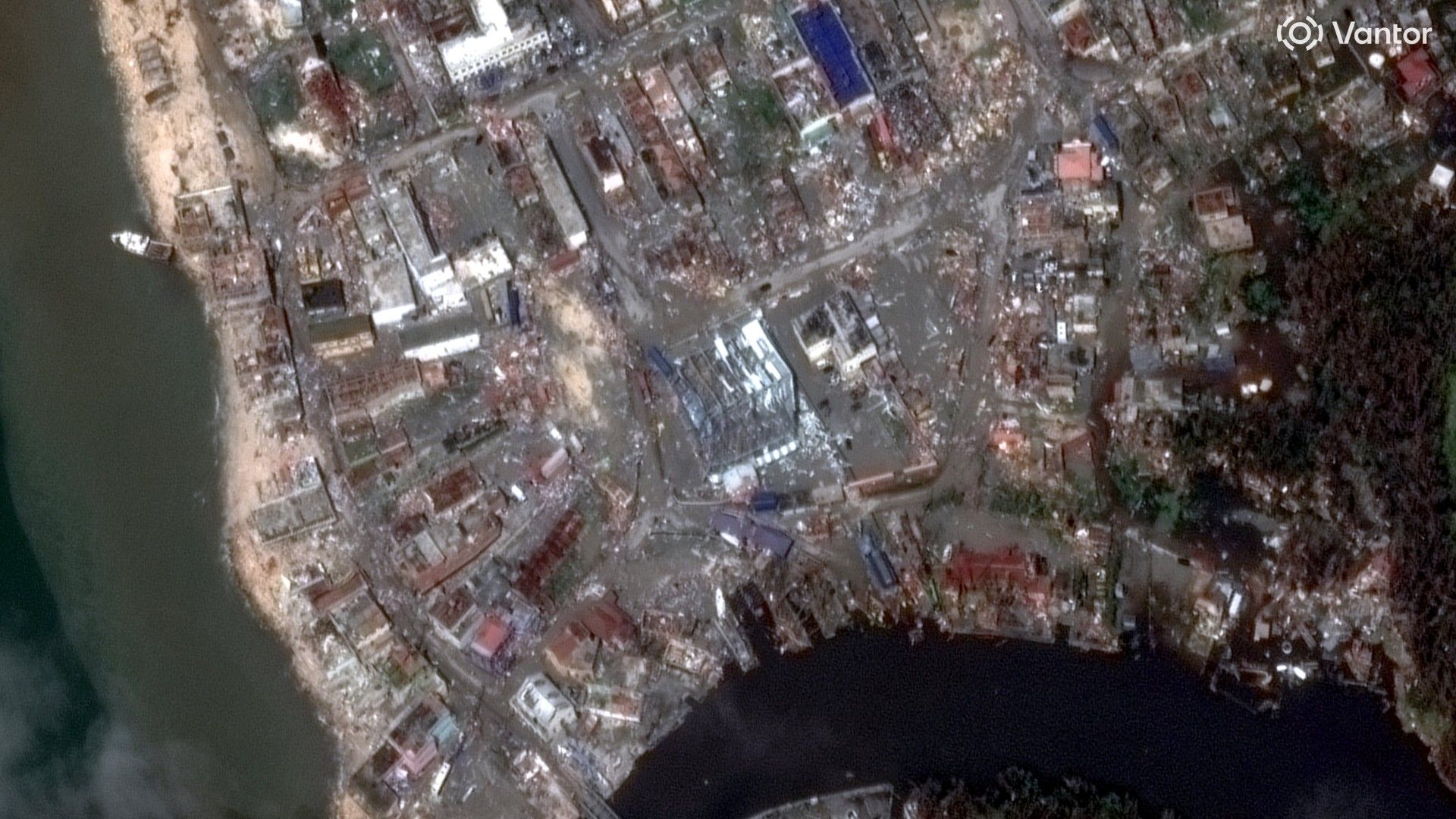
Hurricane Melissa, tying the record as the strongest Atlantic hurricane to make landfall, caused catastrophic damage in Jamaica, with satellite images revealing extensive destruction and aiding rescue efforts; the storm resulted in at least 50 deaths and over $50 billion in damages.
Scientists are alarmed by a series of climate records being broken, including the hottest day on record, the hottest June globally, extreme marine heatwaves, and record-low Antarctic sea ice. These events, which are occurring earlier than expected, are attributed to global warming from burning fossil fuels and the influence of the first El Niño since 2018. The average global ocean temperature has also reached record levels, with particular concern over extreme heat in the North Atlantic. While the exact link to climate change is complex, the impact on marine ecosystems is significant. The reduction in Antarctic sea ice is also at record lows, raising questions about the pace of change and the potential worst-case scenarios. Despite these alarming records, scientists emphasize that there is still time to secure a livable future.
Climate records are being broken at an alarming rate, with soaring temperatures, unusually hot oceans, record high levels of carbon pollution, and record low levels of Antarctic sea ice. Scientists are concerned that this could be a sign of a planet warming much more rapidly than expected. The world is already 1.2 degrees Celsius warmer than it was in preindustrial times, and the next five years are predicted to be the hottest on record.