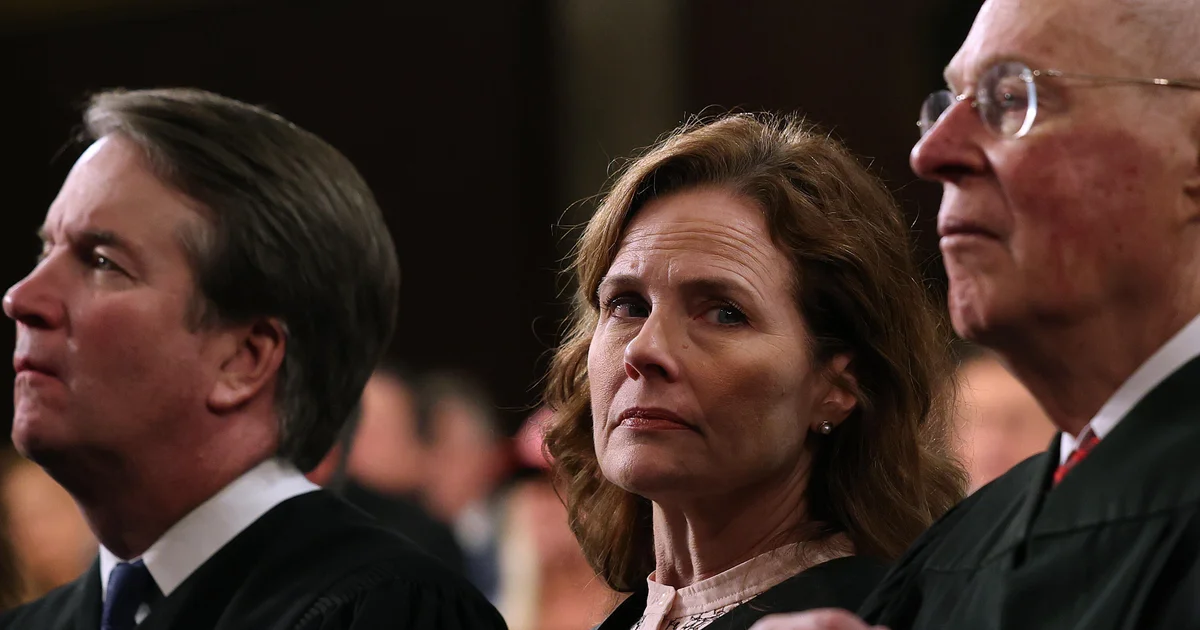
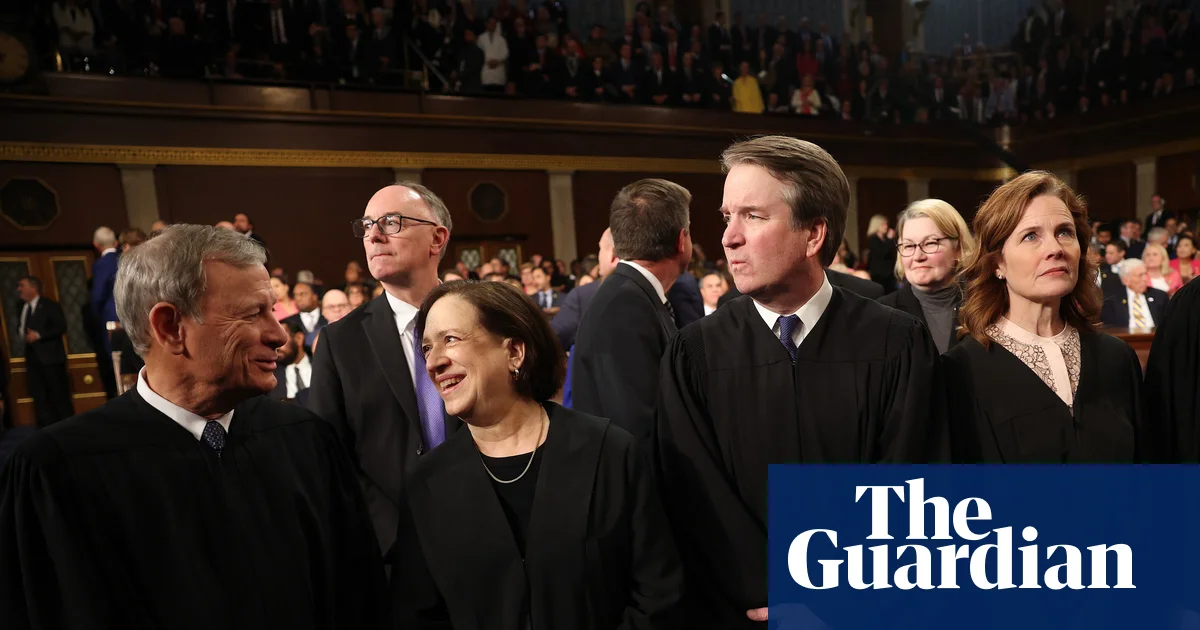
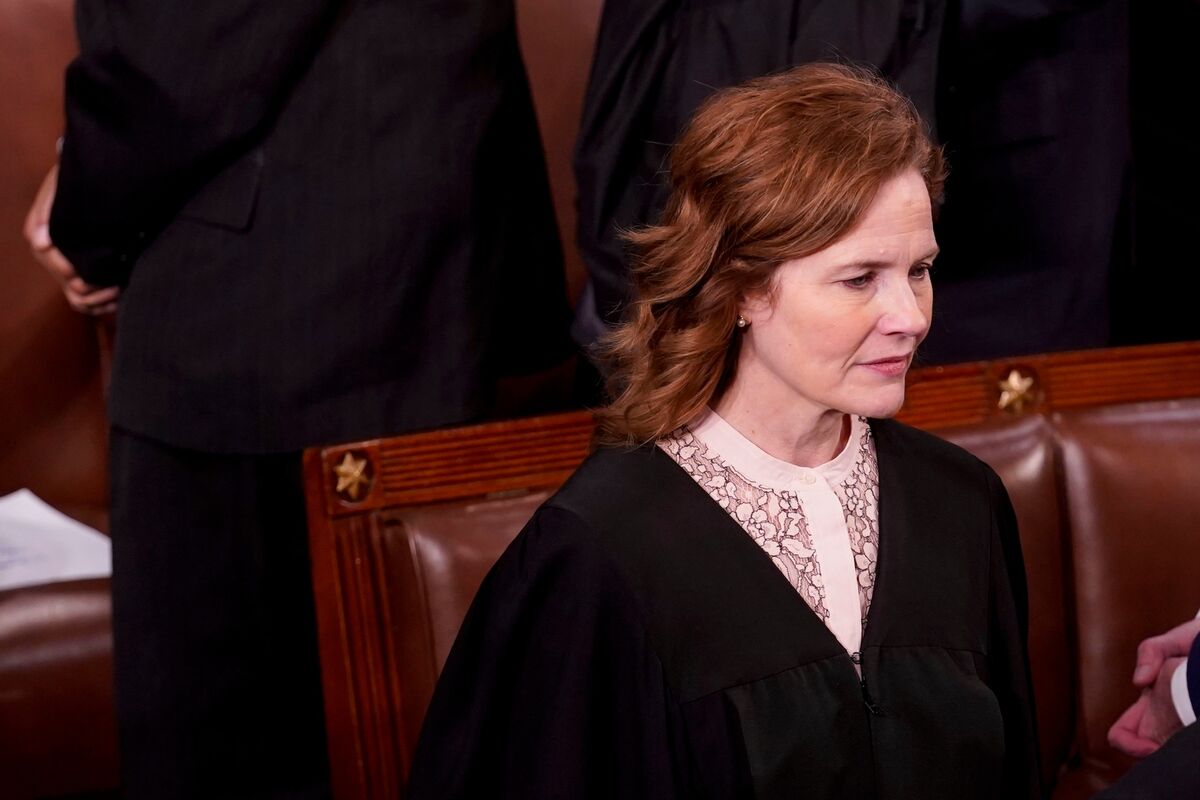
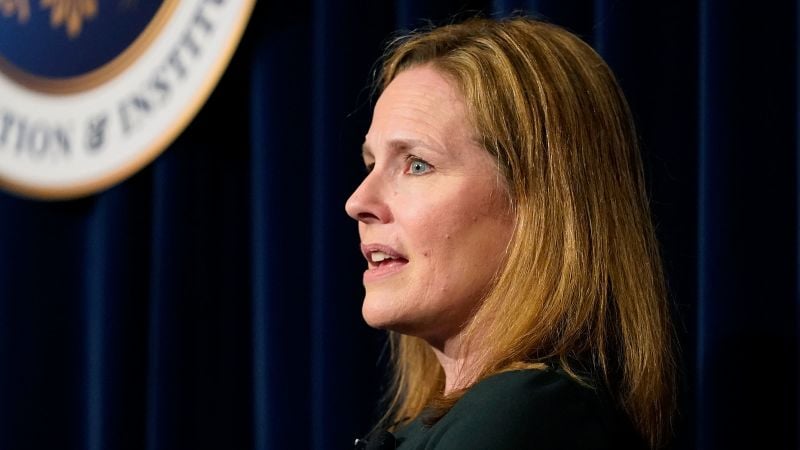
Justice Amy Coney Barrett discusses her experiences with protests, threats, and her approach to the law, emphasizing her resilience and commitment to impartiality amid ongoing political and social tensions surrounding the Supreme Court.
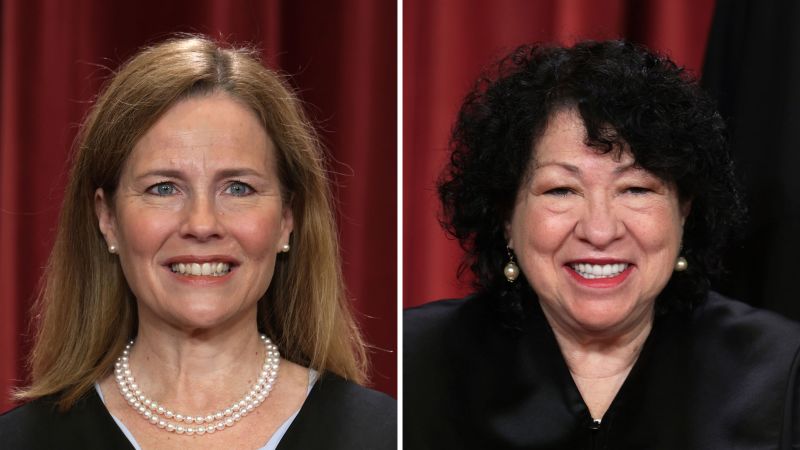
Two Supreme Court justices, Amy Coney Barrett and Sonia Sotomayor, publicly affirmed that the 22nd Amendment clearly limits presidents to two terms, effectively shutting down discussions of a third Trump term.
Justice Amy Coney Barrett discusses her judicial philosophy, the Supreme Court's role in checking presidential power, and her views on recent controversial issues like abortion and executive orders, emphasizing her commitment to legal interpretation over political labels.
Amy Coney Barrett emphasizes that Supreme Court rulings are based on the law, not opinion polls, as the court considers overturning key decisions on same-sex marriage and abortion, reflecting her conservative judicial philosophy and the court's role in interpreting the Constitution.
Justice Amy Coney Barrett defends the Supreme Court against claims of political bias, emphasizing its role in upholding the rule of law and distancing itself from political influence, amid concerns over public trust and potential constitutional crises.
Amy Coney Barrett defended the Supreme Court against claims of a constitutional crisis, emphasizing the importance of public trust and the court's integrity, while acknowledging that justices can make mistakes and facing criticism from Trump supporters with a focus on maintaining her independence and thick skin.
Justice Amy Coney Barrett's new book, 'Listening to the Law,' aims to explain her judicial reasoning and rebuild public trust in the Supreme Court amid political polarization and recent controversial decisions, while emphasizing her commitment to neutrality and the rule of law.
Supreme Court Justice Amy Coney Barrett downplayed President Trump's criticisms of federal judges, emphasizing the long history of presidential conflicts with the judiciary and calling for greater public trust in the court, while promoting her memoir at a book tour event.
Justice Amy Coney Barrett emphasized that the Supreme Court's role is to interpret the law, not to reflect public opinion, as it faces a potential challenge to its 2015 ruling legalizing same-sex marriage, with some predicting the court might send the issue back to the states. She highlighted the importance of understanding the law as grounded in the Constitution and statutes, rather than personal or popular values.
Justice Amy Coney Barrett defends her vote to overturn Roe v. Wade in her new memoir, explaining her view that the Court's role is to respect the will of the American people and criticizing Roe as an overreach. She also discusses her decision-making process, her views on religious bias, and the dynamics within the Supreme Court, emphasizing her commitment to the law over personal beliefs.
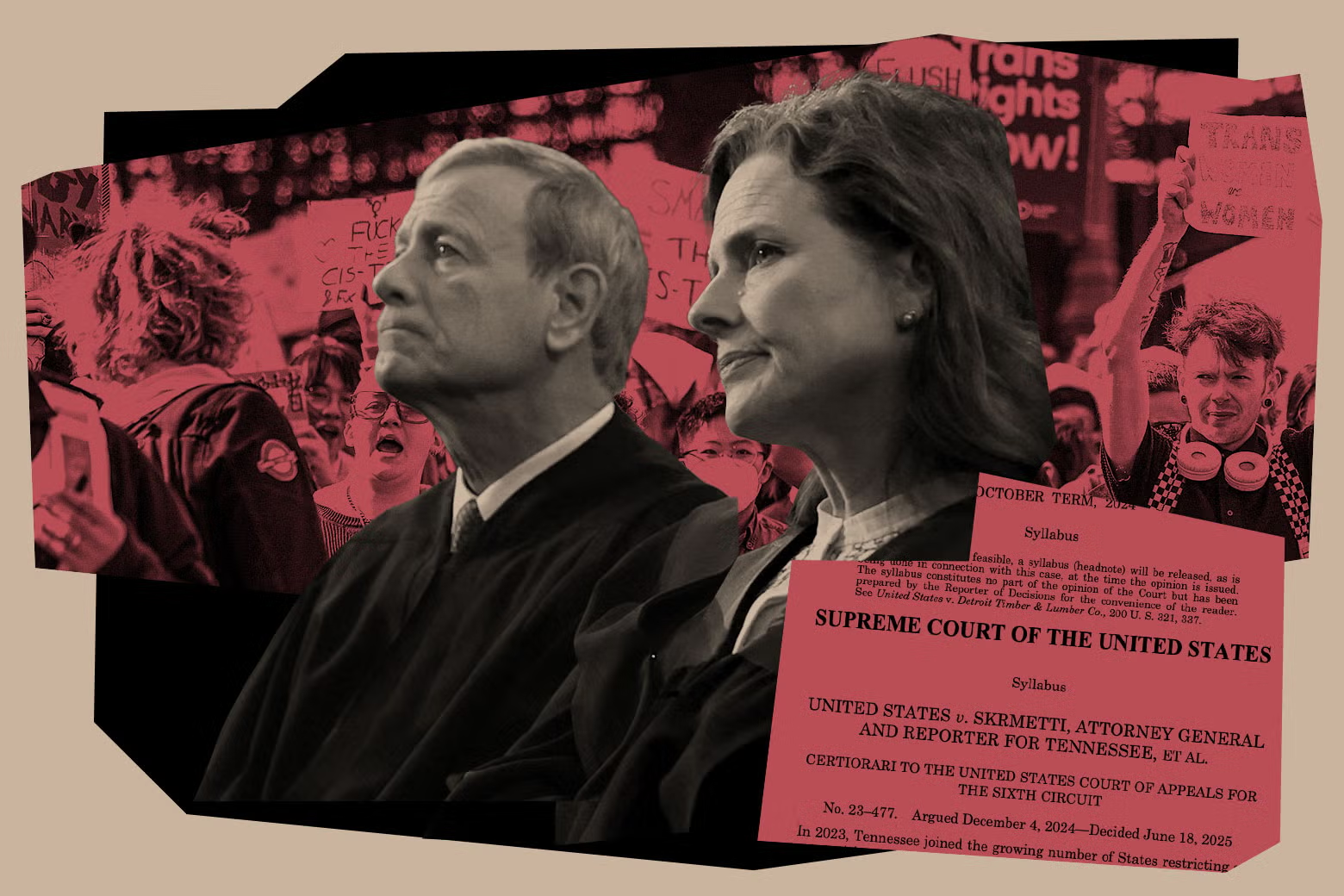
The Supreme Court upheld Tennessee's law banning gender-affirming care for trans youth, with Chief Justice Roberts' majority opinion avoiding broader questions of discrimination and transgender rights, while Justice Barrett's concurrence argued that discrimination against trans people isn't inherently suspect, a view countered by Justice Sotomayor. The decision reflects a conservative majority willing to limit protections for transgender individuals and leaves open the possibility of future rulings that could go further against trans rights.
President Donald Trump has privately expressed frustration with the Supreme Court justices he appointed, especially Amy Coney Barrett, criticizing their rulings and perceived lack of support for his agenda, amid ongoing tensions with the judiciary and conservative legal figures.
Supreme Court Justices Amy Coney Barrett and Sonia Sotomayor urged Americans to temper political rhetoric and engage in civil discourse, emphasizing the importance of assuming good faith in disagreements. Their comments come amidst the court's consideration of politically charged cases, with Barrett advocating for opinions that lower rather than raise the national temperature. Both justices have previously emphasized the court's independence from politics and the need for constructive disagreement.
Justice Amy Coney Barrett's brief opinion in a Supreme Court decision rejecting a constitutional challenge to Donald Trump's eligibility to hold office has set her apart from both conservative and liberal blocs, emphasizing her distinctive role as a relatively moderate member of the court's conservative supermajority. Despite her public insistence on the court's apolitical nature, her appearances at conservative forums have raised questions about her message. In this case, she aligned herself with the liberal members of the court in criticizing the majority's ruling, signaling her independence and willingness to diverge from partisan lines.
The Supreme Court is considering the legality of bump stocks, which were used in the deadly Las Vegas music festival shooting, effectively turning rifles into machine guns. The ban on bump stocks, enacted by the Trump administration, is now being challenged, with the conservative-leaning Supreme Court showing a potential inclination to invalidate it. Justice Amy Coney Barrett's swing vote may decide the outcome, as she expressed skepticism about whether bump stocks meet the federal definition of a "machinegun." The case has sparked a debate over the interpretation of federal law and the role of the administrative state, with implications for gun safety legislation and potential future mass shootings.