President Trump has publicly expressed interest in running for a third term, despite the 22nd Amendment, and his allies and the Supreme Court may be willing to interpret the Constitution creatively to facilitate this, raising concerns about the future of democratic norms.

The article discusses the possibility of Donald Trump seeking a third presidential term, despite it being unconstitutional under the 22nd Amendment, and highlights how the current legal and political environment, including the Supreme Court, is increasingly undermining constitutional norms to accommodate Trump's ambitions. It emphasizes the erosion of constitutional protections and the need for a popular movement to prevent potential unconstitutional actions by Trump.
President Trump has hinted at the possibility of a third term, despite the clear constitutional restriction of the 22nd Amendment, with allies like Steve Bannon discussing legal workarounds and Trump himself leaving the door open, though experts agree such a third term would be unconstitutional.
President Trump acknowledged that he cannot run for a third term due to the 22nd Amendment, though he has previously teased the idea of a future run in 2028, amidst ongoing political speculation and discussions about constitutional limits.
President Donald Trump has indicated he will not seek a third term in 2024, citing the constitutional limit of two terms as per the 22nd Amendment, despite speculation and discussions about a potential run in 2028.
Donald Trump has indicated he is unlikely to run for a third term due to constitutional limits, despite previous hints and symbolic gestures suggesting interest. His comments came amid speculation about alternative paths to stay in power, such as running for vice president, which he also dismissed.
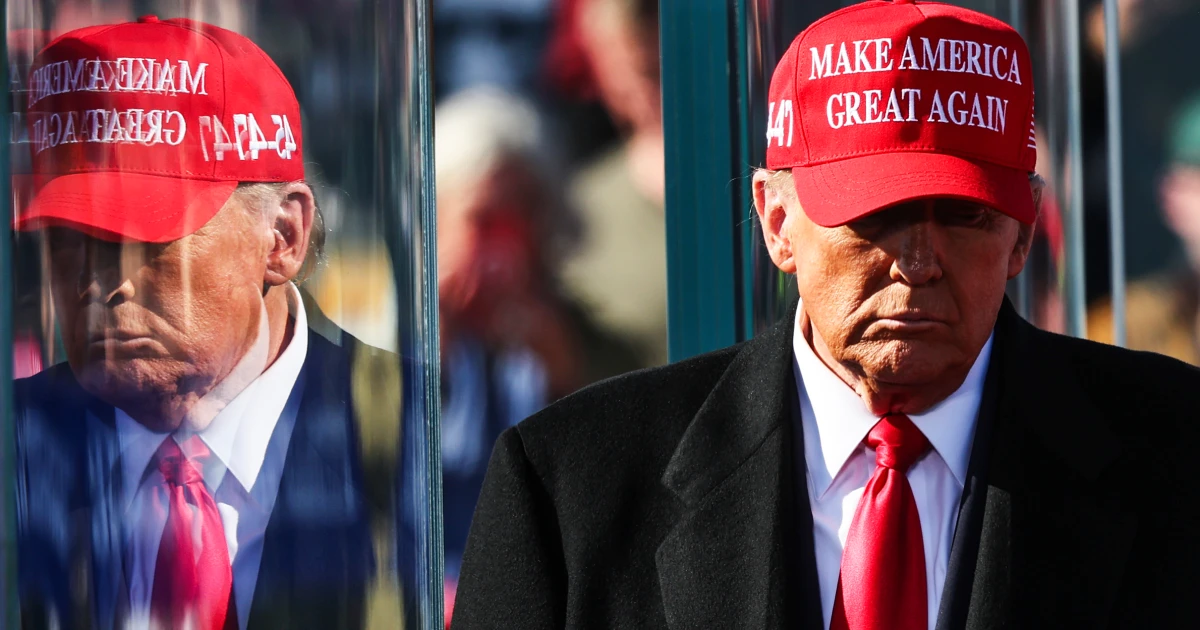
Donald Trump has hinted at a potential run for a third presidential term in 2028, despite the US Constitution's prohibition on more than two terms, with legal experts asserting such a bid would likely be unsuccessful. His supporters have already produced merchandise supporting a 2028 campaign, but constitutional and legal barriers, including the 22nd Amendment, prevent him from legally running for a third term or as vice president to circumvent the rule. Trump has fluctuated in his stance on this issue over time, and public opinion is largely against his attempt.
President Trump declined to rule out a third presidential term, despite the 22nd Amendment prohibiting it, and suggested potential ticket options with Vance and Rubio, while legal experts consider his comments seriously, though constitutional barriers remain.
Two Supreme Court justices, Amy Coney Barrett and Sonia Sotomayor, publicly affirmed that the 22nd Amendment clearly limits presidents to two terms, effectively shutting down discussions of a third Trump term.
Rep. Dan Goldman, a Democrat from New York, plans to introduce a resolution reaffirming that Donald Trump cannot serve more than two terms as president, as stipulated by the 22nd Amendment. Despite the amendment already limiting presidents to two terms, Goldman aims to address Trump's past jokes about serving additional terms. The resolution may face challenges in the Republican-controlled House but could be introduced as a "privileged resolution" to force a vote.
Rep. Dan Goldman plans to introduce a House resolution supporting the 22nd Amendment, which limits U.S. presidents to two terms, specifically reaffirming its application to Donald Trump. Although the resolution is largely symbolic and unlikely to pass in the Republican-controlled House, it highlights Trump's past comments about serving more than two terms. The 22nd Amendment, ratified in 1951, restricts presidents to two terms, with specific provisions for vice presidents who assume the presidency.
Donald Trump cannot run for a third presidential term due to the 22nd Amendment, which limits presidents to two terms. Repealing this amendment would require overwhelming support from Congress and state legislatures, which is highly unlikely. Legal experts confirm there are no loopholes or realistic options for Trump to bypass this constitutional restriction.
Donald Trump, having been elected president in 2016 and 2024, cannot run for president again in 2028 due to the 22nd Amendment, which limits a person to two terms in office. The terms do not need to be consecutive, as demonstrated by Grover Cleveland, the only president to serve non-consecutive terms before Trump. While there is no limit on how many times someone can run for president, they can only serve two terms. Trump's comments on term limits have sparked controversy, but he has stated he intends to serve only one more term.
Donald Trump, having won the 2024 presidential election, cannot run for president again in 2028 due to the 22nd Amendment, which limits a person to two terms as U.S. president. This amendment was ratified in 1951 following Franklin D. Roosevelt's four-term presidency. Trump's victory over Kamala Harris in the electoral college with 277 votes marks his second term, which will begin on January 20, 2025.