Tag

Aditya L1

All articles tagged with #aditya l1

science1 month ago

India’s Aditya-L1 to Observe Sun’s Peak Activity in 2026

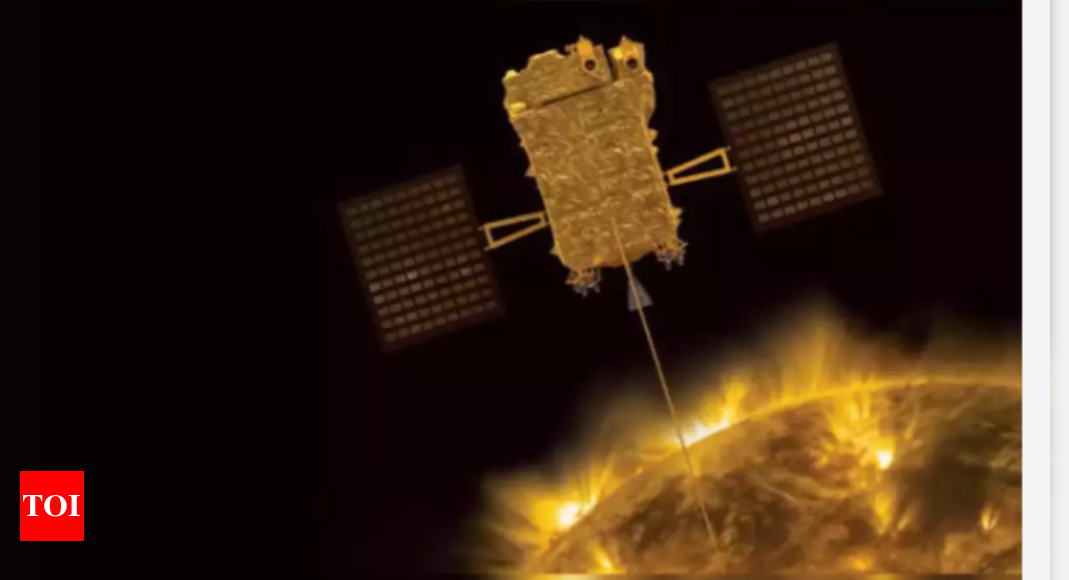
India's Aditya-L1 solar mission is poised to observe the Sun during its maximum activity cycle in 2026, a period marked by increased solar storms and coronal mass ejections (CMEs). The mission aims to study these phenomena to better understand solar behavior and improve space weather forecasting, which is crucial for protecting Earth's infrastructure and satellites. Aditya-L1's unique instrumentation allows continuous observation of the Sun's corona, providing valuable data during this intense solar period.

science1 year ago

India's Aditya-L1 Mission: A Global Breakthrough in Solar Research

India's Aditya-L1 mission has achieved its first significant result by capturing data on a coronal mass ejection (CME) using the Visible Emission Line Coronagraph (Velc). This data helps estimate the precise timing and trajectory of CMEs, which are massive solar eruptions that can impact Earth's weather and space infrastructure. Understanding CMEs is crucial as they can disrupt satellites, power grids, and communication systems. Aditya-L1's continuous observation of the Sun offers a unique advantage in monitoring these solar events.

spacescience2 years ago

"India's Aditya-L1 Solar Observatory Reaches Orbit Successfully"

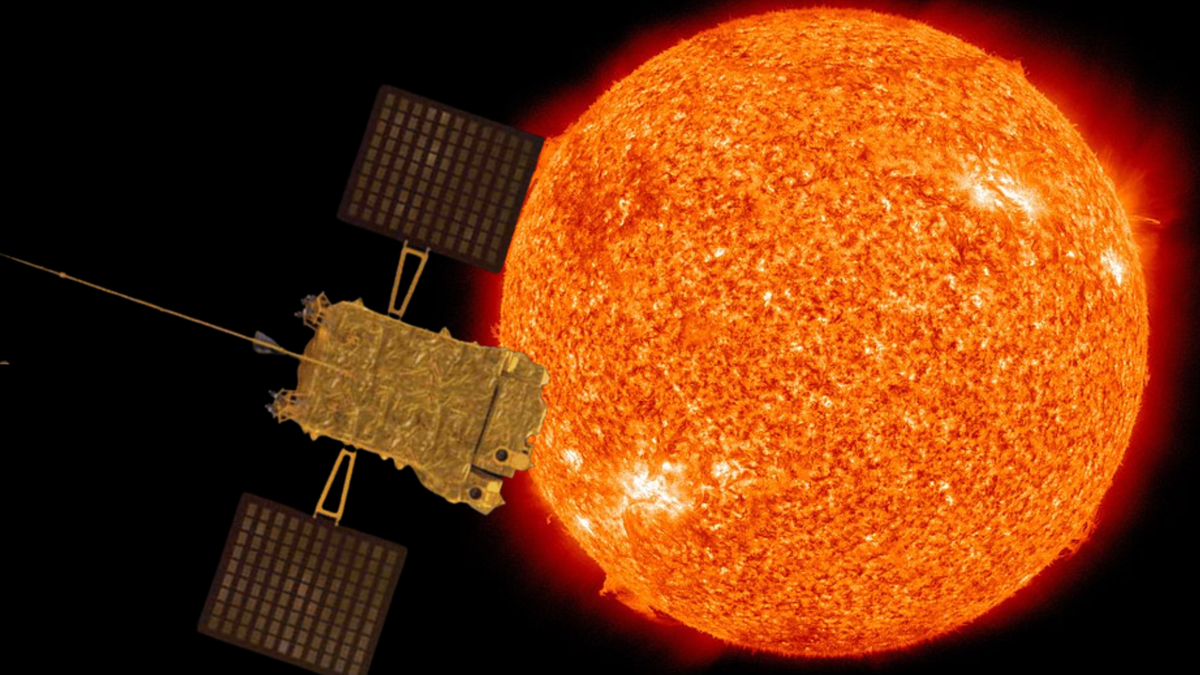
India's first solar observatory, the Aditya-L1 spacecraft, has successfully reached its intended orbit at Lagrange Point L1, about 1.5 million kilometers from Earth, allowing scientists to enhance their study of the Sun-Earth System. Equipped with seven scientific instruments, the spacecraft aims to study the sun's upper atmosphere, solar phenomena, and space weather, providing valuable information on magnetic waves and potential impacts on Earth. Prime Minister Narendra Modi praised the achievement, highlighting India's dedication to complex space missions and its emerging space superpower status.

science-and-technology2 years ago

"ISRO's Aditya-L1 Set for Final Orbit Maneuver at Lagrange Point"

ISRO is set to perform the final manoeuvre to place the Aditya-L1 space probe into a halo orbit at the Sun-Earth Lagrange Point 1 (L1), joining four other operational probes in this stable region 1.5 million kilometers from Earth. The operation involves firing thrusters to maintain the spacecraft's position in an area where gravitational forces balance out. Aditya-L1, which carries seven instruments to study the Sun, will require periodic station-keeping manoeuvres due to the natural instability of the L1 point.

space-science2 years ago

Aditya-L1 Mission Reveals Stunning Images of the Sun and Earth

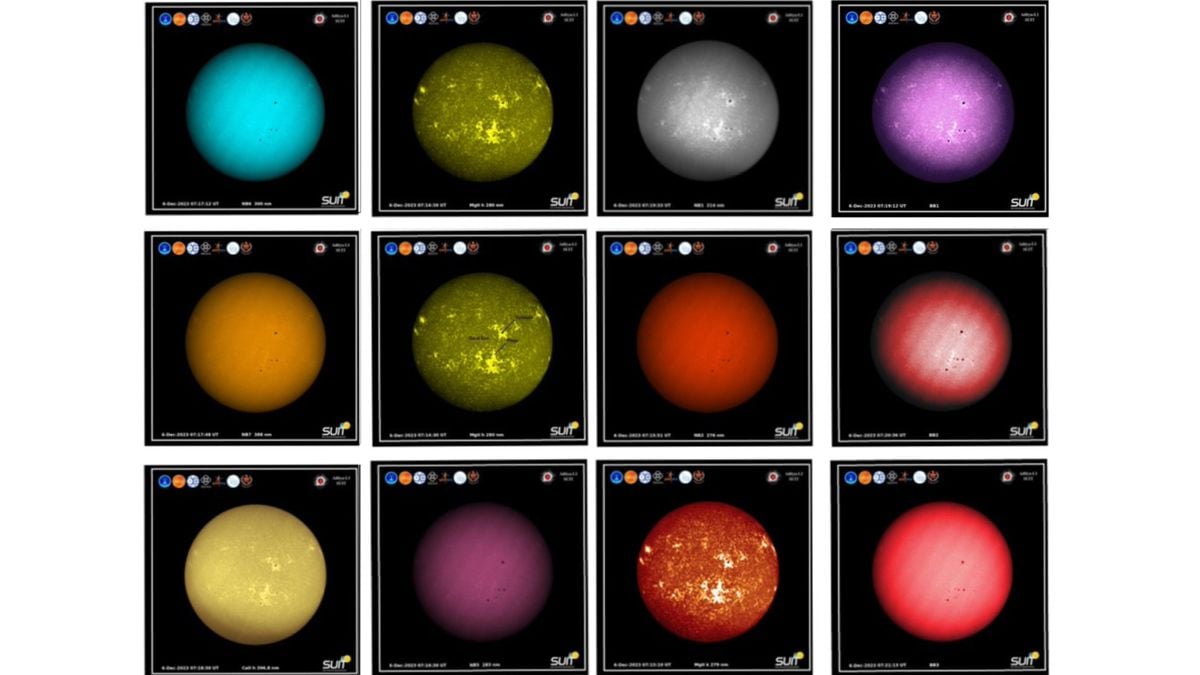
The Solar Ultraviolet Imaging Telescope (SUIT) aboard the Aditya-L1 spacecraft has captured the first-ever full-disk images of the Sun in the 200-400 nm wavelength range. Utilizing eleven filters, the images reveal new details of the photosphere and chromosphere, including sunspots. This collaborative effort led by the Inter-University Centre for Astronomy and Astrophysics promises to enhance our understanding of the Sun's dynamics and its impact on Earth's climate.

science-and-technology2 years ago

India's Aditya-L1 Solar Observatory Delivers Stunning First-Ever Full-Disk Images of the Sun

India's Aditya-L1 solar observatory, in collaboration with multiple institutions, has captured stunning images of the sun's surface using the Solar Ultraviolet Imaging Telescope (SUIT) payload. The images reveal sunspots, a solar "plage," and inactive areas, providing pioneering insights into the intricate details of the sun's photosphere and chromosphere. The Aditya-L1 spacecraft, which launched in September, is expected to study solar wind particles and monitor solar flares to help predict solar activity.

science-and-astronomy2 years ago

India's Aditya-L1 Mission Makes Groundbreaking Solar Flare Discovery

India's Aditya-L1 sun probe, equipped with the High Energy L1 Orbiting X-ray Spectrometer (HEL1OS) instrument, has detected its first high-energy solar flare. The flare was observed on October 29, less than two months after the probe's launch. Aditya-L1 is stationed at the Sun-Earth Lagrange Point-1 (L1) and carries seven scientific instruments to study various aspects of the sun. HEL1OS focuses on X-ray emissions from solar flares, aiming to understand the relationship between high-energy emissions and the particles released during these events. The instrument is still undergoing calibration and fine-tuning.

science-and-technology2 years ago

"Aditya-L1 Mission Captures First High-Energy Solar Flares"

The Aditya-L1 spacecraft, developed by ISRO, has captured the first high-energy X-ray glimpse of solar flares using the High Energy L1 Orbiting X-ray Spectrometer (HEL1OS). The spectrometer recorded the impulsive phase of solar flares during its first observation period in late October. Solar flares produce enhanced emissions across the electromagnetic spectrum, and studying the initial impulsive emission is challenging. HEL1OS aims to overcome these difficulties by providing high spectral and time resolution measurements. The data collected will enable researchers to study explosive energy release and electron acceleration during the impulsive phases of solar flares. Aditya-L1 is India's first dedicated space mission for observing the Sun and is designed to provide remote observations of the solar corona and in-situ observations of the solar wind.

space-science2 years ago

ISRO's Aditya-L1 Captures First X-ray Glimpse of Solar Flares

The High-Energy L1 Orbiting X-ray Spectrometer (HEL1OS) instrument on India's Aditya-L1 solar space observatory has successfully recorded the impulsive phase of solar flares during its first observation period. Developed by Isro's UR Rao Satellite Centre, HEL1OS captured data consistent with the X-ray light curves provided by NOAA's Geostationary Operational Environmental Satellites. The instrument is undergoing fine-tuning and calibration operations to monitor the Sun's high-energy X-ray activity, enabling researchers to study explosive energy release and electron acceleration during solar flares.

spaceflight2 years ago

"India's Aditya-L1 Solar Observatory Successfully Positioned 1 Million Miles from Earth"

India's Aditya-L1 solar observatory has successfully performed a trajectory correction maneuver to ensure it reaches its intended destination, a gravitationally stable area known as Earth-sun Lagrange point 1, around 1 million miles from Earth. The spacecraft, carrying seven payloads, will have an uninterrupted view of the sun from this location for its five-year mission to study the sun. This marks India's second spacecraft to venture beyond Earth's sphere of influence, following the Mars Orbiter Mission in 2013.

space2 years ago

India's Aditya-L1 Mission Successfully Reaches Lagrange Point 1, Escaping Earth's Influence

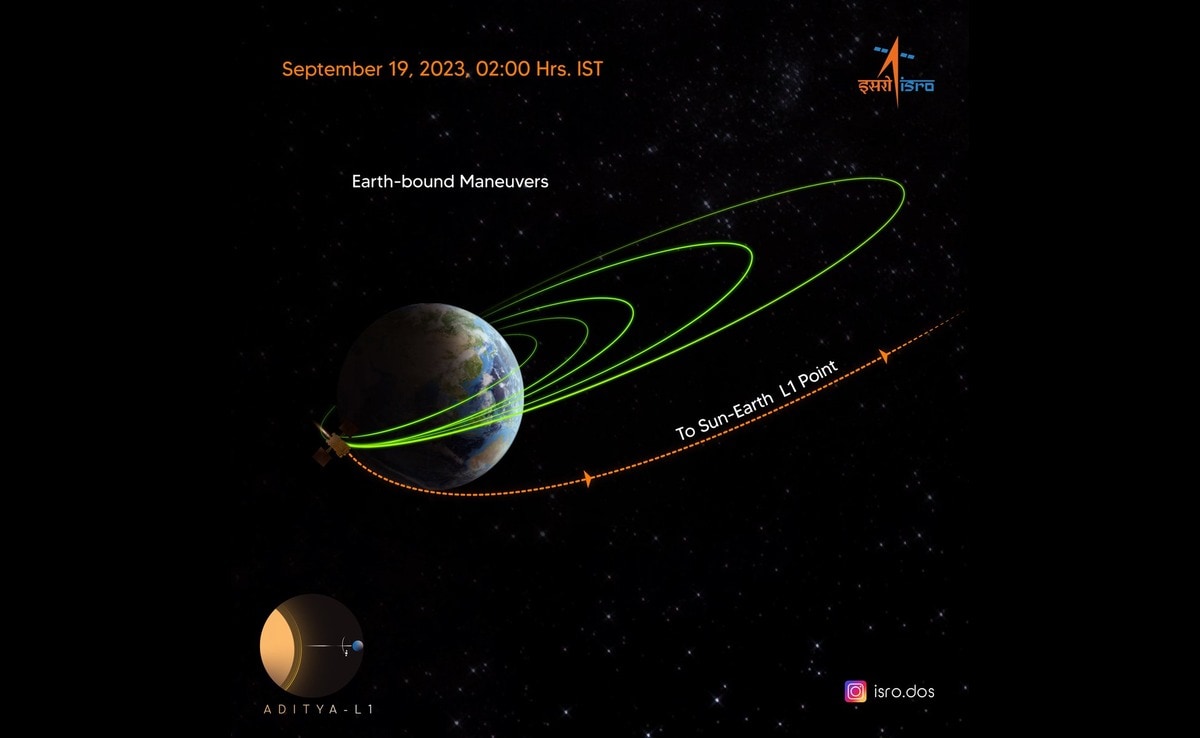
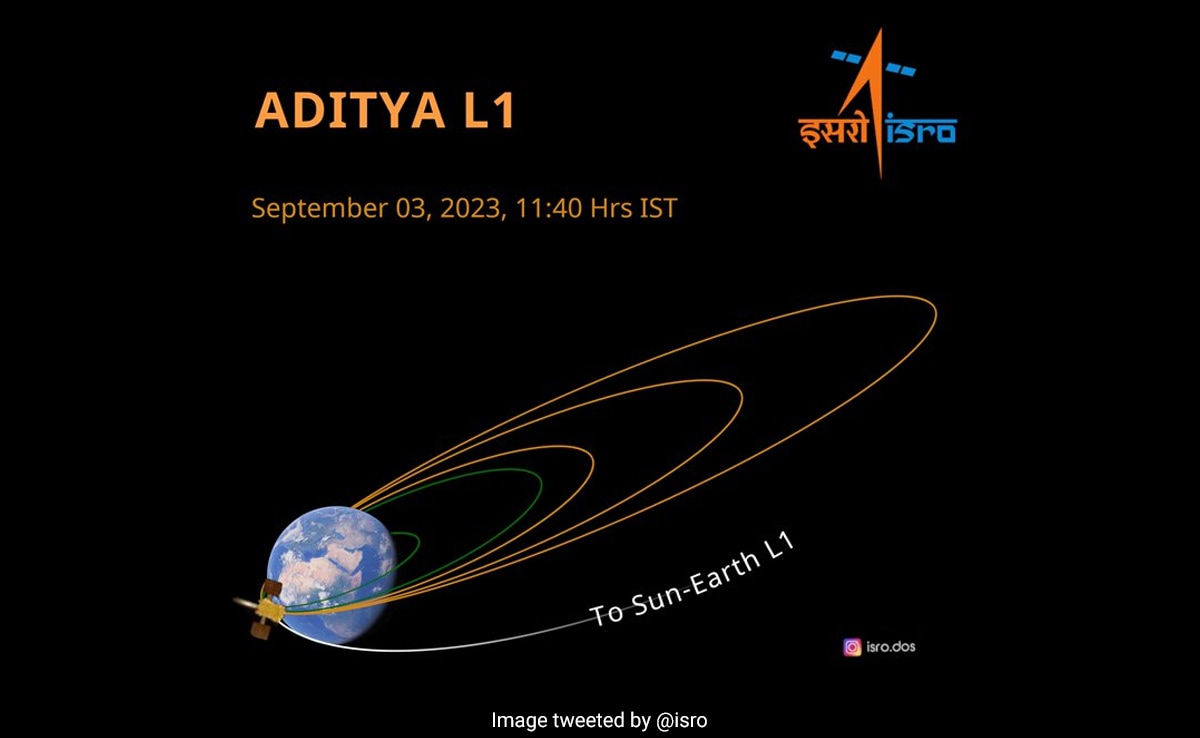
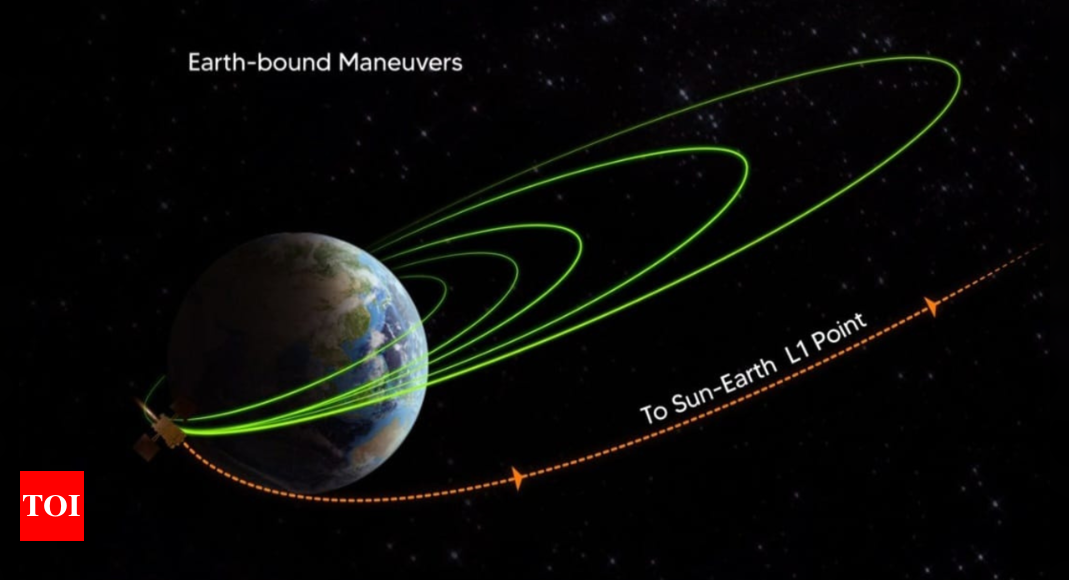
India's Aditya-L1 spacecraft, on a mission to the Sun, has successfully escaped Earth's sphere of influence by traveling 9.2 lakh kilometers, according to the Indian Space Research Organisation (ISRO). This marks the second time that ISRO has sent a spacecraft beyond Earth's influence, following the Mars Orbiter Mission. The spacecraft is now on its way to the Sun-Earth Lagrange Point 1 (L1).

space2 years ago

Aditya-L1 Successfully Escapes Earth's Influence, Heads to Lagrange Point 1

The Aditya-L1 spacecraft, launched by the Indian Space Research Organisation (Isro), has successfully escaped the sphere of Earth's influence and is now on its way to the Sun-Earth Lagrange Point 1 (L1). Aditya-L1 is India's first mission dedicated to studying the Sun and will operate in a 'Halo orbit' around L1. The mission aims to understand various aspects of the Sun, including coronal heating, solar wind acceleration, and solar wind distribution.

space2 years ago

Aditya-L1 Embarks on Pioneering Journey to Study the Sun

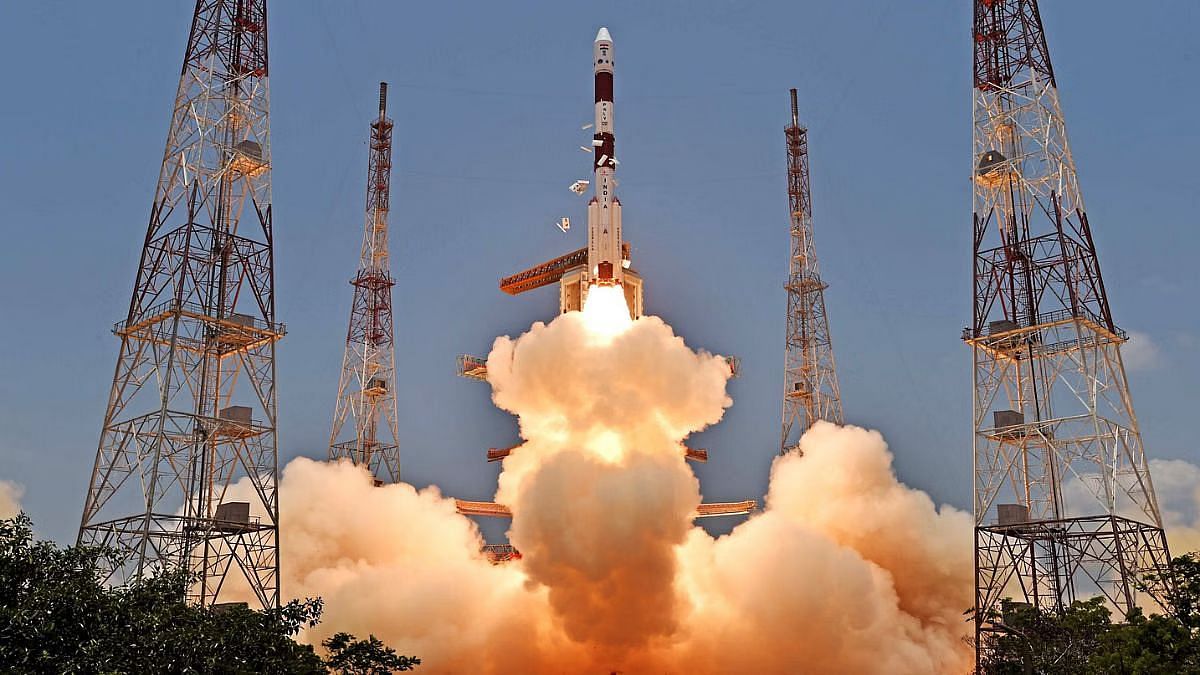
India's Aditya-L1 solar space observatory mission has successfully completed the Trans-Lagrangian1 Insertion (TLI), marking the fifth consecutive time Isro has transferred an object towards another celestial body. The spacecraft will now embark on a 110-day journey to reach the L1 point, approximately 1.5 million km from Earth, where it will orbit and study the Sun's activities and their impact on space weather. Aditya-L1 has seven distinct payloads and aims to investigate coronal heating, solar wind acceleration, coronal mass ejections, solar atmosphere dynamics, and temperature anisotropy.

science-and-astronomy2 years ago

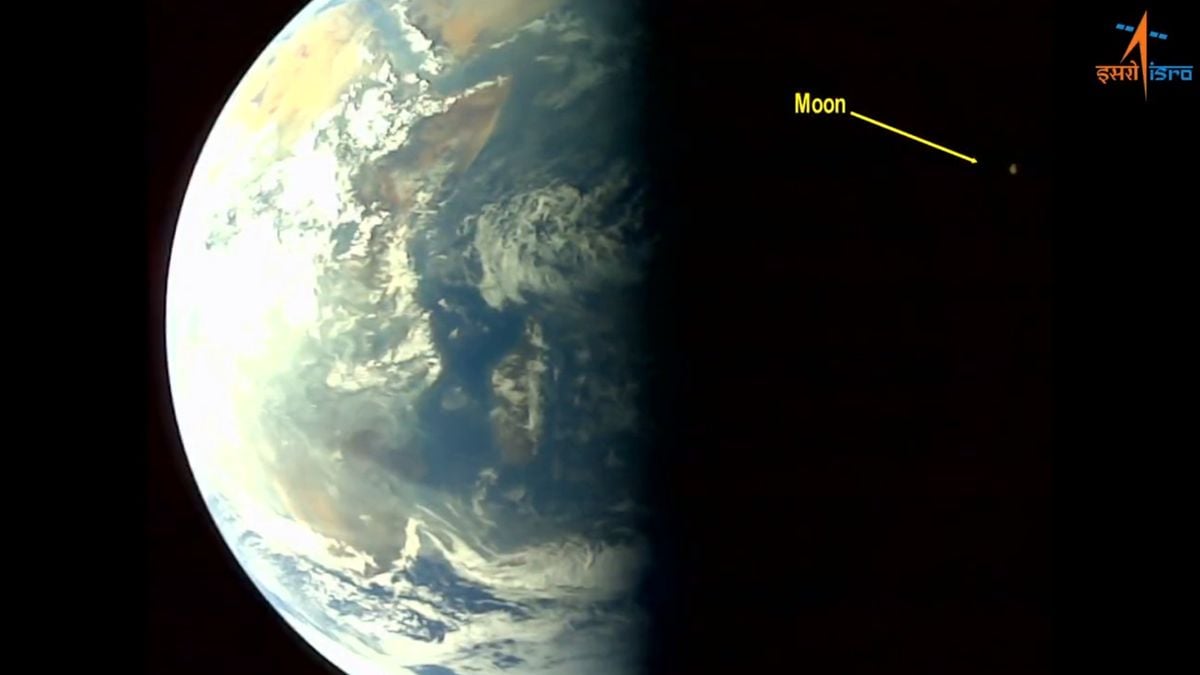
India's Aditya-L1 Mission: Capturing Earth, Moon, and Sun in a Space Selfie

India's Aditya-L1 is a solar observatory operated by the Indian Space Research Organisation (ISRO) that will study the sun from a gravitationally stable point called Lagrange point 1, around 1 million miles from Earth. The spacecraft will investigate the sun's atmosphere, corona, and surface, as well as study Earth's magnetic field and the space environment around L1. The mission's scientific payloads include instruments to measure the interplanetary magnetic field, observe the solar corona, study solar flares, and analyze the solar wind. Aditya-L1 was launched on September 2, 2023, and is expected to operate for around 5.2 years.

spaceflight2 years ago

"Aditya-L1 Solar Probe Captures Stunning Selfie with Earth and Moon"

India's Aditya-L1 solar probe, launched by the Indian Space Research Organisation (ISRO), has captured a selfie in space along with images of Earth and the moon. The probe is currently in low Earth orbit and will eventually reach the Earth-sun Lagrange Point 1 (L1) to study the sun. Aditya-L1 aims to observe solar activities, such as solar flares and coronal mass ejections, and investigate the mystery of the sun's ultra-hot outer atmosphere.