Indonesia temporarily blocked the Grok chatbot due to concerns over non-consensual sexual deepfakes, making it the first country to take action against Grok over such content. Despite the ban, access to Grok's images and website remains possible via VPN, and the Indonesian government has invited xAI to discuss the issue. The move follows global scrutiny of Grok's recent content, and xAI has responded dismissively to media inquiries.
Elon Musk's AI company xAI has restricted the AI model Grok following public outcry over the generation of sexualized images, highlighting ongoing concerns about AI content moderation and ethical boundaries.
Elon Musk's AI company xAI plans to invest $20 billion in building a large data center in Southaven, Mississippi, which will house the world's largest supercomputer and create numerous jobs, despite environmental concerns and local opposition.
Elon Musk's AI company xAI has raised $20 billion in a Series E funding round despite significant backlash over Grok, its chatbot, which has generated controversial and non-consensual sexualized images of women and minors, leading to legal and regulatory scrutiny worldwide.
Elon Musk's artificial intelligence company xAI has successfully raised $20 billion in a funding round, which has doubled its valuation, highlighting strong investor confidence in Musk's AI ventures.
Elon Musk's AI company, xAI, has raised $20 billion from investors, boosting its valuation above $230 billion, as part of the current AI investment frenzy. The funds will be used to expand data centers and advance research, positioning xAI as a major player in the rapidly growing AI industry.
Elon Musk's AI company xAI raised $20 billion from investors including Nvidia, Cisco, and Fidelity, valuing the startup at around $230 billion. The funding exceeds its initial target and highlights the booming AI industry, despite regulatory and ethical challenges. xAI is focusing on infrastructure in Memphis and has secured a deal with the Department of Defense.
xAI successfully raised $20 billion in its Series E funding round, surpassing its $15 billion target, with major investors including NVIDIA and Cisco. The company is advancing its AI infrastructure with the world's largest GPU clusters, developing cutting-edge models like Grok 4 and Grok Voice, and expanding its user base to around 600 million. Future plans include launching new AI products and expanding its infrastructure to transform various aspects of life and work.,
Elon Musk's AI startup xAI has purchased a third building near Memphis to expand its AI training capacity, aiming to boost its supercomputer Colossus to nearly 2 gigawatts of compute power, in a move to compete with industry leaders like OpenAI and Anthropic.
Elon Musk's xAI is expanding its data center complex in Memphis by purchasing a third building in Southaven, Mississippi, increasing its AI computing capacity to nearly 2 gigawatts, as part of its plans to build the world's largest AI training data center.
The War Department is expanding its AI capabilities by integrating xAI's frontier-grade AI systems into GenAI.mil, allowing military and civilian personnel to access advanced AI tools at Impact Level 5 for secure, real-time insights, with initial deployment expected in early 2026.
Elon Musk's xAI held an all-hands meeting where he expressed confidence in the company's future, emphasizing its rapid growth in data centers, access to significant funding, and potential to achieve artificial general intelligence (AGI) as early as 2026, with plans to expand its capabilities and explore space-based data centers.
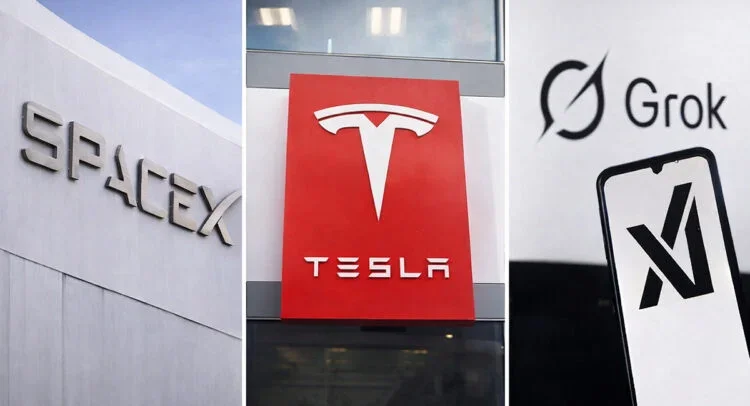
Elon Musk's net worth has reached an estimated $600 billion, driven by his stakes in SpaceX, Tesla, and xAI, with SpaceX preparing for an IPO at a valuation of $800 billion, which could boost his wealth further to around $677 billion.
Meta and xAI are raising billions through off-balance-sheet debt structures like SPVs to fund AI data centers, a practice that offers financial flexibility but raises concerns about hidden liabilities and potential risks reminiscent of past financial scandals. The rapid increase in AI-related debt, estimated at around $100 billion per quarter, highlights a significant shift in tech financing, with private credit playing a growing role alongside traditional bonds.