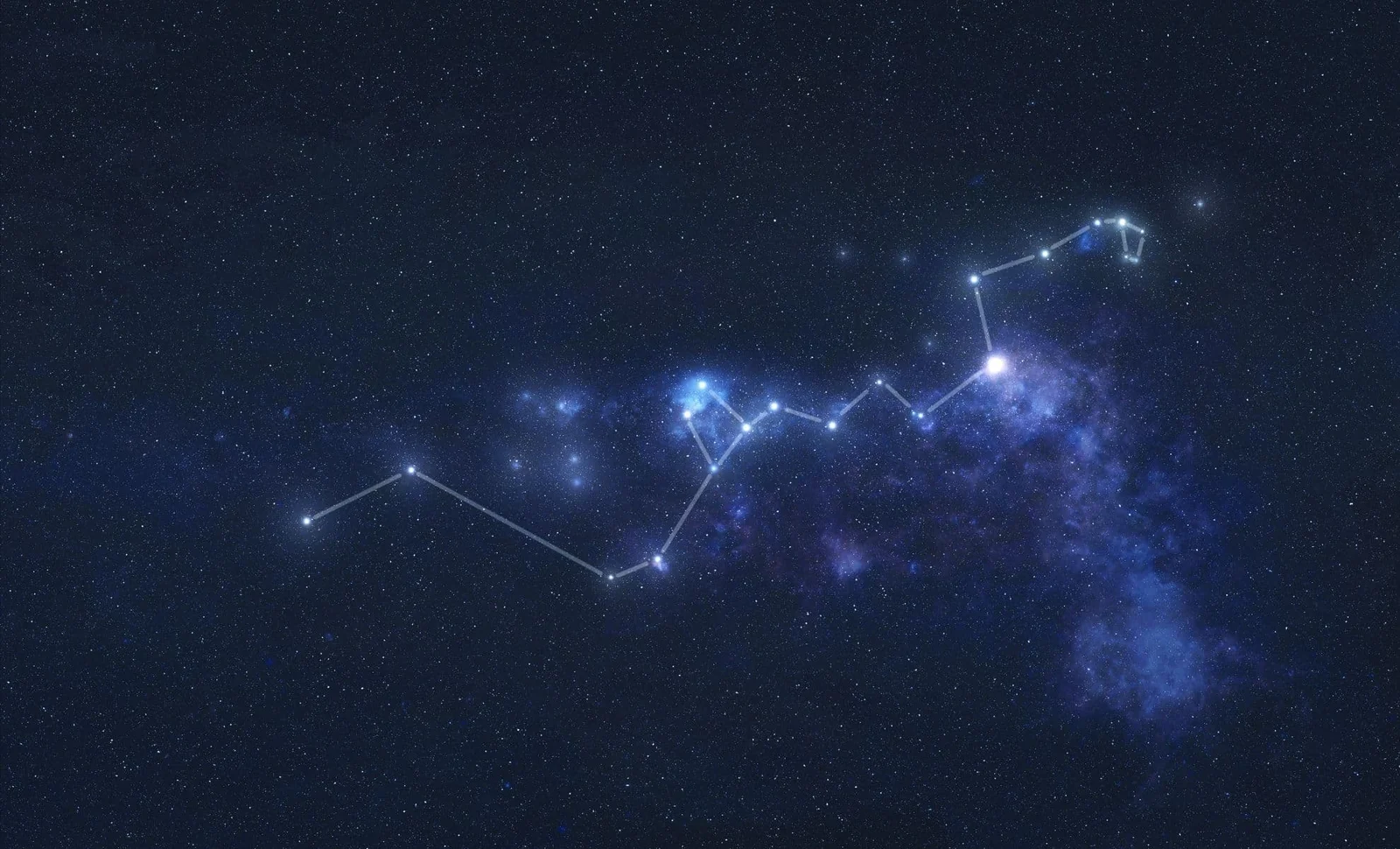
NASA's IXPE has captured detailed observations of the white dwarf star EX Hydrae, revealing new insights into its accretion process and magnetic field interactions, marking a significant advancement in high-energy astronomy.
NASA's IXPE has for the first time used its X-ray polarization capabilities to study a white dwarf star, EX Hydrae, revealing details about the star's accretion process and magnetic field, which enhances understanding of energetic binary systems.
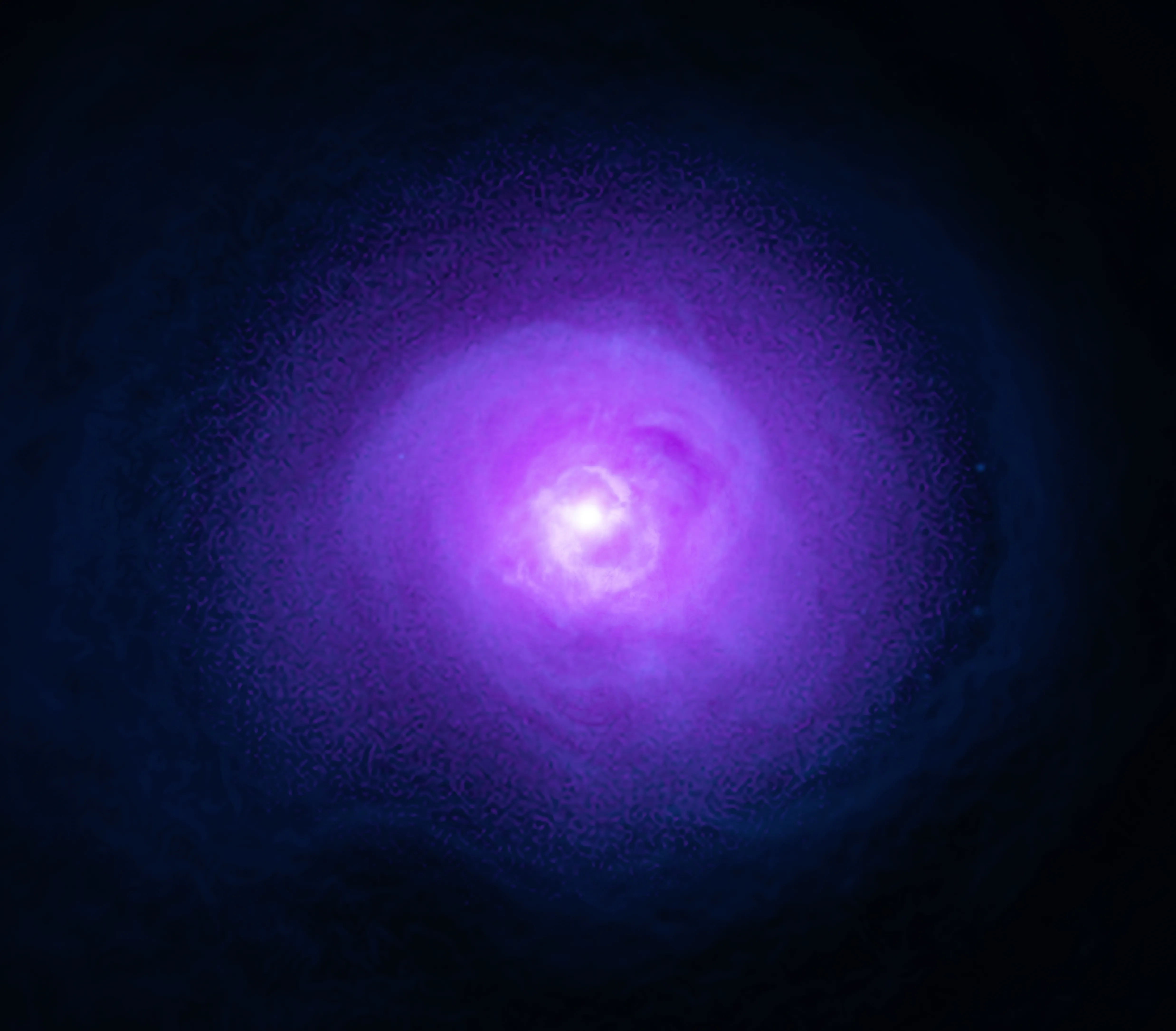
NASA's IXPE mission's longest observation of the Perseus Cluster has identified the origin of X-rays in a supermassive black hole's jet, confirming that the X-rays originate from inverse Compton scattering within the jet, primarily supporting the synchrotron self-Compton model, through polarization measurements combined with data from other observatories.
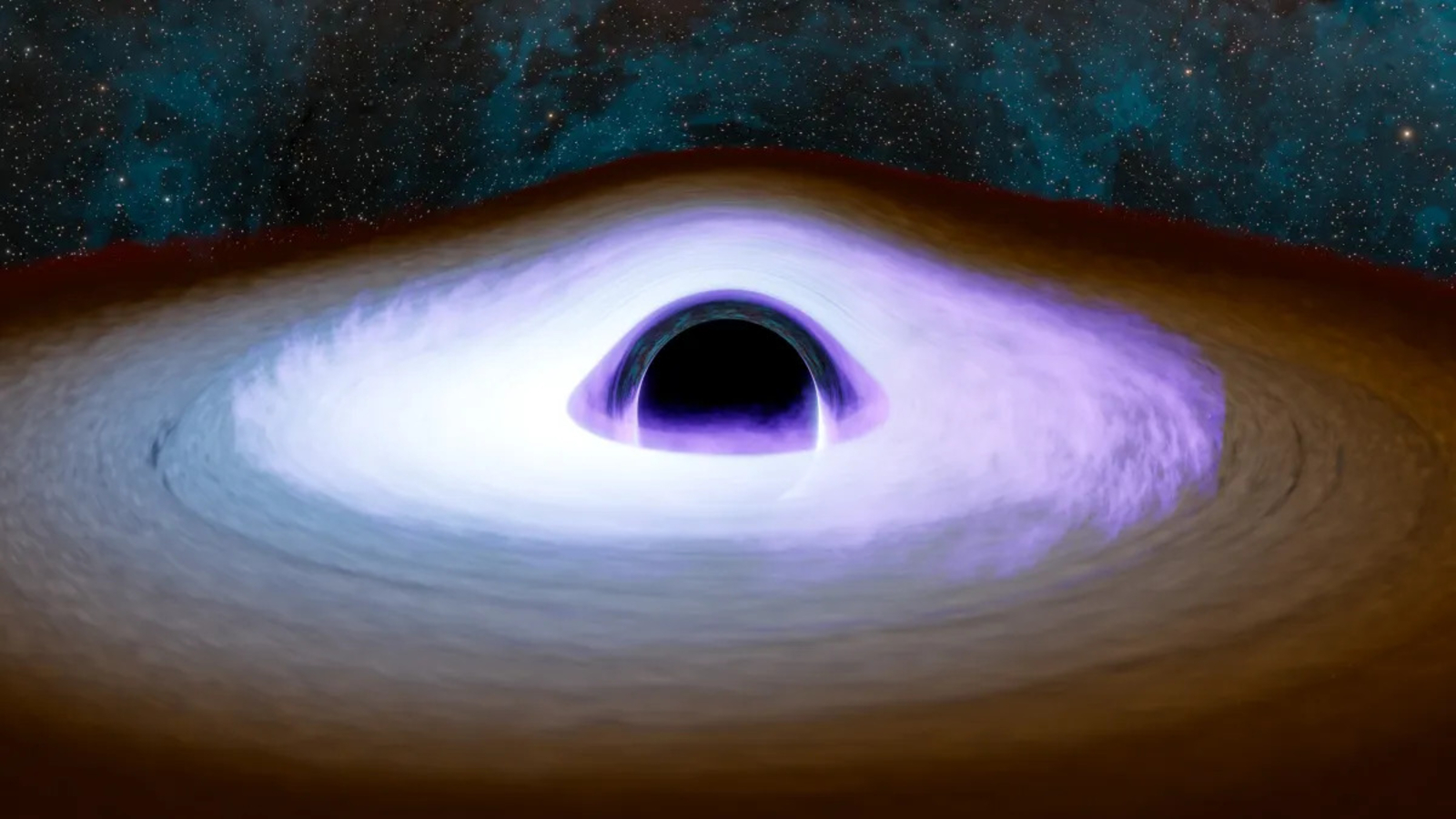
NASA's IXPE observed unexpected high polarization in the 'heartbeat' black hole IGR J17091-3624, challenging existing models and suggesting new insights into black hole environments, possibly involving winds or relativistic corona movement.
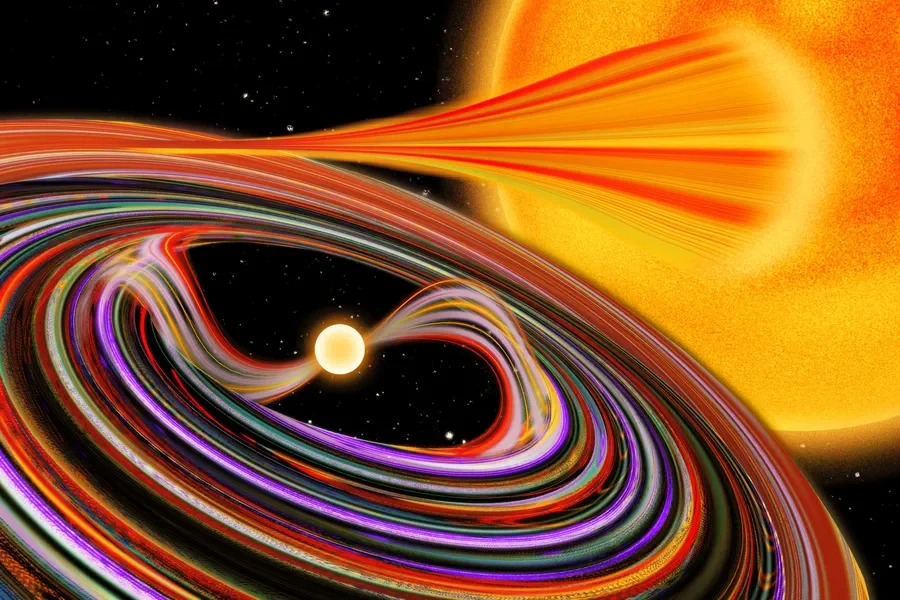
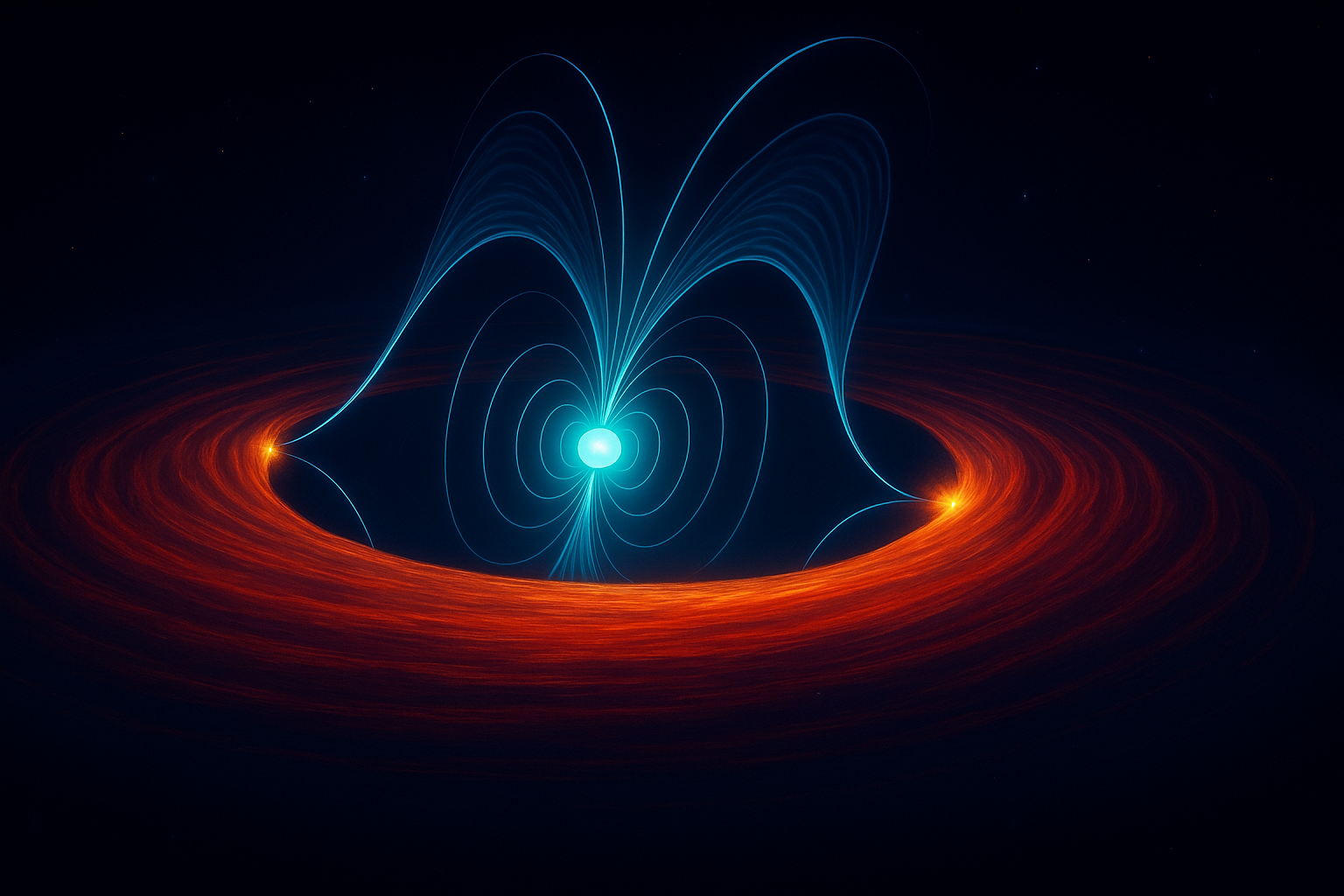
NASA's X-ray spacecraft revealed that radiation from the rapidly spinning neutron star PSR J1023+0038 is mainly influenced by its powerful particle winds rather than material from its companion star, with observations showing the highest polarization levels ever detected from such a system, providing new insights into pulsar behavior.
NASA's IXPE telescope helped scientists discover that X-rays from the rare pulsar system PSR J1023+0038 originate from the pulsar wind, challenging previous models and providing new insights into neutron star environments and particle acceleration.
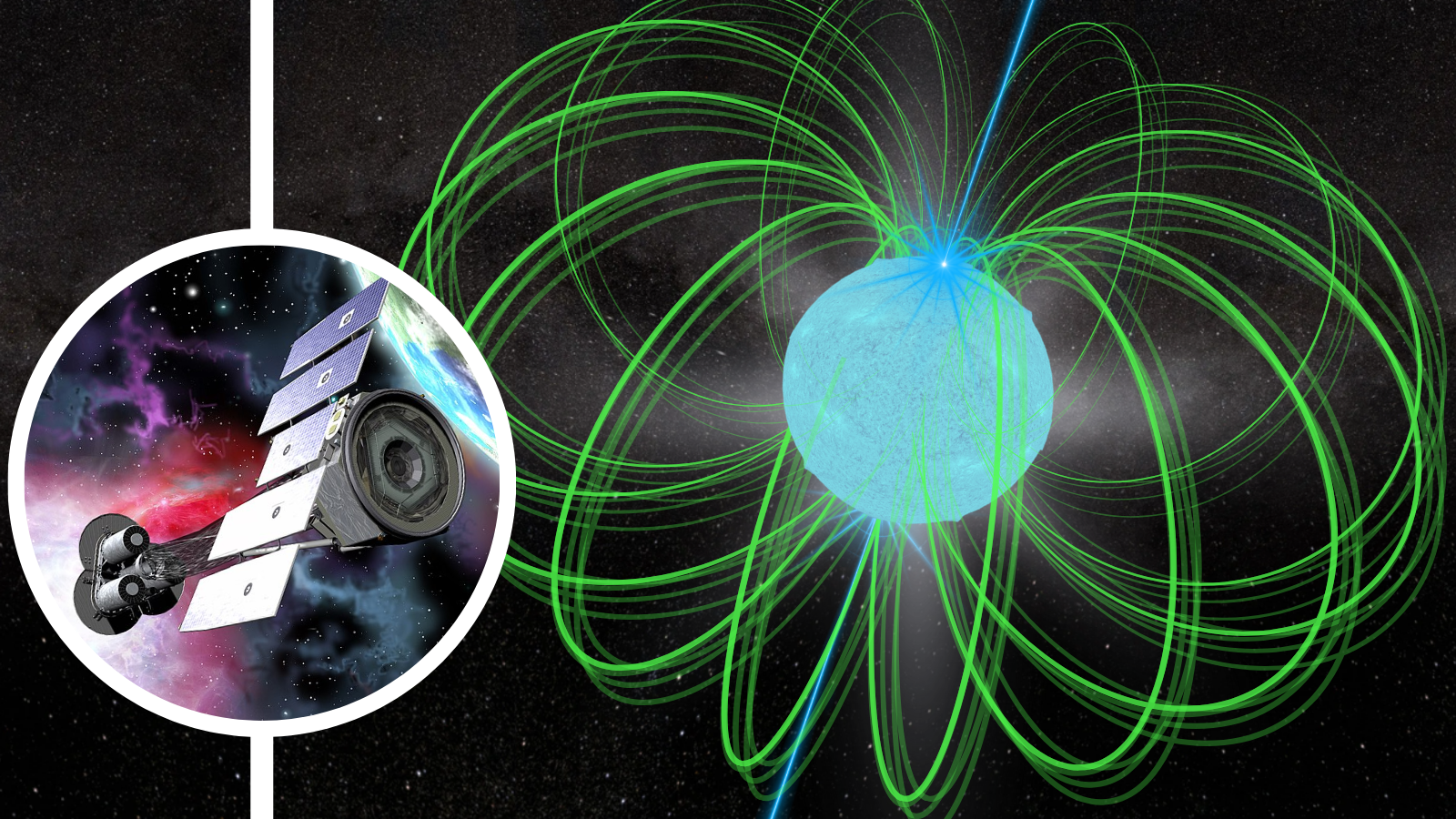
NASA's IXPE spacecraft observed a magnetar, 1E 1841-045, during its first active outburst, measuring X-ray polarization to better understand the magnetic and emission mechanisms of these extremely magnetic neutron stars, which are among the universe's most intense magnetic objects.
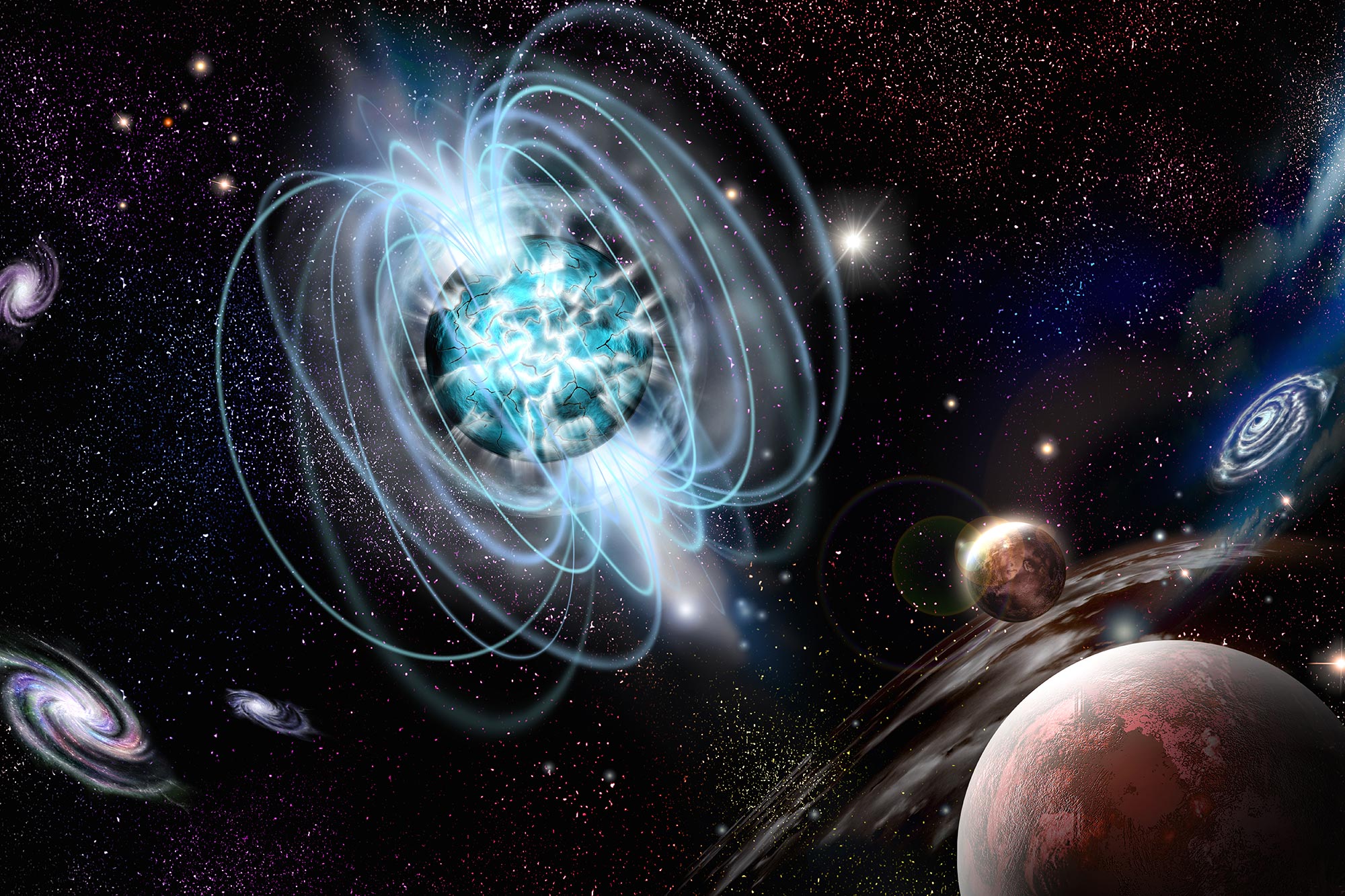
Astrophysicist Dong Lai proposes that a quantum electrodynamics effect called "photon metamorphosis" explains the observed X-ray polarization from a magnetar, a neutron star with a strong magnetic field. Lai's theory suggests that X-ray photons passing through the magnetar's magnetized atmosphere can temporarily transform into pairs of virtual electrons and positrons, resulting in different polarizations for low and high-energy X-rays. This phenomenon, known as vacuum birefringence, provides insights into the behavior of matter in extreme conditions and helps scientists understand the nature of magnetars and neutron stars.
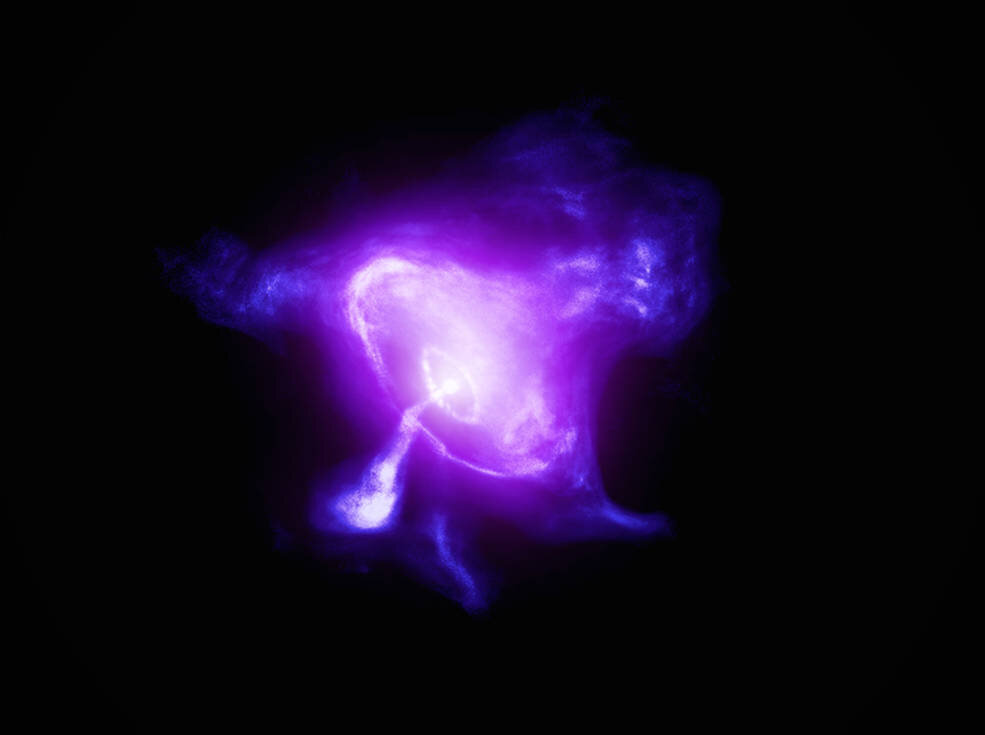
NASA's Imaging X-ray Polarimetry Explorer (IXPE) has created a detailed map of the Crab Nebula's magnetic field, revealing more of its inner workings than ever before. The new results help resolve longstanding mysteries about the well-studied Crab Nebula and open new questions for future study. IXPE data show that the Crab Nebula's magnetic field resembles that of the Vela Pulsar Wind Nebula, which is also donut-shaped. But at the Crab, scientists were surprised that areas of magnetic field turbulence were more patchy and asymmetrical than expected.