Tag

X Ray Observatory

All articles tagged with #x ray observatory

astronomy1 year ago

"NASA: Milky Way's Supermassive Black Hole Spinning Rapidly, Warping Spacetime"

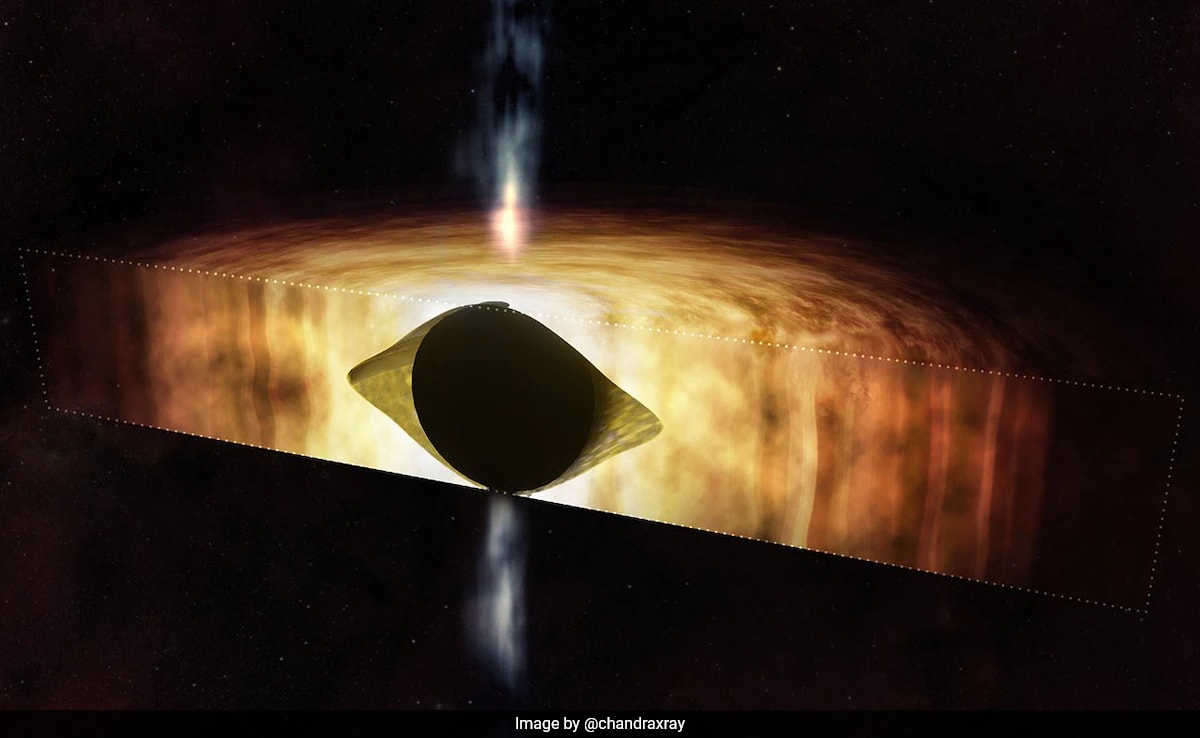
NASA's Chandra X-ray Observatory has revealed that the supermassive black hole, Sagittarius A*, at the center of the Milky Way galaxy is spinning rapidly, warping spacetime into an oval shape resembling a rugby ball. Although its exact rotational speed remains unknown, it is estimated to weigh about four million times that of the Sun. This discovery has far-reaching implications, as the black hole's spin could drive powerful outflows in the future, making it more active.
space-science2 years ago

Unraveling the Universe's Hottest Mysteries: XRISM's Spectroscopic Quest

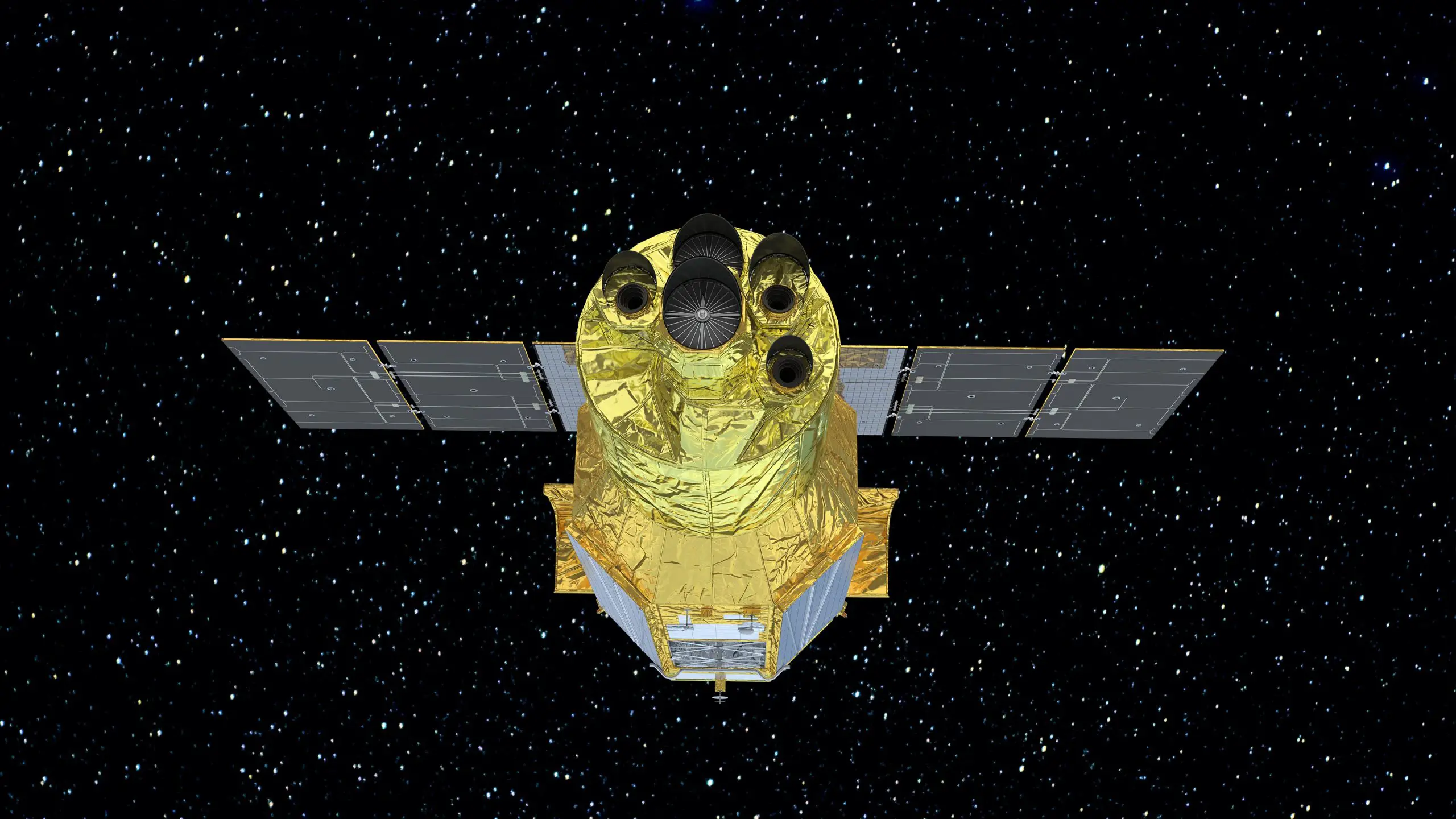
Japan's XRISM (X-ray Imaging and Spectroscopy Mission) observatory, set to launch on August 25, will provide unprecedented insights into the universe's hottest places using ultra-cold instruments. XRISM's Resolve instrument, developed in collaboration between NASA and JAXA, will allow scientists to study cosmic X-ray sources and reveal their brightness and chemical composition. The detector for Resolve is colder than any known cosmic location, enabling it to measure the tiny temperature increase caused by X-rays. XRISM's other instrument, Xtend, will provide complementary information as an X-ray imager. The mission aims to study supernova remnants, black holes, galaxies, and clusters of galaxies.

astronomy2 years ago

Record-breaking galactic tail discovered near doomed galaxy group.

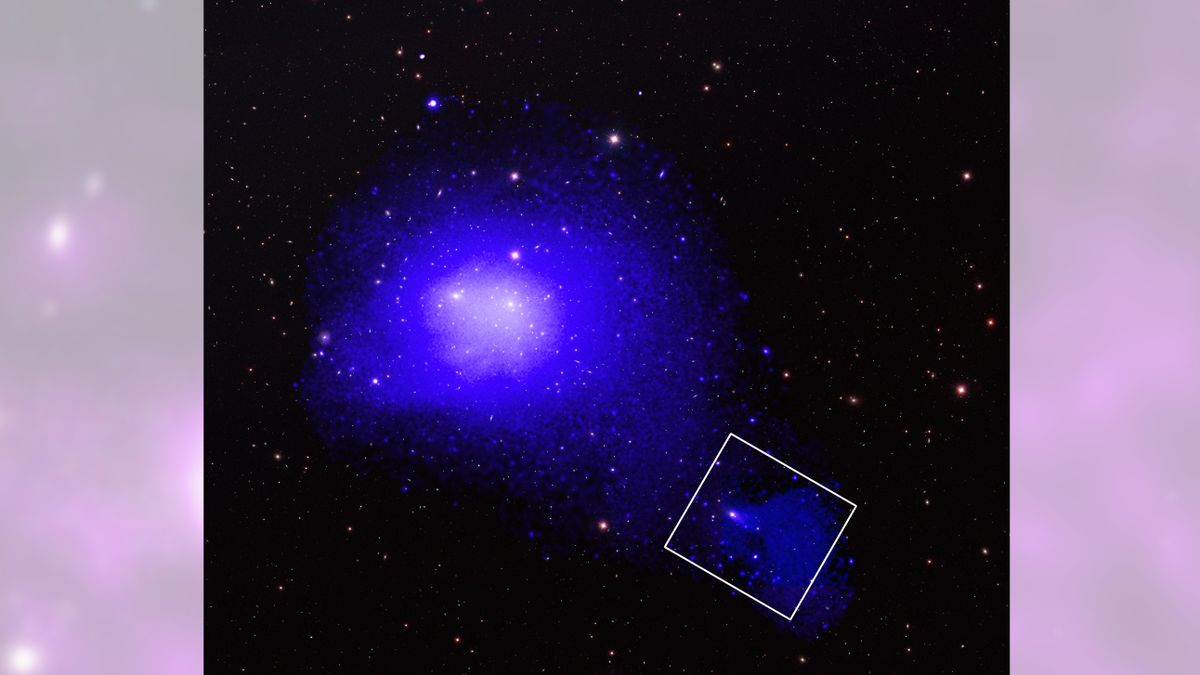
Astronomers have discovered a gas tail stretching over a million light-years long behind galaxy group NGC 4839, which is merging with the much larger Coma Cluster. Using X-ray data from NASA's Chandra X-ray Observatory and optical data from the Sloan Digital Sky Survey, scientists measured the tail as NGC 4839 moved through the Coma Cluster. The tail is the longest such structure ever observed and is burning especially bright, giving astronomers a rare opportunity to study it in more detail and learn more about the mechanics of how galaxy clusters merge.

astronomy2 years ago

Lonely Galaxy Devours Its Companions, Becomes Isolated.

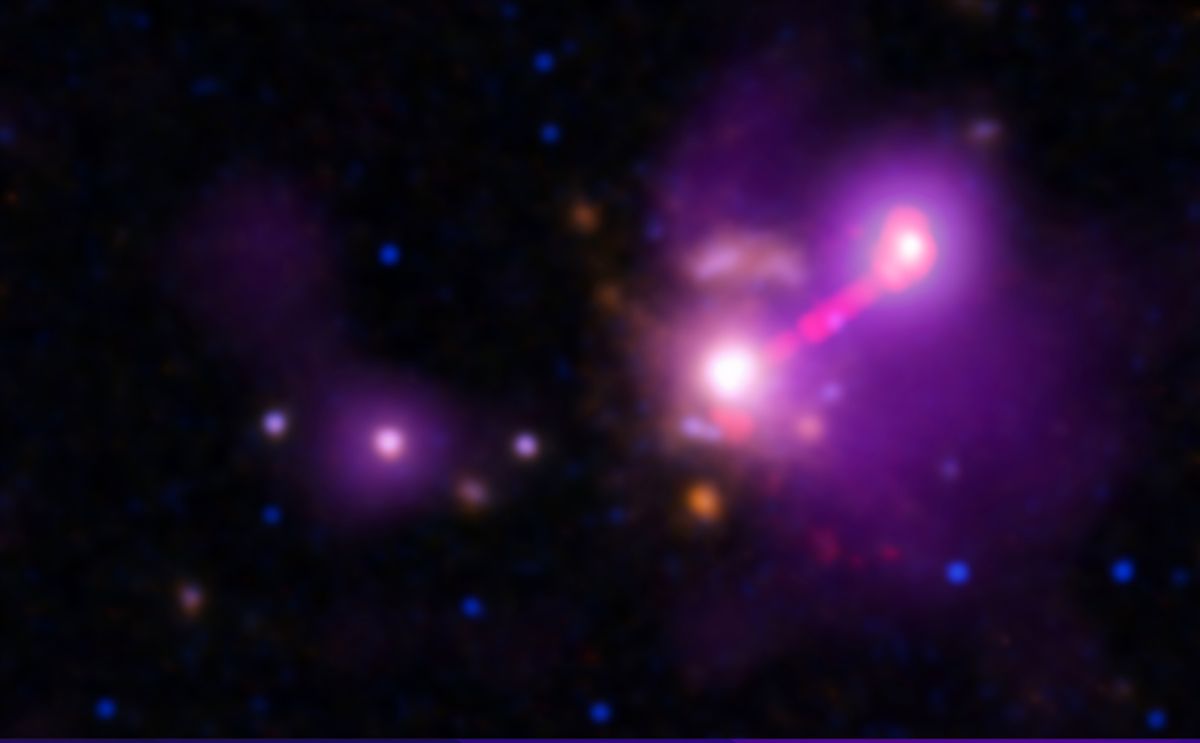
Galaxy 3C 297, located 9.2 billion light-years from Earth, is now a "fossil group" as it appears to have devoured all the other galaxies that once surrounded it. The galaxy is shrouded in clouds of scorching gas, which is common for a cluster, and its active galactic nucleus (AGN) suggests that it interacted with gas surrounding 3C 297, indicating a former cluster. However, it is unclear how the system could have evolved this way in such a relatively short time frame, challenging our ideas of cosmology.

science-and-astronomy2 years ago

"Collision Course: Two Pairs of Ringing Black Holes in Violent Encounter"

Astronomers have observed two pairs of colliding black holes in separate dwarf galaxies, providing the first observational evidence of such a cosmic clash. As the black holes head for a collision and merger, the dwarf galaxies they sit in will also merge and form a larger galaxy, shedding light on how these cosmic titans and the galaxies they inhabit grew in the early universe. The scientists used NASA's Chandra X-ray Observatory to examine the colliding black hole pairings and found that the dwarf galaxies are pulling in gas that is "feeding" their inhabitant black holes, causing them to grow even before the merger.