Tag

X Ray Emission

All articles tagged with #x ray emission

science1 year ago

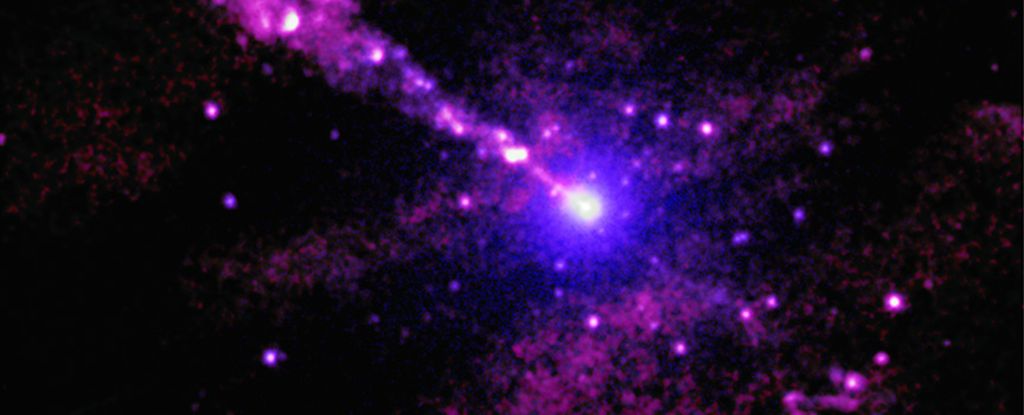
Black Hole Jet Collides with Mysterious Object in Stunning Image

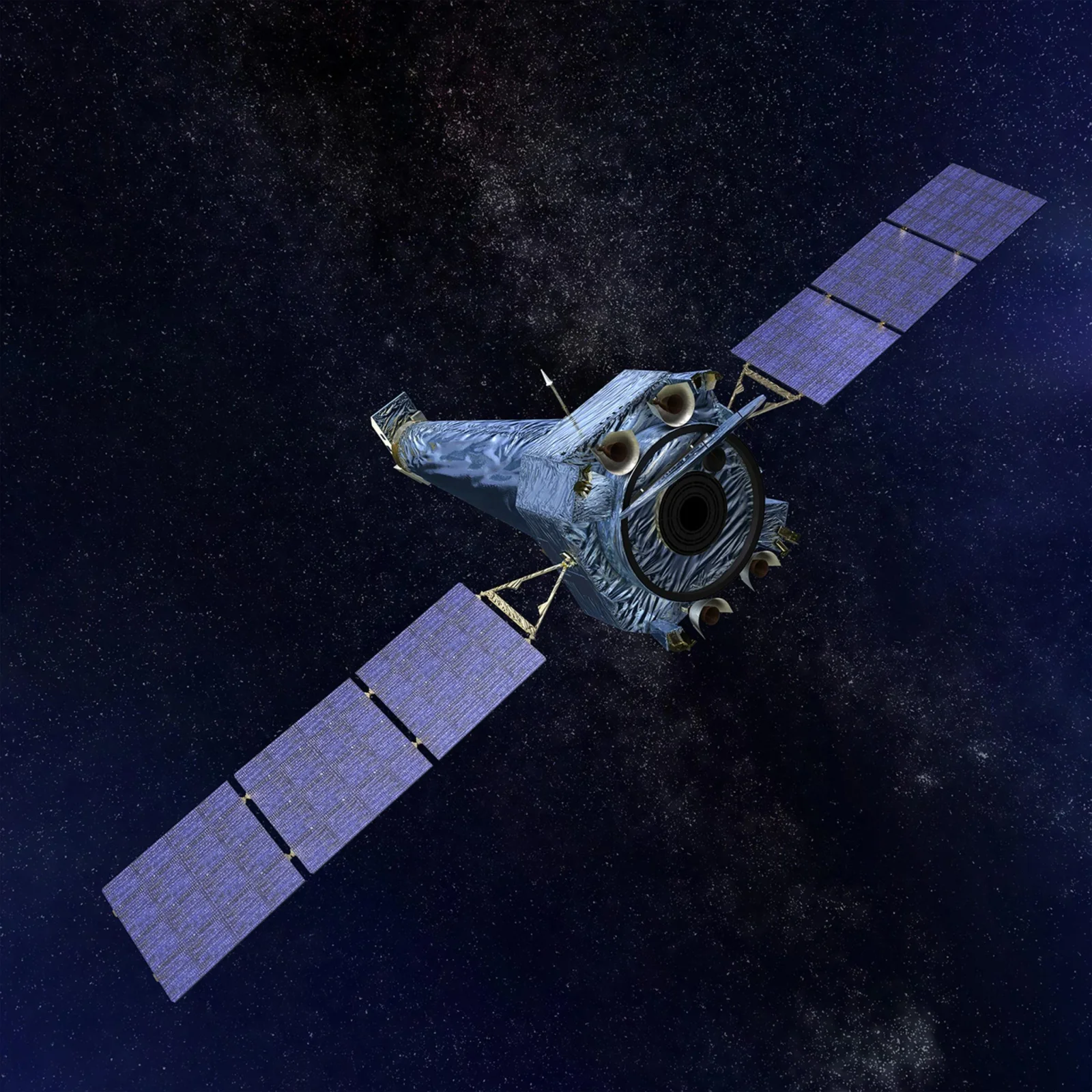
NASA's Chandra X-ray Observatory has captured a mysterious V-shaped X-ray emission from the galaxy Centaurus A, where jets from its supermassive black hole have collided with an unknown object, dubbed C4. This peculiar feature, unlike any other observed in the galaxy's jets, presents a mystery as one arm of the V aligns with the jet flow while the other does not. The nature of C4 remains unclear, prompting further investigation to understand this unique astronomical phenomenon.

space-and-physics1 year ago

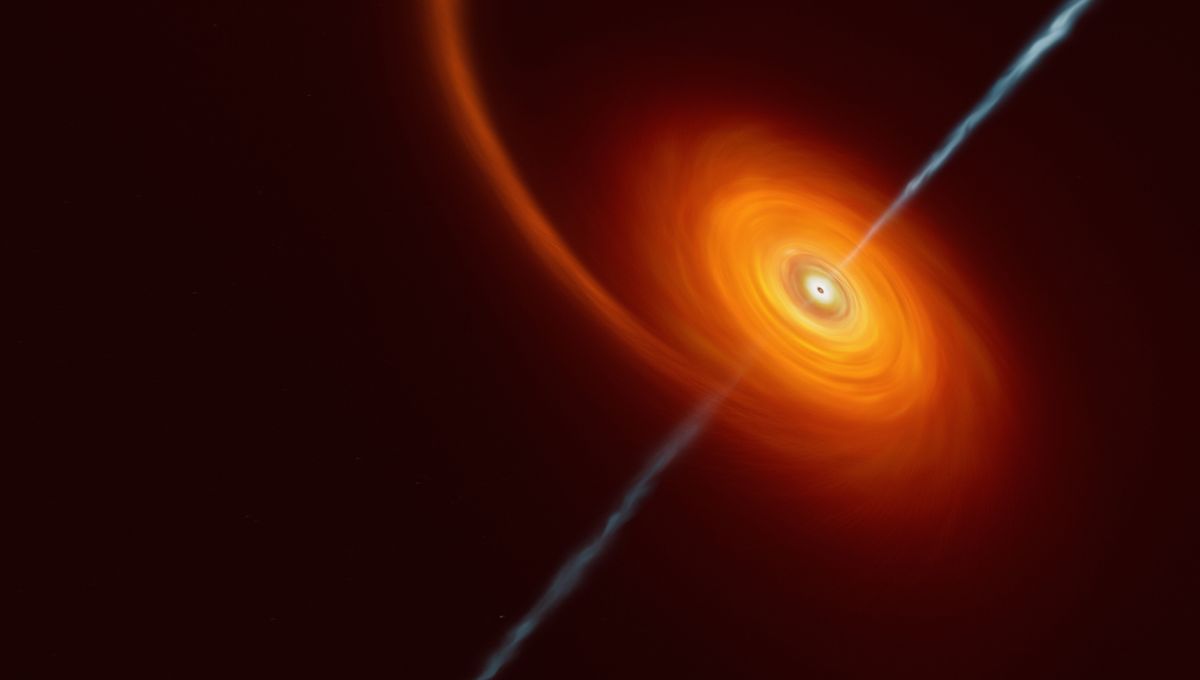
Astronomers Measure Supermassive Black Hole's Spin Using Destroyed Star

For the first time, astronomers have measured the spin of a supermassive black hole using the wobble of a hot accretion disk formed from a star that was torn apart by the black hole. The event, known as AT2020ocn, revealed that the black hole's spin is less than one-quarter of the speed of light. This discovery, made using the NICER telescope, provides new insights into the growth and evolution of supermassive black holes.

astronomy1 year ago

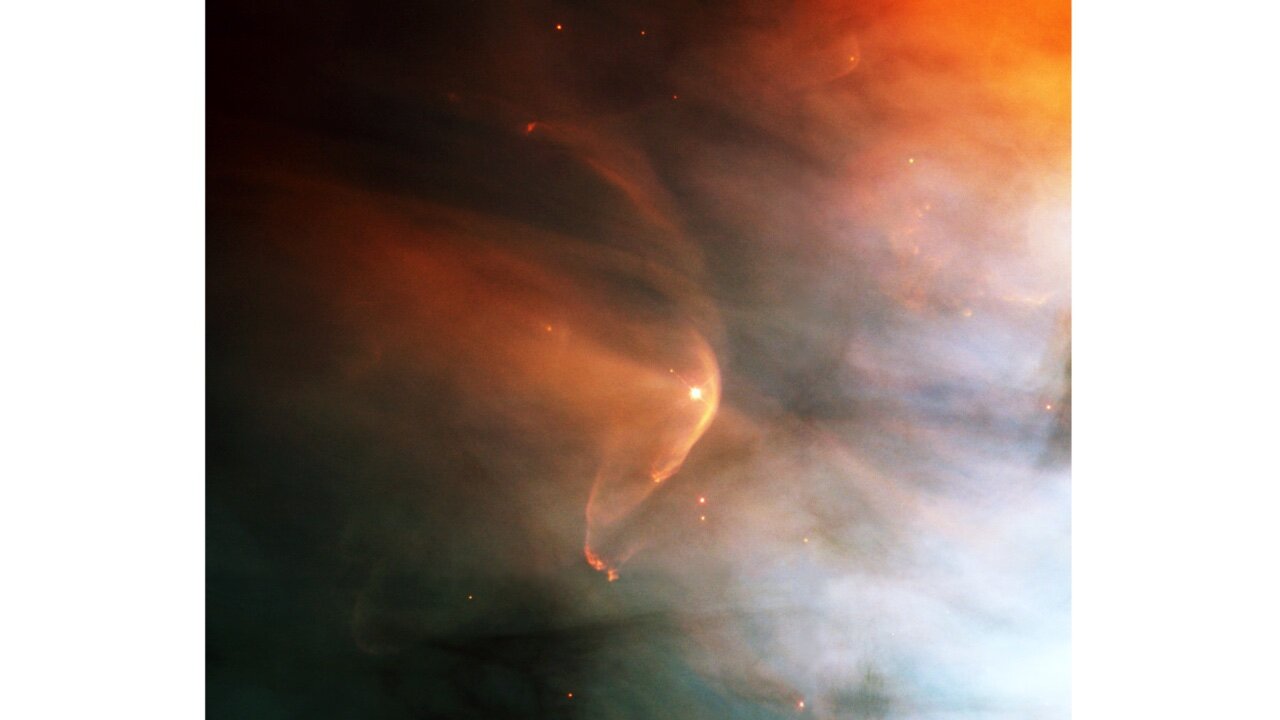
"First-Ever Detection of Stellar Winds from Sun-Like Stars"

An international research team led by a University of Vienna scientist has directly detected stellar winds from three sun-like stars for the first time by recording the X-ray emission from their astrospheres, placing constraints on the mass loss rate of the stars via their stellar winds. The study, published in Nature Astronomy, observed the spectral fingerprints of oxygen ions with the XMM-Newton space telescope and estimated the mass loss rates of the stars to be much stronger than the solar wind, potentially due to stronger magnetic activity. This breakthrough paves the way for future direct detection and imaging of stellar winds, with implications for understanding stellar and planetary evolution.

astronomy2 years ago

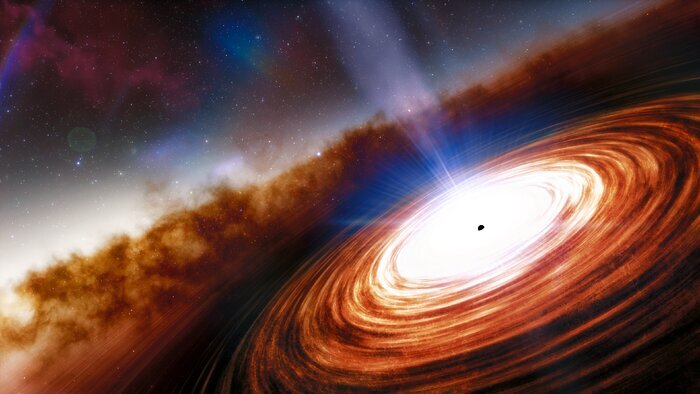
Exploring the Heart of Quasars through X-ray Imaging

Researchers have observed the X-ray emission of the most luminous quasar seen in the last 9 billion years of cosmic history, known as SMSS J114447.77-430859.3, or J1144 for short. The study sheds light on the inner workings of quasars and how they interact with their environment. J1144 is much closer to Earth than other sources of the same luminosity, allowing astronomers to gain insight into the black hole powering the quasar and its surrounding environment. The team used data from several space-based observatories to measure the temperature of the X-rays being emitted from the quasar and found that the mass of the black hole at the quasar's center is around 10 billion times the mass of the sun, and the rate at which it is growing to be of the order of 100 solar masses per year.

astronomy2 years ago

Standard model of cosmology supported by galaxy clusters.

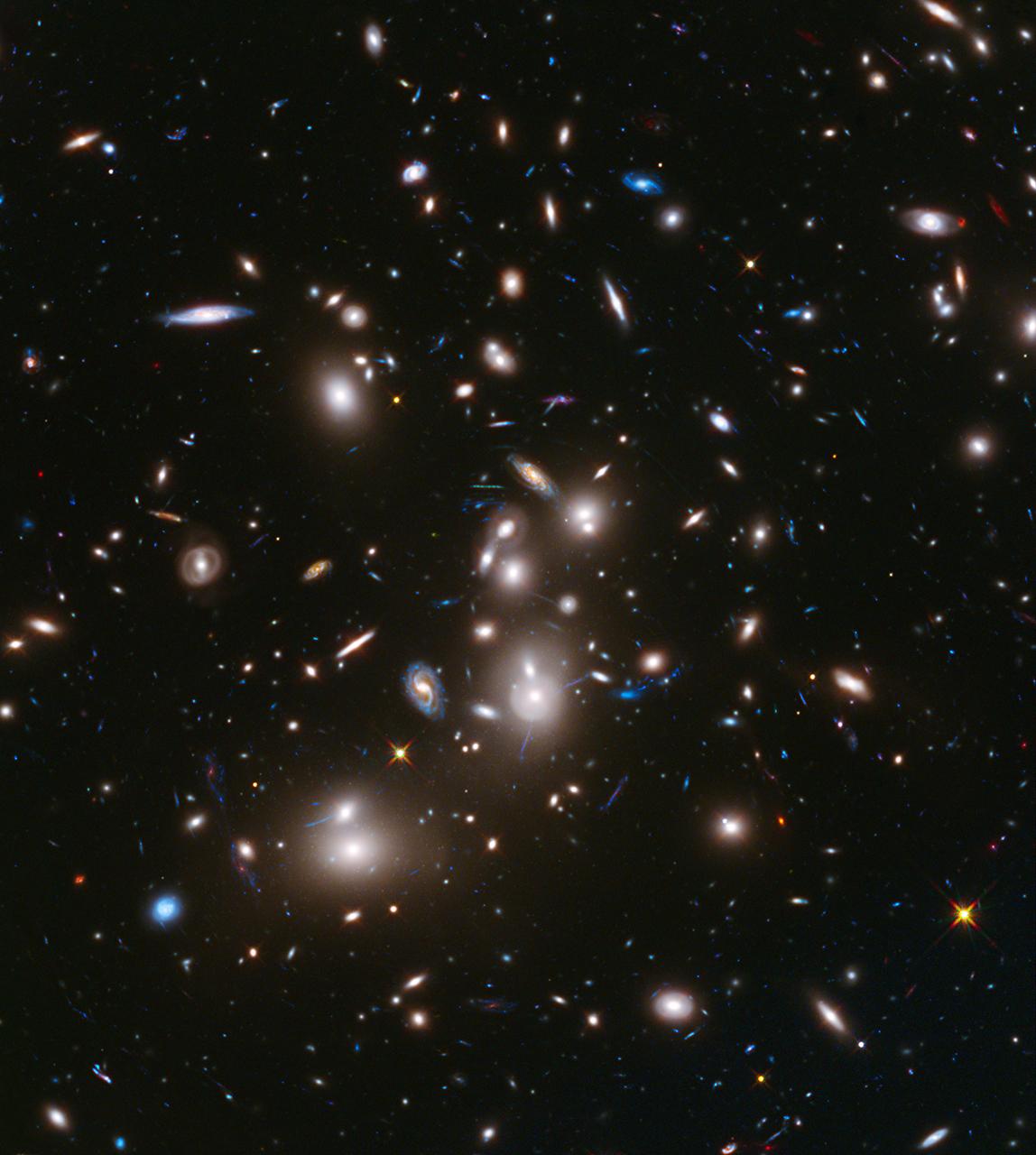
Physicists at the Department of Energy's SLAC National Accelerator Laboratory and Stanford University have found new evidence for the standard model of cosmology by making detailed measurements of the X-ray emission from galaxy clusters, which revealed the distribution of matter within them. The data helped the scientists test the prevailing theory of the structure and evolution of the universe, known as Lambda-CDM. The team found consistent results from both data sets: Overall, clusters have become more centrally concentrated over time, while at any given time, less massive clusters are more centrally concentrated than more massive ones.