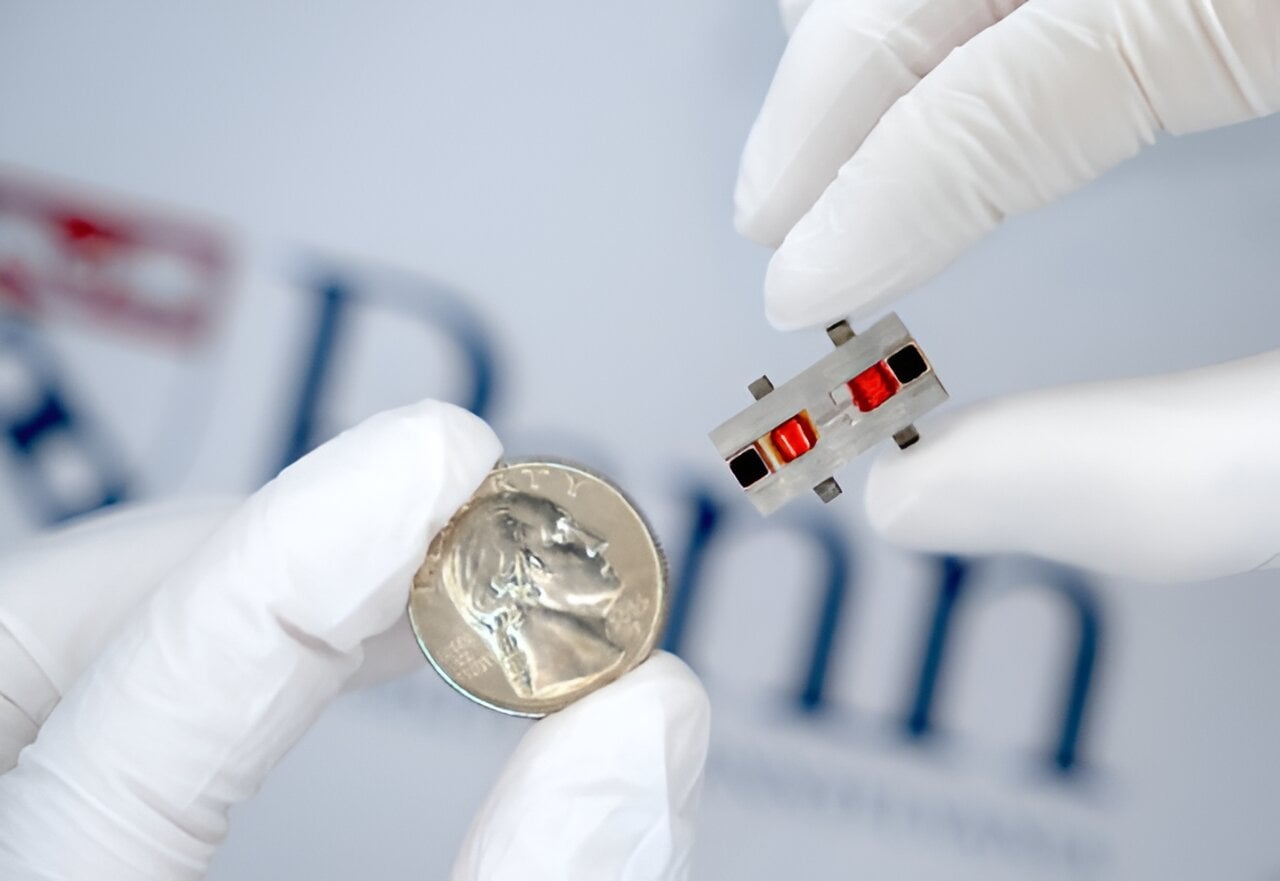
Penn Engineers have developed a revolutionary adjustable filter using yttrium iron garnet (YIG) that can prevent signal interference in higher-frequency bands, potentially enabling the next generation of wireless communications, including 6G. This new filter is significantly smaller and more power-efficient than previous models, making it suitable for mobile devices and capable of covering a broad frequency range from 3.4 GHz to 11.1 GHz.
Scientists have conducted a groundbreaking experiment demonstrating the time reflection of electromagnetic waves, which has potential implications for wireless communications and optical computing. The experiment used a tailored metamaterial to observe time reflections of electromagnetic signals, causing a significant portion of the broadband signals traveling in the metamaterial to be instantaneously time reversed and frequency converted. The researchers also demonstrated that the duration of the time-reflected signals was stretched in time due to broadband frequency conversion. The achievement can pave the way for exciting applications in wireless communications and for the development of small, low-energy, wave-based computers.
Scientists have observed "time reflections" in electromagnetic waves, a phenomenon that was previously only hypothesized to exist. By using a special kind of material, researchers saw signals reverse in time by quickly triggering a change in the physical properties. The discovery could lead to practical applications, including wireless communications and new small, low-energy computers.