Microsoft has added a new security feature to Windows PowerShell 5.1 that prompts users to confirm before executing web content without special parameters, allowing them to choose between safety and potential risk, primarily impacting enterprise environments but also relevant for interactive users.,
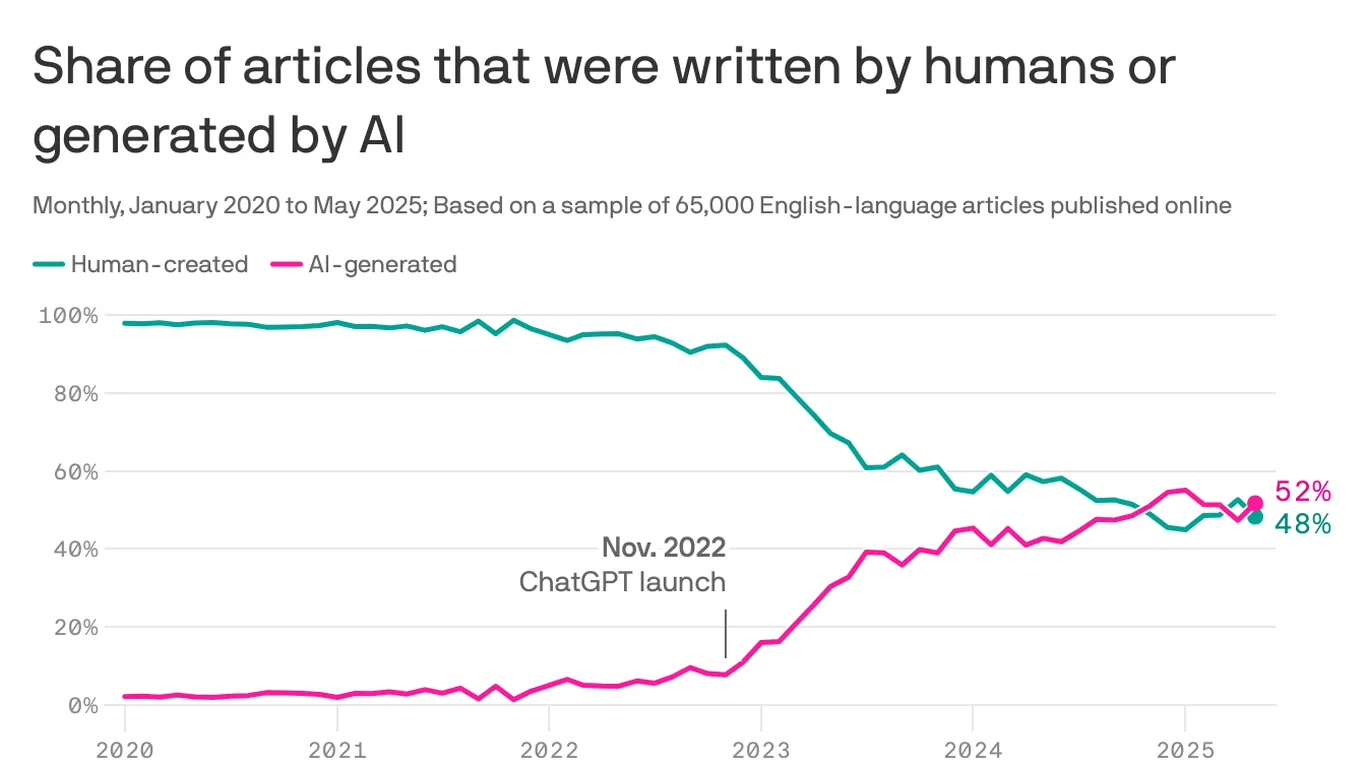
AI-generated articles briefly outnumbered human-written ones online but are now roughly equal, with AI content still comprising a minority of search rankings and user trust remaining low. Researchers highlight the difficulty in distinguishing AI from human content and note that humans prefer human-written material, though AI's role in content creation continues to grow.
Originally Published 5 months ago — by Hacker News
The article discusses the challenges of protecting website content from AI scraping and the limitations of technical measures like robots.txt, advocating for legal solutions and emphasizing the importance of human-centric web interactions. It highlights concerns about AI's impact on content creators, the legal and ethical issues surrounding data use, and the need for laws that respect creators' rights while acknowledging technological realities.
Cloudflare has changed its policy to block AI web crawlers by default, requiring explicit permission and introducing a 'Pay Per Crawl' system to address concerns from publishers and website owners about unauthorized content scraping by AI companies, potentially impacting AI training and web traffic.
Generative AI is making it easier and cheaper to create low-quality content, leading to an increase in spammy websites and misinformation. Advertisers are being affected as their ads appear on these junk news sites, potentially diverting advertising money away from legitimate sites. The solution to this problem is unclear, with suggestions ranging from tighter regulation by search engines and ad platforms to the development of better-funded platforms. In other AI news, OpenAI has launched GPT-4, its latest text-generating model, and is forming a team to develop ways to control "superintelligent" AI systems. New York City has begun enforcing a law requiring employers to submit algorithms used for recruitment and promotion for independent audits. Major tech figures in Europe have warned against stifling innovation with AI regulations. Additionally, various AI projects have been developed, including a smart intubation system, AI-powered animation technology for movies, and AI applications in archaeology and natural disaster prediction.
Google is initiating a public discussion on developing new protocols and ethical guidelines for how AI systems access and use content from websites. The aim is to ensure web publishers have meaningful choice and control over their content, while addressing the ethical challenges raised by AI technologies in terms of data use, privacy, and bias. Google is inviting stakeholders from the web and AI communities to participate in the discussion, with the goal of finding a collaborative solution that balances AI progress with privacy and control over data. The outcome of these discussions could shape how AI systems interact with and utilize data from websites in the future.