Yeast Boosts Salmonella Virulence
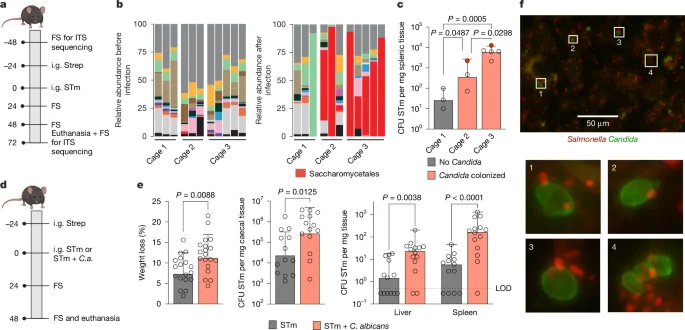
Commensal yeast C. albicans enhances Salmonella Typhimurium virulence by producing arginine, which increases bacterial invasion and dampens host immune response, thereby promoting infection severity.
All articles tagged with #virulence

Commensal yeast C. albicans enhances Salmonella Typhimurium virulence by producing arginine, which increases bacterial invasion and dampens host immune response, thereby promoting infection severity.

Scientists at the University of Michigan have discovered that the life-threatening fungus Candida auris uses a unique adhesin called Surface Colonization Factor 1 (SCF1) to stick to surfaces, including skin and catheters. This adhesin, unlike those found in other fungi, forms strong cation-pi bonds similar to those used by oceanic organisms like barnacles and mollusks. The researchers also found that SCF1 is associated with increased colonization and enhanced disease-causing ability. Understanding the link between SCF1 and virulence could lead to more effective anti-fungal therapies for C. auris, which is often resistant to current medications. The adhesive properties of SCF1 suggest a possible oceanic origin for C. auris.

A new study in mice has found that the Omicron BA.5 variant of SARS-CoV-2 is more virulent and replicates faster than its predecessors. The study, published in Science Advances, used genetically modified mice to compare different subvariants of Omicron and found that BA.5 caused more severe illness and death, likely due to its ability to rapidly replicate early during infection. This study provides a valuable animal model for studying the new Omicron variants and understanding their behavior, as previous animal models did not exhibit illness with other variants. The findings suggest that targeting cytokines with drugs could potentially lessen symptoms and provide a treatment option.

A new study published in Nature Communications found that the ongoing outbreak of avian influenza has been marked by rapid genetic changes and highly increased virulence in both birds and mammals. The virus gained a different version of a viral protein called neuraminidase, which increased its ability to transmit between birds, before arriving in Canada and then spreading to the rest of the Americas. The virus also became more severe since it spread to the Americas, with ferrets infected with samples of the virus experiencing rapid weight loss, lethargy and severe neurologic symptoms such as paralysis and impaired muscle control. While the virus is still low-risk to humans, the scientists stressed that the increased pathogenicity of the virus is "of significant concern."