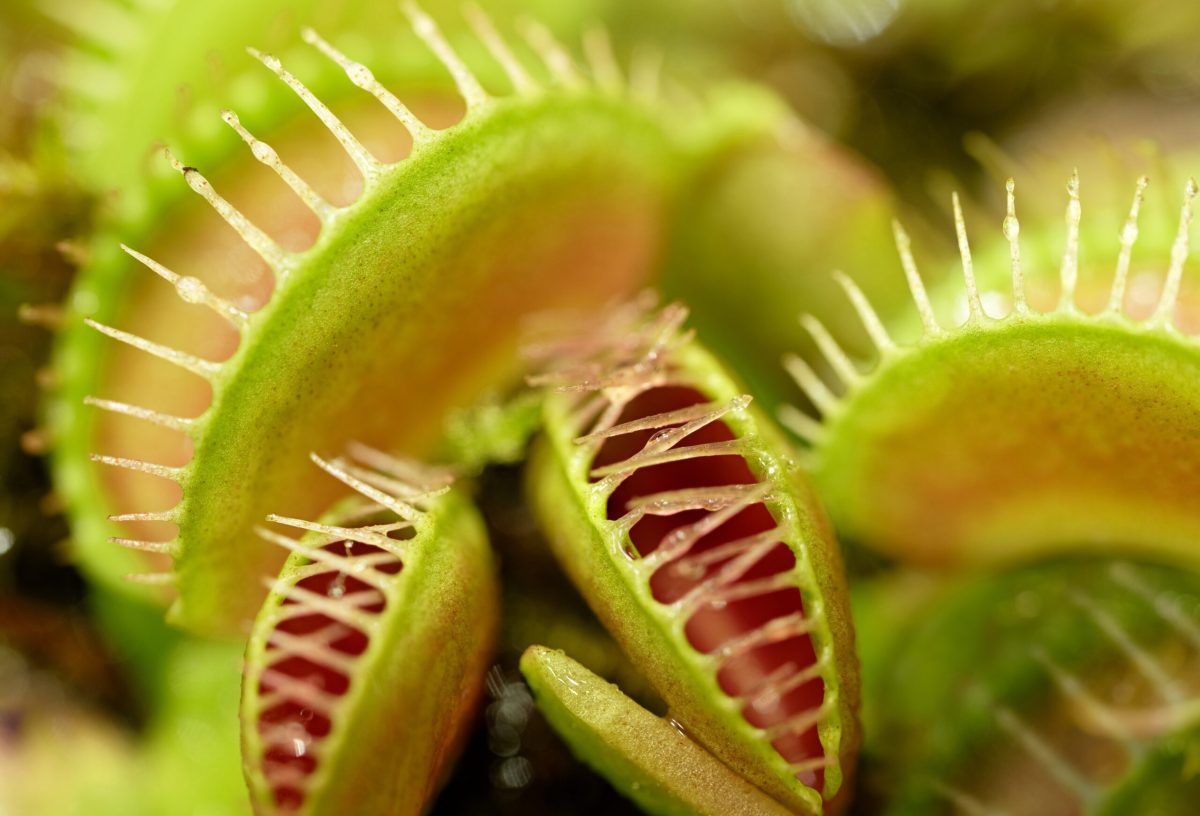
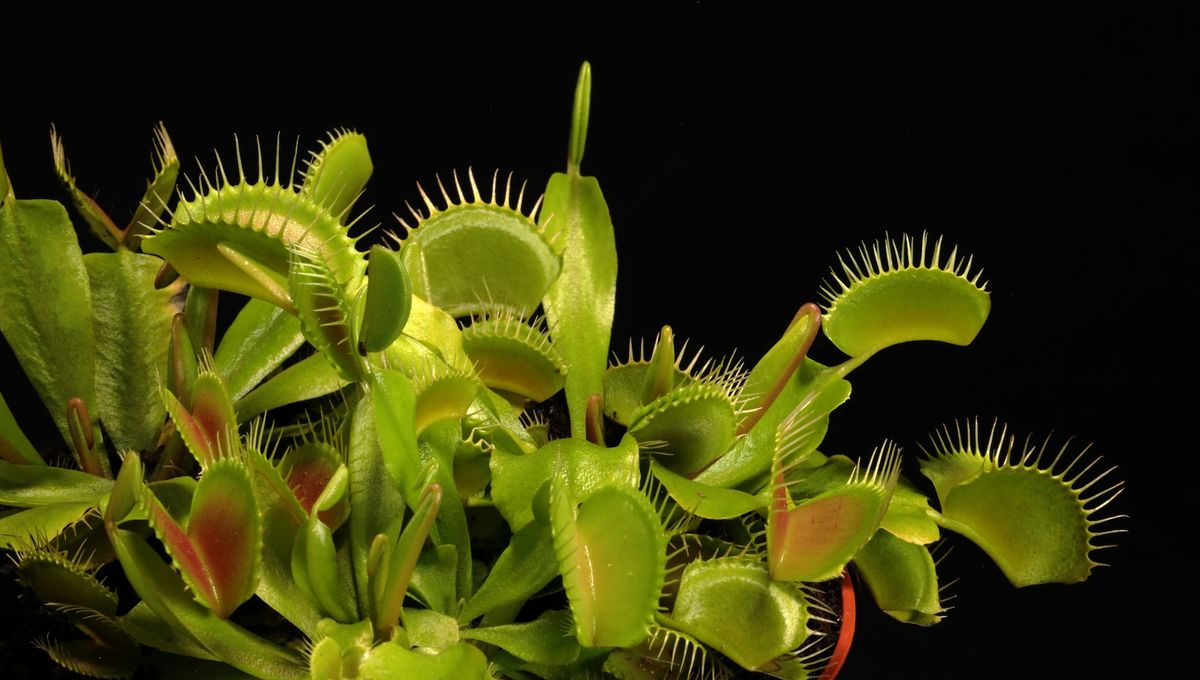
Barry Rice, an astronomy professor and botanist, conducted an experiment to determine if Venus flytraps can digest human flesh. Using chunks of his own skin affected by athlete's foot, Rice fed them to four different Venus flytraps. After a week, the traps opened, and to his surprise, the skin chunks were almost completely digested. The remaining residue was gooey and slimy, with a strange hue shift to bacon color.
A biologist conducted an experiment by feeding pieces of his own skin to Venus flytrap plants, which surprisingly digested most of the skin. However, the small size of Venus flytraps and their inability to consume anything larger than a fly make them unlikely to pose a threat to humans. While the experiment is intriguing, it does not prove that these plants could consume harder tissues like bones and cartilage. So, for now, the idea of flesh-eating plants remains in the realm of science fiction.
A carnivorous plant enthusiast conducted an experiment to determine if Venus flytraps could digest human flesh. He fed his plants pieces of skin from his toes and found that the chunks were almost completely digested. However, the experiment only tested skin and did not provide insight into breaking down tougher tissues like bone. While some carnivorous plants can consume vertebrates like frogs and rats, no species could contain a whole human corpse. Carnivorous plants evolved to survive in nutrient-lacking environments and rely on animals for vital nutrients, but consuming a human would be too time-consuming and costly.
Researchers have successfully mapped the electrical signals that trigger the deadly movement of Venus flytraps for the first time. Using thin-film sensors and electrodes, the team measured and recorded the electrical impulses generated by the plant's sensory hairs. The study revealed that the signals propagate at a constant speed from tripped sensory hairs, triggering the trap to close. Surprisingly, the researchers also found spontaneous electrical signals originating from unstimulated hairs. Further research is needed to understand the function of these signals and how electrical impulses propagate in plants. Decoding these signals could provide insights into plant functioning and stress responses.