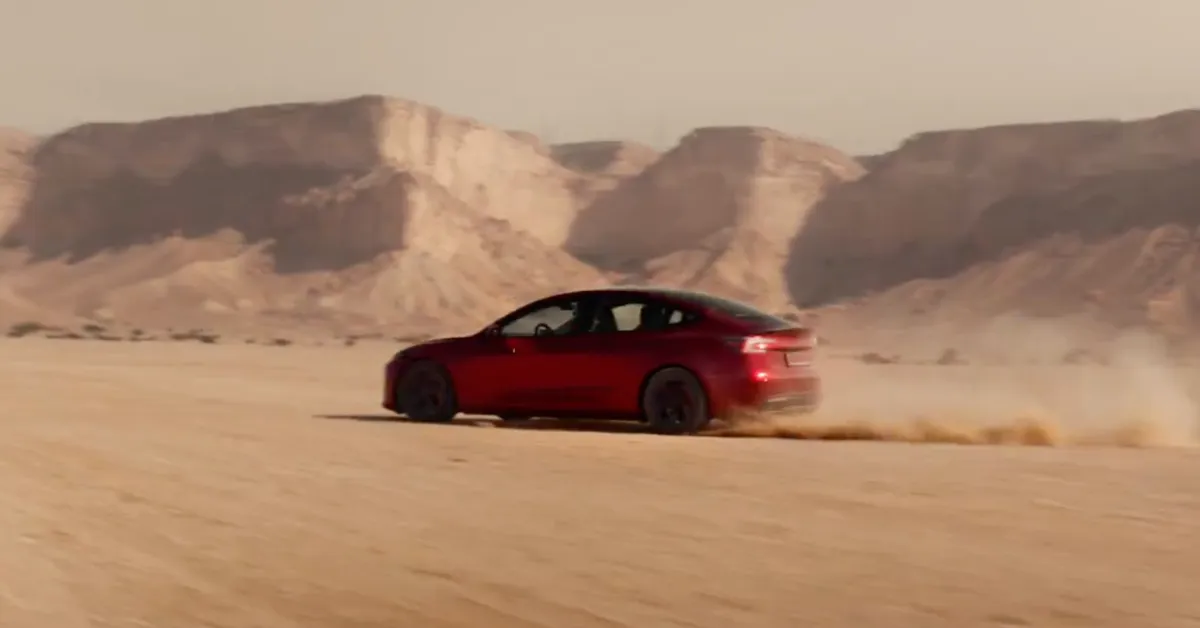
Tesla's Q4 2025 vehicle deliveries dropped 15.6% year-over-year, signaling a sales slump amid weaker demand and the expiration of U.S. tax credits, but growth in energy storage and future autonomous ride-sharing (Robotaxi) plans remain key to investor optimism. The company is expected to report full quarterly results on Jan. 28, with future demand hinging on advancements in self-driving tech and scaling Robotaxi services.
Elon Musk's deadline to launch fully unsupervised Tesla robotaxi rides in Austin has passed without meeting the target, causing Tesla's stock to decline. Despite Musk's optimistic claims about solving full self-driving, regulatory and technical hurdles remain. Tesla's Q4 vehicle deliveries are expected to be around 422,850, with a full-year forecast of 1.64 million vehicles, though global sales are expected to decline slightly in 2025. Tesla's stock has fallen from recent highs, amid broader EV market pressures and skepticism from investors like Michael Burry, but analysts remain optimistic about Tesla's potential catalysts in 2026.
Tesla's stock faces potential big moves this week as CEO Elon Musk aims to launch unsupervised robotaxis in Austin by year's end and reports Q4 vehicle delivery numbers, which are expected to decline. The stock has recently retreated below key buy points but remains a top performer in the S&P 500 for the year, with investors closely watching these catalysts for future gains.
Tesla's Q3 earnings missed expectations despite a record number of vehicle deliveries and higher revenues, due to declining sales in Europe and challenges from reduced EV tax credits and increased competition. The company reported $28.09 billion in revenue, a 12% increase year-over-year, but earnings per share fell short of forecasts. Tesla also launched cheaper models amid a competitive EV market and regulatory headwinds.
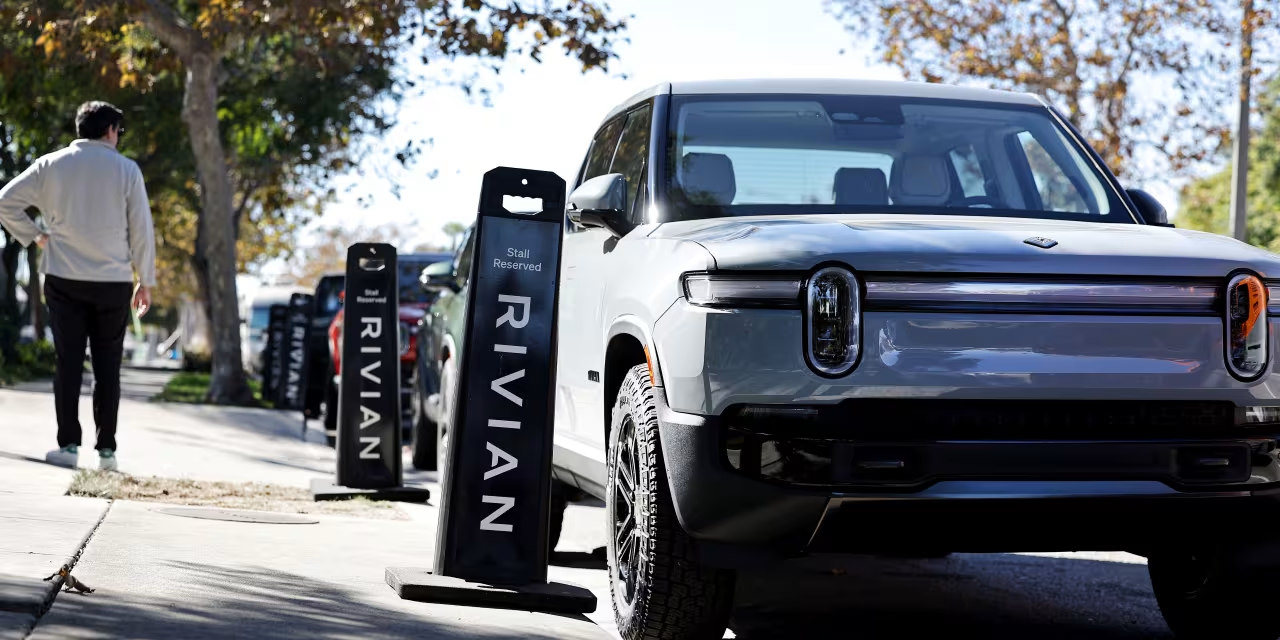
Rivian's third-quarter vehicle deliveries increased by nearly 32%, surpassing estimates, but the company lowered its full-year delivery guidance and reported a decrease in production, leading to a 7.1% drop in its stock price despite solid growth and a competitive EV market.
Tesla's stock has surged 28% this month, with an analyst raising the price target to $500 due to its leadership in autonomous vehicles and AI, and regulatory approvals for robotaxi testing in Arizona. The company is also preparing for Q3 vehicle delivery reports, with stock performance strong and analysts optimistic about its future growth.
Nio has achieved a record-breaking month with over 31,000 vehicle deliveries, challenging Tesla and BYD in the EV market, and is set to release its earnings report, with analysts expecting a reduced loss and a moderate buy rating for its stock, which has surged 81% since the last earnings.
NIO Inc. achieved a record-high monthly vehicle delivery of 31,305 units in August 2025, marking a 55.2% increase year-over-year, with total deliveries reaching 838,036 by the end of August, reflecting strong growth in its smart electric vehicle market.
Tesla's Q2 2025 earnings are expected to show a significant decline in revenue and earnings per share compared to the previous year, with delivery numbers meeting expectations but overall financial performance indicating potential unprofitability, amid ongoing skepticism about its autonomous driving and robotics ambitions.
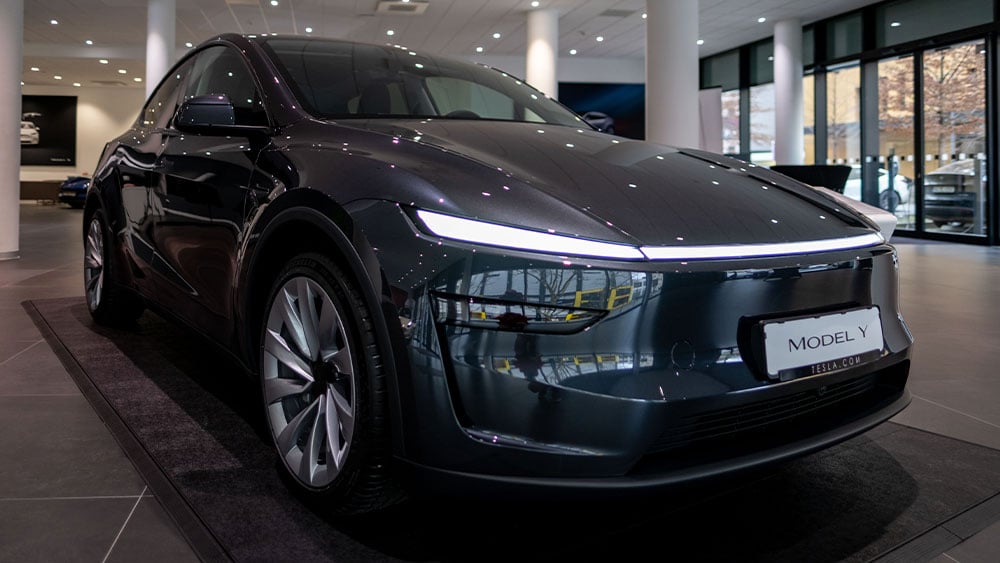
Tesla's quarterly vehicle deliveries declined for the second straight quarter, raising concerns about demand and increased competition, especially from Chinese automakers. Despite a recent stock rebound, shares are down 22% year-to-date. Analyst Daniel Ives remains bullish, citing strong Model Y updates and growth prospects, particularly in autonomous driving, but warns Musk's political conflicts could impact investor confidence.
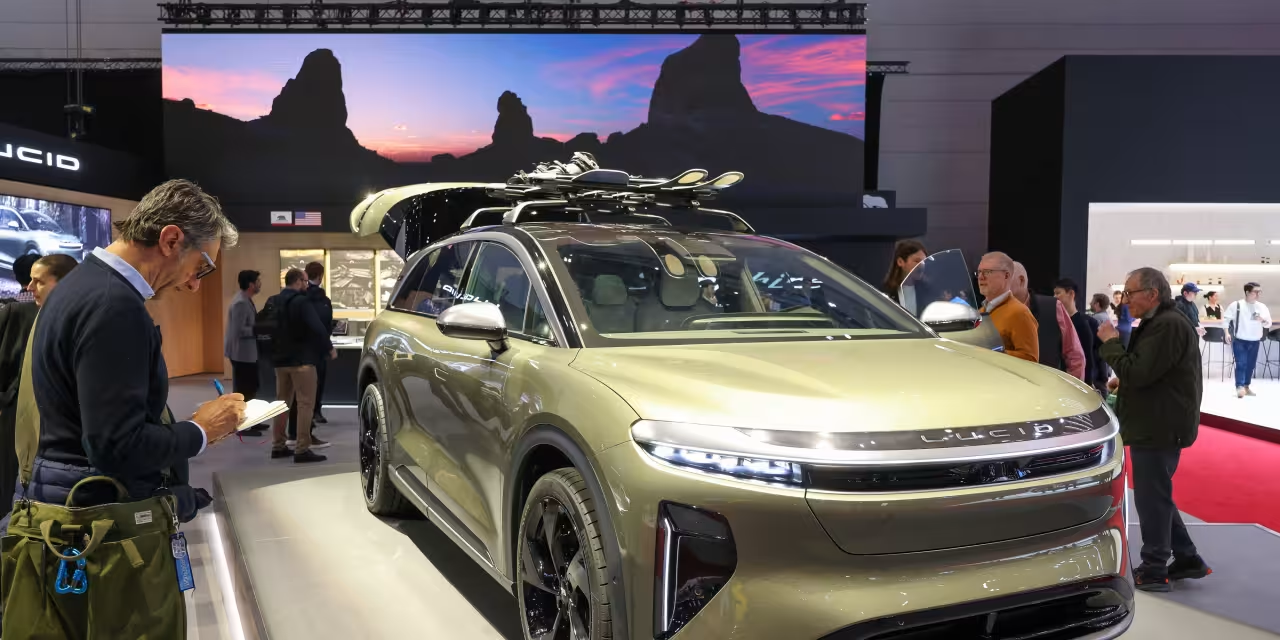
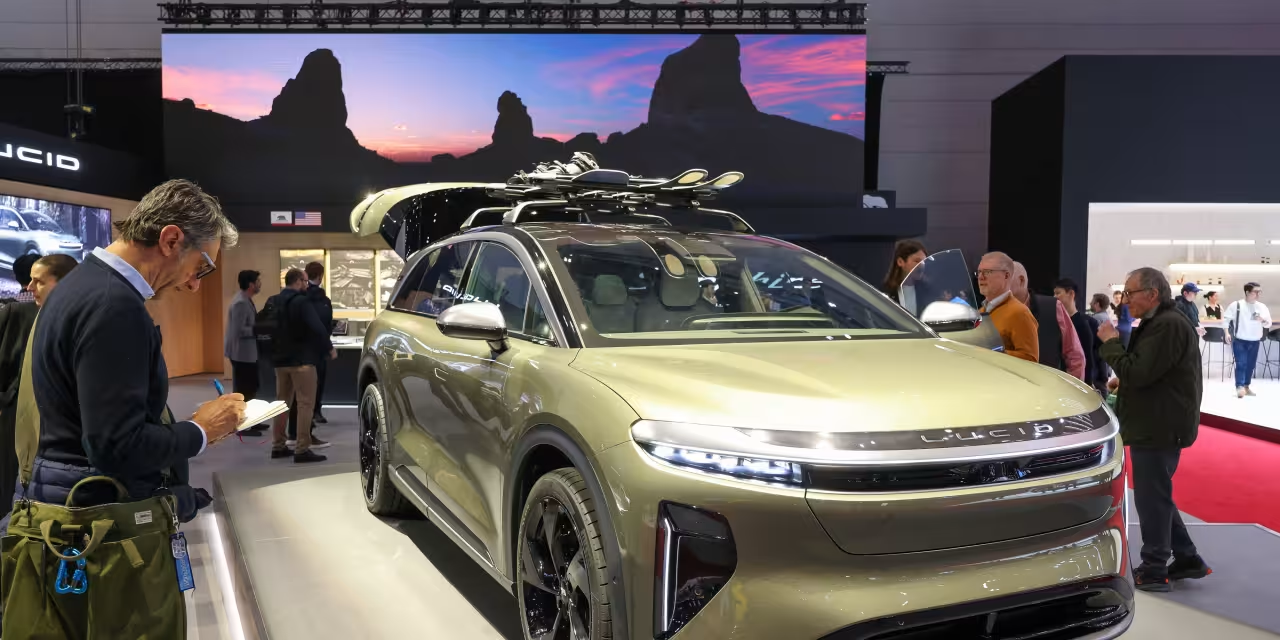
Lucid reported a record second quarter with 3,309 vehicle deliveries, up 38% year-over-year, and a nearly 50% increase in first-half deliveries, driven by new models like the Gravity SUV. Despite surpassing previous records, the results slightly missed Wall Street expectations, and the stock rose modestly. The company aims to produce around 20,000 vehicles in 2025, with a significant portion still to be manufactured in the year's second half.
Lucid reported a record second quarter with 3,309 vehicle deliveries, up 38% year-over-year, and nearly 50% growth in the first half of 2025, driven by new models like the Gravity SUV. Despite this growth, the company missed Wall Street expectations of 3,600 vehicles for the quarter. Shares remained relatively stable, though the stock has declined about 25% over the past year.
Tesla's quarterly vehicle deliveries dropped 13.5% to 384,122 units, marking a potential second consecutive annual decline amid waning demand influenced by Musk's political stance and an aging lineup, with market concerns over brand damage and challenges in boosting sales despite new models and robotaxi initiatives.
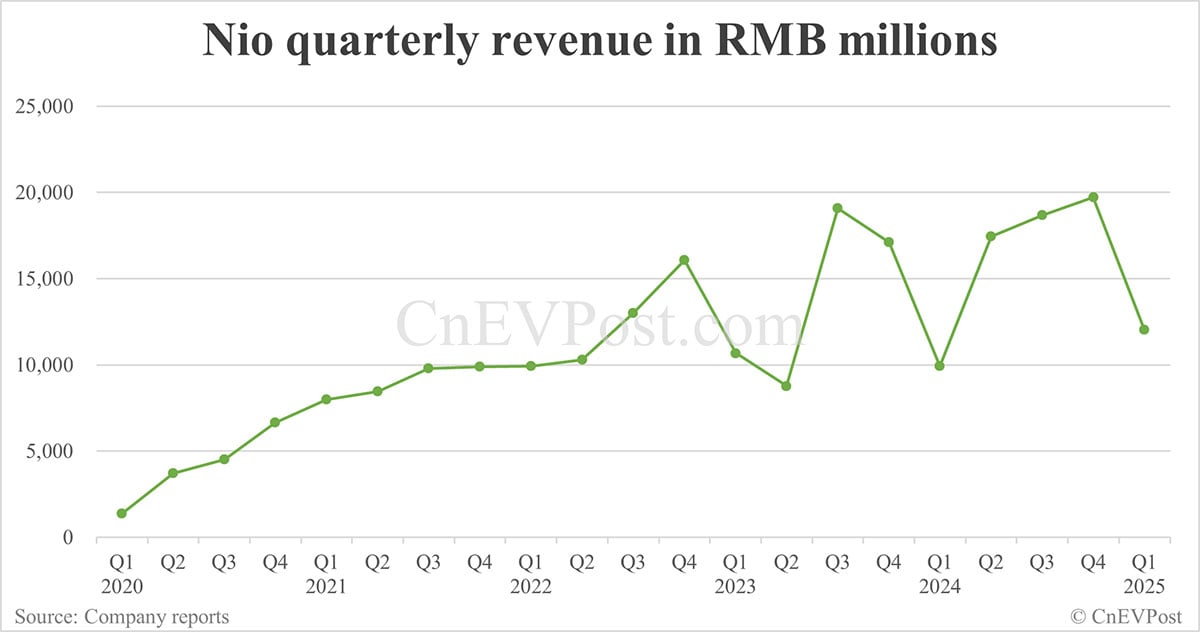
NIO Inc. reported its unaudited financial results for Q1 2025, with vehicle deliveries reaching 42,094, a 40.1% increase YoY but a decline from the previous quarter. Revenue increased by 21.5% YoY to RMB12.03 billion, while net loss widened to RMB6.75 billion. The company launched new products, completed a share offering, and expects Q2 deliveries between 72,000 and 75,000 vehicles, with revenues rising further. Despite ongoing losses, NIO emphasizes technological innovation and cost control efforts.
Nio reported a 30% increase in net loss for Q1 2025, driven by higher R&D and marketing expenses, with revenue slightly below expectations. Despite delivering over 42,000 vehicles, the company faced rising costs and cash flow issues, but guided for significant growth in deliveries and revenue in Q2.