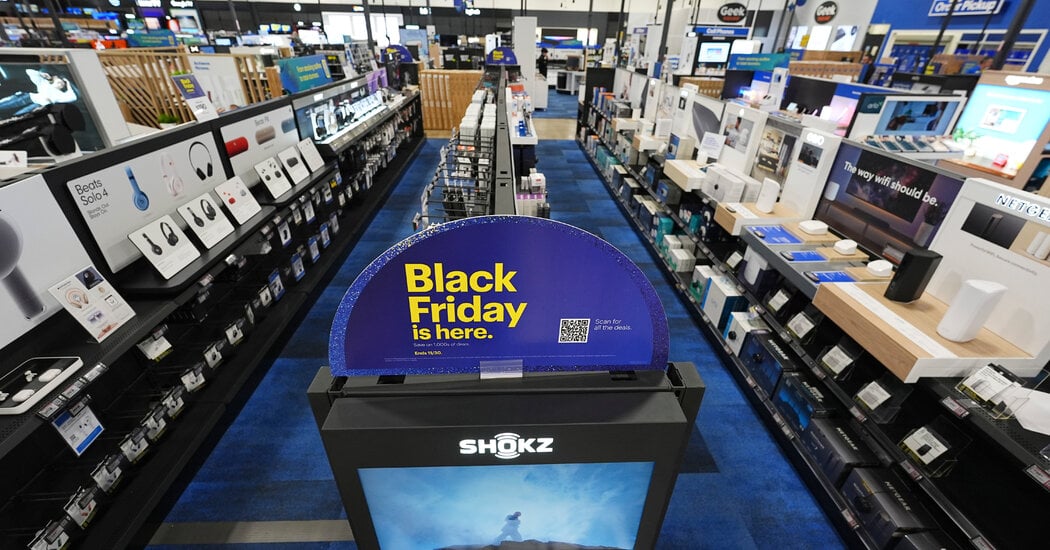
U.S. December retail sales were flat at $735.0 billion, unchanged from November and below the +0.4% consensus, with core retail sales and sales excluding gas and autos also flat, signaling softer consumer spending even as the holiday season remained solid; year-over-year sales rose 2.4%.
The U.S. economy added 227,000 jobs in November, indicating continued growth in the labor market. This increase reflects ongoing economic recovery efforts and suggests a positive trend in employment figures.
As Trumponomics policies are implemented, concerns about rising inflation are increasing. The economic strategies, characterized by tax cuts and deregulation, aim to boost growth but may also lead to higher prices, prompting debates on their long-term impact on the U.S. economy.
Treasury yields fell as the personal consumption expenditures price index, a key inflation measure, met expectations, with the 10-year yield dropping to 4.27%. The data suggests no immediate change in the Federal Reserve's monetary policy, with a gradual approach to rate cuts anticipated. Initial jobless claims also fell, indicating a tight labor market. Traders are largely expecting a rate cut in December, while President-elect Trump's Treasury secretary pick, Scott Bessent, is seen as a stabilizing choice for markets.
Exxon Mobil's Upstream President Liam Mallon stated that US oil and gas producers are unlikely to significantly increase output despite President-Elect Donald Trump's calls to "drill, baby, drill." Mallon emphasized that economic considerations are the primary focus for producers, and a radical change in drilling activity is improbable. While Trump may open federal lands for drilling, much of the land in Texas is private, and producers are taking a long-term approach to production. Mallon also supported the US Inflation Reduction Act, which contrasts with Trump's stance.
The 10-year Treasury yield decreased slightly as investors evaluated mixed economic data and the U.S. economic outlook. While PMI surveys showed improvement, consumer sentiment fell short of expectations. Initial jobless claims were lower than anticipated, indicating a stable labor market, but other data, like rising continuing claims and a slowing Philadelphia Fed manufacturing index, suggested economic weakness. Investors also considered Federal Reserve officials' comments on potential interest rate cuts, with differing views on the pace of future reductions.
At the annual meeting of the largest association of economists, the consensus is that the U.S. will experience economic growth this year, avoiding a recession. However, economists are less optimistic about long-term prospects, indicating that growth rates may not improve beyond pre-pandemic levels.
The U.S. economy surpassed expectations by adding 216,000 jobs in December, maintaining the unemployment rate at 3.7% and potentially easing the urgency for the Federal Reserve to cut interest rates. Despite the strong job growth and wage increases, the Fed has not committed to a timeline for easing monetary policy, suggesting a cautious approach amidst economic uncertainty. This robust job market performance, along with a year-end stock market rally, indicates a resilient economy that may be achieving a "soft landing" without triggering a severe recession.
The U.S. jobs report for December showed strong hiring with 216,000 jobs added, keeping the unemployment rate at a low 3.7%, which suggests the economy might avoid a recession and achieve a "soft landing." However, this robust job growth poses a challenge to the Federal Reserve's efforts to fight inflation, which remains above their target rate. The strong labor market could lead to sustained wage growth, potentially fueling inflation and complicating the Fed's plans to cut interest rates in 2024. Despite high interest rates, the economy has shown resilience, growing at a significant pace, which may offer the Fed more room to maneuver without triggering a downturn.
U.S. Treasury Secretary Janet Yellen has stated that the American economy has achieved a "soft landing," a condition where inflation is controlled without causing significant harm to the job market. This announcement follows the December jobs report, which suggests that the economy is stabilizing with real wage increases, allowing American workers to progress financially. Yellen expressed hope that this economic state will persist.
The US December ISM services index came in at 50.6, lower than the expected 52.6, indicating a slower expansion in the service sector than anticipated. Key components such as the employment index and prices paid index also showed a decline, suggesting dovish economic conditions. Comments from various sectors highlighted issues like high beef prices, Panama Canal congestion, labor constraints, and the need for expense reduction. Despite these challenges, some areas like mining and retail trade reported positive trends, and there is a general sense of stability returning to supply chains. The report is considered a forward-looking indicator, contrasting with the lagging nature of non-farm payrolls data.
The US economy surpassed expectations by adding 216,000 jobs in December 2023, keeping the unemployment rate steady at 3.7%. This performance, which defied Wall Street predictions, suggests a robust labor market that could influence the Federal Reserve's interest rate decisions, potentially delaying rate cuts. Wages saw a healthy increase, but the labor force participation rate and average weekly hours worked both experienced slight declines. The job gains were led by government and healthcare sectors, while transportation and warehousing saw job losses. Recent data indicates a cooling labor market, which may allow the Fed to begin reducing rates by May.
U.S. stock futures declined as a stronger-than-expected December jobs report, with the economy adding 216,000 jobs, led investors to reassess the likelihood of an interest rate cut by the Federal Reserve. The unemployment rate held steady at 3.7%, and the robust labor market data dampened hopes for a Fed policy pivot, causing a pullback in the stock market's recent rally. Bond yields rose, and tech stocks, including Apple, faced premarket losses following downgrades and a revenue drop forecast from iPhone supplier Foxconn.
The US non-farm payrolls for November exceeded expectations with an increase of 216,000 jobs compared to the anticipated 170,000. Despite a downward revision of the previous month's figures and a decrease in the labor force participation rate, the unemployment rate remained steady at 3.7%, defying expectations of a slight increase. Average hourly earnings also rose more than expected on both a monthly and yearly basis, indicating wage growth. These robust employment figures led to a strengthening of the US dollar and affected market expectations for future Federal Reserve interest rate cuts.
U.S. stock futures declined as investors awaited the December jobs report, which could influence Federal Reserve rate decisions. The market's recent rally has been challenged by uncertainty over the Fed's next moves, with some investors reducing expectations for a March rate cut. The jobs data will be crucial in assessing whether the Fed has achieved a "soft landing" for the economy. Meanwhile, bond yields rose and Apple's stock faced pressure after supplier Foxconn predicted a revenue drop and analysts downgraded the tech giant.