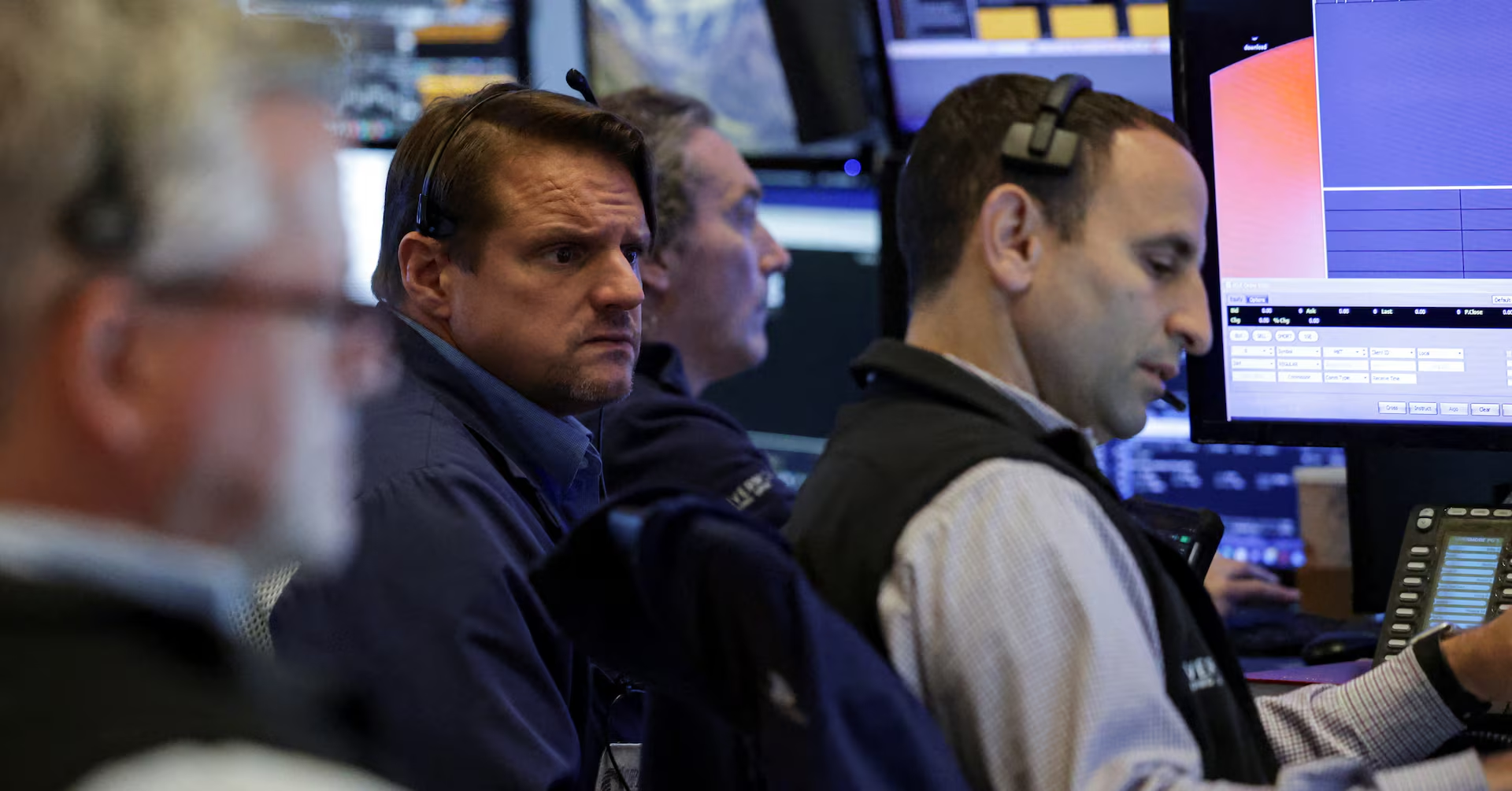
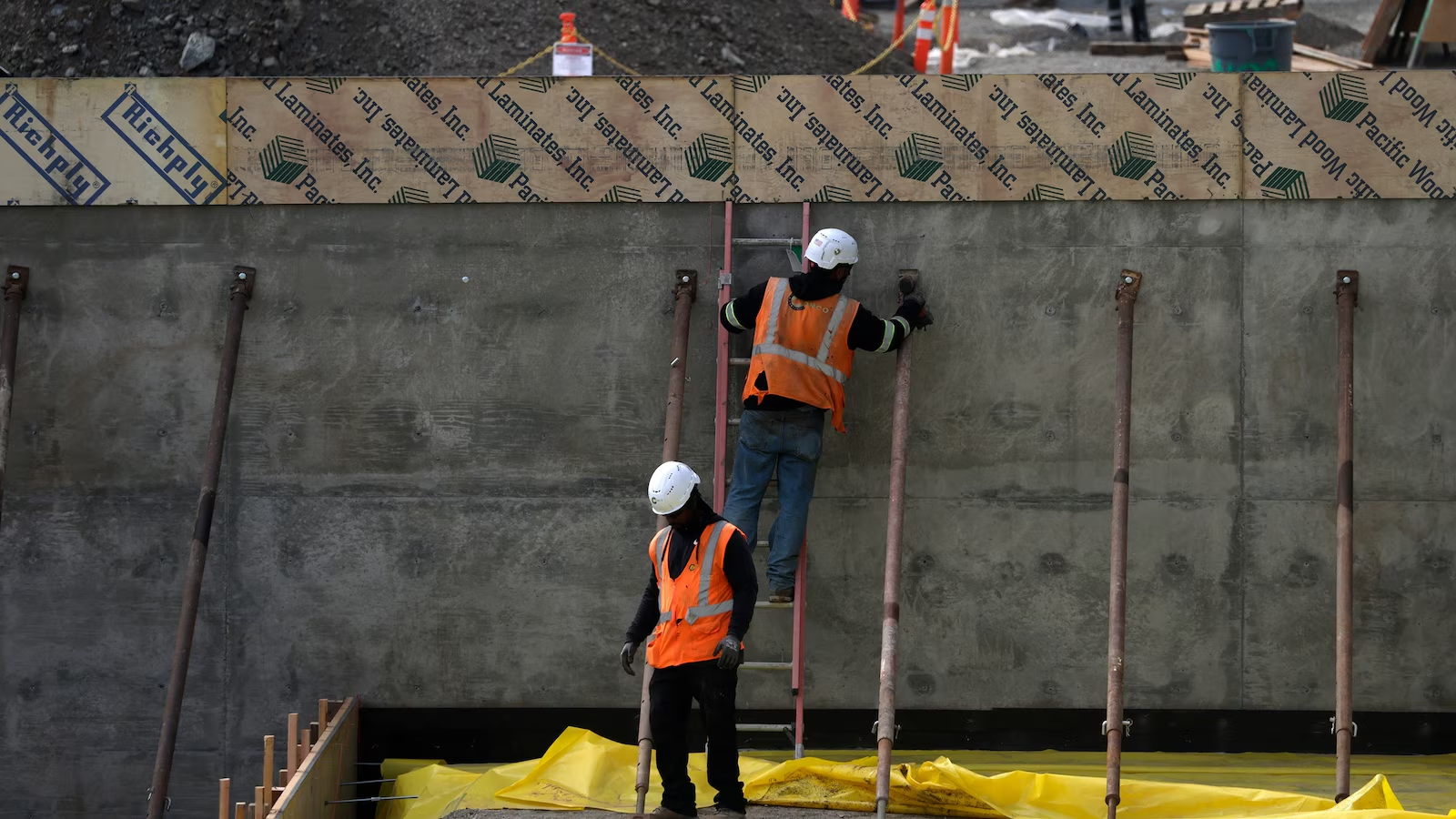
The US economy added only 50,000 jobs in December 2025, marking the weakest annual job growth since 2003, but the unemployment rate fell to 4.4%, indicating a sluggish labor market with cautious optimism from markets and policymakers.
The November US jobs report shows mixed signals with some indicators of economic strength and others of weakness, leading to market ambivalence and unchanged interest rate expectations.
The US jobs report shows a rise in the unemployment rate to 4.6%, the highest in four years, amid sluggish hiring and sector-specific job losses, influenced by government shutdown and policy changes. Despite some positive wage growth, the data presents a mixed picture, prompting cautious reactions from markets and policymakers.
The US economy added 64,000 jobs in November with the unemployment rate rising to 4.6%, the highest in over four years, indicating persistent weakness in the labor market amid revisions and delayed data due to the government shutdown, with the Federal Reserve responding by cutting interest rates to counteract the slowdown.
Asian shares and US futures declined ahead of key US employment and inflation reports, with investors cautious about potential interest rate changes and economic slowdown signals, amid mixed corporate earnings and global economic data.
Global shares declined in Europe and Asia ahead of key US employment and inflation reports, with investors cautious about potential interest rate changes and economic momentum slowing towards year-end.
Bond traders are closely watching the upcoming US jobs report to determine the likelihood of a Federal Reserve interest rate cut in October, but a potential government shutdown could delay key data releases, adding uncertainty to market expectations. The market is currently betting heavily on a rate cut, but the strength of upcoming economic data, especially employment figures, will be crucial in confirming or challenging this outlook, with implications for bond yields and investor strategies.
Global stocks rose and the dollar gained after a US jobs report revision suggested slower job growth, but expectations for Fed rate cuts remained intact, with investors awaiting upcoming inflation data.
The US labor market was significantly weaker than initially reported, with the Bureau of Labor Statistics revising down job gains by 911,000 over the past year, marking the largest revision ever, amid political controversy over the data's credibility.
Asian stocks rose for the fourth consecutive day amid optimism about US Federal Reserve rate cuts, driven by hopes of easing monetary policy to support corporate earnings. US markets rebounded after a recent selloff, with traders anticipating multiple rate cuts this year. Meanwhile, China's export growth slowed, and political changes in Indonesia added to regional market dynamics. Investors are closely watching upcoming US inflation and jobs data to gauge the Fed's next move, with a generally optimistic outlook for stocks despite inflation concerns.
The August US jobs report showed a significant slowdown with payrolls well below expectations, prompting expectations of a rate cut by the Federal Reserve to support the economy, despite ongoing inflation concerns. Markets reacted moderately, with investors anticipating Fed intervention to stabilize growth.
The article covers multiple recent events including a major ICE raid at a Hyundai factory in Georgia detaining 475 workers, Trump's executive order to rebrand the Pentagon as the 'Department of War', political updates in New York and the US jobs market showing slow growth, military movements in Puerto Rico, and a tragic incident involving US Navy SEALs in North Korea. Additionally, it mentions community tensions in Chicago and other political and international developments.
The US jobs report for August shows a slowdown in employment growth with only 22,000 new jobs added and a slight increase in the unemployment rate to 4.3%, amid revisions to previous months' data, federal job losses, and concerns over inflation and economic stability. The report highlights a weakening labor market, especially among federal employees and manufacturing, while healthcare and social assistance sectors see growth. Black Americans face higher unemployment rates, and the Federal Reserve is expected to consider interest rate cuts in September amidst these economic uncertainties. The White House and administration officials remain optimistic, attributing the downturn to temporary factors and promising future growth.
Gold prices are on track for their strongest weekly increase in three months, reaching a record high above $3,500 per ounce, driven by expectations of a US Federal Reserve interest rate cut and safe-haven demand amid geopolitical and economic uncertainties, with traders awaiting the key US non-farm payrolls report.
The U.S. labor market experienced a significant slowdown in August, with only 22,000 new jobs added, well below expectations, and the unemployment rate rising to 4.3%, indicating economic stagnation and potential underlying issues in employment growth.