The US is releasing delayed employment and CPI reports due to a government shutdown, resulting in missing October data, including the unemployment rate and CPI components, which impacts economic analysis and policy decisions.
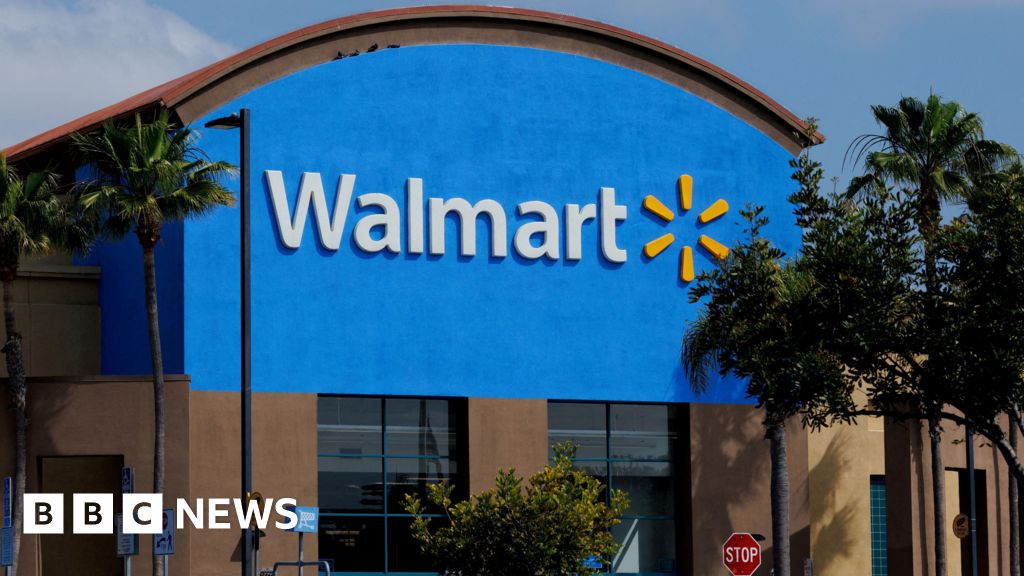
Walmart has paused hiring H-1B visa candidates in response to the Trump administration's new $100,000 fee, which aims to curb perceived abuse of the visa program and has caused controversy among business groups and policymakers.
Carlyle Group has released its own estimates indicating only 17,000 jobs were created in September, suggesting a weaker US labor market amid conflicting private data and a government shutdown that delayed official employment reports. Despite this, other economic indicators point to a resilient, though cooling, US economy, with broader inflation and GDP growth remaining stable. The discrepancy between employment data and other economic signals highlights uncertainty in the current economic outlook.
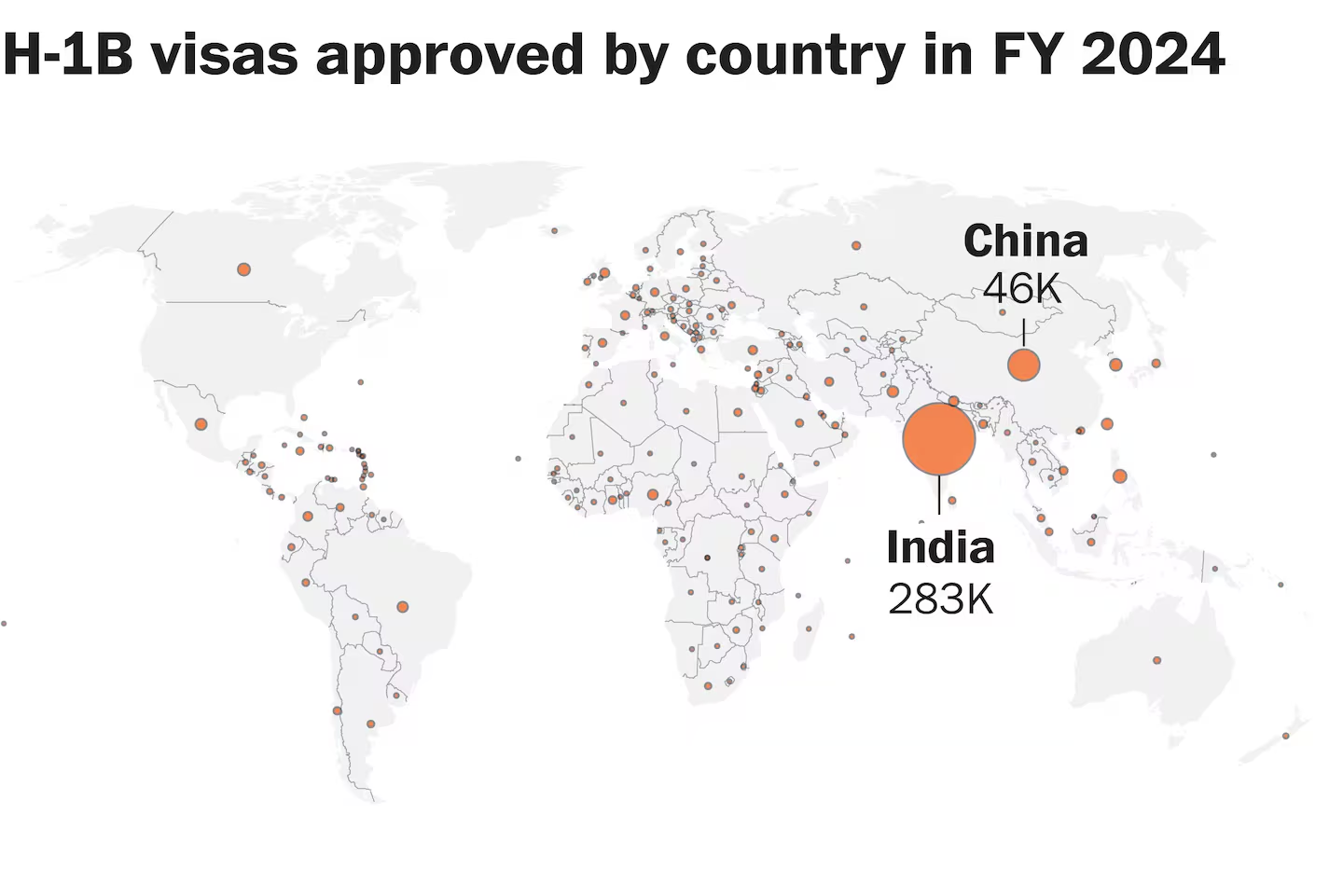
President Trump announced a policy to charge $100,000 for H-1B visas, impacting foreign workers, their countries of origin, and U.S. employers seeking specialized skills.
US job growth in July was minimal with only 73,000 new jobs, and previous months' gains were significantly revised downward, signaling potential economic weakness and raising concerns about the labor market's resilience amid global tariff increases and policy debates.
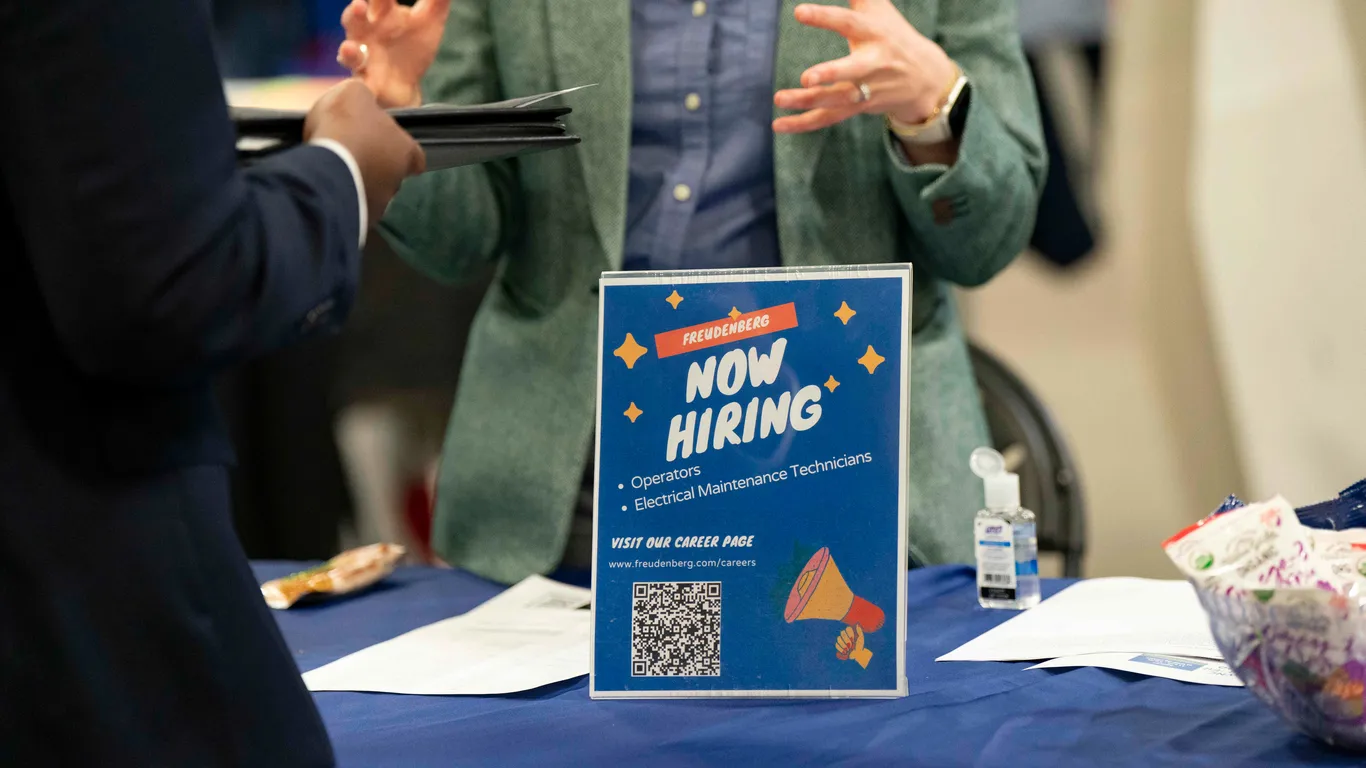
The May 2025 US jobs report is expected to show steady hiring with 125,000 new jobs, maintaining a low unemployment rate of 4.2%, amid ongoing economic uncertainty and mixed labor market signals, including rising unemployment claims and cautious hiring practices.
The U.S. jobs report for October is expected to show a slowdown in job growth, with economists projecting an increase of about 180,000 jobs. The gains in average hourly earnings are also expected to decelerate. The report may be impacted by major work stoppages, including strikes by the United Automobile Workers. Meanwhile, A.P. Moller-Maersk, a shipping giant, plans to cut at least 10,000 jobs, reflecting a decline in demand for container ships. The labor market is loosening, but companies are still struggling to find available workers while balancing cost concerns. The prospect of a government shutdown looms, which could delay data releases and have broader economic consequences. Despite some gloomy sentiment, the overall economic picture remains positive, with recent wage gains surpassing inflation and labor force participation higher than pre-pandemic levels.
Global markets are experiencing a downturn due to a deepening selloff in China, while awaiting crucial updates on U.S. employment. Hong Kong's Hang Seng index fell over 3%, recording its worst day since March, and Chinese banks listed in Hong Kong saw their worst two-day performance in almost 12 years. Shanghai stocks fell slightly, while Tokyo, Seoul, and European shares experienced heavier losses. Bond markets tightened, with U.S. and European government bond yields rising, and the Federal Reserve's latest policy meeting revealed a hesitant governing committee restating plans for two more interest rate hikes this year. The focus now turns to four critical readouts on the U.S. labor markets, which will likely impact Fed thinking. Additionally, Meta Platforms launched Threads, a direct challenge to Twitter, gaining millions of users in hours.
World markets are still basking in the glow of Friday's US employment reading, with only minor gains in crude oil prices on Saudi Arabia's output cut clouding the picture. The Federal Reserve moving into a blackout period ahead of a June 14 policy decision, futures markets only see just over a one-in-four chance of another rate hike this month. The combined picture was enough to lift the S&P500 and Nasdaq to their highest in almost 10 months on Friday. Meanwhile, US regulators are preparing to tighten rules for large banks, which could raise their capital requirements by 20% on average after a spate of midsize bank failures this year.