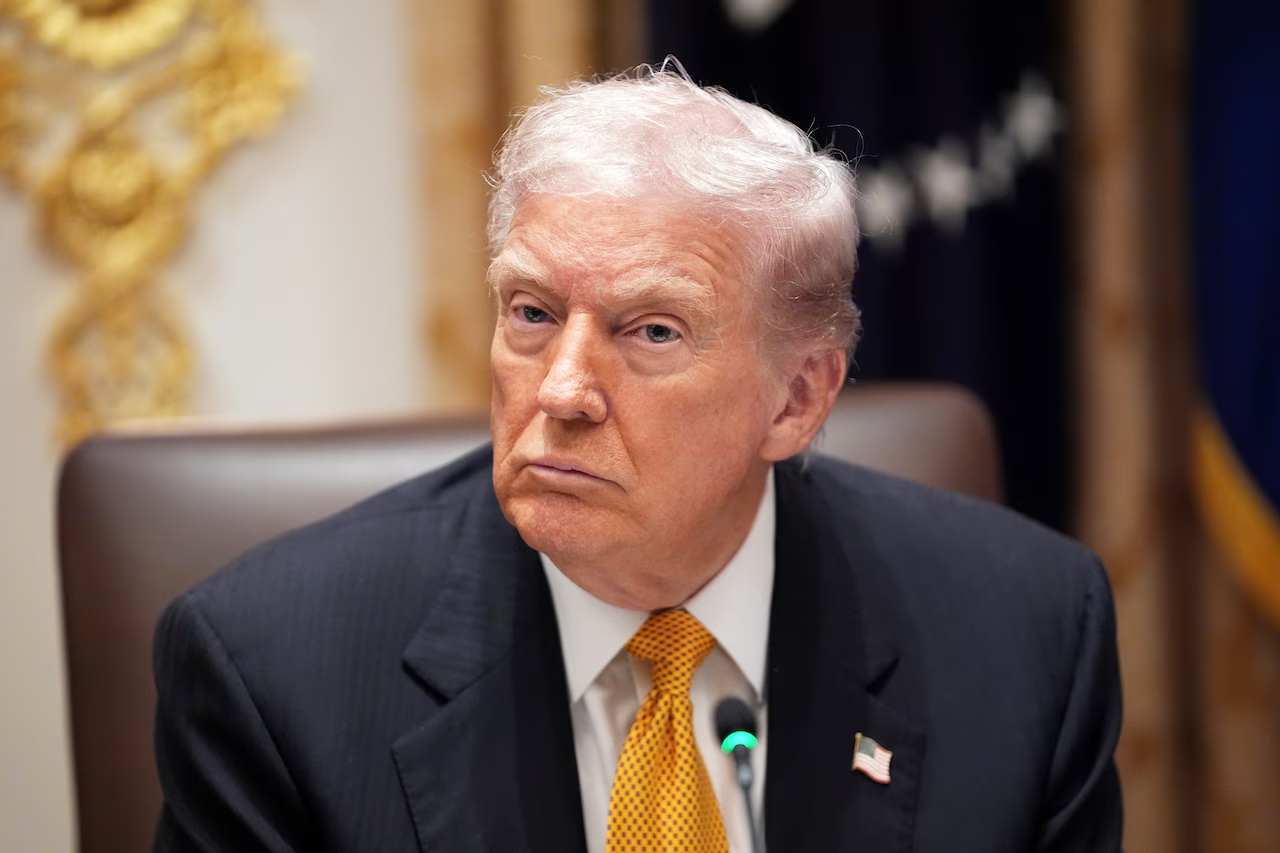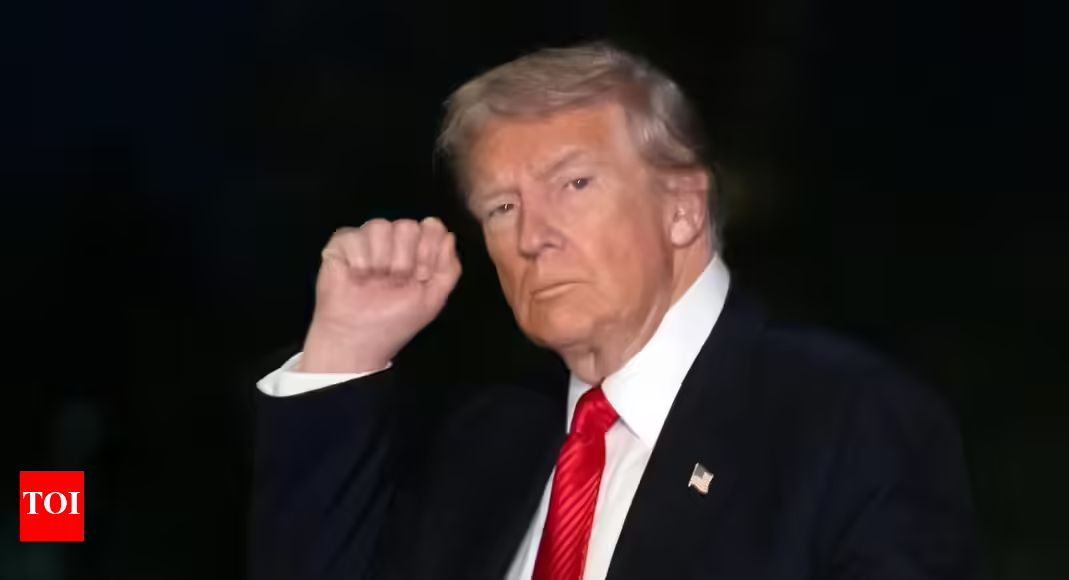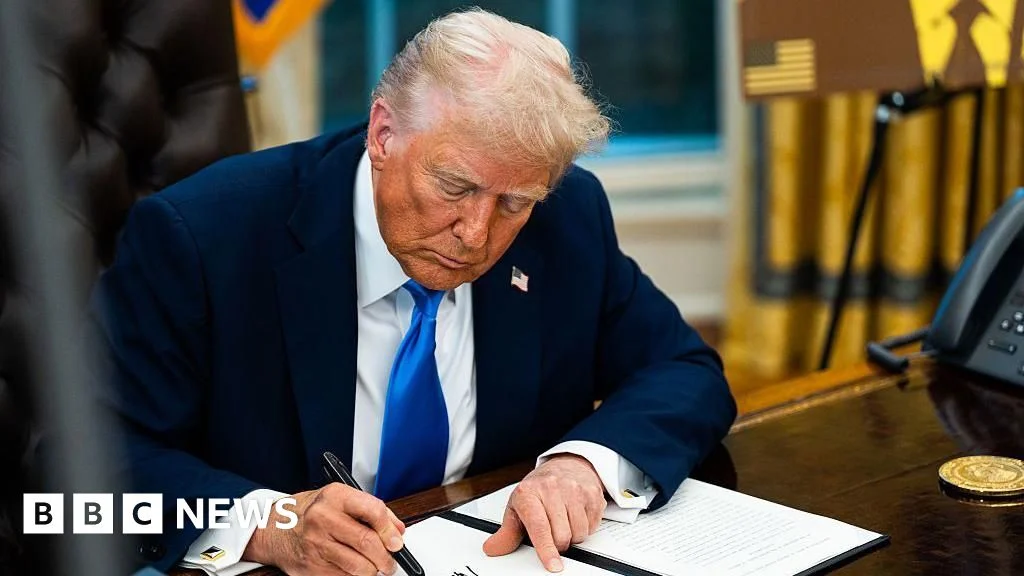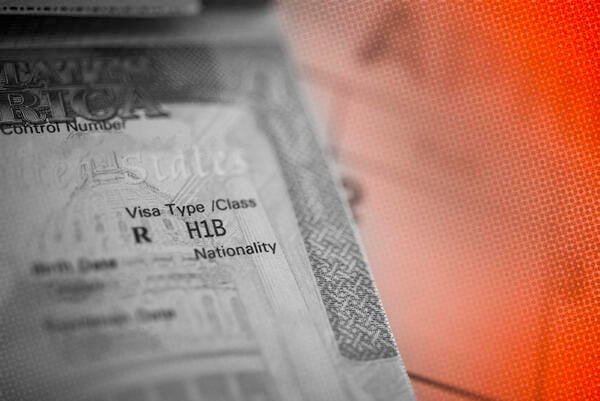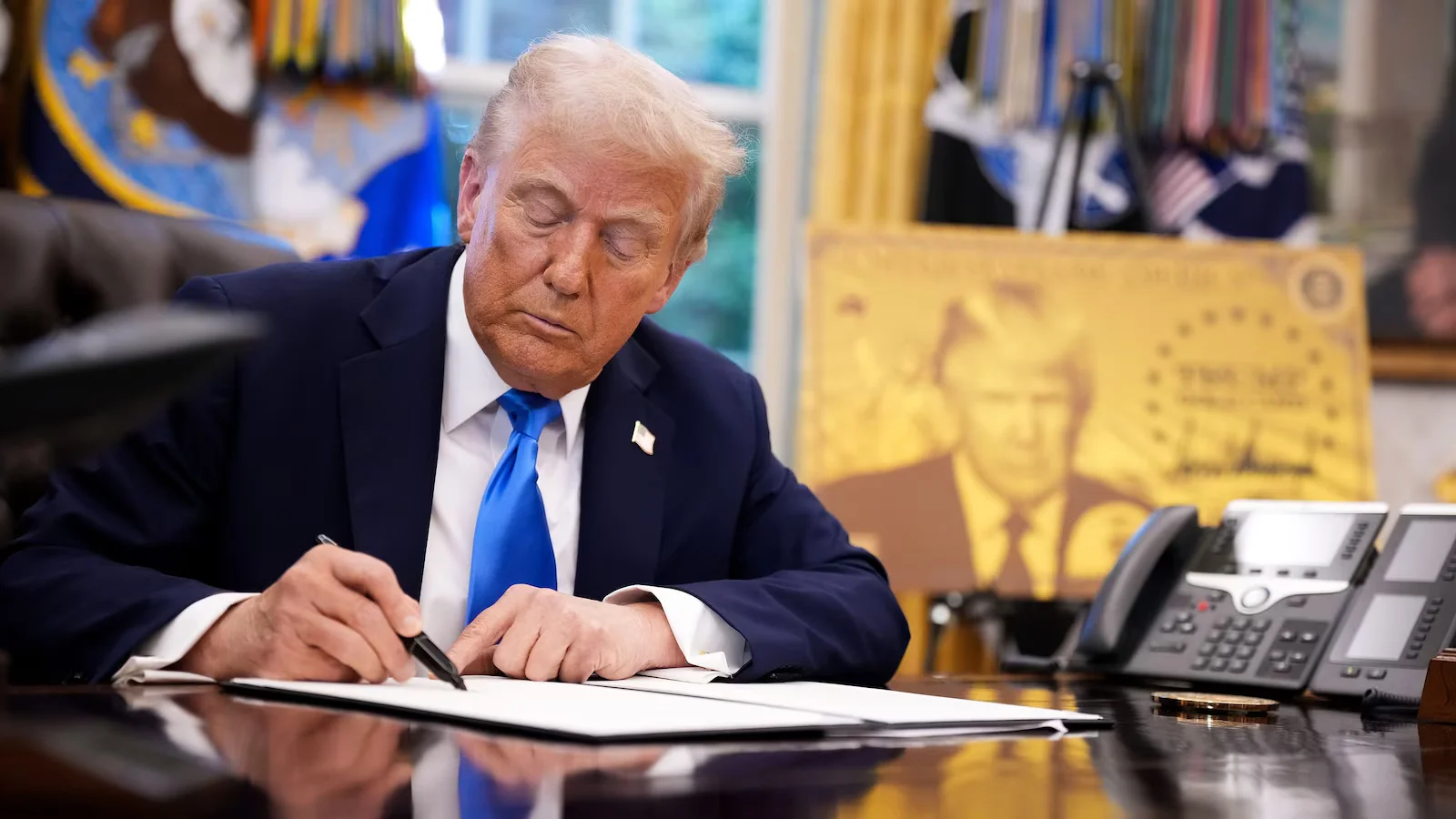
President Trump faced criticism from his pro-MAGA base after making comments suggesting the U.S. lacks certain talents and needs foreign workers on H-1B visas, sparking outrage among supporters and prompting defense from allies like Steve Bannon.
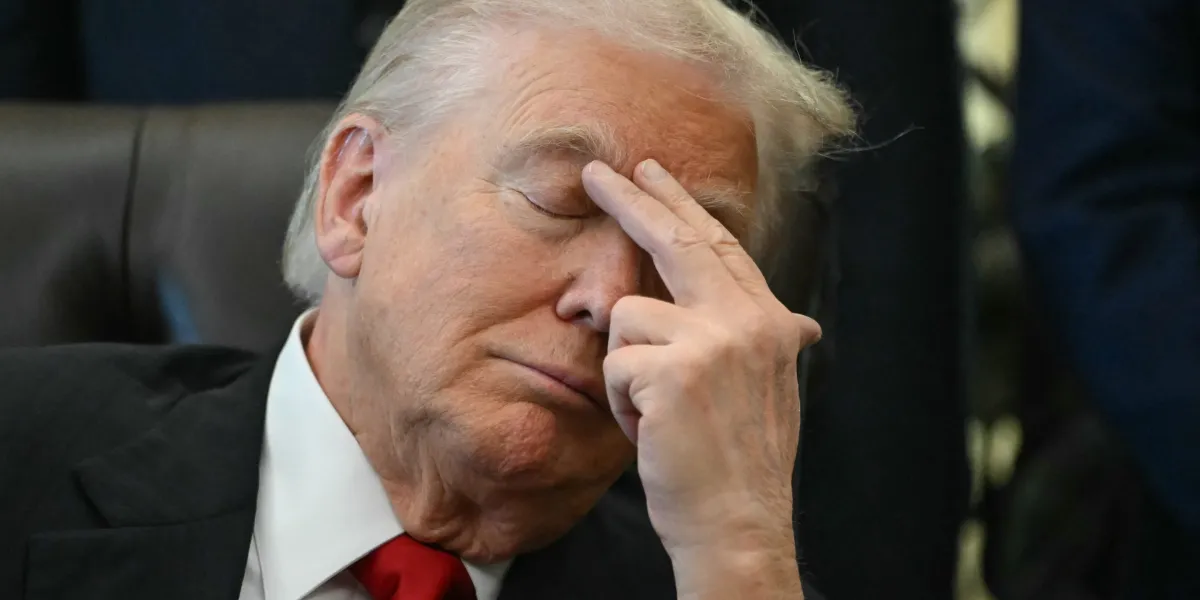
President Trump has shifted his stance on H-1B visas, acknowledging a talent shortage in the U.S. and defending the importance of skilled foreign workers, despite recent policies aimed at restricting visa access and increasing fees, which critics argue could harm economic growth and innovation.
President Donald Trump faced criticism from his supporters after defending the use of H-1B visas in a Fox News interview, suggesting the need for foreign talent in the U.S. workforce, which contradicted his 'America First' stance and sparked a social media backlash from MAGA supporters.
Donald Trump, in a shift from his previous stance, suggested the US should welcome more skilled foreign workers through H-1B visas, sparking criticism from his MAGA base who see it as a betrayal of American workers. He emphasized the need for specialized skills not readily available domestically, despite concerns about displacing American workers. The comments followed increased H-1B visa application fees and drew backlash from supporters who viewed his remarks as a sellout to foreigners and corporations.
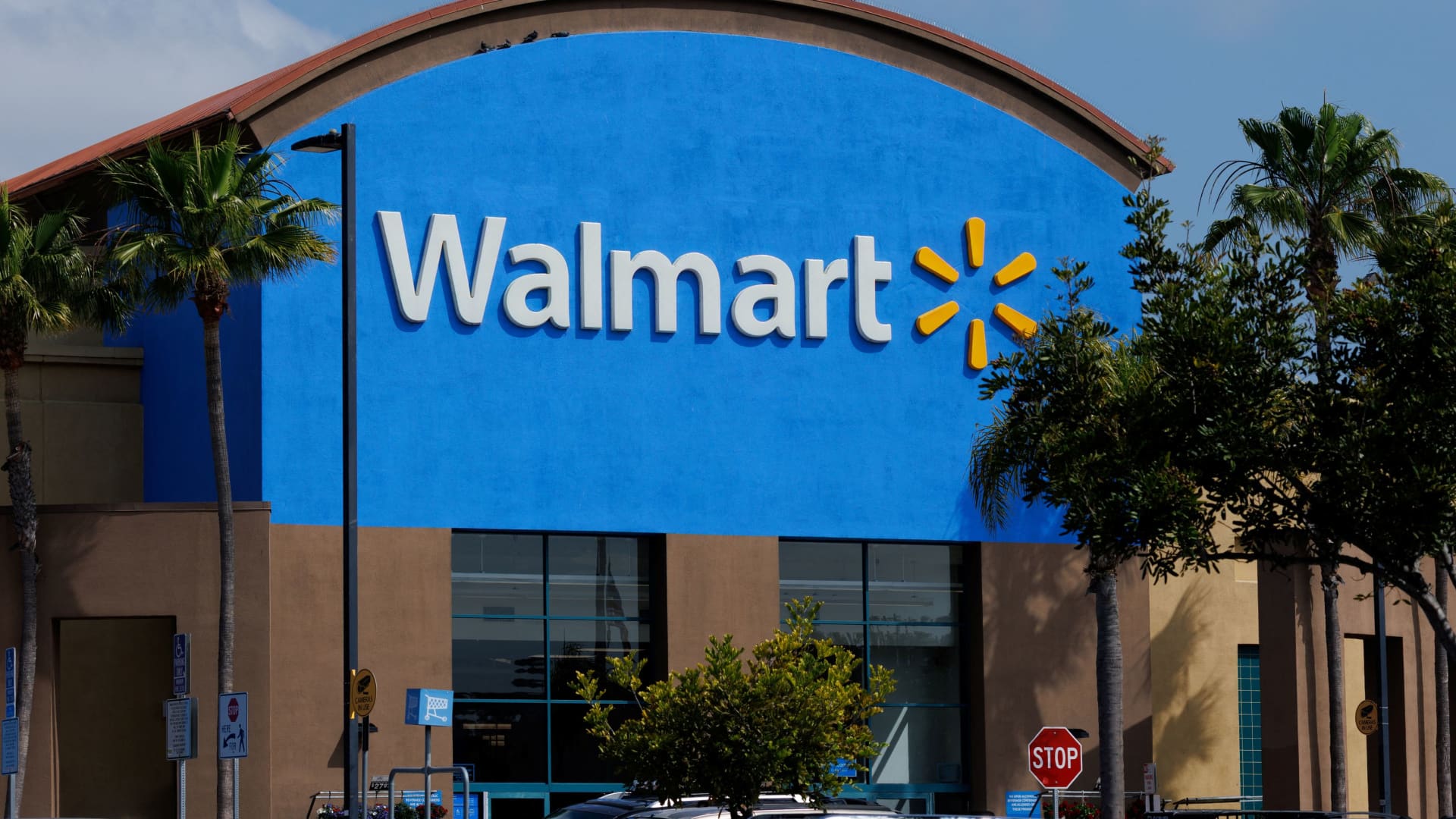
Walmart has paused hiring H-1B visa holders in response to increased visa fees announced by the Trump administration, which aims to protect American jobs and curb visa abuse. The move reflects broader impacts of U.S. immigration policies on corporate hiring practices, especially for skilled foreign workers, though exceptions may be made in some cases.
Walmart has paused job offers to foreign applicants requiring H-1B visas following President Trump's announcement of a $100,000 fee on the visas, impacting high-skilled workers and US companies relying on this program, especially those from India.
Walmart has paused hiring H-1B visa candidates in response to the Trump administration's new $100,000 fee, which aims to curb perceived abuse of the visa program and has caused controversy among business groups and policymakers.
Walmart has paused hiring new H-1B visa candidates due to the Trump administration's $100,000 visa fee, impacting its ability to hire international talent and adding to industry-wide workforce challenges.
The US Chamber of Commerce has sued the Trump administration over a new $100,000 fee on H-1B visas, arguing it will harm American businesses and the tech sector, while the White House defends the fee as a necessary reform to prevent abuse of the visa program.
Tata Consultancy Services (TCS) CEO K. Krithivasan announced that the company will not be hiring new H-1B visa holders in the US, focusing instead on expanding its local workforce and renewing existing visas, signaling a shift in visa hiring strategies among major corporations.
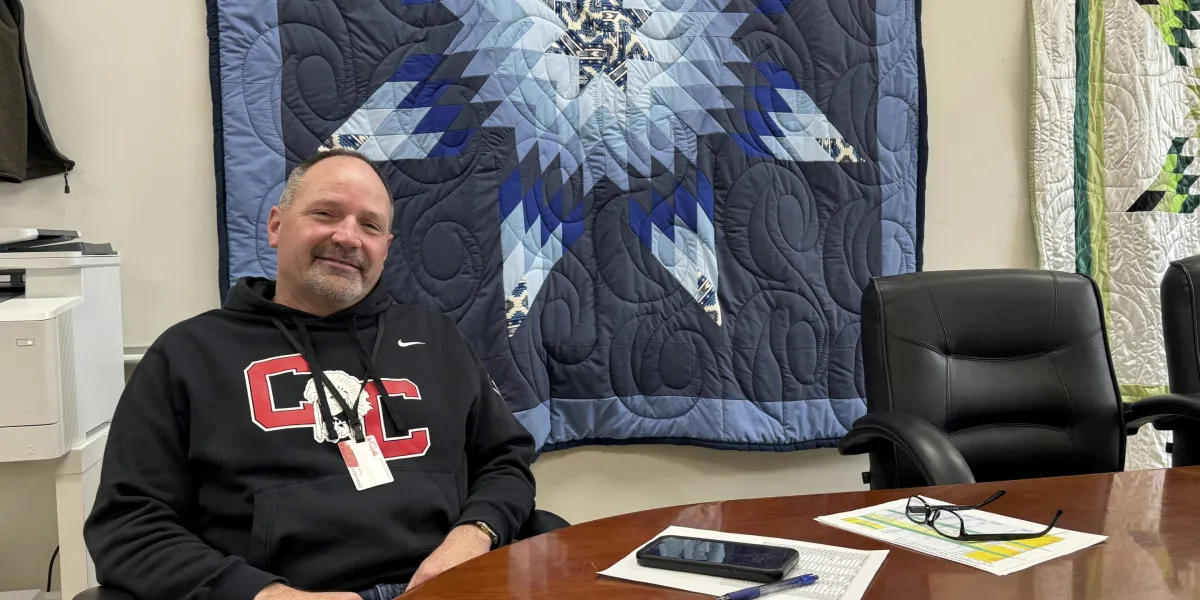
A rural school district in South Dakota has relied on Filipino teachers on H-1B visas to fill unfilled teaching positions, highlighting the importance of immigrant workers in addressing shortages in education and healthcare. The recent $100,000 fee for H-1B visa applications threatens to impact such communities, especially in rural areas where hiring foreign professionals is often the only option to fill critical roles. This policy change raises concerns about the future of staffing in rural schools and hospitals, with advocates calling for exemptions to prevent harm to essential services.
Nvidia CEO Jensen Huang announced that the company will continue sponsoring H-1B visas and cover all associated fees, expressing support for the importance of legal immigration for U.S. technological leadership, despite recent Trump administration visa fee increases.
The Trump administration has announced significant changes to the H-1B visa system, including a $100,000 fee, sparking legal challenges and concerns about its impact on high-skilled immigration, innovation, and the U.S. economy. The changes aim to prioritize high-cost, high-skilled labor but face opposition from various groups who argue they could harm research, startups, and economic growth.
The Trump administration's proposal to impose a $100,000 fee on H-1B visa applications could significantly impact U.S. colleges and universities, which employ over 16,000 workers on these visas, mainly in specialized fields. The policy aims to curb perceived abuse of the program but may hinder universities' ability to hire essential international staff, including researchers and medical professionals, especially as many institutions rely heavily on H-1B visa holders. The new fee and cap could pose financial challenges for higher education institutions, potentially affecting their staffing and research capabilities.
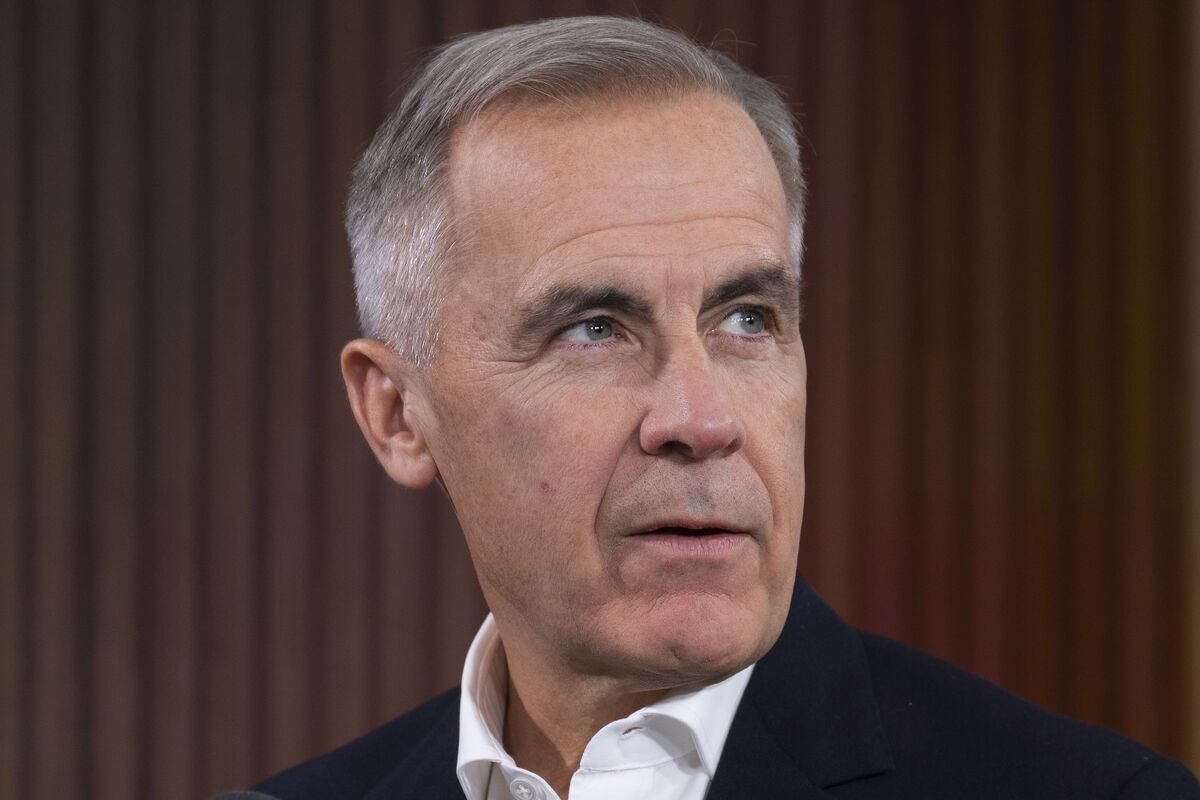
Canadian Prime Minister Mark Carney aims to attract tech workers who are deterred by the US's new $100,000 H-1B visa fees, positioning Canada as an alternative destination for global talent, amid similar efforts by Germany and the UK.