The Dow Jones Industrial Average rose as the S&P affirmed the U.S. credit rating, supported by increased tariff revenue, reflecting positive investor sentiment in the stock market.
The article discusses the early signs of the impact of Trump's tariffs on the US economy, including a plunge in imports, Moody's lowering of the US credit rating due to rising debt and deficits, and market concerns about trade policy volatility and its effects on growth and financial stability.
U.S. stock futures dipped slightly after Moody's downgraded its U.S. credit rating outlook to negative, citing fiscal deficits and partisan gridlock. While the U.S. credit rating remains AAA, the downgrade could impact the attractiveness of U.S. debt for foreign investors. Additionally, Bank of America's technology team noted that the tech sector is still recovering from the effects of low interest rates, and Morgan Stanley predicts slowing GDP growth and steady interest rates until mid-2024.
Moody's has downgraded its outlook on the US credit rating to "negative" from "stable" due to large fiscal deficits and a decline in debt affordability, following a similar move by Fitch earlier this year. The rating agency cited continued political polarization in Congress as a risk to reaching a consensus on a fiscal plan. The Biden administration criticized the change, emphasizing the strength of the American economy and Treasury securities. While a Moody's downgrade may not have a significant impact on the US bond market, it increases pressure on congressional Republicans to advance funding legislation and avert a partial government shutdown.
Moody's has downgraded the US credit rating outlook from 'stable' to 'negative', citing risks to fiscal strength and political polarization. The agency maintained the AAA rating but warned of a possible future downgrade due to rising interest rates and large fiscal deficits. The Biden administration blamed Republicans for the downgrade, accusing them of extremism and dysfunction. The downgrade raises concerns about the US's fiscal health and political stability, adding pressure to resolve budget and debt issues. It also highlights the need to address long-term structural challenges.
Moody's Investors Services has lowered the US credit rating outlook from "stable" to "negative" due to political polarization in Congress and the risk of successive governments failing to reach consensus on a fiscal plan to address the decline in debt affordability. The agency expects that without effective fiscal policy measures, the US fiscal deficits will remain large, significantly weakening debt affordability. Republicans in the House are working on a temporary spending measure to avoid a government shutdown, while the White House attributes the downgrade to congressional Republican extremism and dysfunction. While Moody's maintained the AAA rating, S&P and Fitch have already downgraded it to AA+.
Fitch Ratings has downgraded the creditworthiness of the US government from AAA to AA+ due to the increasing size of US indebtedness and an "erosion of governance." The downgrade could have long-term implications for US economic growth and borrowing costs. The US Treasury currently owes $32.6 trillion, and if investors perceive US Treasury bonds as riskier, they may demand higher interest rates or become less interested in buying them, resulting in higher borrowing costs for the government. The federal government has limited options to cover its growing borrowing costs, including borrowing more money, hiking tax rates, or cutting spending, all of which have political consequences. Higher government debt is generally associated with lower long-term economic growth.
The U.S. is unlikely to regain its AAA rating with Fitch Ratings due to growing political instability and expected fiscal deterioration over the next three years, according to Elliot Hentov, head of macro policy research at State Street Global Advisors. Hentov, who was part of the team that downgraded the U.S. credit rating in 2011, stated that the fiscal profile and governance of the U.S. are worse than before and not comparable to other AAA-rated countries. Despite some dismissing the downgrade as insignificant, Hentov believes it reflects the current state of the U.S. economy.
The Dow Jones Industrial Average dropped nearly 1% or about 350 points as Fitch Ratings downgraded the U.S. credit rating, causing stocks to fall across indexes. The tech sector lost 2.5%, with Intel, Microsoft, Salesforce, and Apple all experiencing declines. Walgreens saw a 3.3% increase in its stock price after rival CVS reported positive results. The 10-year Treasury yield reached its highest level since November, impacting tech stocks.
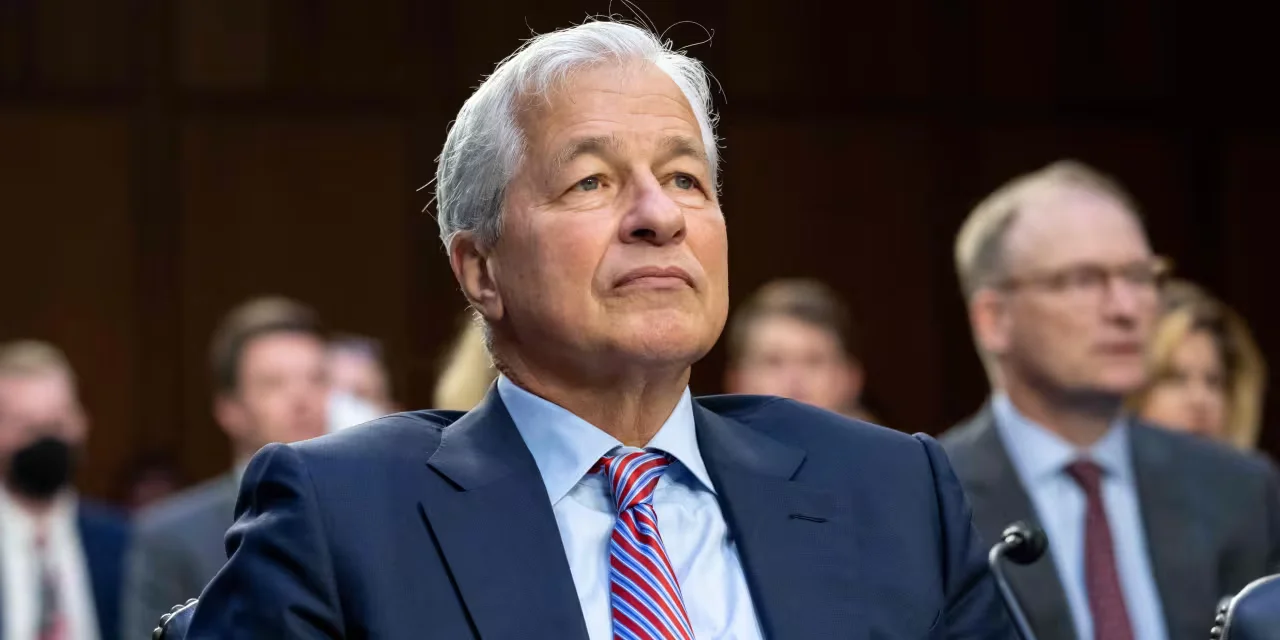
JPMorgan CEO Jamie Dimon argues that the U.S. should have the highest credit rating in the world, criticizing the recent downgrade by Fitch Ratings. Dimon believes that proposed capital requirements for banks would make small-business loans more expensive and hinder access to mortgages for those with lower credit scores. He also expresses concerns about geopolitical uncertainty and the Federal Reserve's efforts to combat inflation. Dimon calls for the abolition of the debt ceiling, stating that it is used as a political tool. He suggests that banks would benefit from fewer regulatory requirements and emphasizes the need for recalibrating existing rules. Dimon remains optimistic about the U.S. economy and supports measures to assist low- and moderate-income families.
Former President Donald Trump has been indicted for the third time on charges related to his attempts to overturn the 2020 election results. The U.S. has lost its AAA credit rating, downgraded to AA+ by Fitch Ratings due to concerns about governance standards. The family of Henrietta Lacks, whose cells were used without her consent for scientific breakthroughs, has settled with the biotech company involved. Research shows that extreme heat can negatively impact cognitive performance and increase anxiety.
Japanese shares experienced their largest one-day drop this year as caution spread across Asia following a surprise cut in the US credit rating by Fitch. The Nikkei average closed down 2.30%, while the broader Topix slipped 1.54%. Chip-related stocks and the brokerage sector were particularly affected, with Tokyo Electron and Advantest experiencing declines, and Nomura Holdings seeing its biggest one-day drop since March 2021. However, Toyota Motor managed to rise 2% after reporting a significant increase in operating profit for the first quarter.
Fitch, one of the major credit rating agencies, has downgraded the US government's credit rating from AAA to AA+ due to concerns over the country's finances and debt burden. The agency cited a "steady deterioration" in governance over the past 20 years. US Treasury Secretary Janet Yellen called the downgrade "arbitrary" and based on outdated data. While the timing and rationale behind the downgrade have surprised many economists, it is not expected to have a significant impact on financial markets. Fitch also predicts a mild recession for the US later this year.
Fitch Ratings has downgraded the long-term credit rating of the United States from AAA to AA+, citing the nation's high and growing debt burden and its history of brinkmanship over borrowing authority as factors eroding confidence in fiscal management. This is the second downgrade in America's history and comes two months after narrowly avoiding defaulting on its debt. The ongoing political standoffs and lack of a medium-term fiscal framework, along with the growing levels of U.S. debt, were major considerations for the downgrade. The move could limit the number of investors able to buy U.S. government debt, potentially increasing borrowing costs, although the impact is expected to be limited given the size of the Treasury market and ongoing demand for U.S. Treasury securities. The Biden administration criticized the decision, arguing that it did not reflect the strength of the U.S. economy.
Fitch Ratings may still downgrade the US credit rating despite the debt ceiling deal, citing increased political polarization and governance shortcomings. The US currently has an AAA rating from Fitch, but a downgrade would make it more expensive for the US to borrow debt and drain funding from other priorities. Fitch plans to make a decision by the end of September.